

On the morning of Sunday, Sept. 23, 2001, Dover International Speedway in Dover, Delaware, opened its gates for the MBNA Cal Ripken Jr. 400, the first NASCAR Cup Series race held after the Sept. 11 terrorist attacks. At the entrances, 140,000 American flags, each measuring 11.5 inches by 17 inches, were stacked and handed to fans as they entered the track. Dover’s location—about three hours from New York City and two hours from Washington, D.C.—placed it close to the sites of the attacks and placed unusual responsibility on the venue as NASCAR resumed its season.
Approximately 135,000 to 140,000 fans attended the race, making it the largest gathering of Americans in one place since Sept. 11. The race covered 400 miles on Dover’s one-mile oval, commonly known as the Monster Mile, and featured a 43-car field. From the start of the day, the event carried national importance beyond racing.
- NASCAR returned just 12 days after 9/11 with the MBNA Cal Ripken Jr. 400 at Dover International Speedway, drawing 135,000–140,000 fans, the largest U.S. gathering since the attacks.
- Unprecedented security measures involving federal, state, and local agencies reshaped NASCAR operations, establishing protocols that remain in place across tracks today.
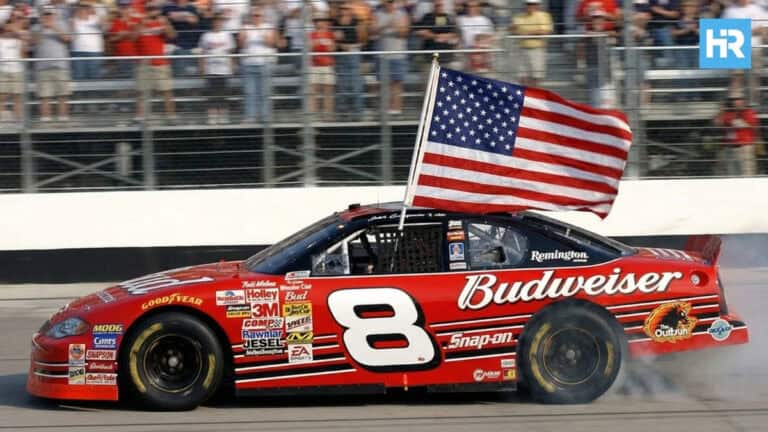
- Dale Earnhardt Jr.’s victory and flag-waving Polish Victory Lap became one of the most enduring patriotic images in motorsports history.
Security Preparations and Law Enforcement Presence at Dover
In the days leading up to the race weekend, Dover Motor Speedway coordinated security at a level never before seen at a NASCAR event. Denis McGlynn, President and CEO of Dover Motorsports, Inc., said the track worked with nearly every level of law enforcement, including federal, state, and local agencies, naming the FBI and ATF among those involved. Security planning addressed possible threats by air, vehicles, and explosives.
McGlynn said officials treated all reports seriously, including ones that came from outside Delaware. One report came from Sussex County, New Jersey, involving people near a crop duster, while another came from New Castle County, Delaware. Over the full three-day race weekend, officials expected about 200,000 people on the property.
Several changes affected fans directly. For the first time in track history, coolers and backpacks were not allowed inside the grandstands. Security checkpoints increased, and trash cans throughout the speedway and campgrounds were inspected multiple times each day.
National Broadcast and Arrival of Fans
NBC’s race coverage reflected the seriousness of the moment. Instead of beginning with pit road or driver introductions, the broadcast opened with shots of Dover Air Force Base, located six miles from the track. NBC announcer Bill Weber explained that the base usually provides 1,200 volunteers on a normal race weekend, but those volunteers were now occupied with more urgent duties.
As fans arrived via North Dupont Highway, the scene differed from a typical NASCAR weekend. Rather than wearing the usual driver uniforms or team colors, most fans dressed in red, white, and blue, and many painted American flags on their faces. McGlynn later said that once fans passed through security and reached the grandstands with their flags, the mood shifted and the crowd took on a shared identity.
Pre-Race Ceremonies and National Symbols
Pre-race ceremonies centered on national unity and recognition. A military parade moved along the frontstretch, with troops standing on military vehicles while waving American flags. The ceremony also included 10 first responders from New York City and Shanksville, Pennsylvania, appearing at the speedway 12 days after the attacks.
Country music singer Lee Greenwood performed “God Bless The U.S.A.” and later said it was “hard to describe” what he felt as he began to sing. He described being “Wounded, like all of America,” and said he would never forget either “the events of 9/11” or “singing at Dover for the NASCAR race to uplift America.”
Singer Tanya Tucker performed The Star-Spangled Banner, and fans joined in across the track. As she reached the final lines of the anthem, the crowd responded with extended cheers and chants of “U-S-A” that lasted about 20 seconds, followed by the release of dozens of doves into the air.
NASCAR’s 2001 Season Context and the Decision to Race
The Dover race came during an already difficult season for NASCAR. On Feb. 18, 2001, Dale Earnhardt Sr. was killed in a crash on the final lap of the Daytona 500, an event that left the sport without one of its most recognizable leaders. Seven months later, the Sept. 11 terrorist attacks caused NASCAR to halt competition once again.
At the time of the attacks, NASCAR was scheduled to race at New Hampshire Motor Speedway on Sunday, Sept. 16. That event was postponed and later rescheduled for Nov. 23. The decision-making process was led by Mike Helton, then NASCAR President, who had previously addressed the public following Earnhardt Sr.’s death earlier in the year. Helton worked with track officials and government agencies to assess whether racing could resume safely.
According to Denis McGlynn, President and CEO of Dover Motorsports, Inc., Helton contacted him later that week to confirm that Dover would host NASCAR’s first race following the attacks. McGlynn described the moment NASCAR’s plan snapped into place with a simple phone call. He said Helton—“a man of few words”—called him and said, “You’re up,” and told him they would be talking often through the week.
The Garage Area and Driver Mindset During the Weekend
Teams arrived at Dover International Speedway later that week, and on-track activity on Friday and Saturday moved forward without interruption. Drivers and crew members were aware of the increased security presence but continued their normal work routines in the garage area. While the setting was unusual, the day-to-day operations of race preparation remained consistent.
Dale Earnhardt Jr., who was 26 years old at the time, was competing in his first full season following his father’s death. Earlier in 2001, Dale Earnhardt Sr. provided his son’s first NASCAR Cup Series opportunity through Dale Earnhardt Incorporated, placing him in the No. 8 Chevrolet. Earnhardt Jr. had earned a victory at Daytona earlier that summer, his first since his father’s death, but he later said that life had not returned to normal.
During this period, communication between NASCAR and drivers was limited. There were no mass emails, social media platforms, or group text systems, and drivers often waited for updates without clear timelines.
The MBNA Cal Ripken Jr. 400: Race Details and Results
The MBNA Cal Ripken Jr. 400 is the 64th NASCAR Cup Series race held at Dover. Cal Ripken Jr., serving as grand marshal, waved the green flag during his final season in Major League Baseball. The race field included 10 future NASCAR Hall of Famers, including Dale Earnhardt Jr., Jeff Gordon, Bill Elliott, Dale Jarrett, Bobby Labonte, Terry Labonte, Mark Martin, Tony Stewart, Ron Hornaday, and Rusty Wallace. Benny Parsons, also a Hall of Famer, worked as part of the NBC broadcast team.
At the start, Dale Jarrett and Bobby Labonte led the field to green, with Earnhardt Jr. starting third. By lap three, Earnhardt Jr. had taken the lead. Throughout the race, he battled Ricky Rudd, whose No. 28 car carried a large American flag on its hood.
Earnhardt Jr. led a race-high 193 laps, including the final 39, and won by more than 1.5 seconds over Jerry Nadeau. Rudd finished third, followed by Jeff Gordon, Tony Stewart, and Kevin Harvick. The win was Earnhardt Jr.’s second victory of the 2001 season and became his only NASCAR Cup Series win at Dover.
Victory Celebration and the Image That Endured
When it came to the celebration, Earnhardt Jr. skipped the burnout and chose a more somber approach. He took an American flag from a Dale Earnhardt Inc. crew member, turned his car so fans could see it through the window, and performed the Polish Victory Lap, described as a tradition “coined after the late Alan Kulwicki,” and one he felt fit the moment.
McGlynn later said, “If anybody asks me what’s one thing I would take away from 50 years here, it’s going to be that weekend.” Earnhardt Jr., reflecting later, said the win and the day’s larger meaning were hard to fully process, but he believed the race helped people understand it was “OK to stand up and move forward,” and that it may have helped fans “take care of themselves and of each other.”
“I don’t think you will ever see a more patriotic moment in racing,” Earnhardt said.
Dover’s Place in NASCAR History and the Night’s Final Moments
Since 1969, Dover Motor Speedway has hosted 106 NASCAR Cup Series races, run between 300 and 500 miles, on both asphalt and concrete, with margins ranging from less than a second to more than five laps. Despite those decades of competition, the Sept. 23, 2001, race remains distinct due to its timing and setting.
That evening, Cal Ripken Jr. returned to Baltimore after serving as grand marshal. In a nationally televised game at Camden Yards, he hit the 431st and final home run of his career off Orlando Hernandez of the New York Yankees, completing a day that connected two major American sports.
Security Practices That Continued Beyond 2001
Following Sept. 23, 2001, NASCAR security practices became more detailed across all tracks. McGlynn later explained that inspections at the gates, metal detection, and bag checks became routine. Many in the industry describe the modern NASCAR venue as operating with procedures similar to a small airport, though without shoe removal.
“The inspections at the gate are routine now,” McGlynn said.
These measures, first tested at Dover, remain standard practice more than 20 years later.