

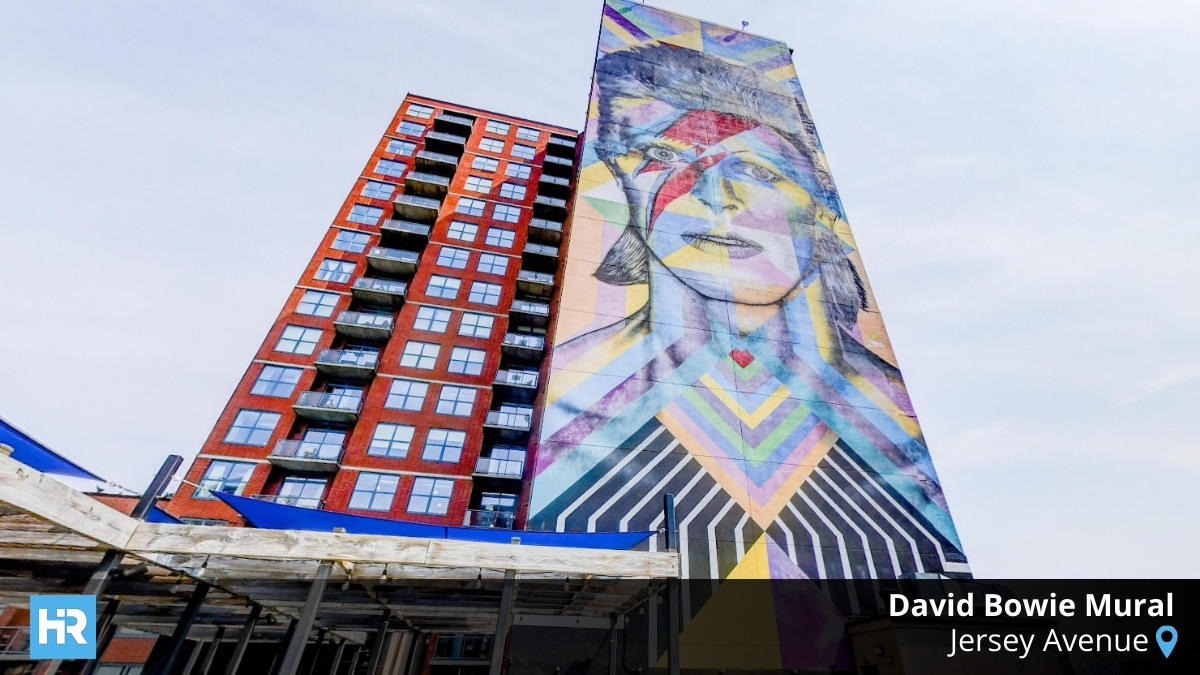
It started with a face — David Bowie’s, staring back at me from a brick wall on Jersey Avenue. I’d seen photos of the mural countless times online, usually cropped and filtered, but standing in front of it felt different. The paint had faded slightly, edges softened by weather and time, yet the energy was still there. It wasn’t pristine, and that was exactly the point.
That moment pushed me to slow down and explore Jersey City and Hoboken on foot, not looking for curated attractions but for the walls, alleys, and forgotten corners where street art lives. Over several weekends, I followed color instead of maps, discovering murals and graffiti that tell the story of these cities in ways guidebooks never could.
A City Painted in Layers
Street art in Jersey City doesn’t announce itself with plaques or signs. It exists alongside everyday life — above bodegas, behind parking garages, on warehouse walls you only notice when traffic slows. The art feels lived-in, not staged.
What struck me early on was how quickly murals change. A wall I photographed in spring was painted over by summer. Another piece gained new tags and layers, becoming something entirely different. This constant evolution makes walking the city feel like stepping into a living museum — one that refuses to stay still.
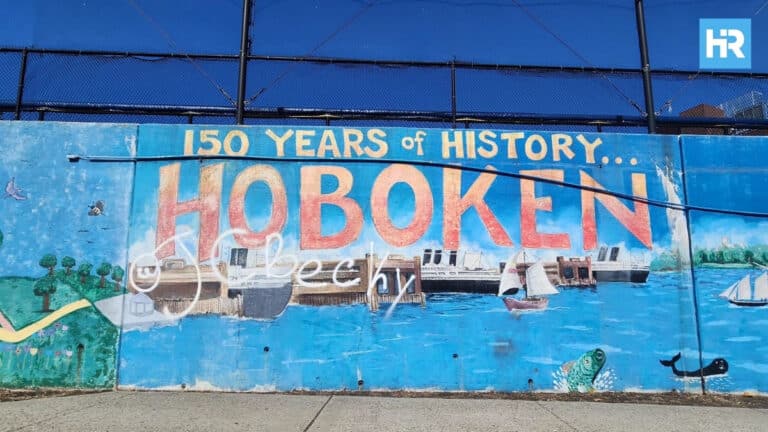
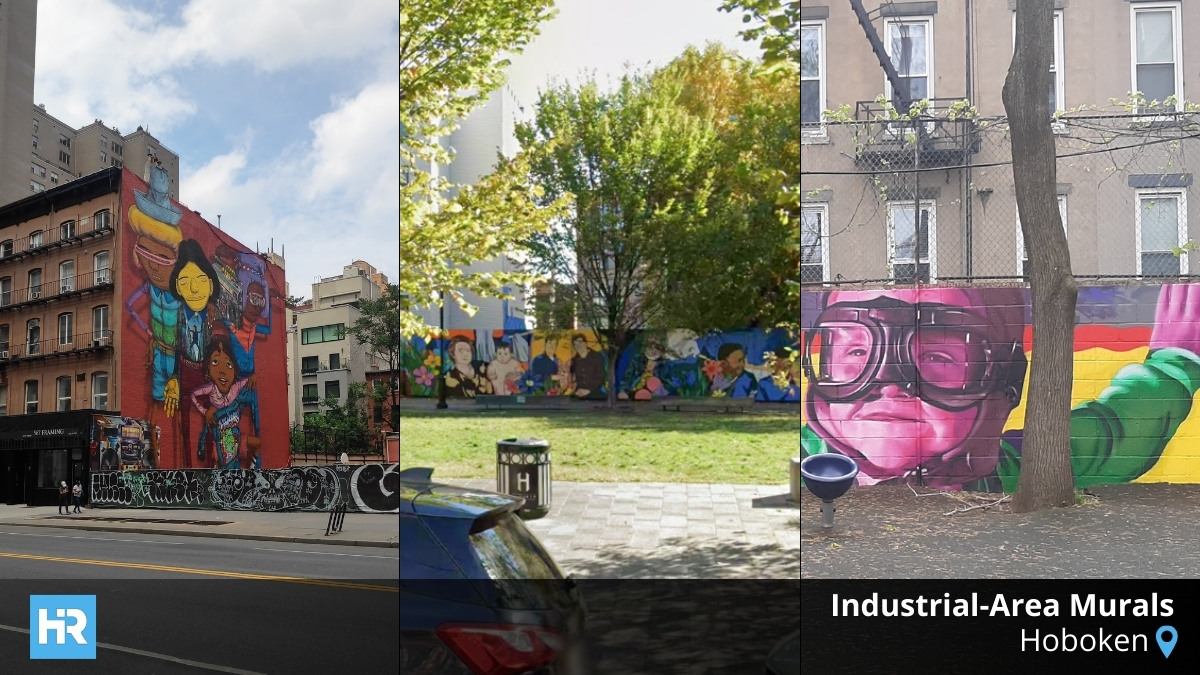
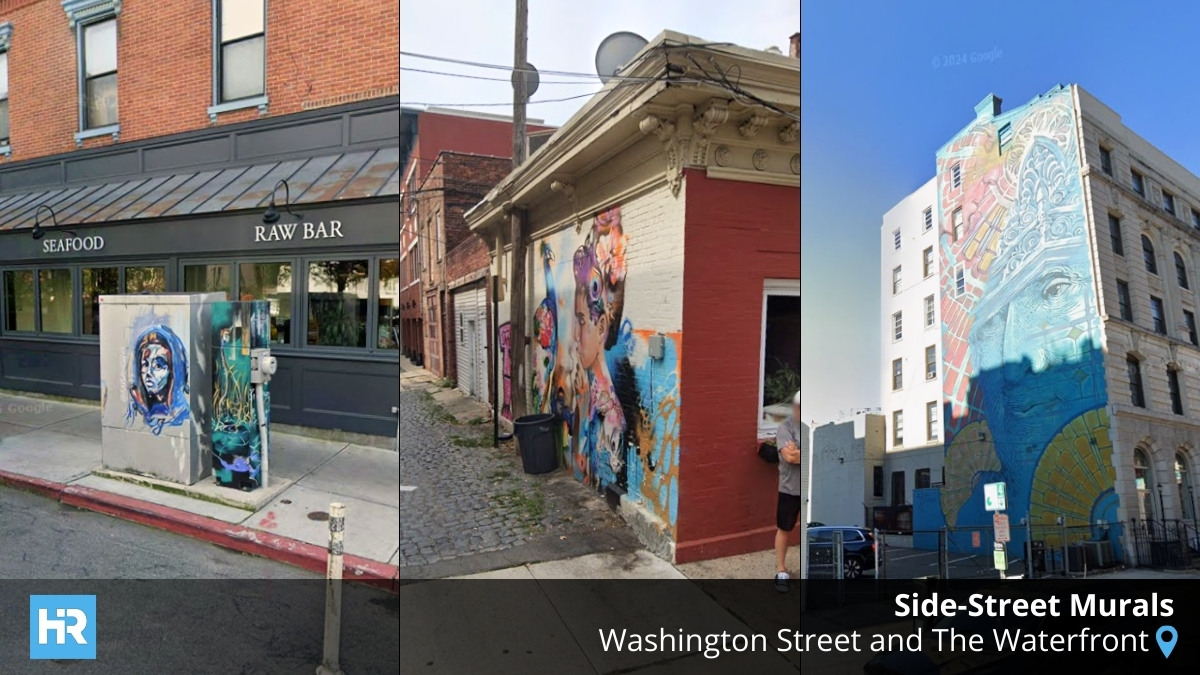
In Hoboken, the scale is smaller but no less intentional. Murals appear tucked between brownstones or on the sides of old industrial buildings near the edges of town. You’re rewarded for paying attention.
The Heights: Finding Murals by Accident
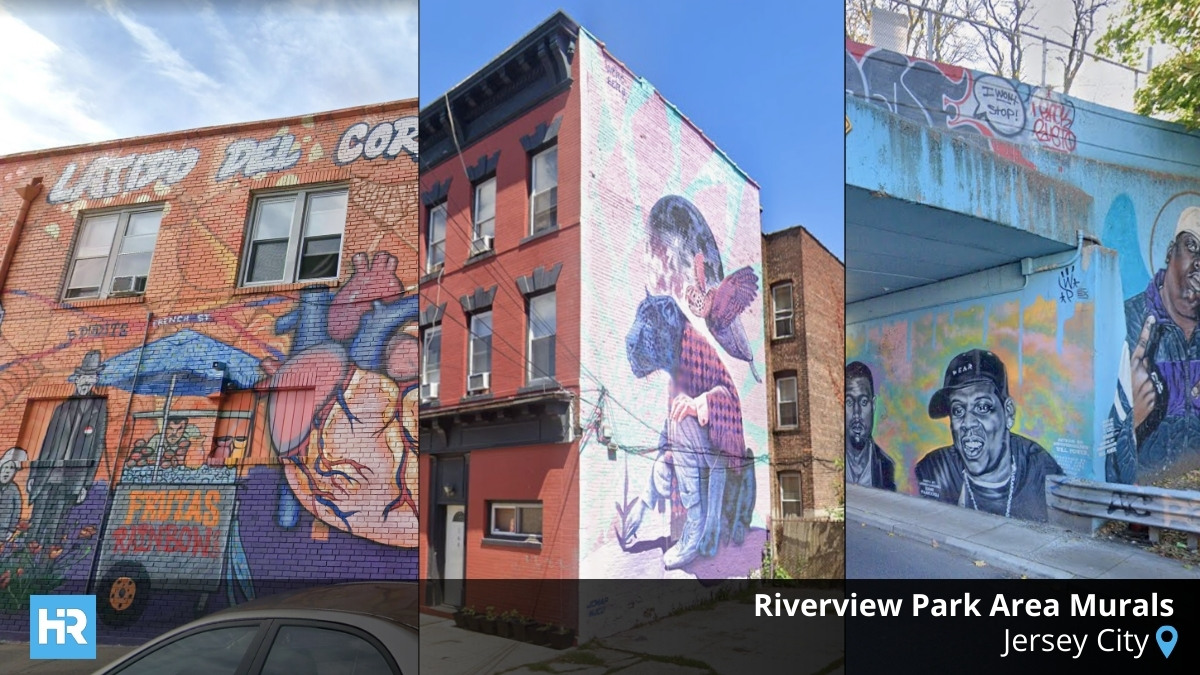
I started many of my walks in The Heights, where some of Jersey City’s most striking murals are woven into residential blocks. On Palisade Avenue near Riverview Park, a massive portrait stretches across an entire building, watching over the street. You don’t stumble upon it by following a tour — you find it while walking to get coffee or waiting for a bus.
That’s what makes street art here feel personal. These works aren’t isolated destinations; they’re part of the neighborhood rhythm. Kids ride scooters past them. People walk dogs beneath them. The murals become landmarks locals navigate by, even if they’re never officially named.
Downtown Jersey City: Dialogue on the Walls
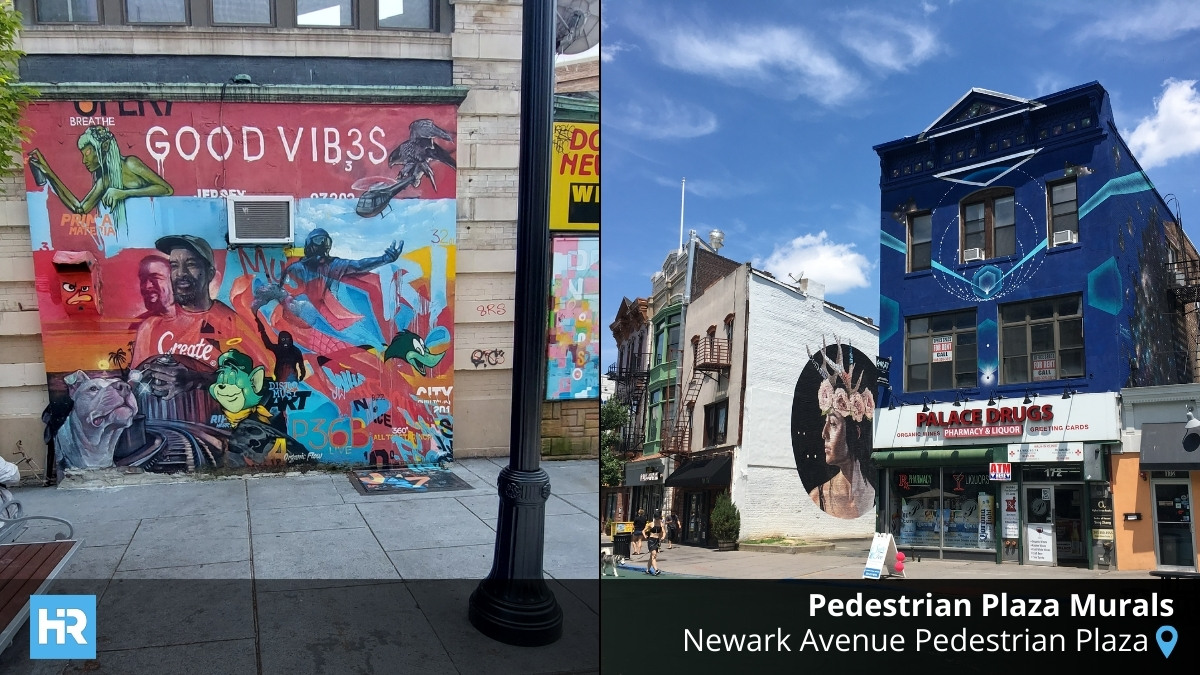
Downtown feels louder, visually and culturally. Near Newark Avenue’s pedestrian plaza, layers of graffiti, paste-ups, and sanctioned murals overlap, creating walls that read like conversations in progress.
I spent an afternoon wandering side streets off the main drag, noticing how quickly styles shift from block to block. One alley might feature bold, colorful figures; the next is covered in tags, some crossed out, others highlighted. It’s messy, expressive, and honest.
This is where the idea of “off the beaten path” really makes sense — not because these streets are hidden, but because most people are moving too fast to notice them.
Following (And Ignoring) the Mural Map
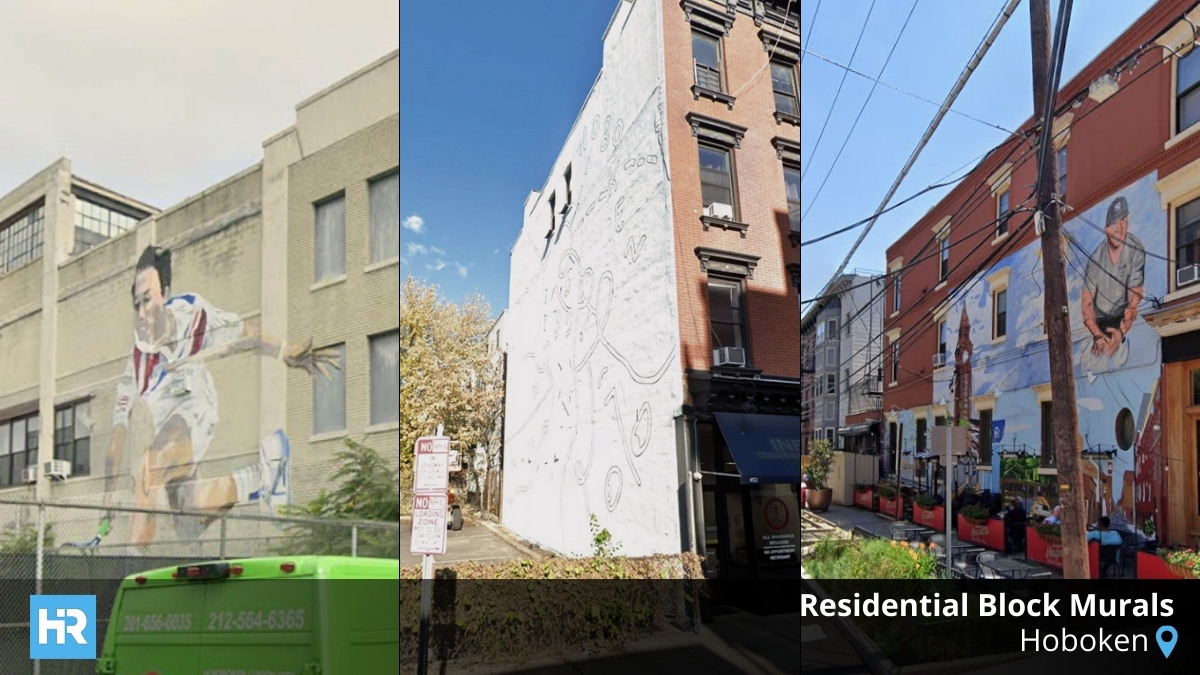
Before one walk, I downloaded the city’s mural map, which catalogs hundreds of works across neighborhoods. It’s useful, especially if you want to make sure you see a few key pieces. But I learned quickly that the best discoveries happen when you deviate.
Some murals aren’t listed. Others no longer exist. A few appear overnight. Treating the map as a loose guide rather than a checklist keeps the experience exploratory instead of instructional.
In Hoboken, where fewer murals are officially cataloged, wandering without a plan feels even more rewarding. A turn down the wrong street often leads to the right wall.
The Raw Edge: Bergen Arches and Beyond
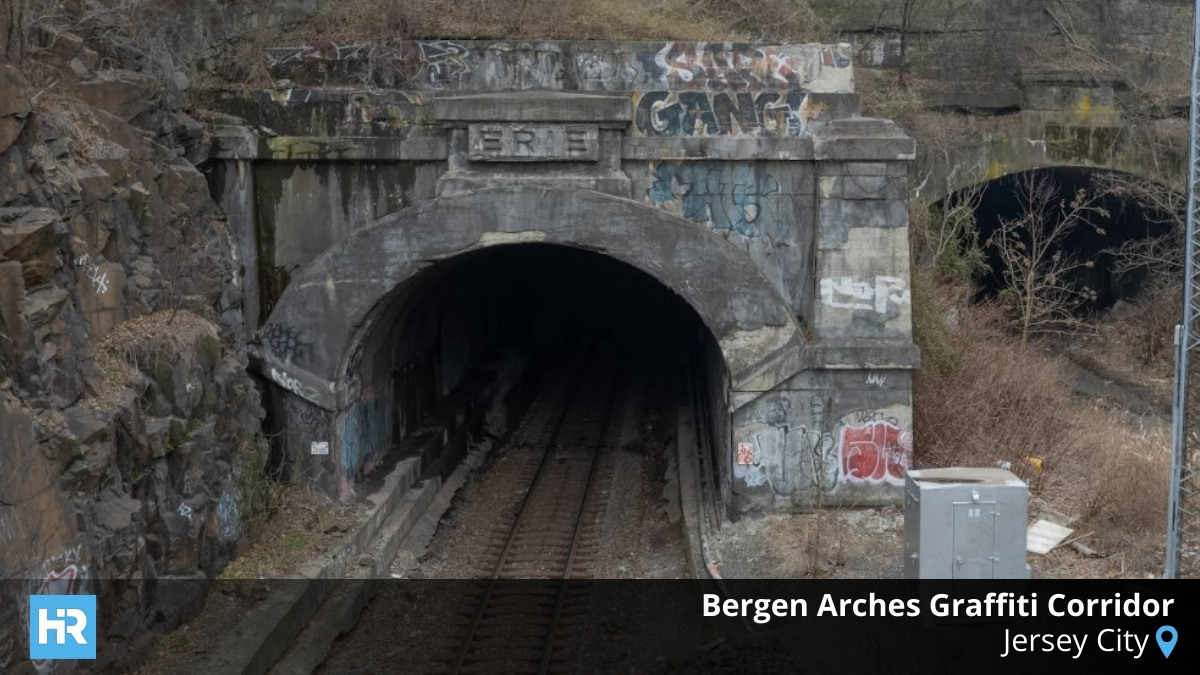
Not all street art is polished or sanctioned. Near the Bergen Arches and along rail corridors, graffiti thrives in its rawest form. These spaces feel temporary and contested — walls layered with names, symbols, and images that might disappear within days.
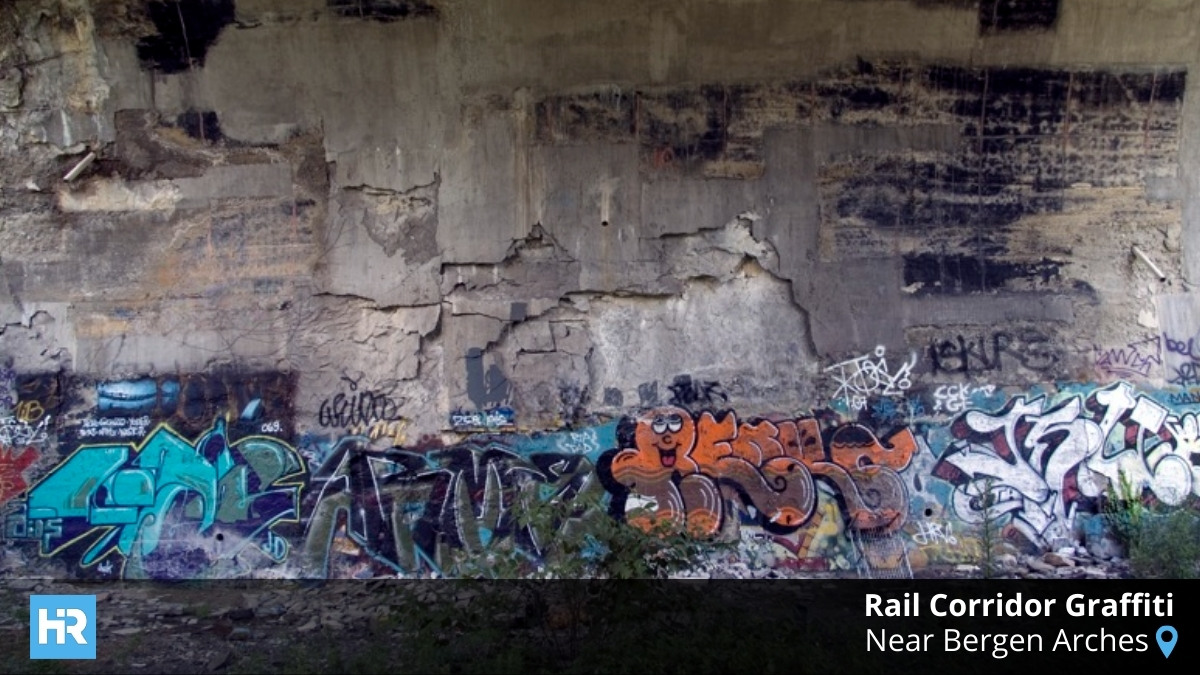
I watched an artist retouch a black-and-white portrait under an overpass, working quickly, glancing over his shoulder between strokes. When I asked him why he painted there, he shrugged and said, “Because it won’t last.” That answer stuck with me.
Graffiti here feels less like decoration and more like dialogue — a response, a challenge, a presence.
Where Street Art Meets Institutions
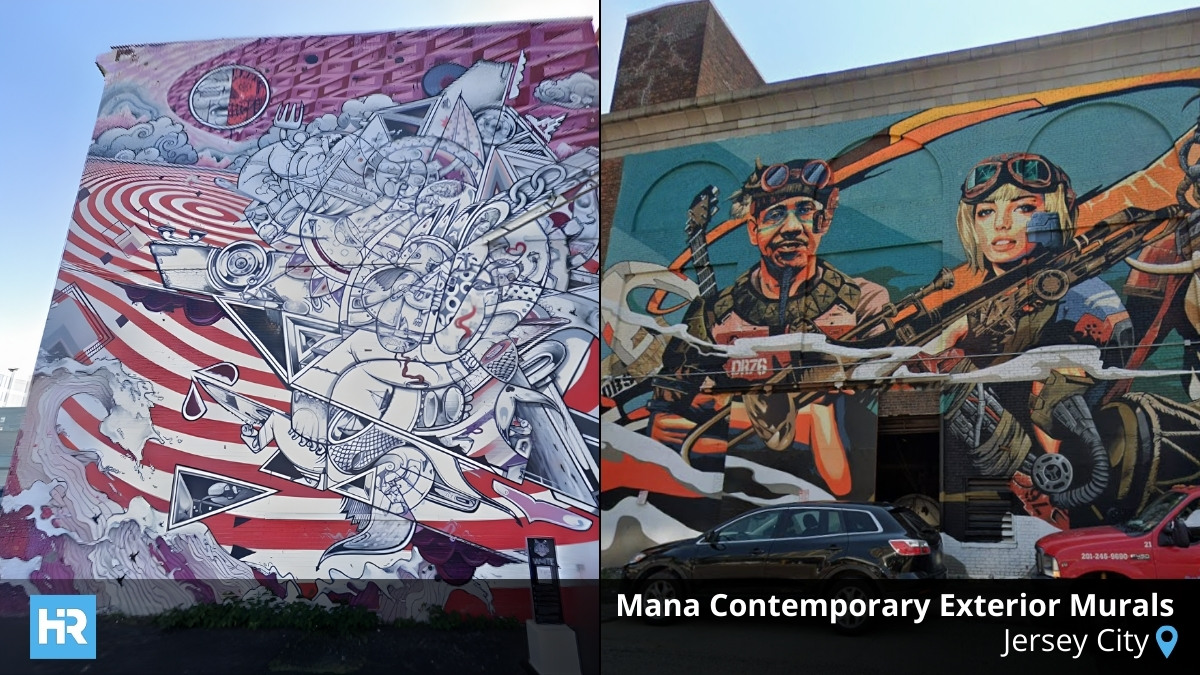
One of the most interesting aspects of Jersey City’s scene is how street art intersects with formal cultural spaces. Places like Mana Contemporary blur the line between gallery and street, hosting large-scale murals on their exterior walls while showcasing fine art inside.
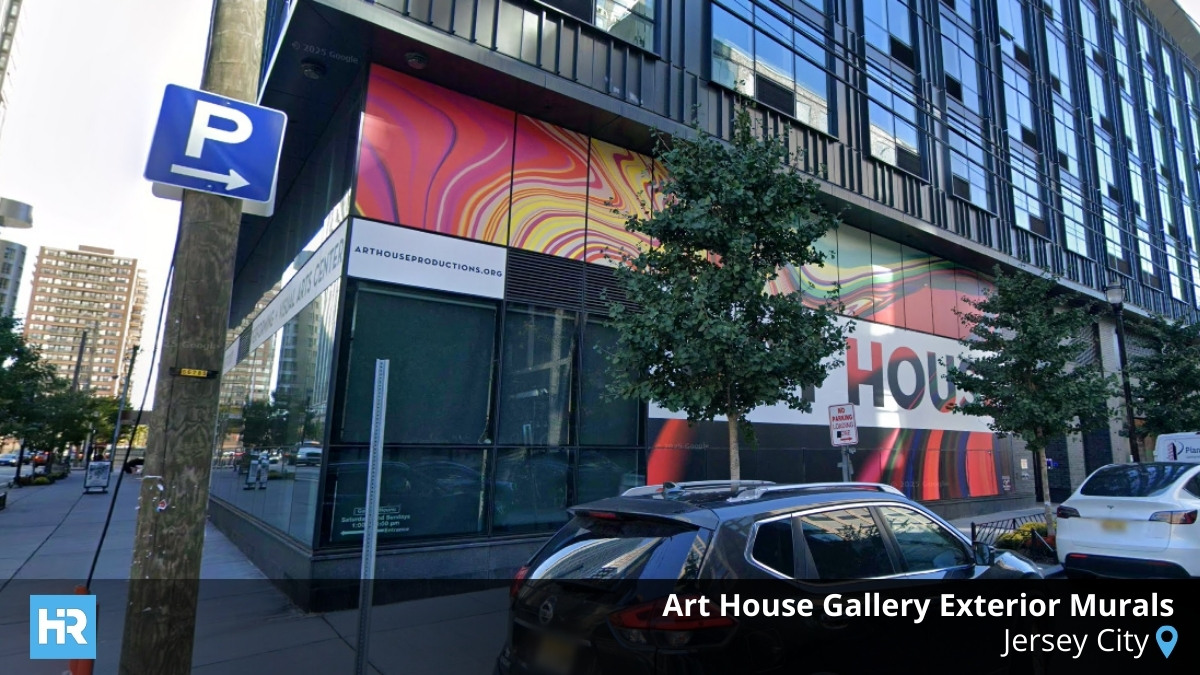
Art House Productions and Art House Gallery also play a role, hosting events where live performance spills onto sidewalks and artists paint in real time. These moments collapse the boundary between audience and creator, turning the street itself into a stage.
The Artists Behind the Walls
As I walked more, names started repeating. Certain styles became familiar. Local artists leave recognizable signatures, even when their work changes or disappears. There’s pride here, but also frustration — several artists mentioned murals being lost to new development.
One painter told me, “We’re always painting on borrowed walls.” That sense of impermanence adds urgency. You’re not just viewing art; you’re witnessing it.
More Than Backdrops
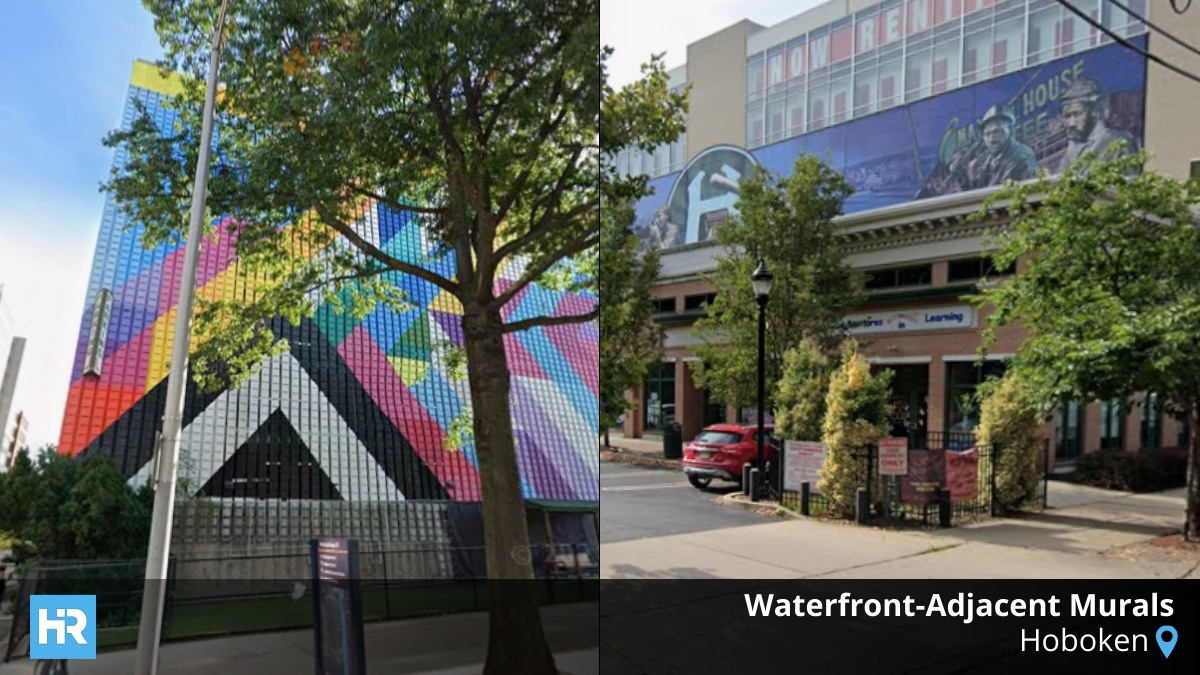
It’s tempting to treat murals as photo opportunities, and you’ll see plenty of people doing just that. But spending time with the walls reveals something deeper. In some neighborhoods, murals honor local activists, memorialize loss, or celebrate cultural identity.
I found one unmarked piece surrounded by candles and notes, clearly maintained by the community. It wasn’t on any map. It wasn’t meant to be discovered by outsiders. Standing there felt like being trusted with a story.
Why It Matters
In cities changing as fast as Jersey City and Hoboken, street art acts as an anchor. It documents who was here, what mattered, and what people were feeling at a specific moment in time.
These murals won’t last forever. That’s not a flaw — it’s the point. The act of painting, of claiming space temporarily, keeps communities visible even as skylines change.
How to Self-Guide Your Own Walk
If you want to explore these murals yourself, start with one known piece — the Bowie mural on Jersey Avenue, a wall in The Heights, or a Hoboken side street — and let curiosity take over.
Walk slowly. Look up. Check alleyways. Go back at different times of day. Morning light reveals details you miss in the afternoon, and early hours are quieter if you want to linger.
Final Thoughts
I started these walks thinking I was chasing color. What I found instead were stories — layered, imperfect, and fleeting. Street art in Jersey City and Hoboken isn’t meant to be consumed quickly. It asks you to slow down, pay attention, and accept that not everything beautiful is permanent.
If you walk long enough, the walls start talking back.