


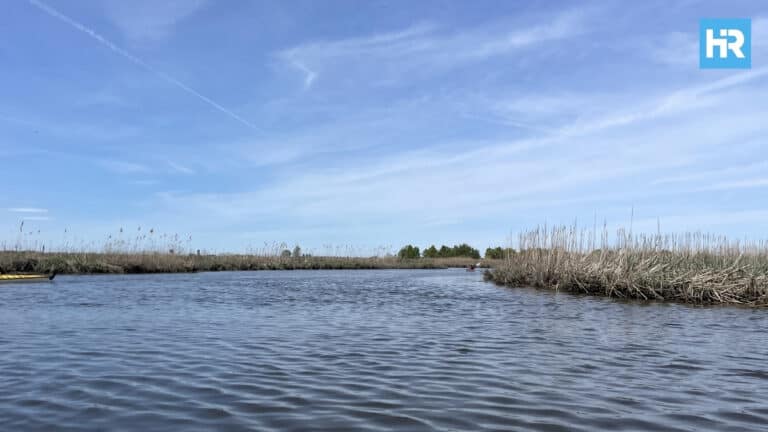
In November, the Trump administration moved forward with policies that restrict which wetlands qualify for protection under federal law. Environmental organizations warned that the changes could place millions of acres of freshwater resources and wildlife habitat at risk. The policy shift follows the Supreme Court’s 2023 decision in Sackett v. EPA, which narrowed the scope of the Clean Water Act.
While federal standards have tightened, New Jersey continues to regulate wetlands through its own legal system. State officials and environmental advocates say this framework preserves protections that would otherwise be lost under the revised federal definition.
- Federal protections for wetlands have been reduced through the implementation of the Supreme Court’s 2023 Sackett v. EPA decision.
- New Jersey is one of only two states, along with Michigan, that chose to regulate wetlands more strictly than required under federal law.
- New Jersey’s appellate court has upheld the state’s 2020 environmental justice law and the rules adopted to enforce it in 2023.
Supreme Court Ruling Redefines the Reach of the Clean Water Act
The Sackett v. EPA decision reinterpreted which waters fall under federal jurisdiction. The Supreme Court ruled that the Clean Water Act applies only to relatively permanent bodies of water and to wetlands that maintain a continuous surface connection to those waters.
The case involved a wetlands area on private property near Priest Lake in Idaho. Although the wetlands were located close to the lake, they were not physically joined by a continuous sheet of surface water. The court determined that this lack of direct surface connection placed the wetlands outside federal protection.
After the ruling, the Trump administration adjusted federal regulations to reflect this interpretation. Environmental groups cautioned that wetlands without visible surface connections, including inland and seasonal wetlands, could lose federal protection as a result.
State Authority Permits New Jersey to Exceed Federal Standards
New Jersey’s wetland protections remain largely intact because the state chose decades ago to exceed federal minimum requirements. Along with Michigan, New Jersey is one of only two states that adopted stricter wetland regulations under Section 404 of the Clean Water Act.
Federal law prevents states from weakening Clean Water Act protections but lets them implement stricter rules. New Jersey exercised this option by establishing its own permitting authority, allowing the state to regulate wetlands even when federal jurisdiction no longer applies.
Christopher Miller, executive director of the Eastern Environmental Law Center, explained that this structure gives New Jersey the ability to maintain oversight independent of federal definitions. In October 2023, the New Jersey Department of Environmental Protection reinforced this position in an advisory stating that for “the vast majority” of waters and wetlands it regulates, the Sackett decision does not limit the department’s authority under state law.
Water Pollution Control Act Forms the Backbone of Wetland Regulation
The foundation of New Jersey’s regulatory system is the state Water Pollution Control Act. The law prohibits the discharge of pollutants, including dredged or fill material, into “waters of the State” without a permit, which includes freshwater wetlands and open state waters.
Under this framework, permits are required for dredged or fill material placed into freshwater wetlands. The state also regulates adjacent transition areas, commonly referred to as buffers, which can extend up to 150 feet from a wetland. These areas are intended to provide wildlife refuge during high water events, support habitat, and filter sediment and stormwater from nearby development.
The act establishes a public policy goal “to restore, enhance and maintain the chemical, physical and biological integrity” of New Jersey’s waters, closely mirroring the language of the Clean Water Act while applying it more broadly.
Wetlands’ Role and Loss Across New Jersey’s Landscape
Wetlands are a defining feature of New Jersey’s environment. State data shows they cover 17 percent of the Garden State and are found along the coast, throughout the Pinelands, and within densely developed suburban corridors between highways and rivers.
Historically, these ecosystems experienced extensive loss. Between the 1780s and the 1980s, approximately 39 percent of New Jersey’s wetlands were drained for agriculture or filled for housing and industrial use.
In response to this decline, the state began formally mapping and regulating coastal wetlands in the early 1970s, producing more than 1,000 official coastal wetland maps. The passage of the Water Pollution Control Act in 1977 established stricter wetland protections, and by the late 1980s, the Freshwater Wetlands Protection Act expanded regulatory oversight beyond coastal areas.
Challenges of Relying Solely on State-Level Protections
Environmental advocates caution that even strong state laws cannot fully replace federal oversight. Water systems move freely across state boundaries through rivers, tributaries, groundwater, and infrastructure.
Pollution originating upstream in areas with weaker protections can still affect downstream states. Water flowing through the Delaware River, for example, can carry contaminants into New Jersey regardless of the state’s regulatory standards. As federal jurisdiction continues to narrow, advocates warn that states may be forced to compensate for gaps in nationwide protection.
Sean Jackson, national campaigns coordinator for Clean Water Action, stated that restoring comprehensive protections would require legislative action by Congress.
Environmental Justice Law Upheld by Appellate Court
New Jersey’s authority to regulate environmental impacts was reinforced by a recent appellate court ruling that upheld the state’s environmental justice law and its implementing regulations. Governor Phil Murphy signed the law in 2020 to prevent additional pollution in low-income communities and communities of color.
A three-judge appellate panel issued a 70-page opinion on Monday rejecting legal challenges from the New Jersey Chapter of The Institute of Scrap Recycling Industries and the construction advocacy group ELEC825. Judges Heidi Currier, Maritza Berdote Byrne, and Jeffrey Jablonski ruled that the regulations adopted by the New Jersey Department of Environmental Protection fall within existing case law and are constitutional.
The law requires regulators to assess the cumulative pollution burden faced by a community before approving new industrial projects. The DEP adopted detailed enforcement rules in 2023 to guide this process.
Responses From Government, Advocates, and Industry
DEP Commissioner Shawn LaTourette described the ruling as a major victory for the department and the communities affected by pollution. He stated that the department would continue implementing the law while working with regulated entities to reduce pollution and improve public health, safety, and environmental outcomes.
Environmental justice advocates pointed to neighborhoods such as the South Ward and Ironbound sections of Newark, where residents have experienced prolonged exposure to toxic emissions.
Business groups expressed concern about the decision. The New Jersey Business & Industry Association warned that the environmental justice rules could discourage industrial investment. The organization stated that although the rules have been in place for more than two years, only two applications have completed the process, citing unclear standards and decision timelines as barriers for businesses.