


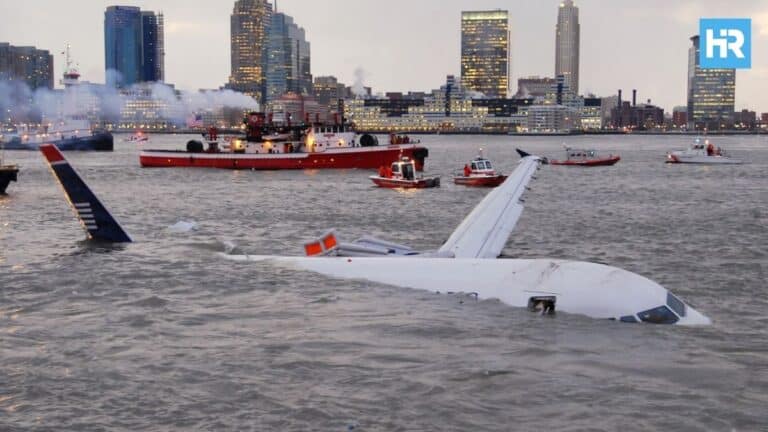
On a frigid January afternoon in 2009, Flight 1549 went from routine takeoff to a split-second fight for survival and ended with an airliner gliding onto the icy Hudson River.
The “Miracle on the Hudson” stunned the world, rewriting what many thought was possible in a worst-case aviation scenario and spotlighting calm, expert decision-making under pressure.
More than 16 years later, it remains a defining moment in modern aviation and its impact still shapes how the industry thinks about training, safety, and crisis response.
Remembering Flight 1549’s Hudson River Landing
The answer to when did the plane land in the Hudson is January 15, 2009. On that date, US Airways Flight 1549 experienced the unthinkable: dual engine failure minutes after takeoff from New York’s LaGuardia Airport that ended with a plane in Hudson river. This event is commonly referred to as the Hudson River plane crash.
Captain Chesley “Sully” Sullenberger made the split-second decision to land the plane on the Hudson River, a maneuver fraught with risk but ultimately the only option to save the lives aboard.
Miraculously, all 155 passengers and crew survived the splashdown, thanks in part to Sully’s adept piloting and the rapid response of nearby boats and emergency responders.
The rescue operation was a show of human solidarity and efficiency. Ferry operators, Coast Guard vessels, and emergency teams converged on the scene, braving the frigid waters to ensure every soul was safely brought to shore.
Amid the chaos, passengers stood on the wings of the sinking plane, a vivid tableau of vulnerability and hope.
This seamless coordination of efforts underscored the event’s miraculous nature, turning a potential tragedy into a story of survival and heroism that captivated the world.
Captain Sully: Hero of the Hudson
At the heart of the Miracle on Hudson stood Captain Chesley “Sully” Sullenberger, whose calm demeanor and expert piloting instantly catapulted him into the annals of heroes.
A veteran aviator with over 40 years of experience, Sully’s decisive action and mastery under pressure were pivotal in averting what could have been a catastrophic tragedy.
His remarkable skill in gliding the aircraft onto the water’s surface showcased not just his profound expertise but also his courage. In the aftermath, Sully became a symbol of hope and resilience, embodying the best of human potential in the face of dire adversity.
Aviation Safety Reforms Post-Hudson River Incident
In the years following the Miracle on the Hudson, the aviation industry embarked on a journey of introspection and reform.
Captain Sully’s heroic water landing underscored the critical need for enhanced safety protocols and sparked significant changes in aviation regulations and pilot training programs.
By 2024, these reforms have become deeply embedded in the fabric of aviation safety, leading to more rigorous bird strike awareness and prevention methodologies, as well as advanced simulator training for pilots, preparing them for rare but potentially catastrophic scenarios.
The incident also activated improvements in engine durability and stricter inspection routines, ensuring that aircraft are better equipped to withstand bird strikes.
Furthermore, the role of crew resource management (CRM) has been magnified, promoting greater communication and teamwork among flight crews—a testament to the seamless coordination between Captain Sully and First Officer Jeffrey Skiles during the crisis.
These enhancements reflect a broader commitment within the industry to learn from past incidents and proactively safeguard against future emergencies. Not every captain can land a plane in the Hudson River, and protocols are required to avoid these incidents.
Survivor Stories: 16 Years After the Hudson Miracle
Sixteen years after the Miracle on the Hudson captivated the world, the stories of those who lived through it continue to resonate.
These real survivor tales not only echo the harrowing moments of survival but also reveal the profound, lasting impact the event has had on their lives.
- Vallie Collins’ Harrowing Texts: As CNN reports, Vallie Collins experienced sheer terror as Flight 1549 plummeted towards the Hudson. In those dire moments, she texted her husband, believing they might be her last words. This poignant testament to the human spirit highlights the emotional turmoil of facing one’s mortality head-on. Moments after her texts, the plane lands in the Hudson River, and the rest is history.
- Tribute to Heroism on the 16th Anniversary: On January 15, 2025, communities marked the 16th anniversary of Flight 1549’s emergency landing on the Hudson River, honoring the skill and courage of Captain Chesley “Sully” Sullenberger, his crew, and first responders. The remembrance highlighted how calm leadership saved all 155 people, turning a near disaster into a lasting story of resilience and hope.
- Survivors Relive the Experience: On the 16th anniversary of the Miracle on the Hudson, aviation enthusiasts and visitors went to the Sullenberger Aviation Museum on Wednesday. Crane (a survivor) recalled the plane shaking violently, the order to “brace for impact,” and the eerie silence as the engines shut down, with whispers of birds spreading through the cabin.
Reflecting on 16 Years Since the Hudson River Miracle
The story of the Miracle on the Hudson doesn’t just belong to history books; it continues to ripple through our collective consciousness, a beacon of human tenacity and ingenuity.
It’s not merely a tale of survival against the odds but a narrative rich with lessons in leadership, teamwork, and the unfaltering spirit of humanity.
This event’s legacy goes beyond the waters of the Hudson – it serves as a lighthouse guiding the future of aviation safety and emergency preparedness.
By reflecting on this remarkable moment, we don’t just commemorate an incident; we celebrate the enduring power of hope and the invaluable insights gained from adversity.