

Prolonged freezing temperatures have turned large portions of the Hudson River into a hazardous mix of drifting ice and hardened formations that threaten commuter ferry routes connecting New Jersey and New York. In response, the U.S. Coast Guard has launched a sustained, around-the-clock icebreaking operation to keep waterways open for passenger vessels, commercial traffic, and regional transportation.
The mission is coordinated from the Coast Guard’s base in Bayonne, New Jersey, a facility that has served for decades as a hub for maritime safety operations in New York Harbor and along the Hudson River system. From this location, crews can quickly deploy into the harbor and move north along the river as conditions require.
Key Takeaways:
- The Coast Guard is running daily icebreaking from New York Harbor to Albany using three Bayonne-based vessels led by the 65-foot Cutter Hawser.
- Freezing temperatures have already disrupted Hudson River ferries, and this operation is keeping routes open for thousands of daily New Jersey–Manhattan commuters.
- Icebreaking will continue every day for as long as freezing conditions persist.
Cutter Hawser Leads a Three-Vessel Fleet from Bayonne
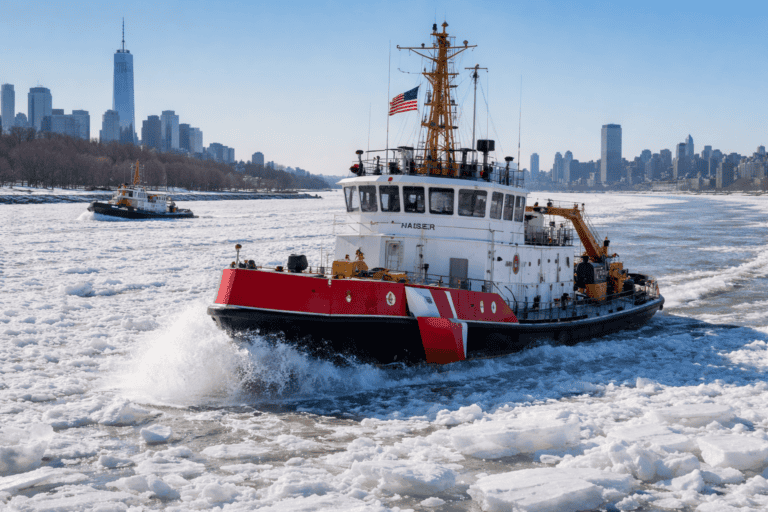
At the center of the operation is the Coast Guard Cutter Hawser, a 65-foot tugboat specifically built for icebreaking duties. Built differently from typical patrol boats, Hawser can drive with enough force to fracture heavy ice while remaining agile in tight stretches of the river.
Each day, Hawser operates alongside two additional Bayonne-based tugboats, creating a three-vessel fleet that works in multiple parts of the river at once. This strategy lets crews break ice in one location while protecting previously cleared channels from being blocked again.
Daily Operations Stretch from New York Harbor to Albany
Every morning, the three vessels depart Bayonne and travel the full navigable length of the Hudson River system. Their work begins in New York Harbor and extends as far north as Albany, covering the entire corridor used by ferries and other vessels.
Crews focus on breaking up surface ice before it consolidates into larger barriers that could strand boats or force service cancellations. The operation is continuous, meaning vessels clear ice even in areas that have not yet experienced full blockages.
Recent cold conditions have already disrupted some ferry commutes along the Hudson, making the Coast Guard’s presence essential for thousands of daily riders who depend on water transportation between New Jersey and Manhattan.
Dangerous Conditions for Coast Guard Crews
The Bayonne-based operation requires personnel to work in extreme winter conditions, including freezing air temperatures, icy decks, and unpredictable water conditions. Ice formations can move without warning, creating risks for both vessels and crew members.
The mission is logistically complex, requiring constant coordination among the three tugboats, monitoring of changing ice patterns, and careful navigation through partially frozen waterways. Despite these challenges, crews continue to operate daily to keep one of the region’s most important transportation corridors open.
Importance for Hudson County Commuters and Commerce
For residents of Hudson County, the icebreaking effort directly affects daily travel and the local economy. Many commuters rely on Hudson River ferries as their primary connection to Manhattan, making uninterrupted service critical for employment, travel, and business activity.
When ice blocks ferry routes, transportation options become limited, increasing pressure on roads, tunnels, and trains. Keeping the river navigable supports both individual commuters and the regional movement of people and goods.
The Coast Guard’s longstanding presence in Bayonne places the operation at the center of Hudson County’s maritime infrastructure and reinforces the county’s role in regional transportation networks.
Specialized Equipment for Winter Navigation
The Cutter Hawser is purpose-built for winter navigation, combining the power needed to break through ice with the maneuverability required in confined waterways where larger ships cannot operate effectively. At 65 feet, the vessel can reach tighter stretches of the Hudson while still exerting enough force to fracture solid ice formations.
The two supporting tugboats strengthen the overall operation, letting crews work in several locations simultaneously. As one vessel maintains open passages, the others advance upriver to break fresh ice and prevent closures from forming again downstream.
Winter Weather Creates Ongoing Navigation Risks
Sustained freezing temperatures have created hazardous conditions throughout the Hudson River system, with ice forming rapidly across large sections of water. These conditions threaten ferries and smaller vessels, which can become trapped or damaged.
Federal maritime safety rules require major waterways to remain open for commercial and passenger traffic, making Coast Guard icebreaking a legal obligation. Ferry operators depend on cleared routes to maintain published schedules and protect passenger safety.
Icebreaking Will Continue as Long as Conditions Persist
The Coast Guard will maintain daily icebreaking operations for the duration of the cold spell. The length and intensity of the mission depend entirely on weather conditions, with crews prepared to extend their efforts if freezing temperatures continue.
As long as ice remains a threat to navigation, the three-vessel fleet will stay active along the Hudson River, working to prevent service disruptions and maintain safe passage for ferries and other vessels.