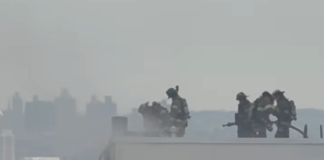


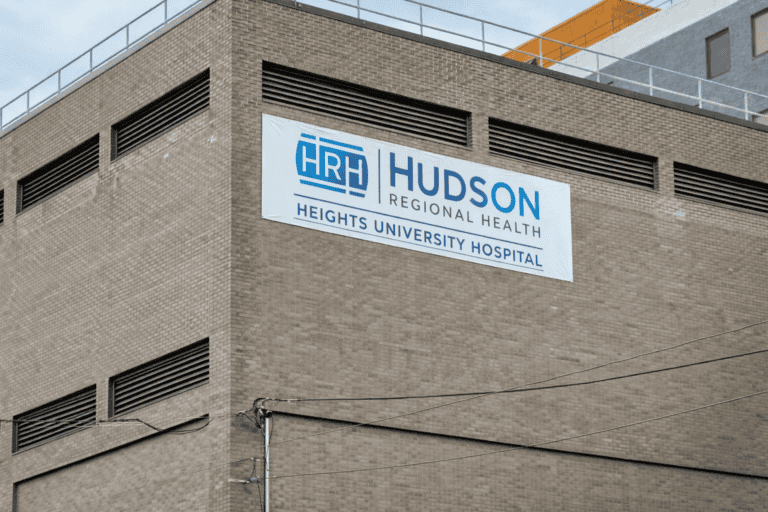
The emergency department at Heights University Hospital, located at 176 Palisade Avenue in Jersey City, will close permanently at 7:30 p.m. on Saturday, March 14, 2026, ending all medical services at the site.
The emergency room is the final operating unit of the hospital. Other services closed in late 2025 after a change in ownership and continuing financial problems. Once the emergency department stops operating, residents will need to seek treatment at other hospitals.
Hospital leadership states the closure is tied to ongoing financial losses and the lack of additional state funding. Community leaders and healthcare workers warn that the loss of emergency care will affect residents across Jersey City and surrounding communities.
- Heights University Hospital’s emergency room in Jersey City will shut down at 7:30 p.m. on March 14, ending all services at the facility.
- The hospital lost $74 million last year, and the ER alone was projected to lose $30 million in 2026.
- Jersey City leaders and the HPAE union are asking New Jersey officials to intervene and stop the closure.
A Hospital With Roots Dating to 1872
The facility began operating in 1872 as Christ Hospital and served as a central healthcare provider in the Jersey City Heights neighborhood for generations.
Operations changed when Hudson Regional Health (HRH) began running the hospital in November 2024. Ownership of the property transferred to Hudson Regional Health in April 2025 through bankruptcy proceedings involving CarePoint Health.
The acquisition included Christ Hospital in Jersey City and Hoboken University Medical Center. Hudson Regional Health had previously owned the Bayonne Medical Center property since July 2020 and later received approval from the state to assume full ownership and operation of that facility.
Despite the acquisition, the hospital soon faced operational and financial problems.
Service Suspensions and Funding Request in 2025
In September 2025, Hudson Regional Health announced that non-essential services would be suspended at the hospital.
The New Jersey Department of Health informed the operator that a hospital cannot close without working with the state and other entities on a formal plan to wind down services. State officials warned that abruptly closing a hospital would violate licensing responsibilities and could result in fines and regulatory action.
In October 2025, hospital leadership stated that additional state funding was necessary to continue operations. The operator requested $25 million from the state.
The state provided $2 million, which the hospital’s CEO described as a stopgap measure.
During the same period, the Health Professionals and Allied Employees (HPAE) union, which represents many hospital employees, criticized how the situation was handled. The union said healthcare workers were verbally informed that departments were closing or that they no longer needed to report to work without written notice detailing separation dates or severance amounts.
Union leaders also stated that less than six months earlier, Hudson Regional Health had committed in bankruptcy court to having sufficient funds to acquire and operate the CarePoint hospital system, including Christ Hospital.
Emergency Department Became the Final Operating Service
As inpatient services and other departments shut down, the emergency department remained the only operating section of the hospital.
On February 26, 2026, Hudson Regional Health announced plans to close the emergency department on February 28. On February 27 at approximately 4 p.m., the operator announced that the department would remain open for two additional weeks, extending the final closure date to March 14.
The New Jersey Department of Health negotiated with the hospital to keep the emergency department operating during that two-week period.
The emergency department will close at 7:30 p.m. on Saturday, March 14.
As part of the arrangement with the state, an ambulance will be stationed outside the hospital for two weeks to transport patients needing emergency treatment to other hospitals.
Primary care services will also be expanded at nearby medical offices located at 142 Palisade Avenue, according to Vijay Chaudhuri, Vice President of External Affairs and Community Relations for Hudson Regional Health.
Financial Losses Cited by Hospital Leadership
Hudson Regional Health states that financial losses led to the decision to close the emergency department.
According to Chaudhuri, HRH and its chairman, Yan Moshe, have invested more than $100 million into Heights University Hospital since taking over operations. These investments included rebuilding service lines, negotiating labor agreements, recruiting physicians, and other operational efforts.
Despite those efforts, the hospital recorded a $74 million loss during the previous year.
Hudson Regional Health projected that keeping the emergency department open would result in $30 million in losses in 2026. The organization stated that continuing those losses would affect the financial stability of its other hospitals in Bayonne, Hoboken, and Secaucus.
The hospital attributed the losses to several factors, including Medicaid funding reductions linked to the One Big Beautiful Bill, reductions in state Charity Care funding by roughly half, a growing number of uninsured patients, and other unexpected circumstances.
Redevelopment Proposal and Zoning Conflict
Plans for the hospital property surfaced in October 2025.
The proposal included two towers containing 2,200 residential units and 1,150 parking spaces spread across 10-story buildings.
The future of the hospital site became a topic during the Fall 2025 Jersey City mayoral election.
In December 2025, the Jersey City Council approved an ordinance limiting how the property could be rezoned. City officials stated that the change was intended to preserve the district’s original purpose of supporting hospitals, acute care facilities, and related medical uses.
The dispute continued in February 2026, when the hospital owners filed a lawsuit against Jersey City. The lawsuit argues that the council’s zoning decision violates the city’s Master Plan.
Local Leaders Call for State Intervention
The approaching closure drew responses from city and state officials.
Jersey City Mayor James Solomon, Ward D Councilmember Jake Ephros, and the Health Professionals and Allied Employees union supported an emergency resolution introduced by Ephros to the Jersey City Council condemning the closure.
The resolution requests that New Jersey Attorney General Jennifer Davenport and Governor Mikie Sherrill seek an injunction to stop the shutdown of the hospital.
The resolution also calls for the hospital to be placed into emergency receivership, requests a Community Health Needs Assessment funded by Hudson Regional Health, and criticizes the operator’s management decisions.
City officials state that Christ Hospital is one of only two hospitals serving Jersey City’s population of more than 300,000 residents.
Healthcare advocates state that a population of that size requires at least 700 hospital beds, while Jersey City Medical Center has no more than 350 beds.
Officials warn that losing Christ Hospital could extend emergency travel times and reduce healthcare access in the Heights neighborhood and across Hudson County.
Concerns Raised by State and Labor Leaders
New Jersey State Senator Angela McKnight, whose district includes the hospital, said suspending emergency department operations will affect residents in Jersey City and surrounding communities.
The senator stated that the closure announcement initially came only three days before the emergency department was scheduled to stop operating. She said the short timeline left patients, families, and healthcare workers little opportunity to prepare.
McKnight also stated that Heights University Hospital serves residents who face barriers to care, including seniors and uninsured or underinsured individuals.
The Health Professionals and Allied Employees union called on the Department of Health, the Governor, and the Attorney General to intervene to prevent the hospital from shutting down. The organization stated that its members and their patients require immediate action from state officials.