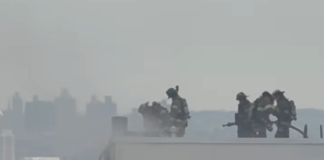


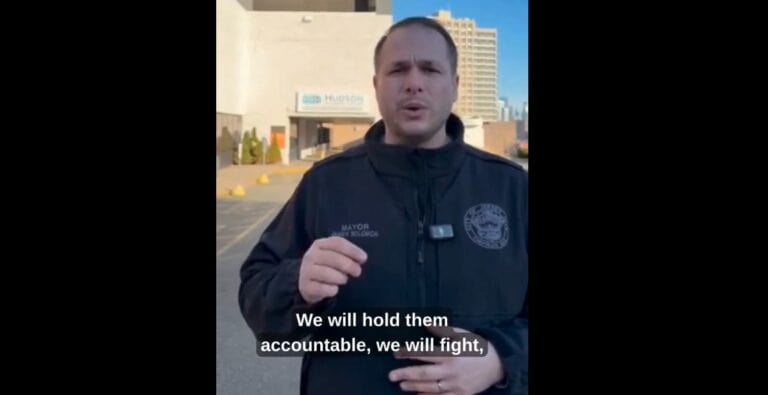
Heights University Hospital in Jersey City closed permanently on March 14, 2026, after a final legal effort to keep the facility open failed. The hospital, located at 176 Palisade Avenue, shut down at 7:30 PM when a judge declined to grant an emergency request filed by the city.
With the facility closed, Jersey City—home to nearly 300,000 residents—now has only one hospital emergency room.
- Heights University Hospital at 176 Palisade Avenue in Jersey City closed permanently on March 14, 2026 at 7:30 PM after a judge rejected a last-minute injunction filed by the city.
- The shutdown leaves Jersey City, a city of nearly 300,000 residents, with just one hospital emergency room.
- Demonstrations outside the hospital on the day of the closure resulted in two arrests, while state and local officials continue examining what led to the shutdown.
Financial Issues And Ownership Changes Led Up To The Closure
Hudson Regional Health assumed management of the hospital in November 2024. The facility was formerly known as Christ Hospital before being renamed Heights University Hospital.
Ownership of the property transferred to Hudson Regional Health in April 2025 during CarePoint Health’s bankruptcy proceedings, which also included Hoboken University Medical Center.
Financial problems continued during the following months. In September 2025, Hudson Regional Health announced it would suspend non-essential services at the hospital.
The New Jersey Department of Health stated at the time that the hospital could not shut down without following the required process, which included working with the state and other organizations on a formal plan to wind down operations.
In October 2025, Hudson Regional Health said the hospital would have to close if it did not receive additional funding. Hospital operators requested $25 million from the state.
The state provided $2 million, which the hospital’s CEO described as a “stopgap measure.”
State officials also reported that the Department of Health had provided $10 million in 2024 to keep the hospital operating while CarePoint Health was going through bankruptcy.
Regulators later reported that Heights University Hospital owes more than $128,000 in fines for shutting down services without proper approval from the state.
Emergency Court Request Attempted To Prevent The Shutdown
On the morning of March 14, the Jersey City Corporation Counsel filed an emergency injunction intended to stop the hospital from closing. City officials argued the action would preserve access to healthcare services, while questions about whether Hudson Regional Health (HRH) followed required procedures were reviewed.
The judge declined to issue the injunction on Saturday. With no court order blocking the closure, Hudson Regional Health continued with plans to shut down the hospital later that evening.
Jersey City Mayor James Solomon criticized the hospital’s handling of the closure and the limits of penalties connected to hospital shutdown rules.
“At every stop on the way to today, HRH failed to follow basic rules required by state law to close a hospital. Unfortunately, the allowed penalties are so small as to count as the cost of doing business. Further, in recent days, HRH sought to negotiate a deal to keep the hospital open long-term if the City agreed to fast-track the process to begin a luxury residential development project on the site.”
Later that night, Solomon posted an update confirming the hospital had closed.
“Christ Hospital has closed. We fought, and we will keep fighting.”
Christ Hospital has closed. We fought, and we will keep fighting.
I directed our Corporation Counsel to file a motion to keep the doors open. The judge ruled against us. But I am committed to using every tool available to get healthcare back to the Heights — including eminent… pic.twitter.com/Jf2O8wJyBA
— James Solomon (@SolomonforJC) March 14, 2026
Redevelopment Plans For The Hospital Site
Plans to redevelop the hospital property surfaced during the financial crisis.
A proposal released in October 2025 outlined a residential project that would include:
- Two towers
- 2,200 residential units
- 1,150 parking spaces
- Multiple 10-story buildings
The hospital itself is 150 years old and sits on Palisade Avenue, overlooking views of the Manhattan skyline.
Hudson Regional Health spokesperson Vijay Chaudhuri said the redevelopment could support construction of a new healthcare facility at the site. The proposal described a state-of-the-art facility funded through redevelopment that could recruit physicians, expand specialty services, and attract patients who currently seek care outside Jersey City.
Jersey City Zoning Changes Trigger Legal Dispute
City officials responded to redevelopment proposals by changing zoning rules tied to the hospital property.
In December 2025, the Jersey City Council approved an ordinance restricting how the site could be rezoned. City officials said the goal was to preserve the district’s purpose of supporting hospitals, acute care facilities, and related medical uses.
The dispute continued in February 2026, when the hospital’s owners filed a lawsuit against Jersey City. The legal complaint argues that the council’s zoning changes violate the city’s Master Plan.
Protest Outside The Hospital Results In Arrests
Demonstrations took place outside the hospital on March 14, the day it closed.
A sit-in protest developed into a “die-in” demonstration outside the facility. Protesters lay on the ground while singing protest songs and chanting. Chalk outlines were drawn around the demonstrators to resemble crime scene markings, representing people they believe could lose access to care without the hospital.
During the protest, Jersey City Police arrested two people:
- Isaac Jimenez, a member of the North New Jersey Democratic Socialists of America and Hudson County DSA
- Carissa Cunningham, a DSA member and aide to Ward B Councilman Joel Brooks
Protesters first attempted to enter the hospital through the Emergency Department, but the doors were locked. Later, demonstrators located an open door near a loading dock and entered the building through that entrance.
Police responded inside the hospital and arrested Jimenez and Cunningham for trespassing. Both individuals were released later that evening.
Ward D Councilman Jake Ephros later posted that he was concerned about the circumstances surrounding the arrests and confirmed that both protesters had been released.
View this post on Instagram
State And Local Officials Raise Concerns About Healthcare Access
The closure led to responses from several lawmakers and healthcare representatives.
During a legislative hearing, State Sen. Brian Stack (D-Hudson) asked the acting state health commissioner what actions would follow the hospital’s closure.
State Sen. Raj Mukherji (D-Hudson) proposed that the state designate the hospital as a public acute care facility, similar to University Hospital in Newark, and provide state funding to keep it operating.
Mukherji also said that although two acute care hospitals are located within a few miles of Heights University Hospital, traffic congestion in the area can delay emergency travel times.
Union representatives also spoke about hospital capacity. Debbie White, president of the Health Professionals and Allied Employees union, said the union represented most of the roughly 50 workers still employed at the hospital shortly before it closed.
White pointed out that Newark has three hospitals for a population only slightly larger than Jersey City’s, and said the hospital beds that were lost with the closure are needed in Jersey City.
State Officials Review Enforcement And Potential Legislation
Officials from the administration of Governor Mikie Sherrill said the state is reviewing the closure process.
Maggie Garbarino, a spokesperson for the governor, said hospital operators had bypassed statutory and regulatory requirements during the closure process. She said the state plans to collect fines owed by the hospital and that the governor will pursue legislation giving the state stronger authority to hold healthcare facilities accountable to the communities they serve.
Acting Health Commissioner Raynard Washington also told lawmakers that the Department of Health has enforcement tools available and is prepared to use them if additional action becomes necessary involving the hospital’s operators.
Medical Services Planned Nearby After The Hospital Closed
Prior to the shutdown, Heights University Hospital announced plans to work with other healthcare providers.
On March 12, Hudson Regional Health announced a partnership with Alliance Community Healthcare (ACHI), a Federally Qualified Health Center (FQHC). The partnership will bring healthcare services to residents through space at the Heights Medical Office Building at 142 Palisade Avenue.
The clinic will expand access to primary and preventive care for residents of the Heights community.
After hospital services stopped, Hudson Regional Health placed an ambulance outside the Emergency Department for two weeks to transport patients to nearby hospitals.
Healthcare services will also continue through the HRH Foundation Mobile Health Unit, which will operate with community organizations across Jersey City.
Hudson Regional Health operates hospitals in Bayonne, Hoboken, and Secaucus and said it will continue working with public and private partners to support healthcare services within its network.
County Officials Launch Investigation Into The Hospital Closure
The Hudson County Board of Commissioners voted during a meeting on March 12 to begin an investigation into the hospital’s operations and closure.
The board created an investigatory committee tasked with reviewing how Jersey City reached this point after Hudson Regional Health was expected to address financial problems left by CarePoint Health.
The committee will include specialists in healthcare, finance, law, and clinical governance. Members will have the authority to request documents and financial records, review hospital reports and audits, and interview staff and other stakeholders.
The committee must deliver a written report within 30 days detailing its findings and recommending corrective actions.