Home Blog Page 27

Tiffanie Fisher Raises Highest Amount in Q2 Among Hoboken Mayoral Candidates

On July 21, 2025, Hoboken 2nd Ward Councilwoman Tiffanie Fisher filed her second-quarter campaign finance report with the New Jersey Election Law Enforcement Commission (NJ ELEC), disclosing that she raised a total of $90,609.46 between April 1 and June 30. This amount includes a $10,000 loan she made to her campaign during the same period. Fisher’s report was filed six days after the official deadline.

According to the filing, Fisher’s campaign spent $25,281.73 in the second quarter and reported $103,963.42 in cash on hand at the end of June. She was the top fundraiser among the five declared mayoral candidates during this period. However, in terms of cash on hand, she had less than the other three City Council members running for mayor. Third Ward Councilman Mike Russo reported the most cash on hand, while Councilwoman-at-Large Emily Jabbour and Fourth Ward Councilman Ruben Ramos each reported over $100,000.

Dini Ajmani, a former U.S. Treasury official and the fifth candidate in the race, loaned her campaign $200,000 during the first quarter of 2025.

Key Takeaways
  • Tiffanie Fisher raised over $80,000 in Q2, the highest among Hoboken mayoral candidates, with 87% of contributions from local residents.
  • Her campaign rejects outside influence, focusing instead on grassroots support, accountability, and resident-first development.
  • Despite a strong fundraising quarter, Fisher has the lowest cash on hand among top contenders but insists her campaign is “a movement to win.”

244 Donations Out of 280 Came from Hoboken Residents

Fisher’s campaign reported 280 individual contributions in the second quarter of 2025. Of those, 244 came from Hoboken residents. The report included specific donor information for several high-value contributions. Retired resident Stephen Dunn contributed $5,500. David Fisher, her father, contributed $5,000. Audra Fisher, her sister, gave $2,300. John Bucci, founder of Steeprock Capital, donated $2,500. John Graham, founder of Foundation Risk Partners, contributed $1,000.

Additional contributions included $5,500 each from Eric Helenek, founder of High Trail Capital; Hoboken resident Lauren Hoelzer; and Sea Girt resident Sarah-Marie Martin. Toni Tomarazzo, a founding board member of the Hoboken Community Center, gave $1,500.

Campaign Expenses Total in Q2

Fisher’s campaign expenses in Q2 2025 totaled $25,281.73. Payments included $12,150 to campaign manager Al Benninghoff and $10,395 to Publitics, a media consulting firm based in Lambertville, New Jersey. These two payments represented the majority of the campaign’s spending for the quarter.

Fisher has personally loaned a total of $40,000 to her campaign to date, including the $10,000 loan made during this quarter.

Hoboken Mayoral and Council Elections

The Hoboken mayoral election, a non-partisan race, is scheduled for November 4, 2025. In addition to the mayoral contest, voters will select candidates for three council-at-large seats and the 6th Ward council seat. All four City Council members currently running for mayor—Tiffanie Fisher, Mike Russo, Emily Jabbour, and Ruben Ramos—are participating in the election, along with Dini Ajmani.

Fisher said that her campaign does not accept money from developers or large outside donors and that it is primarily supported by local residents. She has stated that she has sent over 400 email newsletters to constituents during her time on the Hoboken City Council and plans to bring the same level of communication to the mayor’s office if elected.

Social Casino Features: Bringing Community to NJ iGaming

Social Casino Features

Not long ago, online gambling was mostly a solitary activity: one player, one screen, one silent spin. But in the evolving world of NJ iGaming, that model is quickly becoming outdated. New Jersey isn’t just driving record-breaking revenue, it’s quietly reshaping the digital gambling experience through something unexpected: social connection.

Today’s top platforms are folding social casino features directly into the core of their design. We’re talking about live tournament chatrooms, shared leaderboards, and peer-to-peer poker games that feel more like group hangouts than isolated bets. These aren’t side perks, they’re becoming the main attraction.

This shift signals more than just better UX. It points to a deeper cultural change: players want to engage, connect, and compete in spaces that feel lively, not lonely. As the social casino model takes hold, New Jersey is setting the pace, and offering a glimpse of where the future of online gambling might be headed.

What are Social Casinos, Exactly?

They’re not quite casinos. Not in the traditional, chips-on-felt, cigarette-in-hand sense. But social casinos have mastered the illusion, offering the same flashing lights, spinning reels, and blackjack tables you’d find in Atlantic City. The catch? You’re not betting dollars. You’re playing with virtual coins or sweepstakes tokens. Some are handed out freely each day. Others… well, they cost you, just not in the way casinos usually do.

On the surface, it sounds harmless. A free-to-play casino where nobody’s losing rent money. But these platforms don’t survive on simplicity. They thrive on engagement. And that’s where gamification in iGaming takes over. Every spin comes with XP. Every challenge completed unlocks a new tier. Players climb leaderboards, rack up achievements, and earn streak bonuses. It’s gambling, sure, but dressed up in the mechanics of mobile games we’ve been conditioned to love.

But here’s where things get really sticky, in a good way, and sometimes not. Social casinos are deeply social. They’re built around community gaming features: chatrooms buzzing during live tournaments, team-based leaderboards, and even digital “clubs” where players join forces. You’re not alone in front of a screen, you’re in a crowd. Even if you’re still in your sweatpants at 2 a.m.

That sense of belonging is part of the magic. But it’s also part of the risk. These games are sticky not just because they’re fun—but because they’re relational. You come back for the rush, sure—but you also come back for your people. And with real-money purchases always just a tap away, some critics say social casinos blur the line between harmless play and the habits that land people in trouble.

Still, for many across New Jersey and beyond, social casinos hit the right balance. No high-stakes pressure, no wallet drain, just a moment of escape. Log in, chat a little, spin a little, win something virtual and feel something real. And maybe that’s the future of iGaming: not colder, not riskier, but a little more human.

NJ iGaming Hits Record Highs: with a Social Twist

There’s a new kind of energy pulsing through the world of New Jersey online gambling, and it’s not just about the money. Yes, the figures are wild. But underneath the surface is a deeper story about how digital casino culture is evolving, blending entertainment, technology, and community in ways that feel more like Twitch than traditional slots.

If you thought this was just about placing bets, think again. What’s happening across online casinos in New Jersey is reshaping how people play, and why they keep coming back.

The Revenue Speaks, But So Does the Behavior

Let’s start with the numbers. In May 2025, New Jersey pulled in a record $246.8 million from internet gaming, up 28.5% from the same month last year. That surge pushed total gaming revenue statewide to $614.7 million.

Zoom out, and the bigger picture is even more telling: $2.39 billion in iGaming revenue throughout 2024, up 24.1%, according to the American Gaming Association. The takeaway? This isn’t just growth—it’s acceleration, fueled not only by gambling veterans but by newcomers pulled in by a wave of online casino trends NJ had barely seen just two years ago.

It’s Social Now: And That Changes Everything

What used to be a solo hobby has turned communal. Players aren’t just spinning reels, they’re joining tournaments, chatting live with dealers, and climbing leaderboards with friends. This surge in community gaming features has helped turn digital casinos into a sort of entertainment hybrid: part-game, part-social network.

Popular platforms are leaning into this space, even without real-money betting. Meanwhile, real-money platforms are embedding features borrowed from mobile gaming and social apps to create a stickier, more dynamic experience. It’s not just playing, it’s participating.

Mobile-First, Friction-Free, and Always On

Much of the success of online casinos in New Jersey can be traced to their design evolution. Today’s apps are fast, intuitive, and built for swiping, not clicking. Session lengths are rising, particularly among younger users, thanks to mobile-optimized games that blend entertainment with seamless micro-interactions.

The mobile shift isn’t just about convenience. It’s about immersion. Whether you’re at the train station or in bed, the casino is now in your pocket, and it talks like your favorite game app, not like a cold, corporate platform. That approachability is winning over new audiences fast.

Social = Strategy, Not Just Style

Underneath all this flash is a hard business truth: gamification in iGaming works. Leaderboards aren’t just fun, they increase time-on-site. Chatrooms create emotional attachment. Multiplayer games foster loyalty. In short, the more social it feels, the longer players stay, and the more likely they are to return.

Operators know this, and it’s changing how they build. Across the board, from small sweepstakes sites to the biggest online casinos New Jersey has to offer, the trend is clear: social isn’t a gimmick. It’s the strategy.

Social Features at the Center of the Strategy

You can have the slickest slots and the biggest bonuses, but if your platform feels empty, players won’t stick around. That’s the shift happening right now in New Jersey online casinos: social features have gone from “nice to have” to “non-negotiable.” We’re no longer in the era of silent reels and isolated bets. Players want energy. They want people. They want to feel like they’re part of something, even if that something exists entirely online.

The rise of virtual casino communities is less about technology and more about psychology. Because at the end of the day, the game matters, but the connection matters more.

From Solo Play to Shared Rooms

One of the clearest signs of change is the explosion of casino chat features. Whether it’s real-time conversations with other players during blackjack rounds or light banter in slot tournaments, the silence that once defined online gambling is being replaced with dialogue. Platforms now stream multi-angle HD tables where players interact, react, and even cheer each other on in the chat.

This isn’t just a gimmick, it’s a new kind of iGaming social interaction. One that turns gameplay into a digital hangout, and tables into touchpoints.

Competitive Spirit Meets Social Glue

Tournaments, leaderboards, and peer-to-peer poker challenges are no longer fringe experiences, they’re front and center. These features tap into a natural sense of competition but with a friendly, community-first twist. You’re not just trying to beat the house; you’re trying to beat someone with a screen name you recognize from last week.

This element of shared rivalry builds stickiness. It transforms a casual session into a meaningful one. You’re not playing to pass time: you’re playing to show up.

AI That Feels Like a Host, Not a Sales Pitch

Personalization is becoming a silent engine of retention. Today’s top platforms use AI to learn what you like, when you play, and what you’re likely to enjoy next. But it’s not just about showing you the most lucrative slot, it’s about surfacing the experience that feels right for you.

The result? A more tailored lobby. Timely tournament nudges. A gentle reminder that your friends are already playing. It feels less like marketing and more like a casino host who actually knows your name.

Designed to Be Social by Default

Finally, there’s the architecture itself. Modern iGaming platforms—especially in NJ—are built around mobile-first design where iGaming social interaction is not buried in the sidebar; it’s the main event. Chatrooms, invites, shareable wins, and community tabs are central to the layout.

This is what separates the old guard from the new wave. The best platforms today don’t just enable interaction, they actively encourage it. Because when you build a product that people come to for connection, they’ll keep coming back for everything else too.

Legislative Recognition and Regulatory Framework

For a while, social casinos danced just outside the reach of regulators, operating in that curious space between gaming and gambling. But in 2025, that dance started to slow. New Jersey, long a leader in digital gambling policy, made its next bold move: treating social features not as novelties, but as real components of the iGaming experience, worthy of rules, oversight, and clear boundaries.

This isn’t just about slot animations and leaderboard chats. It’s about defining what gambling is in an age where money isn’t always the currency.

The Nation’s First Bill Targeting Social Casinos

On January 16, 2025, Assemblyman Clinton Calabrese introduced Bill A5196, a quiet but groundbreaking moment in NJ gambling legislation. Referred to the Tourism, Gaming and the Arts Committee, the bill is the first in the U.S. to directly address internet casino sweepstakes operators, specifically those that simulate gambling using virtual currency and social mechanics.

It draws a line in clear legal terms. Any platform offering an experience “equivalent to, or with similar statistical odds of winning as an authorized gambling game,” even without requiring an initial monetary deposit, falls under its scope. In other words: free-to-play doesn’t necessarily mean free from regulation.

A New Chapter for Social iGaming

What’s remarkable isn’t just the legal language, it’s the underlying shift in how lawmakers are thinking. Social casino mechanics—chatrooms, virtual coins, tournaments—were once seen as lighthearted add-ons. Now, they’re part of the regulatory conversation.

This bill could become a model. As social casinos continue to blur the lines between entertainment and gambling, NJ gambling legislation is carving out a blueprint for how other states might respond. And for operators, it signals a need to rethink game design, not just to maximize engagement, but to ensure compliance in a market that’s finally watching more closely.

Responsible Gaming in a Social World

The more interactive iGaming becomes, the more responsibility it demands. Social casinos—once considered harmless digital diversions—now rival traditional platforms in terms of time spent, emotional investment, and yes, real-world consequences. That’s why New Jersey isn’t just watching the space grow, it’s tightening the rules around it.

In 2025, the conversation around responsible gaming in the Garden State shifted from optional to urgent.

From Concern to Coordination

Recognizing the evolving risk landscape, New Jersey established the Responsible Gaming Task Force in 2024. The goal? To unify what had previously been a fragmented approach. Among its top recommendations: the creation of a centralized oversight body—URGE (Unifying Responsible Gaming Efforts)—to align policy, enforcement, and communication across agencies and platforms.

For the first time, social and real-money gaming are being treated with equal seriousness in regulatory frameworks.

Setting Limits Before Things Spiral

Forget the old model of waiting until someone hits rock bottom. Today, platforms are required—by the Division of Gaming Enforcement (DGE)—to implement proactive tools: deposit limits, session time tracking, and cool-off periods. These aren’t just for high rollers. They now extend to social casino players as well, signaling a clear message: free-to-play doesn’t mean free from risk.

For users, these features are easy to overlook. But for regulators, they’re becoming the baseline, especially as engagement deepens through chatrooms, tournaments, and mobile-first play.

Educating Before Intervention

The task force’s focus isn’t just on regulation, it’s on prevention. That includes public education campaigns, outreach in schools and universities, and updated messaging strategies that speak to modern user behavior. Think: mobile banners that nudge players to take breaks, or targeted alerts when usage patterns spike.

It’s a shift from moralizing to modernizing, speaking in the tone of the platforms people actually use, not the language of pamphlets no one reads.

Watching the Most Vulnerable

Certain groups are more at risk in this hybrid landscape of entertainment and gambling. The task force identified key demographics: young adults, low-income users, and people with prior addictive behaviors. These groups aren’t necessarily overrepresented on social platforms, but when they do engage, their patterns are different.

New Jersey now requires operators to track engagement across these segments and report anonymized behavioral trends, part of a broader push to make data-informed decisions that can actually prevent harm before it starts.

Community: More than a Feature: It’s a Differentiator

In a digital casino world where everyone has the same flashy slots and welcome bonuses, the real winners are the platforms that understand one simple truth: people come for the games, but they stay for the community. In New Jersey’s iGaming scene, that community is no longer an afterthought, it’s become the defining edge.

Operators aren’t just building casinos anymore. They’re building places to gather, chat, share, and compete, even if you’re miles apart and playing from your phone.

It’s Not Just a Spin: It’s a Shared Moment

Take social slots NJ, for example. These aren’t just solo spins anymore. You’ll often find slot tournaments with live leaderboards and chat enabled, where players race for top prizes while commenting in real time. A big win isn’t just satisfying, it becomes a moment shared with dozens of strangers-turned-rivals-turned-teammates.

According to a 2025 GlobeNewswire survey, 68% of players say that both privacy and social interaction are critical to their enjoyment. That’s why casino chat features, anonymous avatars, and shared chatrooms aren’t just fluff, they’re emotional infrastructure.

Gifting, Hosting, and the Poker Table Next Door

Social features are evolving beyond the screen. You can now send a friend spins or chips, invite them to a match, or join a private room for poker. These mechanics, once relegated to mobile games, are reshaping how people play in real-money and social casinos alike.

Even live casino games NJ—think blackjack or roulette with HD-streamed dealers—are now layered with chatrooms and friend-based features. The result? A hybrid between a home poker night and a professional casino, without ever leaving your couch.

AI That Knows When to Say “Hi”

Behind all this interaction is an AI quietly pulling the strings, but not in the creepy way. Personalized chat nudges, timely bonus offers, and “hey, your friend is online” prompts are now standard across the top platforms. It’s less about automation and more about orchestration, using data to make social gaming feel intuitive and timely.

The American Gaming Association noted in its 2025 report that AI personalization isn’t just improving player experience, it’s extending session times, boosting return visits, and most importantly, fostering stronger community ties between players and the platforms they choose to trust.

The Psychology Behind Social Play

Social casinos don’t just entertain, they’re engineered to keep you coming back. At first glance, it’s easy to attribute their success to good design, flashy animations, or the novelty of earning coins instead of cash. But dig deeper, and what you find is something more complex, and far more intentional.

From behavioral loops to emotional triggers, social casino platforms tap into the same psychological mechanisms that make video games addictive, slot machines captivating, and social media platforms hard to quit. It’s not random. It’s psychology-driven design, built to feel fun, without always feeling like a gamble.

The Dopamine Loop: Why Rewards Keep Us Hooked

Every spin, badge, and unlocked feature in a social casino delivers a small hit of dopamine. This isn’t metaphor—it’s neurochemistry. According to a study by the American Psychological Association, variable-ratio reinforcement schedules—the same used in traditional slot machines, are among the most powerful motivators of repeated behavior. You don’t know when the “win” is coming, so your brain stays alert, engaged, and eager.

In social casinos, this loop is amplified through gamified mechanics: leveling up, earning bonus spins, unlocking new avatars. The unpredictability of reward creates a tension that’s exciting, sometimes euphoric. And it’s this tension that keeps users spinning, even when no real money is on the line.

Social Validation and Streaks: A Recipe for Retention

There’s another ingredient: being seen. Many social casinos now display leaderboards, player rankings, and public win notifications. It’s not just about your own progress, it’s about how others see you progressing. And that matters more than we like to admit.

In a 2023 study by the Journal of Behavioral Addictions, researchers found that public recognition—combined with “streak” features—can significantly increase daily log-ins and session length. If you miss a day, you lose momentum. If you win in front of a chatroom, you gain status. These elements trigger FOMO and social reinforcement, encouraging players to return, not just for the game, but for the acknowledgment it brings.

Are Social Casinos the New “Digital Third Place”?

Sociologist Ray Oldenburg once coined the idea of the “third place”, not home, not work, but a social environment where people unwind and connect. In 2025, that third place might just be a multiplayer poker room on your phone. Social casinos offer community, routine, and low-stakes interaction, especially for users seeking connection without real-world risk.

With chatrooms, gifting systems, private clubs, and repeat log-in incentives, many of these platforms are designed to feel less like apps and more like spaces. Places where you recognize usernames. Where you return to familiar tables. Where the real draw is who’s playing, not just what’s playing.

Where the Future Feels Familiar

As New Jersey redefines the online gambling experience, one thing is clear: the future of iGaming doesn’t feel like a casino, it feels like a conversation. Social casinos have blurred the line between gameplay and gathering, between betting and belonging. What once felt isolating now feels oddly familiar, like logging into a digital lounge you return to every night.

But this isn’t just innovation for innovation’s sake. It’s a shift with real implications: for regulation, for responsible gaming, and for how we understand digital leisure. If New Jersey is the blueprint, the next wave of online gambling won’t be about chasing jackpots, it’ll be about chasing connection.

The house still wins. But now, it also listens, learns, chats, gifts, and remembers your name. And maybe, just maybe, that makes it a little more human. And a little harder to leave.

Emmanuel Clase Placed on Paid Leave During MLB Betting Probe

Cleveland Guardians closer Emmanuel Clase, one of the top bullpen arms rumored to be available at this year’s MLB trade deadline, was placed on non-disciplinary paid leave through August 31. The leave comes as Major League Baseball investigates his involvement in sports betting, according to ESPN’s Jeff Passan.

Clase, a three-time All-Star, was widely linked to the New York Yankees, who have been pursuing top bullpen options ahead of the trade deadline. However, with the investigation now underway, Clase is no longer a trade option for any team.

The MLB announced that Clase was placed on leave as part of an agreement with the MLB Players Association, and added that the investigation is ongoing. No further details or allegations were released regarding specific incidents involving Clase.

Key Takeaways
  • Emmanuel Clase was placed on paid leave through August 31 while MLB investigates him for possible involvement in sports betting.
  • Luis Ortiz was placed on leave on July 3 after two of his pitches in June drew unusual betting activity flagged by a betting-integrity firm.
  • MLB banned Tucupita Marcano for life and suspended four other players and one umpire in 2024 for gambling violations.

Luis Ortiz Also Under Investigation for Sports Gambling

Emmanuel Clase is the second Cleveland Guardians pitcher to be placed on non-disciplinary paid leave for issues related to a sports betting investigation. Right-hander Luis Ortiz was first placed on leave on July 3, and his leave was also extended through August 31, according to MLB.

While no public link has been established between Clase’s and Ortiz’s cases, the Guardians issued a statement noting they had been informed that “no additional players or club personnel are expected to be impacted.

The investigation into Ortiz is related to two pitches he threw that reportedly generated higher-than-usual betting activity. These pitches took place during starts at Seattle on June 15 and against St. Louis on June 27. The betting activity was flagged by a betting-integrity firm and forwarded to Major League Baseball.

There has been no similar pitch-related detail released about Clase’s case as of now.

Clase’s Career Performance and Trade Deadline 

Emmanuel Clase has established himself as one of MLB’s elite closers since being acquired by the Cleveland Guardians from the Texas Rangers in December 2019 in exchange for Corey Kluber, a former Yankees starting pitcher.

In his time with Cleveland, Clase has made 345 appearances, compiled a 1.84 earned run average (ERA), and recorded 181 saves. He was selected for the All-Star Game three times and was awarded the Mariano Rivera American League Reliever of the Year Award in both 2022 and 2024.

In the 2024 season, Clase has posted a 5–3 win-loss record, 24 saves, and a 3.23 ERA, which is a career high. He has appeared in 48 games so far this year.

Prior to the betting investigation, Clase was rumored to be available for trade, with the New York Yankees specifically linked to interest in acquiring him. However, recent reports indicated the Guardians were leaning toward retaining him even before his leave was announced.

With Clase no longer available, New York and other teams must now look elsewhere for bullpen reinforcements before the trade deadline.

MLB’s Recent Disciplinary Actions Related to Sports Betting

In June 2024, MLB suspended five players for gambling:

  • Tucupita Marcano, an infielder for the San Diego Padres, received a lifetime ban after placing 387 baseball bets totaling more than $150,000 through a legal sportsbook in 2022 and 2023.
  • Michael Kelly, a pitcher for the Oakland Athletics, and minor leaguers Jay Groome (San Diego Padres), Andrew Saalfrank (Arizona Diamondbacks), and José Rodríguez (Philadelphia Phillies) were each suspended for one year for betting violations.

Earlier in the year, in February 2024, MLB dismissed umpire Pat Hoberg for his role in a separate gambling violation. Hoberg was found to have shared access to his legal betting account with a friend who placed bets on baseball games. He was also found to have deleted electronic communications relevant to MLB’s investigation, which contributed to the league’s decision to terminate his employment.

MLB Betting Policy and Rule Violations

Major League Baseball outlines its gambling rules in Rule 21 of the MLB handbook:

  • Rule 21(d)(2): “Any player, umpire or club or league official or employee who shall bet any sum whatsoever upon any baseball game in connection with which the bettor has a duty to perform, shall be declared permanently ineligible.
  • Rule 21(d)(3): “Any player, umpire or club or league official or employee who places bets with illegal bookmakers or agents for illegal bookmakers, shall be subject to such penalty as the Commissioner deems appropriate in light of the facts and circumstances of the conduct.

These rules are central to MLB’s current investigations and disciplinary actions related to sports betting.

Guardians’ Trade Deadline Plans Disrupted by Betting Probe

Although reports indicated that Cleveland had been leaning against trading him even before the leave was announced, the team now faces additional roster challenges. With both Clase and Ortiz unavailable through at least the end of August, the bullpen depth will be tested during a critical stretch of the season.

The Guardians currently hold a 52–53 record and are positioned second in the American League Central. With Clase out, right-hander Cade Smith may be the lead internal candidate to assume closer duties, though no official bullpen restructuring has been confirmed.

Brett Berard Competing for Rangers’ Third-Line Spot After Shoulder Recovery

On July 24, 2025, at the third annual Shoulder Check Showcase held at Terry Conners Rink in Stamford, Connecticut, New York Rangers forward Brett Berard confirmed he played most of the 2024–25 NHL season with a torn labrum in his shoulder. He said the injury occurred on November 30, 2024, during his fourth NHL game, which was against the Montreal Canadiens.

Berard said he sat out the next three games and returned to play on December 9, 2024. He finished the season with 31 more NHL games and 14 American Hockey League (AHL) games with the Hartford Wolf Pack while wearing a shoulder brace.

It was really kind of just a normal hit,” Berard said. “I just went in weird. I’ve never had any shoulder problems. Knock on wood, hopefully this will be the last one. But it didn’t feel great at all.

Berard stated that he did not require surgery and has used the offseason to recover. He described the shoulder as feeling “a lot better now” and said he expects to be fully ready for training camp.

Key Takeaways
  • Brett Berard played most of the 2024–25 NHL season with a torn labrum suffered on November 30, 2024, returning after missing only three games.
  • He withdrew from Team USA’s 2025 IIHF World Championship roster due to the injury, but has since recovered without surgery.
  • Berard is training in Stamford, Connecticut, with NHL veterans and will compete for the Rangers’ third-line left-wing spot in the 2025–26 season.

Berard Withdrew From 2025 IIHF World Championship Due to Injury

Berard had been selected to play for Team USA at the 2025 International Ice Hockey Federation (IIHF) World Championship. He confirmed that he initially committed and skated once or twice with the team, but ultimately withdrew due to a shoulder injury.

That happened [on Nov. 30] against Montreal, right when I got called up,” Berard said. “Just kind of lingered all year, wore a brace all year. It was good to kind of get that situated.

“It stunk. I was rooting for everybody, it was awesome to see them win gold there,” Berard said. “It makes you a little bit jealous, but I know a ton of those guys, a lot of best friends with them. So it was awesome to watch them. … It was deserved. They had a great team. It was a ton of fun to watch them, but it did stink.

Team USA went on to win the gold medal. The IIHF did not disclose the injury publicly at the time but cited “physical limitations” in May 2025 when Berard’s withdrawal was reported.

Berard Training in Connecticut With NHL Players 

During the 2025 offseason, Berard has been training at Prentiss Hockey Performance in Stamford, Connecticut. He has been working out with NHL players, including Adam Fox, Matt Rempe, Jonathan Quick, Chris Kreider, and Trevor Zegras.

Berard said he has gained weight since the end of last season. He was listed at 5-foot-9 and 175 pounds during the 2024–25 season.

“I’ve put on some weight so far, so that’s been good,” Berard said. “But I just need to treat it like a first impression. Even though I’ve been in the organization for a few years now, it’s a new coaching staff… I want to show what I can do right from the start.

Berard Preparing for Third-Line Role

The Rangers’ third-line left wing position is open for competition entering the 2025–26 season. Berard is one of several candidates, including Brennan Othmann, Gabe Perreault, Taylor Raddysh, and Conor Sheary. Raddysh signed a two-year contract during the offseason. Sheary joined on a professional tryout contract (PTO).

Juuso Parssinen and Jonny Brodzinski are also in contention for roster spots. Parssinen could compete for the third-line center position if Mika Zibanejad shifts to the wing.

Berard said he is preparing for all possible outcomes, including the possibility of switching to right wing. He has worked on defensive zone play and puck handling along the boards.

I’ve worked on a lot of rims and (defensive) zone and stuff like that to get more comfortable,” Berard said. “Anything can happen. I’m preparing for all outcomes.

Rangers’ Betting Odds Reflect Middle-Tier Expectations

As of late July 2025, online sportsbooks have published updated odds for the New York Rangers. BetMGM lists the Rangers at +2800 to win the Stanley Cup, +1300 to win the Eastern Conference, and +550 to win the Metropolitan Division. These odds indicate moderate expectations and reflect changes from earlier in the 2024–25 season, when the Rangers were listed around +225 for the Stanley Cup, according to SportsOddsHistory.

Brett Berard does not currently have individual player props listed on major sports betting sites. However, a player futures page for him exists on BettingPros, suggesting he could be added to prop markets closer to the start of the season. His full recovery and potential role in the Rangers’ lineup may become relevant to betting markets depending on how he performs in training camp.

Berard Finished his Rookie NHL Season

Berard played 35 NHL games during the 2024–25 season and recorded six goals and four assists. He also played 14 games with the Hartford Wolf Pack, where he led the team with 25 goals during the 2023–24 AHL season before being called up.

He scored two goals in games where the Rangers were otherwise struggling. On November 27, 2024, against the Carolina Hurricanes, Berard scored his first NHL goal on a short-side shot during a 2-on-1 rush with Mika Zibanejad. On December 15, 2024, against the St. Louis Blues, he scored another short-side goal while off balance and surrounded by defenders.

According to Evolving Hockey, Berard’s expected goals against per 60 minutes (xGA/60) was 3.19, the highest among Rangers players who played at least 20 games during the season.

Berard Aligns With Coach Sullivan’s System

Mike Sullivan was named the Rangers’ head coach ahead of the 2025–26 season. Sullivan is known for using an up-tempo playing style and a layered 1-2-2 forecheck system.

Berard said he has already had some communication with Sullivan.

Everything I’ve heard about him is awesome, so I’m super excited to get started,” Berard said. “I think I do things that he likes from his players. But for me, it’s just continue to play my game with confidence.”

I’m really looking forward to the start of the year,” he added. “Getting a taste of it last year, I know it’s cliché, but I’m just hungry for more. The opportunity comes in September.

The True Story of Who Invented Pool and Billiards in the United States

Billiards, a game played by kings, commoners, presidents, mental patients, ladies, gentlemen, and hustlers, originated as a lawn game in 15th-century Northern Europe, likely in France. According to Mike Shamos, Curator of The Billiard Archive, the game eventually moved indoors. The indoor version was played on a wooden table covered in green cloth to resemble grass, with a simple border to keep the balls in play.

The balls were initially pushed with wooden sticks called “maces.” The word “billiard” is derived from either the French word billart, meaning one of the wooden sticks, or bille, meaning ball. In time, the mace was replaced by the cue stick. This transition began in the late 1600s when players found it difficult to use the large-headed mace near the edge of the table. They began using the handle of the mace, called the “queue” (meaning tail), to strike the ball.

In early play, only men were permitted to use the cue. Women were required to use the mace, based on the belief that they were more likely to rip the cloth with the sharper cue tip.

Originally, billiard tables had flat walls known as “banks,” whose only function was to keep balls from falling off. Players discovered that balls could bounce off the rails and began aiming at them intentionally. This led to the development of the “bank shot,” where a ball is rebounded from a cushion as part of the shot.

Key Takeaways
  • Billiards began as a lawn game in 15th-century Europe and evolved indoors with the help of royalty, green cloth tables, and early cue sticks called maces.
  • Michael Phelan, known as the “father of American billiards,” revolutionized the game by setting rules, innovating equipment, and starting the first manufacturing firm in the U.S.
  • Movies like The Hustler and The Color of Money revived public interest, saving the sport from decline and reshaping it for modern audiences.

Equipment Advances and Game Recognition

The Industrial Revolution in England after 1800 led to rapid improvements in billiard equipment. Chalk was used to increase friction between the ball and the cue stick even before cue tips existed. The leather cue tip was perfected in 1823, allowing players to apply side-spin. The practice of using side-spin was introduced to Americans by visitors from England. In the United States, this technique became known as “English,” although in Britain it is referred to as “side.”

The two-piece cue stick was introduced in 1829. Slate, which does not warp like wood, became a popular material for table beds around 1835. In 1839, Charles Goodyear discovered the vulcanization of rubber, and by 1845, this rubber was being used to make billiard cushions.

The standard table dimensions with a 2:1 length-to-width ratio became common in the 18th century. Before this standardization, table sizes varied. By 1850, the billiard table had evolved into essentially its current form.

Michael Phelan and the Rise of Billiards in Early America

While the exact origins of billiards in the United States remain unclear, historians have speculated that the game may have arrived with Spanish explorers in St. Augustine during the 1580s. However, researchers have found no concrete evidence supporting that claim. A more plausible theory is that Dutch and English settlers brought the game to the Colonies.

By the 1700s, American cabinetmakers had begun producing finely crafted billiard tables, albeit in limited numbers. The game steadily spread throughout the Colonies, and in 1748, records suggest that George Washington himself won a billiards match.

Public interest grew, and by 1830, despite the primitive equipment available at the time, billiards had found a home in dedicated public rooms. One of the most well-known venues was Bassford’s in New York City, a favorite among stockbrokers. It was in these halls that uniquely American variations of the game took shape, including Pin Pool — which featured miniature wooden targets — and Fifteen-Ball Pool.

A major turning point in the sport’s U.S. history came with Irish immigrant Michael Phelan. In 1850, Phelan published the first American book on billiards and played a central role in formalizing the game’s rules and setting standards for player conduct. His influence extended beyond the rulebook: Phelan introduced technical innovations like diamonds on table rails to aid with aiming, and he also developed improved table and cushion designs.

On January 1, 1859, Phelan became the first American billiards columnist, writing a weekly feature in Leslie’s Illustrated Weekly. That same year, he competed in — and won — the first recorded stake match in U.S. history, held in Detroit with a $15 prize.

Phelan’s legacy continued through business. He co-founded the Phelan and Collender manufacturing company, which later merged in 1884 with its top competitor, J.M. Brunswick & Balke. The resulting Brunswick-Balke-Collender Company dominated the American billiards industry well into the 1950s. Its successor, Brunswick Billiards, remains the largest billiard equipment manufacturer in the country today.

Game Formats and Scoring Systems

From the late 18th century until the 1870s, the main American game was American Four-Ball Billiards. It was played on large tables, 11 or 12 feet in length, with four pockets and four balls: two white and two red. The game was a direct extension of English Billiards.

Players scored points by pocketing balls, scratching the cue ball, or making caroms—shots in which the cue ball hits two object balls in a single stroke. Because of the multiple scoring options, it was possible to earn up to 13 points in one shot.

Two other games came from American Four-Ball Billiards and eventually became more popular by the late 1870s:

  • The first was simple caroms with three balls on a table without pockets, also known as “Straight Rail.” This became the forerunner of all carom games.
  • The second was American Fifteen-Ball Pool, which evolved into modern pocket billiards. It used 15 numbered object balls. Players earned points based on the number of each ball they pocketed. Since the total value of all balls was 120, the first player to score more than half (61 points) was the winner.

This game was used in the first American championship pool tournament in 1878, which was won by Cyrille Dion, a Canadian.

In 1888, the scoring system was changed to count the number of balls pocketed rather than their numerical values, leading to the development of the Continuous Pool as the championship format. In Continuous Pool, the player who sank the final ball of one rack would break the next rack, with scores continuing from rack to rack.

Language, Gambling, and Terminology

The term “pool” originally referred to a collective bet or ante, commonly seen in gambling games like poker. The word later became associated with pocket billiards.

In the 19th century, a “poolroom” was a betting establishment for horse racing. Pool tables were installed to give patrons a way to pass time between races. Over time, the public began to associate the term “poolroom” with billiards. However, the negative connotation came from the gambling, not from the game itself.

Game Variants and Competitive Legacy

Eight-Ball was introduced shortly after 1900. Straight Pool followed in 1910. Nine-Ball appears to have developed around 1920. One-Pocket has even earlier origins, with the concept described in 1775 and formal British rules published in 1869.

From 1878 to 1956, billiards and pool championships were held almost every year. One-on-one challenge matches filled the rest of the calendar. During the Civil War, billiard results sometimes received more press coverage than war news. Prominent players of the era included Jacob Schaefer Sr., Jacob Schaefer Jr., Frank Taberski, Alfredo De Oro, and Johnny Layton.

In 1906, 18-year-old Willie Hoppe defeated Maurice Vignaux of France in balkline, a carom game with table lines creating rectangles. When both object balls were in the same rectangle, the number of permitted shots was limited. This made the game more difficult by forcing players to move the balls out of the rectangle before continuing play.

Hoppe continued his career in three-cushion billiards, which he dominated until his retirement in 1952. He held professional titles for almost 50 years. A newspaper at the time noted that the balls under his control appeared to move “as if under a magic spell.”

20th-Century Decline and Film Revivals

In 1919, public interest began to shift from carom games to pool, largely due to Ralph Greenleaf’s championship play. For two decades, Greenleaf rarely lost the title. During the 1930s, pool and three-cushion billiards shared public attention.

In 1941, the era of Willie Mosconi began, and carom games declined in popularity. That said, among military personnel, pool remained extremely popular. During World War II, professional players gave exhibitions at military posts, and some worked in the defense industry.

Nonetheless, after the war, returning soldiers turned their focus to home life and careers. The appeal of spending afternoons in billiard halls diminished. By the end of the 1950s, many rooms had closed, and the sport appeared to be fading. Mosconi retired as champion in 1956 after winning or defending the title 19 times.

Billiards saw renewed interest due to two films:

  • The Hustler (1961), based on a novel by Walter Tevis and starring Paul Newman, portrayed the life of a pool hustler. The movie prompted a surge in new billiard rooms and public enthusiasm.

  • The Color of Money (1986), a sequel featuring Newman and Tom Cruise, introduced pool to a new generation.

This second wave of popularity led to the rise of “upscale” billiard rooms starting in 1987. In 1991, Jillian’s, a Boston-based chain of pool halls, made a public stock offering.

Women in Billiards

Women have been involved in billiards since the game’s early history. For over 200 years, women of fashion played billiards. However, female players historically faced limited support and fewer opportunities to develop skills.

A documented example is Mary, Queen of Scots, who was raised in France and became familiar with billiards there. In 1587, while imprisoned at Fotheringay Castle, she wrote a letter to the Archbishop of Glasgow, complaining about the removal of her billiard table.

As social barriers have changed, women’s participation and skill in billiards have continued to grow.

Best Offshore Casinos Online in 2026: Top Overseas Casino Sites

Offshore Casinos

Forget standard game libraries and copy-paste bonuses — the best offshore casinos don’t play by those rules, and that’s exactly what makes them stand out.

With fewer restrictions, these sites go all in on higher RTP rates and massive offers — like the $3,000 deposit bonus at Ignition Casino, our personal favorite.

But Ignition’s not the only one worth checking out. Let’s take a closer look at the top offshore casinos that are actually worth your time!

Best Offshore Casinos

Casino Highlight
Ignition Casino Best overall ($3,000 welcome bonus)
Slots of Vegas High RTP online slots
Super Slots Fastest payouts
Raging Bull Slots Best mobile offshore casino
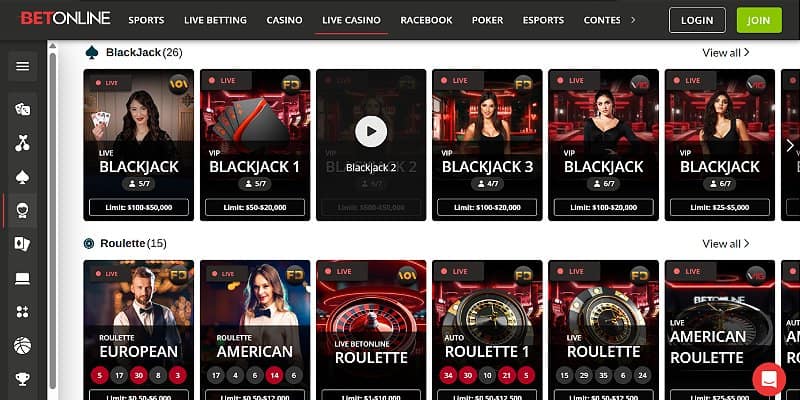
BetOnline 70+ live dealer tables

We will now dive into in-depth reviews of these top offshore casinos and explore the casino gaming experience, welcome bonuses, banking methods, and more.

1. Ignition: Best Offshore Casino Site Overall

Ignition Casino US

Pros:

  • 500+ casino games
  • Unlimited Epic jackpots
  • Multi-million-dollar poker tournaments
  • $3,000 first deposit bonus
  • 1-hour crypto payouts
  • Popular e-wallets accepted via MatchPay

Cons:

  • Credit card fees
  • Most bonuses favor poker

Ignition is the king of offshore casinos. That’s why it gets to kick things off today as our No. 1 pick.

Casino Games & RTP Rates: 4.95/5

500+ games is not the largest catalog in the world. But every game counts here at Ignition. Some slots have RTP rates around a whopping 98% (that would be the Dragon Siege slot). And for thrill seekers, over 3 dozen slots here are part of the Hop Drop Jackpot Network.

This program guarantees hourly jackpots of around $1k, $25k daily jackpots, and the life-altering Epic Jackpots with no maximum win limit.

Bonuses & Free Spins: 4.95/5

New crypto players can snag a massive sign-up bonus of up to $3,000, split 50-50 between poker and other games. Using traditional payment methods like credit cards cuts the match rate to 200% and the max bonus sum to $2,000.

With a 25x wagering requirement, the bonus is approachable and easier to fully clear compared to many others, too. On top of that, every bet earns you Ignition Miles, which are loyalty points you can redeem later for more rewards.

Payment Methods & Payout Times: 4.95/5

Ignition puts a big focus on cryptocurrency payments, and it’s easy to see why. Transactions are fast, wrapped up in a matter of hours if not minutes, and completely free of fees.

Supported cryptocurrencies include Bitcoin (BTC), Litecoin (LTC), Ethereum (ETH), Bitcoin Cash (BCH), and the popular stablecoin Tether (USDT).

For those who prefer more traditional methods, Ignition also offers MatchPay. This feature lets you use e-wallets like PayPal. The site also accepts credit or debit cards and bank transfers.

>> Claim the $3,000 welcome bonus

2. Slots of Vegas: Best Offshore Online Casino for Slots

Slots of Vegas Casino US

Pros:

  • Hundreds of high RTP slots
  • Highly reputable RTG software provider
  • $2,500 bonus + 50 spins
  • Solid mobile optimization
  • Low wagering requirements

Cons:

  • Needs a visual redesign
  • Mainly slot-focused

As the name suggests, Slots of Vegas easily triumphs over other offshore casinos when it comes to slot games.

Casino Games & RTP Rates: 4.9/5

Slots of Vegas focuses heavily on RealTime Gaming slots, a well-known and trusted name in the industry. This means you have access to hundreds of high RTP titles as well as many exciting jackpots.

A highlight here is the Feature Guarantee, which ensures that bonus rounds will trigger after a certain number of spins. This adds a level of excitement and reliability that’s hard to come by at many offshore casinos.

Beyond slots, though, you won’t find a whole ton of variety. Still, we like some of the blackjack variants available.

Bonuses & Free Spins: 4.95/5

New players can grab a solid welcome package by entering the promo code WILD250. This offer gives up to $2,500 in bonuses along with 50 free spins. The 10x playthrough requirement is impressively low, making this deal stand out.

You’ll need to deposit at least $30 to claim this bonus. It’s designed for use on real-money slots and keno, and regular players can also look forward to weekly promotions to keep things interesting.

Payment Methods & Payout Times: 4.85/5

The payment section here is a blend of traditional stuff and a bit of crypto. The minimum deposit is $30 for most banking methods.

When it comes to withdrawals, you can choose from checks as the slowest option, through bank transfers, and then CoinTransfer and Bitcoin as the speediest solutions.

>> Grab $2,500 and 50 free spins

3. Super Slots: Fastest Payouts of Any International Casino Online

Super Slots Casino USA

Pros:

  • 15+ crypto banking options
  • No fees, near-instant payouts
  • 300 free spins welcome bonus
  • No wagering requirements on most bonuses
  • 1,000+ games in total

Cons:

  • Hefty fees for bank transfers
  • Only free spins in welcome bonus

With 15+ crypto payment methods, Super Slots ranks as one of the best Bitcoin casinos, making it our top pick for fast payouts.

Casino Games & RTP Rates: 4.8/5

Super Slots has built its reputation by teaming up with top developers like BetSoft. Their library counts over 1,000 titles and focuses on engaging five-reel slots packed with features.

However, what really sets Super Slots apart is its selection of around 70 live dealer games. It’s not just about having a large variety; it’s also about the flexible betting options and the exceptional quality of the dealers.

Bonuses & Free Spins: 4.6/5

New players at Super Slots can take advantage of an exciting welcome offer of 300 free spins. These spins are released in batches of 30 per day once you make your first deposit, each on a different title, so it’s a great way to explore the game library here.

While some players might prefer a deposit match bonus, the no-wagering requirement on these free spins is a big plus. On top of that, all new players are automatically added to the VIP program, which is a great perk!

Payment Methods & Payout Times: 4.95/5

Super Slots is one of the best online crypto casinos. 20+ banking methods in total is a lot, and that includes over 15 cryptocurrencies, all with near-instant payouts and transfer limits as high as $1,000,000 when using Bitcoin.

There’s a downside if you opt for traditional banking, though: while the $25k bank transfer cap is nice, the $500 minimum payout plus a 3% fee with a minimum of $45 is not the best option.

>> Unlock the 300 free spins bonus

4. Raging Bull Slots: Best Offshore Mobile Casino Site

Raging Bull Casino US

Pros:

  • Superb mobile experience
  • Downloadable Android app
  • Jackpots over $100k
  • $2,500 bonus + 50 spins
  • Exciting VIP program

Cons:

  • Only one software provider
  • Card deposit fees

If you’re on the hunt for mobile offshore casinos, Raging Bull Slots is the top pick in our book.

Casino Games & RTP Rates: 4.7/5

Raging Bull Slots is all about slot machines, something like Slots of Vegas.

As the name suggests, this casino focuses heavily on online slots. Top picks include Merlin’s Riches and Divas of Darkness, but the real stars are the progressive jackpot slots.

Huge prizes await in games like Vampire Night and Shining Crown, with jackpots often climbing above $100,000. For those who prefer table games, there are several classics available, though we’d love to see more variety added in this category.

Bonuses & Free Spins: 4.7/5

All newly registered users at Raging Bull Slots can snag a generous welcome bonus of up to $2,500 along with 50 free spins for the Mighty Drums slot. Just use promo code MIGHTY250 and make a minimum deposit of $30 to claim this offer. Low 10x wagering requirements, too.

Beyond the welcome deal, regular players can look forward to a strong VIP program and over 10 daily promotions to keep things interesting.

Payment Methods & Payout Times: 4.7/5

Raging Bull Slots offers dependable banking choices, though they might not surprise you. Basically, you can pick from credit and debit cards, traditional bank transfers, and Bitcoin. Classic stuff.

Deposits require a minimum of $20. For withdrawals, the limits start from $20 for crypto and $100 for bank payouts and checks, which is a bit steep.

>> Claim the $2,500 bonus with 50 FS

5. BetOnline: Best Offshore Gambling Site for Live Dealer Games

BetOnline Casino US - Live Casino

Pros:

  • 70+ live dealer games
  • 25+ years online
  • 100 free spins for newcomers
  • Live casino wagers start at just $1
  • High-roller-friendly betting & transaction limits

Cons:

  • Smaller welcome bonus
  • Fewer regular bonuses for casino players

Rounding out our top 5 is BetOnline, widely known for being one of the top online sports betting sites. But it also shines on the casino side of things, offering the best live dealer game variety with 70+ live channels.

Casino Games & RTP Rates: 4.65/5

BetOnline shines when it comes to live dealer options. Sure, slots take up most of the catalog; that’s just the industry standard, but poker enthusiasts have plenty to explore, for example.

Looking at the live casino section, you can explore over 60 live games hosted by skilled, professional dealers. The wager sizes start as low as $1 and go beyond $10,000, which truly covers all types of players.

Bonuses & Free Spins: 4.6/5

When you join BetOnline, you are greeted with a welcome package that includes up to 100 free spins without any wagering requirements.

Sports lovers can also benefit from a $250 free bet, which also comes with 100 free spins.

While the welcome offer is not bad, we’d like to see some casino funds included, plus more frequent promotions designed specifically for casino players.

Payment Methods & Payout Times: 4.8/5

Payments are pretty smooth at BetOnline. Credit cards, bank transfers, and crypto are all accepted here.

On the crypto front, we are looking at Bitcoin, Solana, Ethereum, and about 10 other options. When you decide to cash out, payouts are handled on the same day with no extra fees.

>> Sign up and get 100 free spins

How We Ranked the Top Offshore Online Casinos

Safety & Licensing

Licensing is vital when it comes to offshore casino sites. Every offshore gambling site we recommend is licensed by a reputable regulatory body like the CEG, the MGA, or the Panama Gaming Control Board. This ensures regular third-party audits with fairness certificates.

Online Casino Games & RTP Rates

We check offshore platforms for game variety and quality. We only recommend offshore sites that host reputable game providers like Rival Gaming, Dragon Gaming, RealTime Gaming, etc. We look for high RTP rates, a wide range of wager sizes, and solid jackpot potential.

Offshore Casino Bonuses & Free Spins

The best international online casinos go beyond promising a large maximum bonus amount. The top options have fair terms, meaning reasonable wagering requirements, deadlines you can meet, and low minimum deposit requirements. This applies to welcome bonuses, reload bonus deals, and loyalty rewards.

Payment Methods & Payout Times

You should choose offshore casinos that support popular payment methods like credit/debit cards, bank transfers, e-wallets, and crypto. For the highest marks, we want to see low transaction fees — preferably zero — and near-instant withdrawals.

Mobile Gaming Experience & Customer Support

All overseas casinos we recommend are optimized for mobile devices. They all offer instant play capabilities for iOS and Android devices, and some have dedicated mobile apps. Furthermore, 24/7 customer support via live chat and email is a must for offshore casino sites in our book.

We also used similar benchmarks when ranking the best Florida online casinos.

Why Is Ignition the Best International Online Casino?

Ignition is a reputable and regulated casino site that stands out from most offshore casinos on just about every front. These are the key points in our book.

  • Unlimited Epic Jackpots: Ignition is part of the Hot Drop Jackpots program, with 30+ progressive jackpot slots that offer guaranteed daily, hourly, and Epic jackpots with no max win cap.
  • $3,000 Welcome Bonus: Ignition welcomes newcomers aboard with a 300% match deposit bonus worth up to $3,000, split 50-50 between poker and other games. Low 25x wagering requirements apply, too.
  • Same-Day Payouts: Like most offshore casinos, Ignition supports crypto payments. We’re looking at about half a dozen crypto coins here, all of which deliver same-day payouts, sometimes in under 60 minutes.

Why Should I Use Offshore Sites for Online Gambling?

Compared to traditional online casinos stifled by the federal government, offshore casino sites offer a string of benefits. It’s not just the bigger bonuses, guys, check this out.

  • Bigger Bonuses: Because they’re internationally based in countries like Costa Rica, offshore casinos don’t adhere to strict taxes. The best ones use this advantage to boost their bonus offerings, like the $3,000 deposit bonus at Ignition.
  • Higher RTP Rates: Similarly, offshore casinos can increase their payout rates, give players more money back, and still secure profits.
  • Provably Fair Games: Offshore casinos host provably fair games, a new casino gaming concept brought by the crypto revolution. These games run on public, blockchain-based algorithms where players can verify the fairness of every single outcome.

Guide to Offshore Online Gambling Sites – FAQs

Are Offshore Casinos Legal and Safe?

Yes, offshore casino sites are legal and perfectly safe as long as you join licensed and regulated overseas casinos like those featured here. Reputable offshore casinos operate under strict rules, undergo third-party audits, and employ advanced SSL encryption.

What Is the Best Offshore Casino Bonus?

Super Slots has an interesting sign-up deal of 300 free spins with no wagering requirements, a true rarity even among online casinos. For something with actual bonus cash, you can claim Ignition’s $3,000 welcome offer.

What Is the Best Offshore Casino Site?

Ignition is the top offshore gambling site in our book. Reputable, licensed, and stacked with reputable game providers, this place welcomes all newcomers aboard with a $3,000 first deposit bonus.

Are Offshore Casinos Available on Mobile?

Yes, the top offshore casino sites on our list are optimized for instant play through iOS and Android devices. That means you don’t need a dedicated app, just open the site using your mobile browser, and you’re all set.

Comparing the Top 5 International Casino Sites

Here’s a brief recap of the 5 best online casinos for international players and what makes each stand out:

Ignition: This is the best casino international online players can join. The site has high-RTP slots, large jackpot potential, multi-million poker tourneys, and one of the biggest bonuses around: up to $3,000 on your initial deposit.

Slots of Vegas: If you’re chasing high RTP slots, head to Slots of Vegas, which is loaded with the latest and greatest RTG titles. You also get one of the most generous welcome bonuses here, going up to $2,500 with 50 free spins.

Super Slots: The top spot for near-instant payouts, boasting 15+ crypto payment methods for fast withdrawals and zero fees. This casino website stands out from other welcome bonuses by granting 300 free spins with no wagering requirements.

Raging Bull Slots: Love playing on the go? This is the top casino online international players can join for mobile gaming. Raging Bull Slots has a fantastic optimization for all iOS and Android devices, and also offers one of the most generous welcome deals, a $2,500 first-deposit bonus with 50 free spins.

BetOnline: Finally, we have BetOnline, the best offshore sportsbook and a great choice for fans of live dealer games. 70+ live dealer channels is something a lot of offshore casinos can’t offer right now, with very flexible deposit limits, too. The first deposit bonus nets you 100 free spins and $250 for sports betting.

How to Join an International Casino & Play Games Online

You can join overseas casinos in about 5 minutes. This is how to start playing offshore casino games in four easy steps.

1. Register Your Offshore Online Casino Account

  • Visit an offshore online casino of your choice. We recommend Ignition.
  • Click the registration button to activate the sign-up form.
  • Provide the required info, including your email and phone number.
  • Accept the T&Cs and click the Register button.

2. Verify Your Registration

  • The online casino will send you a verification email or code via SMS.
  • Click the verification link or enter the code on-site.
  • Log in to your new offshore online casino account.

3. Fund Your Online Casino Account

  • Enter the cashier section of your online casino profile.
  • Set your preference from the available banking methods.
  • Note the minimum deposit requirement and fund your account.
  • This will activate the first deposit bonus at most offshore gambling sites.

4. Play Online Casino Games

  • Check the game library for available games.
  • Find your favorites and try the demo mode if available.
  • Once ready, start playing real-money games.
  • Have fun and stick to responsible gambling!

Tips for Joining Offshore Casino Sites

Now that you know the best offshore casinos, let’s just take a minute to cover key points when searching for offshore gambling platforms.

  • Check Licensing First: Never join a casino without license. Look for platforms regulated by reputable bodies like the CEG or the MGA. The licensing info is located in the footer menu.
  • Check the Responsible Gaming Tools: Contact the support team and check if the offshore casino has tools for responsible online gaming: deposit limits, self-exclusion options, etc.
  • Verify RTP Rates: First of all, check the game providers. Look for reputable companies like RTG. Then, check the listed RTP rates on-site and on the provider’s official website.

Are You Ready to Explore the Top Offshore Casinos Online?

That concludes our expert roundup of the best offshore casinos!

Again, Ignition is our top pick, a highly reputable offshore online casino with high-paying games and generous bonuses.

Before you take the next step, please go through our list of legit offshore casinos once again to find your ideal pick. If more than one catches your eye, there’s no harm in joining multiple and claiming the bonuses.

Whichever sites you pick, remember to stick to responsible gambling at all times for a fun and safe experience!


Important information for our readers:

Participation is restricted to adults 21+.

Gambling carries financial risk and may lead to addiction.

Never gamble with money you can’t afford to lose.

Check your local laws to confirm online gambling is allowed where you live.

If you need help, call 1‑800‑GAMBLER for free, confidential support any time.

More details: https://www.ncpgambling.org/

Chris Kreider Breaks Silence on Rangers Exit, Prepares for New Role with Ducks

On June 12, 2025, the New York Rangers traded veteran forward Chris Kreider to the Anaheim Ducks. The deal sent Kreider and a 2025 fourth-round pick to Anaheim in exchange for center prospect Carey Terrance and a 2025 third-round pick. Consequently, Kreider’s 13-season run with the Rangers, where he played 883 games, scored 326 goals, and recorded 582 points, has come to an end.

Kreider was originally drafted 19th overall by the Rangers in 2009, and he spent his entire NHL career with the team until the trade, placing him as the third all-time goal scorer in franchise history behind Rod Gilbert (406) and Jean Ratelle (336). He holds the record for the most career playoff goals in the team’s history and contributed to their appearance in the 2014 Stanley Cup Final, as well as five Eastern Conference Finals.

His tenure concluded after a 2024–25 season in which the Rangers finished with a 27-29-7 record, missing the playoffs for the first time in four years. The season began with a 12-7-0 start but ended in disappointment. Kreider scored 22 goals and added 8 assists in 68 games, his lowest full-season totals since the 2017–18 campaign.

Key Takeaways
  • Kreider’s exit from the Rangers concludes a 13-year career featuring 326 goals, five Eastern Conference Finals, and a 2014 Stanley Cup Final appearance.
  • A trade request, injury battles, and financial considerations led to his move to Anaheim, where he joins former Rangers and embraces a new leadership role.
  • Despite a difficult season, Kreider is recovering fast from hand surgery and preparing to reignite his career with a fresh mindset and renewed energy.

Injuries, Trade Request, and a Quiet Departure From New York

Kreider dealt with several physical setbacks during the 2024–25 season. He sustained a hand injury that ultimately required postseason surgery involving metal rods and left him with a three-inch scar. The injury was expected to require six to eight weeks of recovery, but Kreider was medically cleared after four weeks.

Other health issues during the season included back spasms and vertigo caused by illness. Reflecting on the season, Kreider admitted, “I probably should not have tried to play through the injury,” saying that his desire to help the team affected his judgment.

Kreider became a focal point of criticism during the team’s struggles. He was a healthy scratch for a December 23 game against the New Jersey Devils, which the Rangers lost 5-0. Later, a trade memo from Rangers general manager Chris Drury leaked, listing Kreider and then-captain Jacob Trouba as available for trade.

Kreider ultimately requested a trade and waived his no-trade clause to approve a move to Anaheim. There was no farewell press conference or social media post from Kreider; he rather expressed his appreciation quietly. “Gratitude for how I was treated,” he said regarding his time with the Rangers.

Familiar Teammates and Market Reactions

Anaheim was not originally on Kreider’s trade list, but he approved the deal after discussions with his family. He joined a roster that already included former Rangers Jacob Trouba, Ryan Strome, and Frank Vatrano. Kreider said that wearing Ducks equipment for the first time was surreal, “There are brush points where it’s kind of like ‘this is happening, for sure.’ (After Anaheim) shipped out my new equipment, jumping on the ice with Ducks stuff on, and people coming up to me and being like ‘you look weird.’

Kreider continues to train in Stamford, Connecticut, with NHL fitness coach Ben Prentiss. At Prentiss Hockey Performance, he has been working alongside current and former teammates such as Adam Fox and Brett Berard. He’s also scheduled to skate in the Shoulder Check Showcase in the area.

Anaheim’s front office emphasized Kreider’s value as a veteran presence. Ducks general manager Pat Verbeek highlighted Kreider’s size (6-foot-3, 226 pounds), scoring ability around the net, and skating as key assets. Kreider also praised Anaheim’s young talent, calling center Leo Carlsson a “unicorn” and describing Mason McTavish as a “bull.”

Ryan Strome, who played with Kreider in New York and joined the Ducks in July 2022, said, “He’s a very proud Ranger and one of the most accomplished Rangers in history… I think he’s got a ton of game left.” Strome added that Kreider was probably playing through some tough injuries last season, and that personal and team disappointment kind of just snowballed there in a bad direction.

Following the trade and Anaheim’s recent roster changes, betting markets showed modest adjustments. At BetMGM, the Ducks’ odds to win the Stanley Cup shortened slightly, moving from +10,000 to +9,000. This change came after the additions of Kreider, Trouba, and coach Joel Quenneville.

In contrast, Kreider’s individual betting markets have seen no significant movement. His Hart Trophy (NHL MVP) odds remain at +50,000 on DraftKings and FanDuel. At BetMGM, he is listed as “off the board” due to low betting volume. According to BetMGM data, there is no measurable handle on Kreider in MVP markets as of July 2025.

Cap Space, Contract Implications, and Rangers’ Outlook

Kreider’s departure also provided the Rangers with financial relief. His contract carried a $6.5 million cap hit, and his exit created nearly $15 million in available space, according to data from PuckPedia. This could help the team re-sign young players such as K’Andre Miller and Will Cuylle or explore other roster upgrades.

Some fans and analysts questioned the return value of the trade. Carey Terrance, acquired in the deal, is a center prospect still a few years away from NHL readiness. Detractors viewed the trade package — a third-round pick and Terrance — as underwhelming for a player with Kreider’s resume, which includes 326 goals and extensive playoff experience.

While the Rangers move forward with a reshaped roster, Kreider is preparing for his first NHL season outside the Northeast. When asked how he felt about the trade, Kreider responded, “Good,” and then added, “Bit of a loaded question.” For now, he continues to train and recover, quietly entering a new phase of his career with the Anaheim Ducks.

Hudson County Prosecutor Esther Suarez Announces August 1 Retirement

On Thursday, July 17, Hudson County Prosecutor Esther Suarez announced her retirement, effective August 1. Suarez has served 25 years in public service, including the past 10 years as Hudson County Prosecutor. Suarez was born in Bayonne and later lived in Secaucus. Not to mention, the first Hispanic to hold the position.

Suarez was first sworn in as prosecutor in September 2015 at Dickinson High School in Jersey City. Prior to her appointment, she served five years as a Hudson County Superior Court Judge and worked as Corporation Counsel for the City of Hoboken. She was nominated for the position by then-Governor Chris Christie, with approval from Hudson County’s three Democratic state senators. She was reappointed in mid-2021 under Governor Phil Murphy.

Suarez stated that her primary goal since taking office was to build a prosecutor’s office that could meet the needs of Hudson County residents and provide law enforcement with modern tools to serve and protect.

Key Takeaways
  • Esther Suarez will retire as Hudson County Prosecutor on August 1 after 25 years in public service and 10 years in the role.
  • Her tenure included the creation of multiple regional units, an in-house DNA lab, a cybersecurity lab, and a child advocacy center.
  • Hudson County’s homicide unit achieved a 100% solve rate under her leadership, surpassing the national average of 58%.

Suarez Launched New Regional Units and Crime-Solving Facilities

During her tenure, Suarez established multiple regional units and forensic facilities within the Hudson County Prosecutor’s Office:

  • Hudson County Regional Collision Investigation Unit to investigate serious vehicle crashes and improve road safety.
  • Hudson County Regional S.W.A.T. Team to resolve crisis situations safely.
  • Hudson County Regional Arson Task Force to investigate fatal and widespread fires.

In addition to those units, Suarez oversaw the development of specialized labs and centers:

  • In-house DNA Laboratory, created to analyze evidence efficiently and eliminate a months-long backlog.
  • Cybersecurity Lab, used to collect and examine digital footprints in complex cases.
  • Child Advocacy Center, established as a welcoming environment for children involved in violent crime investigations.

Suarez also joined the New Jersey Internet Crimes Against Children Task Force, which addresses digital crimes targeting minors.

Crime Reduction, Federal Support, and Department Modernization

Under Suarez’s leadership, Hudson County participated in the Violent Crime Initiative, a program that used federal funds to reduce gun violence in Jersey City. During her tenure, the homicide unit achieved a 100% solve rate, exceeding the national average of 58%.

She increased training for investigators and prosecutors, backed the creation of a mental health court, and supported criminal justice reform. Her office secured federal grants to upgrade both infrastructure and investigative software.

Suarez cited the support of Hudson County Prosecutor’s Office staff, county government, municipal police departments, and state law enforcement agencies as critical to her ability to implement these changes.

Praise from Law Enforcement and Union Leadership

Several local law enforcement officials and associations issued statements acknowledging Suarez’s contributions.

A statement from the Policemen’s Benevolent Association at the Hudson County Prosecutor’s Office described her leadership as dedicated and committed to public safety. It stated that Hudson County is “undeniably a safer and stronger community” due to her vision and investments.

Dennis Miller, Chief of Police in Secaucus and President of the Hudson County Chiefs of Police Association, credited Suarez with improving operations and forming the regional SWAT team. He described her professionalism and dedication as “outstanding qualities.”

Robert Till, President of PBA Local 232, and John Kolakowski, Acting President of SOA 232A, stated that Suarez supported their unions in contract negotiations and helped ensure that members had the necessary resources to serve the public effectively.

Unresolved Succession and Prior Consideration for U.S. Attorney

A spokesperson for the Hudson County Prosecutor’s Office confirmed that an acting prosecutor has not yet been selected. Attorney General Matt Platkin may designate a temporary replacement until Governor Phil Murphy or his successor nominates a new prosecutor with approval from the county’s three state senators.

In 2021, Suarez was considered for the role of U.S. Attorney for New Jersey but withdrew her name from consideration and was reappointed as county prosecutor.

During her first term, Suarez faced public criticism for not bringing charges against Al Alvarez, who was accused of rape by Katie Brennan during Phil Murphy’s 2017 gubernatorial campaign. Then-Attorney General Gurbir Grewal stated that Suarez acted appropriately in the matter.

Final Remarks and Gratitude from Prosecutor Suarez

Suarez confirmed that she had spoken with Attorney General Platkin to assist in the transition process. She expressed appreciation to the staff of the Hudson County Prosecutor’s Office and to the residents of Hudson County.

She stated that she is grateful for the opportunities presented during her 10 years as prosecutor and thanked both Governor Murphy and former Governor Christie for their nominations. Suarez said she will explore opportunities outside of government but has not ruled out returning to public service in the future.

Francisco Alvarez Returns from Triple-A, Fuels Mets’ 7-5 Comeback Over Angels

Francisco Alvarez Leads Mets to Win

Catcher Francisco Alvarez rejoined the New York Mets on Monday night, July 21, at Citi Field, just one month after being optioned to Triple-A Syracuse. The 23-year-old was recalled ahead of the team’s series opener against the Los Angeles Angels and was inserted into the starting lineup, batting eighth and catching.

In his first Major League game since June 21, Alvarez reached base three times, going 1-for-2 with two walks and two runs scored. His biggest contribution came in the bottom of the eighth inning, when he hit a deep fly ball to right field that resulted in a double. The Mets, who were trailing earlier in the game, used that momentum to complete a 7-5 comeback win.

Alvarez received a standing ovation from the Citi Field crowd during his first plate appearance. Though he grounded out in that at-bat, he did not record another out for the rest of the night.

Key Takeaways
  • Francisco Alvarez hit 11 home runs in 19 games while playing for Triple-A Syracuse, showing big improvements after being sent down by the Mets.
  • In his first game back with the Mets, Alvarez went 1-for-2, walked twice, scored two runs, and hit a double in the eighth inning that helped the Mets take the lead in a 7-5 win over the Angels.
  • Fans at Citi Field gave Alvarez a standing ovation, and teammates like Brett Baty and manager Carlos Mendoza said his return meant a lot to the team after weeks of hard work and progress.

Alvarez Was Optioned After a Decline in Performance

Alvarez was optioned to Triple-A Syracuse after struggling both offensively and defensively over his first 35 games of the 2025 season. At the time of his demotion, he was batting .236 with a .319 on-base percentage and a .333 slugging percentage, totaling a .652 OPS. He had hit only three home runs and driven in eleven runs.

Team officials mentioned a drop in his pitch framing and overall receiving behind the plate, with Baseball Savant ranking his framing in the bottom nine percent of the league. A swing adjustment introduced in the offseason to help Alvarez hit to all fields appeared to diminish the power that had defined his early success.

After being sent down, Alvarez did not delay in reporting. He joined Syracuse without using the full 72-hour window typically granted to demoted players. In 19 games with the Triple-A club, he posted a .299 average, an on-base percentage of .397, and a slugging percentage of .836. He hit 11 home runs, drove in 24 runs, and scored 17 times.

From July 11 to July 20 alone, Alvarez hit seven home runs across six games. Team officials closely monitored this stretch, and after he homered four times over the final weekend of that run, they made the decision to bring him back to the Major League roster.

Working with Syracuse bench coach and former MLB catcher J.P. Arencibia, Alvarez made a key adjustment to his catching stance. By digging his back toe into the dirt while squatting from a one-knee position, Alvarez improved his balance and pitch framing. Team officials took note of the mechanical improvement behind the plate in addition to the resurgence in power.

Alvarez described his mindset during the assignment through an interpreter, saying, “I learned how to be patient. I just continued to work hard, continued to do what I needed to do, and just put in the time to eventually get back to the big leagues.”

Eighth-Inning Double Helps Mets Complete Comeback Win

In the eighth inning on Monday night, with the game tied and one out, Brett Baty drew a walk. Alvarez followed with a deep fly ball to right field. Chris Taylor tracked the ball but could not complete the catch near the wall, resulting in a double.

Ronny Mauricio then grounded to third base, where Yoán Moncada fielded the ball cleanly with the infield drawn in. However, Moncada’s throw home was wide, and Baty crossed the plate with the go-ahead run.

Earlier in the game, Baty had also hit a two-run homer in the fourth inning. Juan Soto contributed with a game-tying two-run single in the seventh. Brandon Nimmo added a sacrifice fly in the eighth inning to extend the Mets’ lead.

Alvarez reflected on the reception he received from the fans, stating, “It felt really good just because of all the struggles that I had earlier in the season. The way that they’ve kept supporting me and the way they received me today—it felt really special.”

Manager Carlos Mendoza mentioned the emotional effect of Alvarez’s return, “It meant something to him. It meant something for all of us.”

Baty echoed that sentiment, saying, “We all wanted him here. For him to come back and have an impact like that in the game was huge for us.”

Sportsbooks Adjust Betting Lines Following Alvarez’s Return

Francisco Alvarez’s performance and offensive resurgence prompted several sportsbooks to adjust his player prop lines. After he came back, his odds shifted noticeably on multiple betting sites.

His over 0.5 home run prop shortened from +560 to +475. The total bases over 0.5 line settled between -167 and -175, while the hits + runs + RBIs over 1.5 were listed at approximately +105. The corresponding under was offered between -138 and -140. His singles over 0.5 prop was also adjusted to around -165 across sportsbooks.

Alvarez had appeared in 37 Major League games in 2025, posting a .240 batting average, a .329 on-base percentage, and a .364 slugging percentage, with four home runs, 31 hits, and 13 RBIs. His double on Monday came off a 97 mph pitch.

Betting and fantasy coverage from sites like RotoWire and FanDuel pointed out that Alvarez had a big power surge in Triple-A and that he had gotten his power back. During a 19-game stretch in Syracuse, his OPS was 1.129.

Mets Adjust Catcher Rotation, Hope for Continued Progress

To activate Alvarez, the Mets optioned catcher Hayden Senger to Triple-A. During Alvarez’s time in Syracuse, Luis Torrens handled the majority of catching duties. Torrens has thrown out 14 of 34 attempted base stealers this season and combined with Francisco Lindor to cut down Noelvi Marte at second base in Sunday’s game against the Reds.

Offensively, Torrens holds a .606 OPS this season. He contributed an eight-pitch at-bat on Sunday that resulted in an RBI groundout, driving in Juan Soto for the go-ahead run in a 3-2 win over Cincinnati.

Speaking through interpreter Alan Suriel, Torrens said, “I’ve been feeling a lot more comfortable at the plate. I’m putting in a lot of good work. When you put in that work, the results start to eventually come around.”

Alvarez Looks to Maintain Momentum After Fast Return

In 2023, Alvarez hit 25 home runs across 123 games as a 21-year-old rookie, despite finishing with a .209 average. Injuries, including wrist and hand issues as well as spring hamate surgery, contributed to a slow start in 2025.

Earlier this month, Alvarez described his focus on his previous power swing with adjustments made during the offseason. “I’ve been working on putting both together,” he said. “I feel more powerful.”

His eighth-inning double in Monday’s win was his first extra-base hit since returning and came against high velocity.

Alvarez explained his renewed mindset, stating, “It’s like when you stumble on a rock. You don’t want to stumble there again.”

David Stearns, the team’s President of Baseball Operations, commented, “This happened faster than I would have envisioned when we optioned him.”

The Mets entered Monday having lost two straight after the All-Star break but avoided a sweep with a win over the Reds on Sunday. With Alvarez back in the lineup and delivering results, the Mets are watching closely to see if he can provide consistent contributions in the second half of the season.

Aaron Judge Hits 351st Home Run, Tying Alex Rodriguez in Yankees Franchise History

Aaron Judge’s first-inning home run on Sunday afternoon at Truist Park in Atlanta was the 351st of his Major League career, tying him with Alex Rodriguez for sixth on the New York Yankees’ all-time home run list.

The solo shot came off Atlanta Braves right-hander Grant Holmes and traveled 409 feet to right field. It was Judge’s 36th home run of the 2025 season and his first ever at Truist Park – the 32nd different Major League stadium in which he has homered.

Following the blast, Judge said, “It’s just an incredible honor, especially growing up and watching A-Rod for so many years, watching what he did in the pinstripes. He’s a legend, one of the best to ever play. So getting to tie him with the Yankees, that’s pretty cool – but there’s more to come.”

Judge now trails only five players in Yankees history: Babe Ruth (659), Mickey Mantle (536), Lou Gehrig (493), Joe DiMaggio (361), and Yogi Berra (358).

This home run is also Judge’s eighth in his last 17 games. He now shares third place among active players for most stadiums homered in, tied with Willy Adames, Randal Grichuk, and Carlos Santana. Only Giancarlo Stanton (36) and Manny Machado (34) have homered in more Major League parks.

Key Takeaways
  • Aaron Judge tied Alex Rodriguez with his 351st career homer, placing him sixth on the Yankees’ all-time home run list.
  • The Yankees beat the Braves 4-2, powered by Judge’s blast, Stroman’s solid pitching, and timely hits from Goldschmidt, Vivas, and Chisholm.
  • New York heads to Toronto for a critical three-game set, trailing the Blue Jays by just three games in the AL East.

Aaron Judge Remains MVP Favorite as Betting Odds Adjust

Aaron Judge is second in the league in home runs behind Seattle Mariners catcher Cal Raleigh, who leads with 38. Raleigh also won the Home Run Derby held in Atlanta on Monday. Judge’s recent performance has influenced betting markets.

Judge remains a leading candidate for the 2025 AL MVP. According to sportsbooks, his MVP odds have ranged between –575 and –800 in recent days. Earlier in the season, FanDuel listed Judge at –8000. The odds movement shows increased competition from players like Raleigh, but still places Judge as the favorite.

In futures markets, BetMGM lists the Yankees at +800 to win the World Series, +340 to win the American League pennant, and +100 to win the AL East. These figures reflect current standings and betting volume ahead of their upcoming series in Toronto.

For their July 22 matchup against the Blue Jays, sportsbooks set the Yankees’ moneyline around –120, with the game total ranging from 8.5 to 9 runs. New York’s Carlos Rodón is scheduled to pitch against Toronto’s Kevin Gausman.

Stroman Delivers Six Strong Innings as Bullpen Rests

The Yankees’ 4-2 victory over the Braves was backed by a steady performance from Marcus Stroman, who pitched six innings and allowed just one run — a solo home run by Matt Olson in the sixth. Stroman scattered five hits, struck out four, and did not issue a walk.

With the Yankees’ bullpen running thin, the game plan was to limit relief usage. Manager Aaron Boone avoided using Jonathan Loáisiga, Luke Weaver, JT Brubaker, and Scott Effross. The pitching duties moved efficiently from Stroman to Ian Hamilton, followed by Tim Hill, and finally to Devin Williams. Williams secured his 14th save despite surrendering a solo homer to Ronald Acuña Jr. in the ninth.

Stroman effectively mixed his pitches and worked both sides of the plate, in sync with catcher Ben Rice throughout his outing. The solid start gave the Yankees exactly what they needed to secure the series win while keeping key relievers rested for the road ahead.

Vivas, Goldschmidt, and Chisholm Contribute Offensively

In the third inning, Jorbit Vivas made a diving catch in foul ground to grab Jurickson Profar’s popped-up bunt, helping Stroman escape a jam, followed by a double play from Matt Olson.

Vivas later contributed to the offense when he was hit in the left knee by a pitch from Holmes in the sixth inning, forcing in the Yankees’ third run with the bases loaded.

In the seventh inning, Jazz Chisholm Jr. hit a run-scoring double off Dane Dunning, increasing New York’s lead to 4-1.

In the ninth, Devin Williams allowed a home run to Ronald Acuña Jr. but secured his 14th save of the season. The Yankees’ win clinched the rubber match of the three-game series against the Braves.

Yankees Secure Series Victory Ahead of AL East Showdown

With the win, the Yankees improved to 55-44. The Braves dropped the rubber match of the series at Truist Park, while the Toronto Blue Jays (58-41) also won Sunday, maintaining a three-game lead over the Yankees in the American League East.

The Yankees will now travel to Toronto for a three-game series.

“This was a big series win, especially going into Toronto. It’s a good time to start getting hot. There’s more to come,” Judge said.

Latest News

Vetoed Bird-Safe Ordinance 26-008 Back in Debate

Jersey City Council Reopens Fight Over Bird-Safe Building Costs

Ordinance 26-008, which regulates bird-safe materials for buildings, has been reintroduced to the Jersey City Council agenda. The measure is identical to the version...
Rob Menendez Slams Trump Over Hudson Tunnel Funding Freeze

Rob Menendez Urges End to Hudson Tunnel Funding Dispute After Court...

In Hoboken, after a press conference concerning an unrelated federal funding allocation, U.S. Rep. Rob Menendez (D-8) discussed the restoration of approximately $205 million...
Hudson County NAMI Caregiver Support Programs

Hudson County Caregivers Get February Mental Health Support

Hudson County residents caring for youth with mental health symptoms can participate in a six-session NAMI Basics course offered this February through NAMI Hudson...
Portal Bridge Cutover Reduces NJ Transit Service

Portal Bridge Cutover Slashes 53% of NJ Transit Service

Beginning Feb. 15, Amtrak will start a month-long “cutover” project to transfer train traffic from the existing Portal Bridge to the new Portal North...
NJ Teacher in “Baby Rapist” Chat Pleads Guilty

Former NJ Teacher in ‘Baby Rapist’ Chat Pleads Guilty to Child...

On Wednesday, February 11, 2026, Senior Counsel Philip Lamparello announced that Matthew Ozol, 40, of Jersey City, pleaded guilty before U.S. District Court Judge...