Home Blog Page 37

New York Rangers Trade Trouba, Kakko, Chytil as Rebuild Begins Ahead of 2025 NHL Deadline

New York Rangers

The New York Rangers have officially moved into selling mode. After returning from the 4 Nations Face-Off break, the team’s performance made the decision clear. First, they were embarrassed by the Buffalo Sabres in an 8-2 loss. Buffalo is the last-place team in the Eastern Conference. Then, the Rangers followed up with a sloppy game against the Pittsburgh Penguins. Although they won 5-3, it was only because of goaltender Igor Shesterkin’s strong effort.

These two games showed that the Rangers are still struggling with the same problems they had in December. Even though they had a better stretch in January, their recent games proved that the improvement didn’t last.

With the NHL trade deadline less than two weeks away, General Manager Chris Drury had no choice. The team hasn’t shown it’s capable of a deep playoff run. Even though the Rangers are just two points out of a wild-card spot, they don’t look like a team that can compete for the Stanley Cup.

Key Takeaways
  • The Rangers traded Trouba, Kakko, Chytil, Lindgren, and Vesey, gaining five draft picks, Juuso Pärssinen, and Urho Vaakanainen while clearing $4.5M in cap space.
  • After an 8-2 loss to Buffalo and a sloppy win over Pittsburgh, GM Chris Drury decided the team wasn’t playoff-ready and began a full-scale roster reset.
  • Chris Kreider is on injured reserve and remains a trade candidate; Reilly Smith is expected to be moved before the deadline as Drury continues to sell.

Major Trades Show the Rangers Are All-In on Change

The first big deal came on December 6, when the Rangers sent Trouba to Anaheim. The move was a win simply because Drury didn’t have to keep any of Trouba’s $8 million salary. In return, the Rangers got Urho Vaakanainen, a bottom-pair defenseman who’s fit in well so far.

Not long after, Kaapo Kakko was traded to Seattle for defenseman Will Borgen. The Rangers now have Borgen locked into a five-year deal. But Kakko has thrived with the Kraken, scoring 19 points in 28 games. This trade may hurt in the long run, especially since the Rangers didn’t give Kakko the right development environment.

The biggest move happened on January 31. The Rangers acquired J.T. Miller and two depth defensemen from the Vancouver Canucks. In exchange, they sent Filip Chytil, defensive prospect Victor Mancini, and a top-13 protected first-round pick. Miller has been a strong addition, bringing scoring ability and physical play. Chytil’s injury history made the decision easier for Drury.

Last week, the Rangers also traded Ryan Lindgren and Jimmy Vesey. Lindgren was dealt to Colorado despite Adam Fox’s recent injury. In return, the Rangers received four pieces, including Juuso Pärssinen, a young center with multiple years of team control. Vesey, like Lindgren, was not expected to return after this season, so the timing made sense.

Altogether, the Rangers have traded five players, cleared $4.5 million in salary cap space, and gained five draft picks plus several players who could help in future seasons.

Tension Around Kreider and Inside the Locker Room

When the trades started, there was some shock inside the team. Veteran forward Chris Kreider was one of the names included in Drury’s trade memo to all 31 NHL general managers. When asked about it, Kreider said he wasn’t surprised.

That wasn’t the first time. Won’t be the last time. That kind of stuff comes out,” he said. “That’s part of professional sports.”

He also mentioned that he doesn’t use social media, so he only found out about the rumors from people close to him.

Kreider has missed time this season with back issues and is currently on injured reserve. Although trade talks about him have quieted, two sources told lohud.com that the Rangers still want to trade him. He has two years left on his contract at a $6.5 million cap hit. A trade might happen this summer instead of this week.

Young Players Bring Energy, But Development Still Needed

While veterans are leaving, younger players are getting a chance. J.T. Miller has provided leadership and a strong work ethic, but rookies like Brennan Othmann, Matt Rempe, Brett Berard, Zac Jones, and Will Cuylle are bringing energy.

The coaching staff, led by Peter Laviolette, has shifted toward a more aggressive, fast-paced style. The younger players fit in well with this new approach.

The goal now is to use the rest of this season to evaluate the young talent. The Rangers want to know which players can help next year, and the change in direction helps the team stay competitive in the short term while planning for the long term.

Cap Space Opens Doors, But Defense Still a Problem

On defense, the team needs help on the left side. K’Andre Miller is the only proven top-four left-handed defenseman. His contract is up this summer, and he will be due a raise. Zac Jones has been shopped but hasn’t drawn enough interest. Adam Fox’s injury gave Jones an opportunity to play more, which may help his trade value.

The Rangers may look at Mario Ferraro from San Jose or Carson Soucy from Vancouver. Both are signed for next season at $3.25 million. However, neither is clearly a top-pair defenseman. Because of that, Drury might wait until the offseason. Possible free-agent targets include Jakob Chychrun, Vladislav Gavrikov, Dmitry Orlov, and Ivan Provorov.

The team is also searching for bigger, more physical forwards. One name that keeps coming up is Scott Laughton from the Philadelphia Flyers. But several teams want him, and the Rangers may not have the right trade pieces.

Another team to watch is the Nashville Predators. Their GM, Barry Trotz, and owner Bill Haslam were spotted at Madison Square Garden recently. Nashville has several players with term, like Michael McCarron, Tommy Novak, and Colton Sissons, who could be good fits for the Rangers.

Who Could Still Be Traded This Week?

The only move that seems certain before the deadline is Reilly Smith. There were early rumors about Toronto, but the Maple Leafs have shifted their focus elsewhere. Sportsnet’s Elliotte Friedman reported that Smith is likely headed to a U.S. team.

The Rangers paid a 2027 second-round pick and a 2025 conditional fifth-rounder to get Smith last summer. Because any new team would only get him for a few months, the expected return is a third-round pick.

After that, Drury may stop dealing and let the current group finish the season.

Eyes on Free Agency and the Bigger Picture

The Rangers are already watching the playoffs closely, even though they might not be playing in them. They are scouting potential free agents and planning their roster for next season.

They will have around $10 million in salary cap space. But with Miller and Cuylle needing new contracts, that number will shrink.

A top priority could be Sam Bennett of the Florida Panthers. He plays a fast, physical game and has helped define Florida’s playoff identity. But many teams will want him, which could raise his price.

Other options include Christian Dvorak from Montreal, Trent Frederic from Edmonton, and Yanni Gourde from Tampa Bay. These players fit better with the Rangers’ needs for toughness and energy.

Some big names like Mitch Marner, John Tavares, and Jamie Benn are probably not realistic due to salary or age. Claude Giroux is 37 and may want to stay in Ottawa.

Long-Term Plan: Add a Star and Stay Competitive

The Rangers still believe in their core group. Adam Fox, Igor Shesterkin, and J.T. Miller are all leaders. And young players like Alexis Lafrenière, Braden Schneider, and Will Cuylle are part of the next wave.

But to become a true Stanley Cup contender, the Rangers know they need another top-tier player. They hoped to develop one internally, but many prospects didn’t reach expectations.

Now, they are watching the market for big names. Ottawa’s Brady Tkachuk is a dream target if he ever becomes available. In the 2026 free-agent class, stars like Jack Eichel and Connor McDavid could be available, although there’s no guarantee.

For now, Drury is targeting low-risk trades for players with potential, like Juuso Pärssinen and Urho Vaakanainen. These are smart moves for a team focused on the long game.

Marcus Stroman’s Return Still Murky as Knee Pain Persists

Marcus Stroman

Marcus Stroman, the 33-year-old starting pitcher for the New York Yankees, is still dealing with soreness in his left knee, 10 days after his last appearance. The Yankees had initially believed he could return quickly after going on the 15-day injured list with knee inflammation on April 13. But that hope was short-lived.

Speaking Monday from Progressive Field in Cleveland, Yankees manager Aaron Boone confirmed Stroman’s condition remains uncertain. “He’s still feeling some things in there,” Boone said. “He threw, but it’s still kind of clearing the path for him.” Boone later added that there may be “some nerve stuff in there that was irritating it a little bit.”

Stroman has only resumed light throwing after receiving a cortisone injection over the weekend, which is a sign of some progress, but it’s clear he is not close to returning to game action. Throwing catch is only the first step in a long process, and there is no timetable for a bullpen session, let alone a rehab assignment.

Key Takeaways
  • Marcus Stroman remains sidelined with ongoing knee soreness, casting doubt on his return despite initial hopes for a quick recovery.
  • His performance before injury was concerning, with an 11.57 ERA over just 9.1 innings, worsening the Yankees’ already thin rotation.
  • With a $140-inning vesting option on the line, Stroman’s health and future earnings hang in the balance as the Yankees take a cautious approach.

Early Struggles Made Injury Worse for Yankees

Before his injury, Stroman was already struggling on the mound. In just 9.1 innings across his first two starts, he allowed 14 earned runs and walked 8 batters. His ERA ballooned to 11.57, with a 2.04 WHIP. These are not numbers the Yankees expected from a two-time All-Star they signed this offseason for $37 million over two years.

Even more concerning is that his sinker, usually one of his most reliable pitches, wasn’t effective. In 2023, it helped him produce a 53% groundball rate. But this season, the pitch has lacked movement and sharpness. The poor results raised questions about his mechanics and physical condition, and now the knee issue adds another layer.

Stroman’s injury also came at a bad time for the team. While Clarke Schmidt returned to the rotation just as Stroman left, the Yankees’ depth remains thin. Carlos Carrasco is still trying to prove he can be a stable option, at least until June when Luis Gil is expected back from a high-grade lat strain.

Without Stroman, the Yankees have had to rely on pitchers like Clayton Beeter and Cody Poteet. Beeter has posted a 3.86 ERA in two starts—respectable but not reliable over the long run. The team needs more than stopgaps, especially now that it’s facing strong lineups like the Cleveland Guardians, led by José Ramírez and Josh Naylor.

Long Injury History Raises More Questions

This is not Stroman’s first injury problem. In 2015, during spring training with the Toronto Blue Jays, he tore his ACL in the same left knee. He returned in September and pitched in the postseason. That same year, while recovering, he finished his degree at Duke University.

Stroman avoided major injuries in 2016 and 2017, though he did deal with a blister and a line drive off the elbow. He didn’t miss a start either time. In 2018, he was placed on the injured list with shoulder fatigue after starting the season 0-5 with a 7.71 ERA. He returned after a month but missed additional time later that year due to more blisters.

In 2020, he suffered a torn left calf and was originally expected to return during the delayed season. However, he opted out due to COVID-19 concerns and did not pitch that year.

His 2023 season with the Chicago Cubs was a tale of two halves. He made the All-Star team and had a strong first half, but missed much of the second half with hip inflammation and a separate rib cage cartilage fracture. He returned in September, but the Cubs were already out of contention.

Innings Milestone at Risk

Stroman is earning $18.5 million this season. His contract includes an $18 million vesting option for 2026, which activates only if he reaches 140 innings pitched in 2025. The longer he remains on the injured list, the harder it will be to reach that number.

Last season, Stroman pitched 154 2/3 innings. That was his highest total since 2021 when he threw 179 innings in 33 starts for the Mets. He looked like a safe bet to log innings for the Yankees this year, especially after a dominant stretch in May 2024 when he posted a 1.67 ERA across six starts.

Now, that confidence has turned into concern. The Yankees were counting on him to be a reliable number-two starter behind Gerrit Cole. With Cole still weeks away from returning and Stroman uncertain, the rotation is unstable.

Boone made it clear that they won’t rush Stroman. “We’ll continue to work to try to get him physically where he needs to be,” he said, “and then hopefully start building him back up.”

That means Stroman is unlikely to pitch in the current series against the Guardians, or possibly even the next. There is no official schedule for his return, and until he’s able to throw without discomfort, the Yankees will have to manage without him.

Interactive Slots: The Next NJ Casino Craze?

Interactive Slots

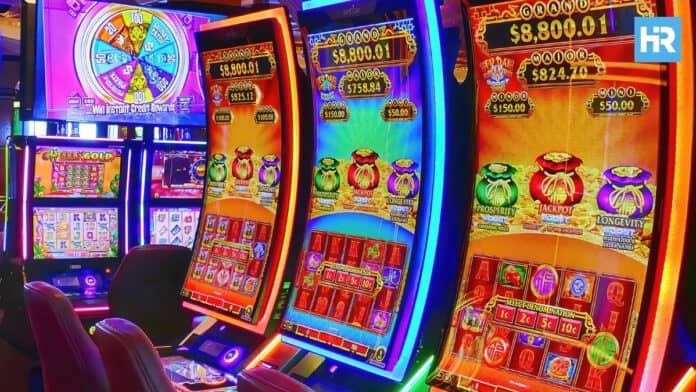
Atlantic City’s casino floors are buzzing with something new that’s reshaping the gambling experience across the Garden State: Interactive slots.

These next-gen games are merging conventional slot action with video gaming elements, creating a more hands-on adventure that’s catching fire with the local crowd.

The shift comes as gaming establishments are looking for ways to bring in new players. Industry insiders point to these skill-based machines as more than just a passing fad — they’re shaping up to be a major part of New Jersey’s gaming future.

So, what’s all the hype about? Here’s everything you need to know about how interactive slots are taking over NJ casinos.

The Rise of Interactive Slots

What are interactive slots exactly? They’re the latest revolution sweeping across New Jersey’s casinos, with companies like GameCo and Skillz leading the industry’s bold transformation.

Simply put, Interactive slots are games that blend traditional slot machine elements with skill-based challenges or video game-style features.

GameCo made history when it rolled out the first skill-based video gambling machines in the state, blending arcade-style action with real-money betting opportunities, a shift inspired by how slot games are increasingly incorporating interactive features and mini-games.

Not to be outdone, Skillz — already a heavyweight in competitive mobile gaming — has jumped into the arena with its own spin on skill-based slot machines. Their approach combines the thrill of gaming tournaments with conventional slot mechanics.

These innovators are fundamentally reshaping what it means to hit the casino, offering experiences that demand player engagement and actual skill, a far cry from the mindless button-pushing of yesterday’s one-armed bandits.

GameCo’s Genre-Fusion Approach

GameCo’s revolutionary machines have brought the living room gaming experience straight to the casino floor, with an impressive lineup of racing, sports, and shooter titles — all featuring integrated betting systems. Players aren’t just pulling levers anymore; they’re gripping controllers and placing real wagers.

Their standout game, Danger Arena, puts gamblers in the driver’s seat of a first-person shooter, where quick reflexes and sharp aim directly impact both the gameplay and the potential jackpot.

It’s a far cry from traditional slots, attracting a new breed of casino-goers who’d rather blast virtual enemies than watch fruit symbols align. For these action-hungry patrons, the days of mindlessly hitting the spin button are long gone.

Skillz’s Competitive Slot Tournaments

Skillz has revolutionized the traditional one-armed bandit by injecting multiplayer showdowns into the gambling equation, launching real-time slot tournaments that pit player against player.

These contests turn solitary spinning into a social spectacle, with outcomes hanging on split-second timing, precision tapping, and performance during bonus features.

Taking a page from the mobile gaming playbook, the platform has rolled out leaderboards and seasonal challenges that keep gamblers coming back for more.

This community-driven approach — already a smash hit in the smartphone gaming world — transforms the once-isolated casino experience into something far more socially dynamic, with bragging rights on the line alongside potential payouts.

Integration of Personalized Player Profiles

Some developers are exploring persistent player profiles — common in video games — as a future feature for interactive slots, though their implementation in New Jersey casinos remains limited due to regulatory constraints.

These digital identities record every win and loss, gradually unlocking fresh levels, exclusive virtual items, and special achievements as players continue to test their luck.

The system borrows heavily from role-playing games, creating an addiction-by-design that keeps patrons coming back to continue their digital journey.

Casino operators have essentially copied the playbook that’s made console and mobile games so irresistible, transforming one-off gambling sessions into an ongoing saga where today’s play builds directly on yesterday’s progress.

Partnerships with Game Studios and Tech Innovators

To maintain their innovative edge, GameCo and Skillz aren’t playing around with second-rate technology. Both companies have inked deals with heavyweight tech partners and creative powerhouses.

GameCo has leveraged popular game development platforms like Unity and Unreal to elevate the visual quality of its titles, although formal partnerships with these engines or their developers haven’t been publicly confirmed.

These strategic alliances are transforming the casino floor into something that looks more like an arcade on steroids. Players can now enjoy slot games featuring Hollywood-quality graphics, storylines that change based on player choices, and richly detailed virtual worlds—elements previously reserved for blockbuster console titles, not the humble slot machine.

The lines between Vegas and PlayStation continue to blur by the day.

Interactive Slot Games on Online and Mobile Platforms

What began as innovations confined to physical casino floors has now burst into the digital realm. Both industry pioneers, Skillz and GameCo, have started unleashing online versions of their interactive hits, carefully tailored for smartphones and computer screens alike.

The strategic pivot mirrors the gambling industry’s wider embrace of all things digital, while simultaneously cracking open fresh revenue streams beyond traditional gambling halls. The timing couldn’t be better, with online betting markets exploding in regions where virtual gambling has gotten the green light from regulators.

For many players, the thrill of skill-based slots will soon be available without setting foot in Atlantic City.

Shift from Traditional to Interactive Slots

Traditional slot machines rely heavily on chance, with outcomes determined by random number generators.

In contrast, interactive slots incorporate skill-based elements, such as mini-games and decision-making scenarios, allowing players to influence outcomes to some extent.

For instance, bonus rounds may involve puzzle-solving or reflex-based challenges, adding a layer of engagement and strategy. This shift not only enhances the gaming experience but also provides a sense of control and accomplishment for players.

How Traditional Slots Work: Reels, RNGs, Payouts & Simplicity

Classic slots operate on pure chance through a fixed algorithm — typically a Random Number Generator (RNG) — that determines every spin outcome. The ritual is familiar to generations of gamblers: insert cash, press a button or yank the lever, then cross your fingers as the reels spin.

Beyond that initial action, players are merely spectators. This stripped-down formula dominated casino floors for decades, its simplicity and rapid-fire play keeping seats filled around the clock.

RNGs: The Hidden Engine Behind Every Spin

Beneath the flashing lights lies the beating heart of every slot machine — the RNG. This tireless digital workhorse cycles through thousands of number combinations each second, even when nobody’s playing.

The moment a gambler hits “spin,” the system freezes on a specific number that translates to a particular reel arrangement, making predictions or manipulation utterly impossible.

Paylines and Payout Tables

Traditional machines operate with fixed paylines — predetermined patterns where matching symbols must align to trigger wins. While vintage one-armed bandits featured just a single payline, their modern descendants might offer 5, 10, or even 20.

Every machine displays its payout table — a non-negotiable contract showing what each winning combination delivers, all hardwired into the game’s programming.

Volatility and Hit Frequency

The gambling industry’s secret sauce lies in how slots are calibrated for volatility—high-risk machines deliver fewer but more substantial payouts, while their low-volatility cousins offer smaller, more frequent wins.

Hit frequency, meanwhile, tells how often players can expect some return. These factors, baked into each machine’s design, determine how long players stay engaged without altering the fundamental luck-based nature of play.

The Psychology of Simplicity

Though offering minimal interaction, traditional slots are masterworks of behavioral engineering. The sensory barrage of sounds, lights, and animations rewards even minor victories.

The notorious “near-miss” experience — almost winning — triggers dopamine rushes that keep players coming back, a pattern noted by many who’ve struggled with responsible gambling.

This psychological sleight-of-hand explains their enduring appeal, at least until interactive alternatives began reshaping the landscape.

How Interactive Slots Work

How interactive slots work represents a fundamental shift in the casino ecosystem. While conventional machines bank on pure chance and monotonous spinning, their interactive cousins deliver something far more captivating — weaving together player skill, character-driven storylines, and meaningful choices into the gambling experience.

These revolutionary games deliberately smudge the boundary between traditional gambling and video gaming, elevating players from passive button-pushers to active adventure participants.

By incorporating challenging mini-games, branching narratives, difficulty levels that adapt to player skill, and robust social features, these machines create a gambling journey that evolves with each session.

It’s a page torn straight from the playbook of blockbuster video games and addictive mobile apps — and it’s changing how people view the casino floor.

Rise of Player Agency in Interactive Games

What sets interactive slots apart is the unprecedented level of player involvement they require.

Gone are the days of mindlessly hitting “spin” and zoning out — today’s machines ask gamblers to make real choices, from selecting which mystery door might hide the jackpot to plotting a path through increasingly complex puzzle levels.

This fundamental shift introduces a genuine thinking component to the casino experience. By transforming players from mere observers into active participants, these new-age slots create a deeper psychological connection to the game.

When you’ve personally chosen your path, that winning moment feels earned rather than random — a subtle distinction that keeps players emotionally invested and reaching for their wallets far longer than traditional machines ever could.

Mini-Games: Skill Meets Reward

A defining feature of interactive slots is their clever incorporation of mini-games that break up the spinning monotony. These bite-sized challenges run the gamut from target-shooting galleries to memory-matching puzzles and quick-thinking logic games that keep players on their toes.

Unlike traditional bonus rounds, where players simply watch extra spins unfold, these interactive segments reward actual skill alongside Lady Luck. Lightning-fast reflexes might multiply winnings significantly, while smart decision-making could reveal hidden treasure rooms normally inaccessible to the average player.

This subtle shift creates the powerful impression that personal ability — not just random chance — determines who walks away a winner, fundamentally transforming the psychological contract between player and machine.

Narrative-Driven Gameplay and Story Arcs

Another groundbreaking development is the introduction of compelling storylines that gradually unfold with each spin.

Today’s interactive slots frequently showcase elaborate themed narratives, whisking players away on mythical quests, entangling them in high-stakes heists, or launching them into deep space adventures.

Each bonus round or level-up reveals another chapter in the unfolding drama, creating an experience more reminiscent of Netflix binges or console gaming marathons than traditional gambling.

This episodic approach hooks players through the powerful one-two punch of narrative curiosity and potential payouts, keeping them glued to machines long after their predecessors would have walked away.

When finding out “what happens next” becomes as motivating as winning money, casinos have effectively doubled their hold on player attention.

Popular Themes & Features in Interactive Slots

Cinematic Themes in Slots

Story-driven slots increasingly tap into Hollywood-worthy genres that instantly resonate with players.

Yggdrasil’s wildly popular Vikings Go Berzerk game throws gamblers headfirst into Norse battlefields alongside bearded warriors facing off against mythical sea monsters, while NetEnt’s Cash Noire plunges players into the smoky underworld of a hardboiled detective thriller.

These immersive themes deliver something traditional spinning fruit symbols never could: a sense of adventure that transforms the gambling experience into something far more captivating.

Level-Based Progression and Unlockable Content

The casino floor has adopted tricks straight from the video game playbook, with many interactive slots now featuring RPG-style progression systems.

Games like Immortal Romance introduce characters gradually, each bringing their own backstory and unique bonus features to the table.

The clever hook? The more you play, the more narrative content unlocks before your eyes. It’s the same addictive formula that keeps viewers glued to Netflix until 3 a.m., now weaponized on the casino floor with a simple message: just one more spin to see what happens next.

Emotional Engagement Through Characters

By incorporating named characters with distinct personalities, professional voice acting, and cinematic animated sequences, developers have discovered the secret to player loyalty.

Gamblers begin forming genuine connections, rooting for protagonists or growing curious about a villain’s mysterious past.

This emotional investment creates a bond that traditional slots could never achieve. When abstract cherries and bells are replaced by characters with dreams and motivations, players aren’t just chasing payouts—they’re following a story they’ve become invested in.

Storytelling as a Retention Strategy

Make no mistake — these narratives aren’t just window dressing. They represent a calculated retention strategy proven effective across gaming platforms. Like addictive mobile games that leave players hanging between episodes, story-driven slots entice gamblers to return and discover what unfolds next.

While casinos closely guard their performance metrics, a recent 2024 report by Bain & Company confirms the broader trend: today’s players gravitate toward immersive experiences that forge deeper emotional connections.

The data supports what casino operators already know: serialized storytelling significantly boosts both playing time and the likelihood of return visits.

Adaptive Difficulty and Personalized Experiences

Many interactive slot games now harness sophisticated machine learning algorithms that continuously adjust gameplay based on individual player performance. These smart systems silently monitor every choice and reaction time, creating a customized experience behind the scenes.

Struggling with that reflex-based shooting gallery? The machine might subtly slow down targets or trigger a helpful tutorial overlay. Meanwhile, players demonstrating exceptional skill find themselves facing increasingly challenging obstacles, with correspondingly juicier rewards dangling as motivation.

This intelligent adaptability ensures everyone stays in their personal “flow zone,” neither bored by trivial challenges nor frustrated by impossible ones, keeping players glued to their seats regardless of skill level.

Social Elements and Multiplayer Functions

A rapidly emerging feature in interactive slots is the incorporation of robust social elements. These include competitive leaderboards, team challenges, and even collaborative missions that bring strangers together on the casino floor.

Some cutting-edge machines now let players directly challenge friends or join forces in community-wide quests where group accomplishments unlock special bonuses for everyone involved.

This newfound social dimension, virtually nonexistent in traditional one-armed bandits, fosters genuine community connections among players while cleverly borrowing engagement strategies from wildly successful mobile games like Candy Crush and Clash Royale.

When the thrill of competition and camaraderie enters the equation, the solitary slot experience transforms into something far more compelling — and potentially addictive.

Top Interactive Casino Games Redefining NJ Casinos

As interactive casino gaming continues its dramatic evolution, several standout titles have captured players’ attention by blending traditional slot mechanics with video game elements.

These breakthrough games incorporate skill-based challenges, immersive storylines, and split-second decision-making that transforms the gambling experience entirely.

The current cream of the crop offers players much more than simple spinning reels—they deliver adventures that unfold with each bet. Below are the interactive casino games making waves across New Jersey’s gambling scene:

  • Gates of Olympus from Pragmatic Play transports players to the realm of Greek gods with its cascading reels, multiplier systems, and thunder-inducing free spins featuring the mighty Zeus himself.
  • Wanted Dead or a Wild by Hacksaw Gaming drops gamblers into a dusty frontier town where high-noon duels, unexpected bonus features, and gritty visual styling create a truly immersive Wild West experience.
  • Chaos Crew, another Hacksaw Gaming creation, brings street art aesthetics to the casino floor with its graffiti-inspired design, wildly unpredictable gameplay, and bonus rounds featuring jaw-dropping multipliers.
  • Aviator by Spribe reinvents gambling with its innovative crash mechanics, challenging players to bet on a digital plane’s flight trajectory and cash out before the inevitable crash—a test of nerves as much as luck.
  • Spaceman from Pragmatic Play takes the crash concept to the final frontier, where perfectly timed decision-making determines whether players land astronomical payouts or watch their investments vanish into the cosmic void.
  • Vikings Go Berzerk by Yggdrasil offers perhaps the most narrative-rich experience, with RPG-style progression systems and visceral character battles that would feel at home on a gaming console.
  • Immortal Romance from Microgaming continues to captivate with its gothic storytelling approach, featuring unlockable character arcs and unique bonuses tied to each protagonist’s journey.
  • Cash Noire by NetEnt rounds out the list with its film noir detective experience, complete with cinematic storytelling techniques and innovative clue-based bonus features that unfold like chapters in a mystery novel.

How Interactive Slots Are Attracting Younger Audiences

The strategic incorporation of interactive elements in modern slot machines is proving remarkably effective at drawing in a demographic that traditional casinos have struggled to capture: younger players.

These machines speak directly to Millennials and Gen Z gamblers who grew up immersed in video games and expect more than passive button-pushing from their entertainment options.

Unlike their parents, who might contentedly watch spinning wheels for hours, these digital natives crave games that challenge their skills and reward their decisions.

By cleverly weaving in compelling storylines, character advancement systems, and social competition features, these next-generation slots bridge the gap between conventional gambling and the interactive experiences younger players already seek out.

Casino operators see these innovations as crucial in ensuring their gaming floors remain relevant to the next wave of consumers with disposable income.

Gaming as a Primary Entertainment Medium for Gen Z

For Generation Z, gaming isn’t merely something to pass the time — it’s become the centerpiece of their entertainment universe. Recent Deloitte research paints a telling picture: roughly 27% of Gen Z teens now rank gaming as their preferred entertainment choice, outpacing traditional heavyweights like television and music streaming.

This fundamental shift explains why casinos scrambling to attract younger patrons are racing to incorporate gaming elements into their offerings.

The Role of Social Connectivity in Gaming

What many casino executives are just beginning to understand is that for younger players, gaming transcends pure entertainment — it’s a crucial social connector.

Newzoo’s Generations Report revealed that a staggering 71% of Gen Z and 67% of Millennials not only play games but actively consume gaming content across platforms, highlighting the multidimensional nature of modern gaming engagement.

This social component can’t be overstated. Games that foster genuine connection, friendly competition, and community building consistently outperform isolated experiences among these demographics.

The days of solitary gambling in silence are rapidly fading as younger players seek shared adventures even at the slot machine.

Technology’s Influence on Gambling Habits

Technology has fundamentally rewired how Gen Z approaches gambling experiences.

Recent analysis confirms that digital innovation is the primary catalyst behind younger generations’ growing interest in casino gaming, particularly when it combines the adrenaline rush of gambling with the familiar social dynamics they’ve grown accustomed to online.

This technological convergence presents both a challenge and an opportunity for forward-thinking casino operators.

Those willing to embrace interactive, socially driven gaming experiences stand to capture the attention and loyalty of these digital natives, while traditionalists clinging to outdated models risk becoming increasingly irrelevant to tomorrow’s high-value customers.

Economic Impact on Casinos and Revenue Growth

The surge of interactive and skill-based slot machines is dramatically reshaping casino economics, particularly across New Jersey’s gambling landscape.

By cleverly blending traditional gambling with video game elements, these next-generation machines are not only luring younger players but also boosting bottom lines and streamlining operations in ways traditional slots never could.

Revenue Per Machine: Are Interactive Slots More Profitable?

While hard data is still emerging, some operators report that interactive slots may boost player engagement and session length compared to traditional machines.

While specific numbers fluctuate depending on game design and engagement metrics, the added dimensions of interactivity and skill-based play frequently translate into longer playing sessions and repeat visits.

The strategic inclusion of immersive mini-games and storylines keeps players glued to their seats, often resulting in higher wagering volume over time.

Floor Layout and Time-on-Device Metrics

Casino floor configuration has evolved into a science as operators scramble to capitalize on interactive gaming trends.

Cutting-edge tools like Casino Intell’s floor mapping software now allow gambling establishments to monitor activity in real-time, spot revenue opportunities as they emerge, and quickly reconfigure their layouts to maximize returns.

Through detailed analysis of player behavior patterns, savvy casino managers strategically position their interactive machines in high-traffic zones, dramatically boosting both visibility and precious play-time statistics.

Operator Feedback and Industry Forecasts

The verdict from casino operators has been overwhelmingly positive regarding their interactive slot investments, with global gambling statistics backing their sentiments.

According to the American Gaming Association, slot machines and other casino games generated over $49 billion in 2023 revenue, though this figure includes both interactive and traditional formats.

Looking ahead, the global slot machine market is projected to expand at an impressive compound annual growth rate (CAGR) of approximately 7.9%, and could reach around $18 billion by 2030.

Industry analysts attribute this robust growth trajectory to continuing technological innovation and the skyrocketing popularity of interactive gaming experiences among younger demographics.

The Future of Interactive Slots and Casino Gaming in NJ

The explosive growth of interactive and skill-based slot machines represents a watershed moment for New Jersey’s casino industry. By brilliantly merging old-school gambling thrills with video game-style challenges, these innovations are capturing the attention of previously disinterested demographics.

This evolution delivers exactly what today’s players demand: personalized experiences that reward skill alongside luck.

As regulations adapt and market enthusiasm builds, these sophisticated machines aren’t merely a temporary trend but the new foundation upon which Atlantic City’s revitalized gambling scene will be built for decades to come.

Arizona Cardinals: The Story of Football’s Oldest Warrior

Arizona Cardinals

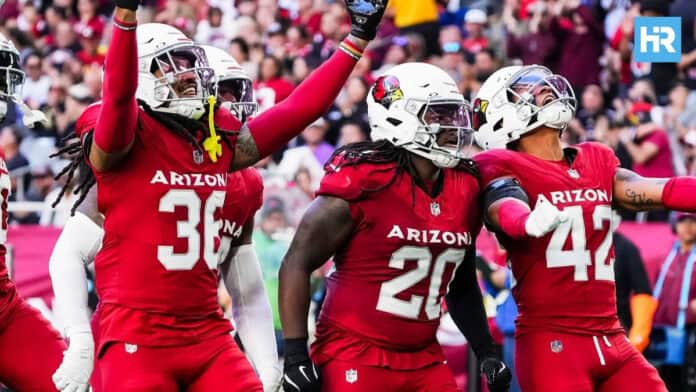
The Arizona Cardinals have one of the longest and most interesting stories in football. They started way back in 1898 as a small team called the Morgan Athletic Club in Chicago, and today, they are known as the oldest professional football team still playing in the NFL.

Over the years, the Cardinals have moved from Chicago to St. Louis, and then to Arizona, where they still play today. Along the way, they have seen both good times and bad. They have won championships, suffered through long losing seasons, and built some unforgettable moments that fans still talk about.

From their first championship win in 1925 to a second one in 1947, to their exciting but heartbreaking trip to the Super Bowl in 2008, the Cardinals have shown the world what it means to keep fighting, no matter what. Even when things got tough, the team stayed strong, always looking for a way to get better.

Now, we’ll walk through the full history of the Arizona Cardinals — how they started, the famous players who wore the uniform, the moves they made, and the special moments that have helped them for who they are today. This is the story of a team that has been through it all but never gave up.

Key Takeaways
  • The Arizona Cardinals are the oldest professional football team in the NFL, founded in 1898.
  • They have moved cities twice, starting in Chicago, then to St. Louis, and finally to Arizona.
  • Despite being one of the oldest teams, the Cardinals have won only two NFL championships (1925 and 1947) and have appeared in just one Super Bowl (2008).

The Birth of the Cardinals (1898–1920)

The Arizona Cardinals began in 1898 when Chris O’Brien formed a small team called the Morgan Athletic Club on the South Side of Chicago. At first, it was just a group of local athletes playing football together without any official league.

A few years later, O’Brien bought used football jerseys from the University of Chicago Maroons. The jerseys had faded from their original maroon color to a shade O’Brien described as “Cardinal red.” This name stuck, and it became part of the team’s identity.

As the team grew, they started playing their games on Racine Street in Chicago. Because of this, they became known as the Racine Street Cardinals. At the time, there was no organized national league, so the Cardinals competed against other amateur clubs in the Chicago area.

Joining the NFL and the Early Chicago Years (1920–1960)

In 1920, the Cardinals became one of the original teams to join the newly formed American Professional Football Association, the organization that would later change its name to the National Football League.

Right after joining, the Cardinals faced a challenge on their home turf. Another team in Chicago, the Chicago Tigers, also joined the league. To settle who would control the city, the Cardinals and Tigers agreed to a winner-take-all game. The Cardinals won a hard-fought 6-0 game, with the only touchdown scored by Paddy Driscoll, securing their right to stay.

In 1922, the team officially changed its name to the Chicago Cardinals. This was necessary because the league added a team from Racine, Wisconsin, and the Cardinals wanted to make sure their identity was clear.

Three years later, in 1925, the Cardinals reached their first major milestone. They finished the season with a record of 11 wins, 2 losses, and 1 tie, earning them their first NFL Championship. Even though the title involved some controversy with the Pottsville Maroons, the league awarded the championship to the Cardinals.

One of the most famous moments in early NFL history came in 1929 when Ernie Nevers scored all 40 points in a 40-6 victory over the Chicago Bears. His record for most points by a single player in a game still stands today.

In 1932, ownership of the team changed when Charles W. Bidwill bought the Cardinals. Bidwill kept the team going through the hard years of the Great Depression and World War II when many teams struggled just to survive.

After the war, Bidwill’s efforts to build a strong roster finally paid off. Under coach Jimmy Conzelman, the Cardinals put together a talented group known as the “Million-Dollar Backfield,” which included Charley Trippi, Paul Christman, Pat Harder, Marshall Goldberg, and Elmer Angsman. This team led the Cardinals to their second NFL Championship in 1947, beating the Philadelphia Eagles by a score of 28-21.

The Cardinals made it back to the title game again in 1948, but this time they lost to the Eagles, 7-0, in a game played in heavy snow.

After that, the team’s success faded. Through the late 1940s and 1950s, the Cardinals struggled to stay competitive, slipping back into years of losing seasons and shrinking fan support.

Moving to St. Louis (1960–1987)

By 1960, after 40 seasons in Chicago, the Cardinals were struggling with low attendance and financial problems. To try and save the team, ownership made the decision to relocate to St. Louis, Missouri.

In St. Louis, the team was usually called the “Football Cardinals” to avoid confusion with the city’s popular Major League Baseball team, the St. Louis Cardinals. Even with a fresh start in a new city, it wasn’t easy. The team had some competitive seasons but often came up short when it mattered most.

In 1964 and again in 1968, the Cardinals came close to reaching the playoffs but finished just half a game behind the Cleveland Browns both times. It wasn’t until 1974 that they finally broke through. With key players like quarterback Jim Hart, running back Terry Metcalf, offensive lineman Dan Dierdorf, and tight end Jackie Smith, the Cardinals won 10 games and captured the NFC Eastern Division title. They made it back to the playoffs the next season in 1975, winning the division again, but lost in the first round both years.

Even with a strong core of players and back-to-back division titles, the team couldn’t turn those successes into long-term dominance. Sustained playoff runs never materialized, and the excitement faded.

By the 1980s, the Cardinals were dealing with serious problems off the field, too. Fan support was weak, and the team was stuck playing in an old stadium that didn’t bring in enough money. Frustrated with the situation and looking for a better opportunity, owner Bill Bidwill decided it was time to move the franchise again.

The Cardinals’ Home: State Farm Stadium

The Cardinals moved into a new home in 2006 with the opening of the University of Phoenix Stadium in Glendale, Arizona. The facility replaced Sun Devil Stadium and gave the franchise a permanent, modern venue.

The stadium features a retractable roof and a roll-out Bermuda grass field that can adjust to both weather and playing conditions. It can hold up to 63,400 fans, and over the years, it has become a major venue for both the Cardinals and national events.

Since opening, the stadium — now called State Farm Stadium — has hosted multiple Super Bowls.

Legendary Cardinals Players and Records

Through more than a century of football, the Cardinals have had standout players set lasting records.

Ottis Anderson, who played for the team from 1979 to 1986, holds the record for most rushing yards in franchise history with 7,999 yards.

Jim Hart, the Cardinals’ long-time quarterback from 1966 to 1983, leads in career passing yards with 34,639.

No player made a bigger mark as a receiver than Larry Fitzgerald. From 2004 to 2020, Fitzgerald caught 1,432 passes, which makes him the team’s all-time leader in receptions and one of the greatest wide receivers in NFL history.

On defense, Chandler Jones recorded 71.5 sacks between 2016 and 2021, the most by any player in Cardinals history. Larry Wilson, who played from 1960 to 1972, still holds the franchise record with 52 career interceptions.

For scoring, Jim Bakken, the team’s kicker from 1962 to 1978, put up 1,380 total points, making him the Cardinals’ all-time leading scorer.

Beyond stats, several players stand out as defining figures in team history. Charley Trippi, a Hall of Famer from the 1947 championship team, helped lead the famed “Million-Dollar Backfield.” Paddy Driscoll, who starred in the 1920s, played a major role in establishing the team during its early NFL years. In more recent history, quarterbacks like Kurt Warner, who led the 2008 Super Bowl run, and Jake Plummer, who helped snap a decades-long playoff drought in 1998.

Ownership and Leadership Legacy

The Cardinals’ story begins with Chris O’Brien, who founded the team in 1898 as the Morgan Athletic Club. He ran the club through its earliest years and gave it the name “Cardinals” after acquiring used red jerseys.

In 1932, the team was bought by Charles W. Bidwill, beginning a long stretch of family ownership. Bidwill was responsible for building the team that won the 1947 NFL Championship, although he died before seeing it happen.

His son, William V. Bidwill, later took over and remained in control through the team’s moves from Chicago to St. Louis, and eventually to Arizona in 1988.

Today, the Cardinals are owned by Michael Bidwill, William’s son. Under his leadership, the team has continued to invest in players, facilities, and long-term growth — even as they work through the challenges of building a consistent winning culture.

The Cardinals Today and the Road Ahead

The Cardinals are now part of a much larger market than when they first arrived in Arizona. As of 2022, the population of Phoenix has grown to more than 1.6 million, one of the largest cities in the country.

Still, the team faces serious challenges. After back-to-back 4–13 seasons in 2022 and 2023, the Cardinals are once again trying to rebuild. Questions remain about coaching, player development, and how to get back to being a playoff team.

The Cardinals’ history is full of setbacks, but also of perseverance. Through more than a century of changes, the team has never stopped showing up. That, more than anything, defines what this franchise is — not as the oldest team in the NFL, but one that keeps moving forward, no matter how tough the road gets.

Learn to Paint Flowers with Valentyna Zasutska at Hoboken Museum

Paint With Valentyna Zasutska

On Tuesday, May 27, 2025, from 6:30 PM to 8:30 PM, the Hoboken Historical Museum will host a guided painting event called Acrylic on Canvas: Blossoming Brushstrokes. This session will be led by Valentyna Zasutska, a professional artist and architect. The workshop will take place at 1301 Hudson Street, Hoboken, New Jersey, and is open to all skill levels.

Attendees will work on a 9×12-inch acrylic floral painting and learn how to build it from start to finish. The event encourages both beginners and experienced painters to join. Everyone will be taught step by step.

Key Takeaways
  • Step-by-step acrylic painting on a 9×12-inch canvas with artist Valentyna Zasutska.
  • Valentyna’s works are featured in top design magazines and prestigious collections in Ukraine and the U.S.
  • Enjoy a creative evening with BYOB and light refreshments at the Hoboken Historical Museum.

Step-by-Step Painting in a Relaxed Setting

This is a hands-on session where participants will receive direct instruction from Valentyna. First, she will explain how to create a strong composition. Then, she will teach how to choose the right colors, mix them, and apply them in layers. Brush techniques will also be covered to help create texture and depth in the artwork.

All painting supplies will be provided. Since the event is BYOB, guests are invited to bring their own drinks. Light refreshments will also be available at the venue. The museum’s quiet and welcoming space will give participants the chance to focus, learn, and enjoy the painting process.

Valentyna’s teaching style is structured but supportive. She gives clear direction while allowing room for each painter’s creativity. As a result, even first-time painters will leave with a finished floral piece.

About the Artist: Valentyna Zasutska

Valentyna Zasutska is an artist and architect based in Jersey City, New Jersey, originally from Kyiv, Ukraine. She graduated in 2009 from the Faculty of Architecture at KNUBA (Kyiv National University of Construction and Architecture), where she studied Fine and Decorative Arts.

Since 2011, she has worked as both an architect and artist with the Zhenya Zasutsky and Team Architectural Bureau. Her art has been included in projects by well-known Ukrainian architects such as Serhiy and Vlada Makhno, Serhiy Gotvyansky, and Victoria Oskilko.

Her paintings have appeared in many private and public spaces in Ukraine and the United States, including in Los Angeles, New York, and San Francisco. Some of her work is held in the Museum of the History of Kyiv, and pieces from her “KYIV.DRONE” series are displayed in the Office of the President of Ukraine.

In addition to private collections, five of her paintings are on display at the Creative State of Arsenal, located at the historic Arsenal plant in Kyiv. Since 2022, her works have also been installed at the M11 hotel in Kyiv.

Her art has been featured in major magazines such as ELLE Decoration, Vogue, ID Interior, Home Interior, and Domus Design. These appearances show her strong connection to both the design and fine arts communities.

She also teaches painting to both children and adults. In her workshops, she focuses on encouraging creativity through practical techniques. She uses her background in both painting and design to help students build skills and confidence.

You can follow her work on Instagram at @valya_zasutska.

Event Details and Registration

This workshop will run for two hours, from 6:30 PM to 8:30 PM, and will be held at the Hoboken Historical Museum, located at 1301 Hudson Street, Hoboken, NJ 07030. It is scheduled for Tuesday, May 27, 2025.

The ticket includes all materials needed to complete a 9×12-inch acrylic floral painting. Light refreshments will be provided, and guests are welcome to bring their drinks.

Spots are limited. You can sign up and get your ticket by visiting the event page:

https://secure.givelively.org/event/hoboken-historical-museum-inc/acrylic-on-canvas-blossoming-brushstrokes-workshop

2025 Madrid Open: Full Breakdown of Matches, Players, and Schedule

Madrid Open

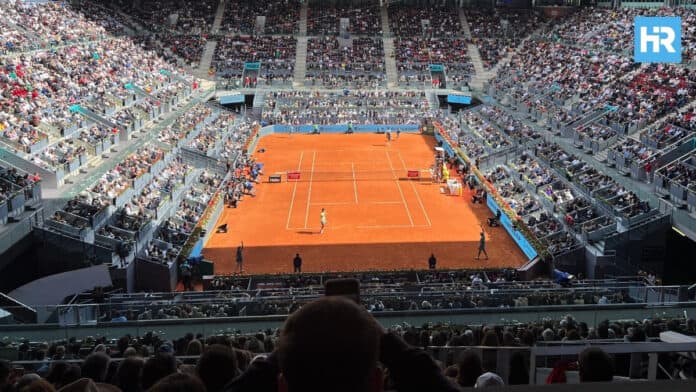
The 2025 Madrid Open started on April 22 and will run until May 4. It is one of the biggest clay tournaments of the season, just below the Grand Slams in importance. The tournament takes place at Caja Mágica in Madrid, Spain, including ATP Masters 1000 and WTA 1000 level events. This year’s draw features top names from both tours, including Novak Djokovic, Alexander Zverev, Iga Swiatek, and Aryna Sabalenka.

Key Takeaways
  • Novak Djokovic returns to Madrid for the first time since 2022, continuing his pursuit of a 100th career ATP title.
  • Carlos Alcaraz withdrew from the tournament due to injury, while Alexander Zverev aims to build momentum after his Munich win.
  • Jannik Sinner, the current World No. 1, is absent due to a hip injury, opening up the draw for new contenders.

Djokovic Returns, Alcaraz Pulls Out, and Zverev Chases Momentum

Novak Djokovic is back in Madrid for the first time since 2022. He has already won the tournament three times and is now chasing his 100th career ATP title. He won his last major title on clay at the Paris Olympics in 2024. Djokovic is 37 years old and has not won a Masters 1000 title since Paris 2023. Madrid has not been his strongest event in terms of win percentage, but he remains a major threat. He will start against either Matteo Arnaldi or a qualifier.

Unfortunately, Carlos Alcaraz won’t be returning to Madrid this year. The two-time defending champion withdrew from the tournament due to a right arm injury. Since 2022, he has dominated Spanish clay, winning 29 of 31 matches. Earlier this month, he reached the final in Barcelona but fell to Holger Rune. After battling injuries during that run, Alcaraz made the decision to prioritize his recovery ahead of Roland-Garros.

Alexander Zverev is seeded third in Madrid. He recently won the BMW Open in Munich, climbing just ahead of Carlos Alcaraz in the rankings by a slim margin. Zverev, a two-time Madrid champion (2018 and 2021), opened his tournament against Roberto Bautista Agut. Looking ahead, a potential third-round clash with Alejandro Davidovich Fokina—currently ranked 10th in the ATP Live Race to Turin—could be one of his tougher early tests.

Key Men’s Matches and Players to Watch

Several other ATP players are entering Madrid with strong momentum. Holger Rune, who had been struggling earlier in the year, returned to form by winning Barcelona. He is now back in the top 10 and begins against Flavio Cobolli or Fabian Marozsan. Rune also reached the final in Indian Wells last month.

Andrey Rublev, the 2024 Madrid champion, returns with an 11–3 record at the tournament. He has made it at least to round 16 in all four previous appearances. Rublev is in the same quarter of the draw as Zverev.

Jack Draper, who won Indian Wells, and Jakub Mensik, who beat Djokovic to win Miami, are also in the draw. Mensik, now seeded, plays a qualifier in his opener.

In addition, Alejandro Davidovich Fokina has made the finals this season in Acapulco and Delray Beach and recently reached the semi-finals in Monte-Carlo. If both he and Zverev win the early rounds, they could face each other in the third round.

The tournament also includes wild cards like Coleman Wong, Federico Cina, Martin Landaluce, Pablo Carreño Busta, and Marin Čilić. Wong and Cina face each other in the first round after strong performances in Miami. The draw also includes lucky losers like Botic van de Zandschulp and Rinky Hijikata, and qualifiers such as Fabio Fognini, Juan Manuel Cerúndolo, and Hugo Gaston.

Jannik Sinner, the current World No. 1, is not playing due to a hip injury and is expected to return after this tournament.

The men’s tournament schedule is:

  • April 23–24: First Round
  • April 25–26: Second Round
  • April 27–28: Third Round
  • April 29: Round of 16
  • April 30–May 1: Quarter-finals
  • May 2: Semi-finals
  • May 3-4: Final

Tournament Info, Seeds, and Broadcast Details

The Mutua Madrid Open was founded in 2002 and is held at Caja Mágica on outdoor clay courts. The ball used is the Dunlop ATP Ball. The tournament features a 96-player singles draw, 48 in qualifying, and 32 doubles teams. The prize money this year totals €8,055,385.

Current champions include:

  • Men’s Singles: Andrey Rublev
  • Women’s Singles: Iga Swiatek
  • Men’s Doubles: Sebastian Korda / Jordan Thompson
  • Women’s Doubles: Cristina Bucsa / Sara Sorribes Tormo

The 2025 Madrid Open is broadcast in Spain on RTVE/TVE, while international broadcast rights vary by country and by ATP/WTA coverage. Full broadcaster lists are available on the official websites of the ATP and WTA.

Responsible Gambling: How Online Casinos Promote Player Well-Being

Responsible Gambling

As online gambling becomes a multi-billion-dollar industry in the U.S., the term responsible gambling is everywhere. It’s in mission statements, regulatory filings, and random pop-up ads urging you to “play smart.”

But how are online casinos and iGaming platforms promoting players’ well-being?

In this article, I’ll go over the basics of responsible gambling, different tools that can prevent compulsive behavior before it becomes an addiction, and state laws responsible for the gambler’s protection.

What is Responsible Gambling?

At its core, responsible gambling refers to a set of principles and practices designed to keep gambling a recreational activity while protecting players from financial harm, addiction, or mental stress.

It emphasizes that gambling should be:

  • A form of entertainment — not a way to make money or solve financial problems.
  • Budgeted — meaning players should only gamble with money they can afford to lose, not rent money, savings, or borrowed funds.
  • Time-limited — players should be aware of how much time they spend gambling and avoid letting it interfere with work, relationships, or daily responsibilities.
  • Informed — gamblers should understand the odds of their games, how much they’re spending, and their risks.
  • Voluntary — free from pressure, compulsive behavior, or emotional triggers like stress or depression.

However, responsible gambling isn’t anti-gambling. It’s about reducing the risks of a gambling problem for people who might be vulnerable, whether they’re betting a few dollars on NFL Sundays or spinning virtual slots at 2 a.m. on a Tuesday.

How Online Casinos Monitor Player Behavior?

Before we discuss these tools in detail, it’s important to understand how platforms actually identify risky patterns in the first place.

Some casinos are now testing AI systems that flag high-risk behavior in real time. These systems track behavioral data across thousands of users simultaneously, looking for different patterns such as rapid, repeated bets within short time spans, unusually long playing sessions, or quick changes in betting amounts.

For example, if a player suddenly switches from $5 bets to $100 spins in the middle of a session, logs in at unusual hours, or gambles for six or more hours at a time, the system takes note.

Casinos add this data into behavioral risk models that compare individual users to known problem gambling profiles. If a player’s actions match those behaviors, the system may trigger soft interventions. It could be a pop-up message asking, “Need a break?” or “Would you like to set a time limit?”

In more serious cases, the platform might freeze the player’s ability to deposit more funds, temporarily lock the account, or even require the user to complete a responsible gambling check-in before continuing.

Role of Tools and Features in Responsible Gambling

Most platforms now offer a suite of features to help protect player well-being. These include self-imposed limits, automated reminders, cooling-off options, and full account exclusion.

Deposit Limits

Deposit limits are one of the most basic and widely available features in online casinos. Players can set daily, weekly, or monthly caps on how much money they can deposit into their account. Once that limit is reached, the system automatically blocks any further deposits until the set time period resets.

These limits are designed to prevent players from chasing losses or spending more than they can afford. In most jurisdictions, operators are not allowed to raise deposit limits instantly. For example, if a player wants to increase their cap, they usually have to wait 24 to 72 hours, giving them plenty of time to rethink the decision.

The issue is that players have to set them up first. Most don’t.

Session Time Limits

Session time limits allow players to control how long they spend gambling in one sitting. It could be 60 minutes or 6 hours per session. Once the time limit is reached, the platform automatically logs them out or prevents further gameplay.

This tool breaks the cycle of prolonged gambling sessions, where players can lose track of time, often winning back losses or continuing to play beyond what’s healthy.

It helps reduce the risk of mental fatigue and keeps gambling in check, so it remains recreational rather than turning into a compulsive habit.

Reality Checks

Reality checks are pop-up notifications that appear during gameplay, often at regular intervals like every 30 minutes or hour. For example, a message might read: “You’ve been playing for 45 minutes. You’ve wagered $200. Do you want to continue?”

Some platforms allow players to customize how often they receive these reminders, adjusting the frequency based on personal preference. While easy to dismiss, they interrupt the immersive gambling experience and give players a chance to decide whether to continue playing or take a step back.

Cool-off Periods

A cool-off period is a short-term self-exclusion tool where players can voluntarily suspend their accounts for a chosen period. It could be 3 days, 1 week, or up to a month.

During this time, they can’t log into their gambling account, deposit or withdraw funds, enter fantasy sports contests, make sports wagers, play casino games, or change existing bets or wagers.

This feature is usually available in the account settings and doesn’t require customer support to activate.

Self-Exclusion Programs

Self-exclusion is a more serious, long-term option for problem gamblers who want to regain control or stop altogether. When a player opts into a self-exclusion program, they voluntarily ban themselves from accessing a gambling platform for a set period, usually ranging from a few months to several years.

During that time, the operator is legally required to block access to the user’s account, refuse new sign-ups, and cut off all marketing communication. Some jurisdictions maintain centralized self-exclusion registries, meaning that if a player self-excludes on one platform, others in that jurisdiction must block them too.

While these tools have helped players avoid deeper losses, most are voluntary. And when you’re in the middle of a fast-paced game of blackjack, spinning reels, or chasing a bonus round, setting up these features isn’t always top of mind.

It’s also important to note that most players even confuse responsible gambling programs with those meant strictly for problem gamblers.

They assume the tools don’t apply to them, so they ignore them entirely, defeating the whole purpose.

Different Organizations Behind Responsible Gambling

Unfortunately, there’s no single federal body enforcing responsible gambling standards. Instead, the work falls on a few non-profit organizations, including:

  • National Council on Problem Gambling
  • The International Center for Responsible Gaming
  • American Gambling Association

Since these groups are often underfunded, it can be difficult for them to make a significant impact in the actual prevention of problem gambling. Most enforcement comes at the state level, which leads us straight into the next issue.

Why the State You Gamble In Matters

In the US, each state has its own gambling regulations, and so are the responsible gambling requirements. For instance, Hawaii and Utah prohibit any form of gambling altogether, including online casinos.

In Washington State, it’s considered a felony to transmit or receive gambling information over the internet, while other states treat it as a misdemeanor, enforcing fines or light penalties instead of criminal charges.

On the other end of the spectrum, states like New Jersey, Connecticut, Delaware, Michigan, Pennsylvania, Rhode Island, and West Virginia have fully legalized online gambling within state lines. That means players’ protection depends on the location.

New Jersey requires all licensed online casinos to offer time limits, spending caps, and self-exclusion options as part of their standard platform features. Beyond that, the Division of Gaming Enforcement (DGE) actively monitors how these tools are used and whether casinos promote them effectively.

Pennsylvania takes a more supportive approach. The Pennsylvania Gaming Control Board’s Office of Compulsive and Problem Gambling works with both operators and nonprofits to raise awareness and promote responsible play.

They provide low-cost treatment referrals, a state-run self-exclusion database, and educational campaigns for compulsive gamblers. While the tools are available, many are opt-in rather than compulsory.

The Michigan Gaming Control Board regulates online casinos, internet gaming, fantasy sports, and online sports betting, but enforcement varies between tribal and commercial operators.

In short, two people logging into the same gambling site from two states could see very different features or none at all.

Bottom Line

Responsible gambling is real, but it’s complicated. Online casinos profit when you lose. The longer you stay, the more you bet, the more they win. So when they say they care about your well-being, there’s also little to no transparency.

Yes, some platforms offer tools to protect you from harm or addiction, but those tools sometimes sit quietly in the background while the bonus banners and jackpot animations take over.

It is your responsibility to set your budget and limits and play responsibly. At the end of the day, the house might offer you a safety net. But it’s still the house.

Steelers Target Jets’ No. 7 Pick for Shedeur Sanders as Aaron Rodgers Remains Undecided

Steelers Eye Sanders as Aaron Rodgers

The Pittsburgh Steelers are in a difficult spot. With the 2025 NFL Draft approaching, they still don’t know if Aaron Rodgers will play for them next season. The 41-year-old quarterback has not announced whether he will join the Steelers, sign with another team, or retire.

Because of this, head coach Mike Tomlin and general manager Omar Khan are considering a trade with the New York Jets. The goal of this trade would be to move up from the 21st pick to the 7th pick in the draft. If they can do that, they could select quarterback Shedeur Sanders from the University of Colorado.

The New Orleans Saints, who draft before Pittsburgh, are also interested in Sanders. So, if the Steelers want him, they may have to act fast. Sports Illustrated’s Zach Pressnell explained that trading with the Jets could allow the Steelers to pick Sanders before the Saints.

This trade would likely cost Pittsburgh future draft picks or key players. Still, if Rodgers does not return, the Steelers need a reliable quarterback for the future. That is why this move is being considered seriously.

Key Takeaways
  • Mike Tomlin and the Steelers are preparing to trade with the Jets to secure QB Shedeur Sanders ahead of teams like the Saints.
  • Aaron Rodgers remains undecided about his future, reportedly interested in the 49ers and Vikings while delaying the Steelers’ plans.
  • Pittsburgh has explored several QB options and is preparing for all possibilities ahead of the 2025 NFL Draft.

Steelers Study Several Quarterbacks as Backup Plans

While they wait on Rodgers, the Steelers are not staying idle. They have already met with four quarterback prospects:

  • Shedeur Sanders (Colorado)
  • Kyle McCord (Syracuse)
  • Tyler Shough (Louisville)
  • Jaxson Dart (Ole Miss)

In addition to those visits, Tomlin and Khan attended pro days at major programs. They traveled to Alabama to see Jalen Milroe, Ohio State for Will Howard, Texas for Quinn Ewers, and Notre Dame for Riley Leonard, which shows the Steelers are looking at all options.

The team currently has the 21st overall pick. However, Sanders might be selected before then. If the Steelers want to guarantee they get him, they will need to move up.

A recent fan poll showed that most fans expect the Steelers to draft a rookie quarterback. About 52% believe the team will select a rookie only. Another 37% think they will sign Rodgers and still draft a quarterback. Only 12% believe the team will just sign Rodgers.

Rodgers Possibly Interested in 49ers or Vikings

Aaron Rodgers may be the biggest question in the NFL right now. He has not said anything about playing in 2025, and that uncertainty is affecting the Steelers’ plans.

According to Colin Cowherd from FOX Sports, Rodgers may not want to play in Pittsburgh. He said the Steelers have issues like a weak offensive line, two unproven receivers, and the loss of running back Najee Harris. Cowherd believes Rodgers wants to wait and see if a better opportunity opens up—possibly with the San Francisco 49ers.

Rodgers is also connected to the Minnesota Vikings. According to Albert Breer from Sports Illustrated, Rodgers reached out to the Vikings with a plan. He offered to play one season while helping rookie JJ McCarthy learn. Minnesota considered the idea but decided to move forward with McCarthy as the starter.

As for the 49ers’ quarterback Brock Purdy, who is only 25 years old, he led the team to a Super Bowl and an NFC Championship Game. Even though his 2024 season had ups and downs, San Francisco is expected to sign him to a new contract. So, it’s unlikely that Rodgers will land there.

New Orleans Saints Enter the Picture

The Saints are another team that could sign Rodgers. After starting quarterback Derek Carr got injured, New Orleans became a possible destination. The team has a new head coach, Kellen Moore, but they are facing major financial problems.

Rodgers might not be a good fit there. New Orleans did not plan to go after him until Carr got hurt. Their roster is not built to support a veteran quarterback with title hopes. And unlike the Steelers, the Saints do not have a strong coaching staff or a solid defensive unit.

Rodgers’ performance in 2024 was also a concern. He won only five games with the Jets and ranked 22nd on the PFSN QB+ metric, lower than Justin Fields (15), Russell Wilson (17), and Derek Carr (11). While Rodgers is still a big name, his recent play has not matched his past success.

Steelers Getting Ready for All Outcomes

With all this in mind, the Steelers are preparing for every possible outcome. If Rodgers joins, they will have a veteran leader. If not, they need to be ready to draft a future starter.

Mason Rudolph is still on the team, and he gives them experience. But the front office clearly wants a new quarterback to lead the franchise long-term.

The Steelers’ trade with the Jets could be their best chance to get Sanders before the Saints do. But if the trade does not happen, they still have other quarterback options they have looked at closely.

Right now, Aaron Rodgers holds the key. But the Steelers cannot wait forever. They are ready to make a move.

Ben Rice Injury Update: Elbow Contusion Confirmed After HBP

Ben Rice Injury Update

On Saturday, during a game against the Tampa Bay Rays at Tropicana Field, New York Yankees designated hitter Ben Rice was hit by a pitch twice. In the first inning, he was hit on the foot. Then, in the fourth inning, he was struck on his left elbow by an 88.2 mph slider thrown by Rays reliever Manuel Rodríguez.

After the second hit-by-pitch, Rice stayed in the game and scored a run. However, when his spot came up in the sixth inning, he was replaced by pinch-hitter Pablo Reyes. The team then announced that Rice would go to St. Joseph’s Hospital for X-rays and a CT scan.

The tests showed no fracture or serious damage. The team said he had a contusion, meaning a bruise and some swelling.

Manager Aaron Boone said on Sunday that Rice was feeling “quite a bit better” and was in good spirits. He said the imaging results helped ease everyone’s concerns.

Because of the swelling, Rice did not play in Sunday’s game and was not available off the bench. The Yankees are being cautious and hope he can return during their next series against the Cleveland Guardians, which begins Monday.

Key Takeaways
  • Ben Rice was hit on the elbow by an 88.2 mph slider but has no fracture or structural damage.
  • He is day-to-day with a contusion and may return during the Cleveland series.
  • Rice has been one of the Yankees’ best hitters this season, with five home runs and a .292 average.

Why Rice’s Health Matters to the Yankees Right Now

Rice has been one of the Yankees’ most productive hitters this season. Through 19 games, he is batting .292 with five home runs, nine RBIs, two stolen bases, a .403 on-base percentage, and a 1.003 OPS. His wRC+ is 188, and he has posted 0.9 fWAR.

Only Aaron Judge has had better offensive numbers on the team.

Rice was drafted in the 12th round in 2021 from Dartmouth College. He made his major league debut on June 18, 2024. On July 6, 2024, he hit three home runs in one game and drove in seven runs, tying Lou Gehrig’s rookie record for RBIs in a game.

Although he struggled for the rest of the 2024 season and finished with a .171 batting average, he added muscle during the offseason and came into 2025 ready to improve. His hard-hit rates and exit velocities have been among the best on the team.

Last Thursday, Rice had his first career four-hit game against the Rays. On Friday, he almost hit a two-run home run, but it was caught at the wall by Rays outfielder José Caballero.

On Saturday, Rice led off the game, got hit by a pitch, and scored the Yankees’ first run before getting hit again in the fourth.

Yankees Adjust Lineup While Rice Recovers

While Rice recovers, the Yankees have adjusted the lineup. On Sunday, Trent Grisham led off and hit a solo home run. He has also hit five home runs this season and could see more time at the top of the order.

Aaron Boone said he liked the way Grisham had been swinging the bat. With Aaron Judge hitting behind him, Grisham could help keep the offense moving while Rice is out.

Max Fried started Sunday’s game. The Yankees wanted a long outing from him since the bullpen had been heavily used in the series. Boone said the team did not want to use Rice even as a pinch-hitter because of the swelling and the early point in the season.

Updates on Yankees Pitching

In other news, Yankees reliever Clayton Beeter made his first rehab appearance after being held back in spring training due to a shoulder injury. Pitching for Single-A Tampa on Sunday, he struck out all four batters he faced. His fastball reached between 95 and 98 mph.

Boone said the team is happy with his progress and sees him as someone who could contribute this year.

Jonathan Loáisiga, who had elbow surgery, threw live batting practice at the Yankees’ player development complex. If all goes well, he is expected to throw one more session before beginning a rehab assignment.

How Nikola Jokić Became a Living Legend in Basketball

Nikola Jokić’s Journey

Nikola Jokić is not the fastest or the strongest player in the NBA. He does not jump high, and he often looks tired during games. But no one understands the game like he does. And in 2023, he became the best player in the world when he led the Denver Nuggets to their first NBA championship.

Let’s go back to where it all started.

Key Takeaways
  • Nikola Jokić became the first player in NBA history to average a triple-double in the NBA Finals, leading the Denver Nuggets to their first championship in 2023.
  • Jokić was drafted 41st overall in 2014, slept through the announcement, and went on to win two MVP awards and a Finals MVP, proving that greatness can come from unexpected places.
  • Known for his high basketball IQ and leadership, Jokić consistently improves teammates’ performance, creating what’s widely known as “The Jokić Bump.”

The Beginning: From Sombor, Serbia

Nikola Jokić was born in Sombor, Serbia, a small town that most basketball fans had never heard of. He lived in a small apartment with his parents, two older brothers, and grandmother. His father was an agricultural engineer. Life was not easy. He grew up during the Yugoslav Wars and sometimes had to hide in bomb shelters. At that time, basketball was not necessary—survival was.

Even so, Jokić started playing basketball with his brothers, Strahinja and Nemanja. He was younger and smaller, but he kept playing. Eventually, he joined Mega Basket, a Serbian club in the Adriatic League. He played there for three seasons and kept improving. In his final season in 2015, he averaged 15.4 points, 9.3 rebounds, and 3.5 assists. That same year, he was named the ABA League MVP and Top Prospect.

Drafted by the Nuggets While Asleep

Because of his performance, NBA scouts noticed him. In the 2014 NBA Draft, the Denver Nuggets selected him with the 41st overall pick. Jokić was not watching. He was asleep in Sombor when his name was called.

He joined the Nuggets a year later for the 2015–2016 season. As a rookie, he averaged 10 points, 7 rebounds, and 2.4 assists per game. He made the All-Rookie First Team. People started calling him “The Joker” for his humor and style of play.

Rapid Rise and Breaking Records

In his second season, he averaged 16.7 points, 9.8 rebounds, and 4.9 assists. He recorded six triple-doubles, something no center had done since David Robinson in 1993–94. In his third season, he averaged 20.1 points, 10.8 rebounds, and 7.3 assists. He helped the Nuggets reach the playoffs for the first time since 2013. That year, he tied Wilt Chamberlain’s record for most triple-doubles in a season by a center, twelve in total.

By the 2020 playoffs, Jokić was already one of the best players in the league. He led the Nuggets to the Western Conference Finals by coming back from two 3-1 deficits against the Utah Jazz and the Los Angeles Clippers. No other team had ever done that in the same postseason. Jokić averaged 24.4 points, 9.8 rebounds, and 5.7 assists.

Winning the MVP and a Championship

In 2021, Jokić became the first center since Shaquille O’Neal in 2000 to win the MVP award. He averaged 26.4 points, 10.8 rebounds, and 8.3 assists while playing in all 72 games. He shot 56.6% from the field and 38.8% from three-point range. He won the MVP again the next season.

In 2023, he led the Nuggets to the best record in franchise history, finishing with a 58-14 regular season. During the playoffs, he averaged 28 points, 12 rebounds, and 10 assists. The Nuggets beat the Dallas Mavericks, Phoenix Suns, Los Angeles Clippers, and finally, the Miami Heat in the NBA Finals.

The Nuggets won the title in five games. Jokić became the first player in NBA history to average a triple-double in the Finals. He also became the first center since Tim Duncan in 2003 to win Finals MVP. His numbers in the Finals were 28 points, 12 rebounds, and 10 assists per game.

That Championship Moment

As the final buzzer sounded, Jokić didn’t jump or scream. He rather shook hands with the Heat players and even held some of their heads in his large hands. He wiped his face with a towel as confetti fell. Then, Lisa Salters from ESPN walked up to interview him. Jokić, almost seven feet tall, bent his head to listen.

The story is even more unbelievable when you remember what Serbian agent Misko Raznatovic posted after the Finals. He shared a photo of five-year-old Jokić wearing a Nuggets sweatshirt.

He wrote, “Back in 2000, when this photo was taken, [Jokić] he is wearing a Nuggets sweatshirt — not because he loved basketball or even knew about the Nuggets — but because he got it as a present. Chances of a kid from a small Serbian town having a sweatshirt from a lesser-known American team back in 2000 were minimal, but chances of that same kid growing up to play basketball and achieve his career high, win two MVP titles, and sign a historic agreement with the same club whose sweatshirt he wore at age 5, were — zero.

The Jokić Bump: How He Improves Everyone

Nikola Jokić also improves his teammates. People call this “The Jokić Bump.” That means players get better just by playing with him.

Christian Braun learned this quickly. During his rookie season, he didn’t take stretching seriously. He would joke and talk while lying on the floor. One day, Jokić walked over, picked up Braun’s mat, moved it next to his own, and said, “You’re gonna do this every day. Right here.”

Since then, Braun stretches next to Jokić before every practice. They race down the court after warmups. Braun doesn’t talk until stretching is done. He said, “It can save your career. Your body is your tool, and he had to understand that he’s young and stuff, but I think a routine is something that you’re doing over the course of time.

In 2024–25, Braun had his best season ever. He set career highs in points, rebounds, and assists. He led the league in fast-break points. Jokić assisted Braun on 168 baskets that season, the second-most of any duo in the league. The only pair ahead of them was James Harden and Ivica Zubac of the Clippers.

Braun said, “It’s all credit to Nikola. He’ll grab you during the game, and he’ll tell you, ‘I want you here because they’re gonna do this.’ He’ll know three steps ahead.

Jokić’s Leadership Without Words

Jokić doesn’t talk much, but his actions teach. During a game, when Bruce Brown yelled “Wolf! Wolf!” to signal a double-team, Jokić didn’t pass. Instead, he threw the ball out of bounds. Later, he told Brown, “Don’t cut. I’m listening to your voice.

Monte Morris said Jokić communicates with his eyes. He explained, “He’ll just put his eyes up big.” That meant it was time to cut.

Bogdan Bogdanović, who played with Jokić on the Serbian national team, said Jokić always tells him, “Steal every second of the game.” That means always thinking fast, even right after a rebound. Bogdanović said, “It’s just pop, fast. Two, three seconds to bring the ball up. It’s constantly thinking.”

Isaiah Hartenstein played with Jokić in 2020–21. He followed him around, asking questions. He said, “(Jokić) is really open. He’s not gonna come to you and tell you, ‘Hey, you should do this.’ But when you ask him questions, he’ll really take time and go through it with you.

Jokić even draws up plays during games. He did it in Denver, and he also did it with Serbia. He keeps plays simple and uses each teammate in the best way. Bogdanović said, “He understands who can understand what.

When the game is over, Jokić doesn’t stop. He follows a strict routine—ice bath, training table, weight room. Morris followed him once and said, “I’m like, he’s the MVP. Let me try his method.” He kept doing it even after leaving Denver. Braun now follows the same routine.

Braun said, “That is somebody I wanna be like. There’s a reason why he’s successful, and I wanna be successful, too. So, why not try to mirror that?

Latest News

New Jersey Bomb Cyclone Travel Ban and Snowfall

New Jersey Bomb Cyclone 2026: Travel Bans, Transit Shutdowns, and Record...

The February 2026 blizzard in New Jersey was officially classified as a “bomb cyclone.” The designation applies when a storm undergoes bombogenesis — a...
Vetoed Bird-Safe Ordinance 26-008 Back in Debate

Jersey City Council Reopens Fight Over Bird-Safe Building Costs

Ordinance 26-008, which regulates bird-safe materials for buildings, has been reintroduced to the Jersey City Council agenda. The measure is identical to the version...
Rob Menendez Slams Trump Over Hudson Tunnel Funding Freeze

Rob Menendez Urges End to Hudson Tunnel Funding Dispute After Court...

In Hoboken, after a press conference concerning an unrelated federal funding allocation, U.S. Rep. Rob Menendez (D-8) discussed the restoration of approximately $205 million...
Hudson County NAMI Caregiver Support Programs

Hudson County Caregivers Get February Mental Health Support

Hudson County residents caring for youth with mental health symptoms can participate in a six-session NAMI Basics course offered this February through NAMI Hudson...
Portal Bridge Cutover Reduces NJ Transit Service

Portal Bridge Cutover Slashes 53% of NJ Transit Service

Beginning Feb. 15, Amtrak will start a month-long “cutover” project to transfer train traffic from the existing Portal Bridge to the new Portal North...