

Home Blog Page 40

The History of Sports Betting: From Ancient Practices to Digital Platforms

The Evolution Of Sports Betting FI

Sports betting has come a long way – from dice games in ancient Mesopotamia to AI-powered bets on esports.

While pinpointing the first wager is impossible, early forms of gambling appeared in civilizations like Ancient China, Greece, and Rome, where chariot races and gladiator fights drew crowds and coins.

Despite opposition during the Middle Ages, betting persisted and found new life in Renaissance-era horse racing. By the 19th century, bookmakers, odds, and regulation began shaping the industry we know today.

The 20th century saw betting go mainstream thanks to radio and TV, but the real game-changer was the internet. Online sportsbooks turned betting into a global phenomenon.

Today, mobile apps, live data, AI, and crypto are redefining the rules yet again.

Join us as we trace the wild evolution of sports betting – from ancient rituals to digital revolutions.

Where It All Began: Early Gambling in Ancient Civilizations

Before the emergence of great civilizations, humans may have been rolling the dice, literally.. Archaeological findings in Mesopotamia, which date back to circa 3000 BCE, reveal objects fashioned out of astragali, or ungulate ankle bones, that closely resemble dice.

Each of the four bones had four useful sides, and each was allotted a point value depending on where it last rested when landed. These results indicate that the early people played games that involved skill and chance, which implies that gambling may have existed even before written history.

While Mesopotamian bones represent the oldest physical records, the earliest recorded history of sports betting, or at least betting of any kind, is in Ancient China, circa 1200 BCE. Archaeologists have found dice made from astragali as well as tiles made of bone, wood, and clay, bearing symbols and characters. These tiles are likely to be the antecedents of early lottery-type games.

By 800 BCE, betting had taken root in Ancient Greece, albeit in a non-formal way.

Without official rules or supervision, friends, colleagues, and spectators bet among themselves. The then-popular Greek Olympics, with its plethora of sports events, quite naturally served as a venue for such informal betting, laying the seeds for what would later become sports betting.

The Roman Empire carried on this custom, in spite of official efforts to restrict gambling activity. By about 500 CE, laws existed that punished unlawful betting; however, gambling prospered at festive occasions and public celebrations.

Gladiator games and chariot racing emerged as popular locations for unofficial betting, where the common people willingly placed bets on their preferred warriors and steeds.

From the Mesopotamian bones to the Roman arenas, the story of gambling is one of human nature’s unquenchable interest in chance, risk, and reward.

The Stakes Shift: Gambling, Morality, and the Rise of Horse Racing in Medieval and Renaissance Europe

The fall of the Western Roman Empire in 476 CE ushered in an era of unstable power structures and spiritual influence in Europe.

As the Middle Ages began, gambling encountered strong opposition. The Christian Church, which had a large influence on political and moral issues, condemned all forms of betting. Furthermore, Charlemagne, the powerful king of the Carolingian Empire, allied with the Church in rejecting gambling as a vice filled with corruption and immorality.

Laws were passed, prohibitions grew stricter, and sermons promised spiritual damnation. Yet still, despite pressure from the pulpit and the palace, gambling refused to vanish.

By the 15th century, things were dramatically changing. Despite the strong opposition from the Church, the Renaissance set in motion a cultural revival, which introduced new gambling traditions. Every form of entertainment, such as card games, lotteries, and horse racing, started to appear throughout Europe.

Initially viewed as an upper-class activity, horse racing soon became popular, and it became a focal point at fairs and national celebrations. These events would provide the basis for the eventual development of organized betting and authorized bookmaking.

A milestone occurred in 1638 with the launch of the Ridotto, the world’s first public casino, in Venice, Italy. Conceived and controlled by the Venetian state, the Ridotto aimed to regulate gambling at Carnival, raise state revenues, and suppress unlicensed gaming.

Featuring velvet curtains, a formal dress code, and state control, it was more than a basic gambling establishment, embodying the model of today’s casinos.

What had begun as a practice condemned from pulpits had, by the 17th century, entered royal palaces and legislatures.

How Sports Betting Started: The Establishment of Legalized Betting in the 19th Century

As the 19th century progressed, gambling in both the United States and Europe underwent a transformation characterized by more organization, spectacle, and social acceptability, best exemplified by horse racing and bookmaking as activities.

In America, the Mississippi River turned into a floating frontier of wealth. Riverboats filled with travelers served as gaming havens. At the same time, cities such as San Francisco, New Orleans, and St. Louis witnessed the establishment of gambling saloons.

A major milestone was achieved in 1863, the year the Saratoga Race Course was opened in New York. The track immediately attracted gamblers, society, and bookmakers, hence solidifying itself as a part of American horse racing and legalized gambling.

With the adoption of a formal race calendar and its increasing popularity, Saratoga assisted in changing the sport to an organized, high-stakes business.

Across the Atlantic, the nobility of Europe embraced the turf with the same zest. Horse racing was dubbed the “Sport of Kings,” and royal patronage gave the sport cachet. By the 1860s, casual, informal betting gave way to more structured systems of wagering.

Bookmakers introduced set odds and spreads, making way for today’s sportsbook.

Dramatic changes were taking place in Britain. The legalization of betting on race courses, under controlled conditions, made it possible for a successful professional bookmaking class to develop. Having a backdrop of well-established racecourses and a tradition-rich culture, the United Kingdom became a hub for systematic horse betting.

Cumulatively, these changes made the 19th century a significant period where gambling transformed to racetracks, saloons, and public venues.

From Whisper to Broadcast: How Technology Reshaped the Game

During the early decades of the 20th century, the betting world stood at a crossroads. In the United States and Europe, there were waves of moral reform in politics and public life that pushed gambling enterprises underground.

Casinos were shuttered or tightly regulated, and public opinion increasingly characterized betting as a social vice that needed to be controlled.

Telephone Betting and Radio

But even as legislators clamped down, technology surreptitiously kept the game going.

As telephones became a common presence in both residential and commercial settings by the early 1900s, a novel approach to gambling was introduced.

Punters were no longer required to be physically present to make a wager. Instead, a simple telephone call sufficed to complete the transaction. Bookmakers responded promptly, utilizing telephone lines to conduct their operations with a degree of confidentiality.

The 1920s also witnessed another innovation: radio broadcasting. Sports fans could, for the first time, listen to live commentary as events unfolded. Radio introduced an immediacy that ushered in a surge of sports betting, with fans now able to monitor results as they happened in real time.

Legalized Gambling Jurisdictions

Following this, the 1930s saw a major change. Betting started to emerge from the shadows. In 1931, the state of Nevada legalized betting through legislation, opening the doors for Las Vegas to become the world’s premier gaming destination.

Over the Atlantic, the United Kingdom introduced controls over greyhound racing and legalized on-course betting, while other European nations passed laws to legalize regulated casino operations.

By the end of the decade, a revolutionary medium appeared in the sphere. In 1939, the advent of televised sport broadcasts represented the intersection of mass entertainment and betting in an essentially new way. No longer were audiences reliant solely on radio reports or printed scores; they were able to watch events as they unfolded in their own living rooms.

The most significant change came in 1960 with the passage of the UK Betting and Gaming Act. The act represented the first legalization of off-course bookmaking shops, bingo halls, and some casinos under an official regulatory framework. Bookmakers were licensed, which caused a gradual removal of the stigma of gambling.

The history of sports betting in the 20th century, from telephone communication to television broadcasting, is one of determination, adaptability, and ultimately change. With each new technological leap, gambling discovered a new avenue toward monetization.

Sportsbooks Go Live: The Internet Betting Boom That Changed How We Wager

It was the year 1990 when the world revolutionized with the advent of the World Wide Web. In 1996, InterCasino became the first real-money online betting website, a digital milestone. Also in 1996, Intertops became the first sportsbook to take bets on sporting events, a new age of convenience and connectivity for players worldwide.

What began as a novelty quickly spawned a digital gold rush.

Online sportsbooks mushroomed in the late 1990s and early 2000s, taking advantage of the growing availability of the internet. Secure payment systems evolved rapidly, allowing users to conduct transfers with more ease and confidence.

The early 2000s witnessed the advent of live betting, a game-changing feature that enabled players to bet while events unfolded in real time. Players were no longer restricted to making pre-game predictions; instead, they could now react to the action as it happened in real time.

Despite this, regulatory responses were soon to follow.

In 2006, the United States enacted the Unlawful Internet Gambling Enforcement Act (UIGEA), which pushed most gambling operations out of the American market.

The expansion of online gambling, however, proceeded unchecked in Europe and Asia. Legalities continued to adapt, and with the introduction of live streaming as well as in-play odds, online betting transformed to become a rich, immersive media experience.

As technology has evolved, so has its influence on culture. Sports and gambling, once distinct domains, have become increasingly intertwined. Today, with the advent of the internet, gambling is no longer merely background noise; it is now a component of how millions of individuals engage with, discuss, and consume sports.

Tap, Bet, Win: Mobile Betting Revolutionizes the Game

The iPhone launch in 2007 was a game-changer not only in mobile technology but also in how individuals engaged in gambling activities. Featuring comprehensive internet capabilities and a user-friendly touchscreen interface, the iPhone offered an ideal stage for the subsequent development of online gambling.

By 2008, major players in the betting industry, such as Betfair, William Hill, and Ladbrokes, began launching dedicated mobile apps for both the iOS and Android operating systems. These early apps acquainted consumers with in-play betting, allowing live wagers to be made during ongoing events, all through the convenience of a mobile phone.

Then from 2012 to 2015, mobile betting evolved from novelty to norm.

For the first time in history, mobile betting eclipsed desktop betting, as apps became sophisticated with live streaming, push notifications, instant deposit options, and in-play cash-out options. Punters were able to track stats, follow matches, and bet simultaneously – anywhere, anytime.

Later, the United States Supreme Court struck down the Professional and Amateur Sports Protection Act (PASPA) and thus gave the power to individual states to legalize sports betting. The ruling spurred a rush towards mobile betting nationwide, with smartphones becoming the preferred platform for millions of United States bettors.

The advent of mobile internet access has ushered in significant legal changes, which have essentially transformed how fans access and wager on sports.

Algorithms and Odds: The Rise of AI in Modern Betting

Although earlier forms of artificial intelligence (AI) had been around for several years, it wasn’t until after 2018 that the sports betting industry wholly adopted this technology, thereby revolutionizing the operations of bookmakers and punters alike.

For bettors, those are the days of dependence on instincts or pure statistics. Digital sports betting trends today mean predictive analytics, machine learning algorithms, and real-time data feeds to inform decisions, rendering betting a data-driven science.

Bookmakers have also utilized the strength of artificial intelligence. Based on real-time match statistics, betting behavior, and market fluctuations, AI allows odds to be updated in real time, particularly within the context of in-play betting, where circumstances alter quickly.

AI is also vital in detecting anomalies and controlling risk, thereby protecting sportsbooks from possible financial loss.

As data becomes more available and artificial intelligence models become more sophisticated, the gap between recreational hobbyists and serious gamblers is increasing. Meanwhile, bookmakers are applying AI technologies to remain competitive and in profit, thereby driving a high-tech arms race for both players and platforms.

The trajectory of sports betting is certain: human and artificial intelligence are now a part of every wager.

Betting’s New Frontier: Esports and Crypto Take Sports Betting Into New Territory

The roots of esports date back to titles like StarCraft and Counter-Strike, where early online tournaments sowed the seeds for a digital explosion. The breakthrough came in 2013, when Dota 2 hosted The International, an annual tournament with multimillion-dollar prizes.

The success of the tournament propelled competitive gaming into a worldwide phenomenon.

In the year 2017, there was a concurrent revolution. Cryptocurrencies, specifically Bitcoin, were gaining popularity in mainstream culture, and online gambling sites started adopting these digital currencies. With the promise of instant payments and greater anonymity, cryptocurrencies added a thrilling new dimension of convenience and excitement to online gambling.

By 2018, esports betting had found its own market niche. Franchises such as League of Legends, CS: GO, and Overwatch were integral parts of new betting platforms, drawing in a wave of digitally literate bettors.

The pandemic of 2020 was the trigger. As conventional sports shut down, esports filled the gap, pulling in millions of spectators and online gamblers. Meanwhile, crypto adoption also soared. Not only did bookmakers adopt cryptocurrencies, but they also promoted them through bonuses and promotions.

Moving to the present time and the future, the convergence of esports, cryptocurrency, and emerging technologies like artificial intelligence is radically changing the face of sports betting. The use of real-time statistical tracking, interactive user interfaces, and decentralized networks has moved from speculative ideas to industry standards.

From Dice to Data: A Wager on the Future

From ancient Mesopotamian dice to apps on your smartphone and blockchain, the evolution of sports betting is a testament to human innovation and our endless appetite for risk and reward.

What began as informal wagers in arenas has become a multi-billion-dollar global industry shaped by regulation, technology, and cultural change.

Every period has ushered in new devices, from the phone and television to the internet and artificial intelligence, that have fundamentally transformed how we gamble. The emergence of esports and cryptocurrency now points to a new era, one that is characterized by an increasing convergence between gaming, finance, and entertainment.

As we look ahead, the betting industry stands at a digital crossroads, driven by real-time data, immersive experiences, and decentralized platforms. While the tools have changed, one thing remains constant: the thrill of the wager and the human instinct to bet on the uncertain.

Yankees’ MLB Trade Deadline Strategy Complicated by Injuries and Trade Market Realities

The New York Yankees are approaching the July 31, 2025, MLB trade deadline with several critical roster needs and only limited flexibility to address them. Their pitching staff has taken multiple hits due to injury, their offense has cooled considerably, and their prospect pool, while top-heavy, may not be deep enough to compete for premium trade targets.

Key Takeaways
  • The Yankees are targeting Sandy Alcantara and Eugenio Suárez but may not have the prospect depth needed to make a competitive offer.
  • New York is monitoring Isiah Kiner-Falefa and Alex Bregman, though both options remain uncertain due to market competition and divisional dynamics.
  • Injuries to key pitchers and a historic offensive slump are pressuring the Yankees to make urgent trade decisions before the July 31 deadline.

Yankees Rotation Under Strain, Targeting Sandy Alcantara

The Yankees’ rotation has been significantly weakened. Gerrit Cole is out for the season, Luis Gil has not pitched this year due to a lat strain, and Ryan Yarbrough was recently placed on the injured list.

According to Zach Pressnell of FanSided, Sandy Alcantara of the Miami Marlins could be the Yankees’ ideal solution. Alcantara has been under team control for multiple years at an affordable cost. Pressnell stated, “Adding him would set the Yankees up for years down the road.

Alcantara has a 6.69 ERA, 1.46 WHIP, 59 strikeouts, and 34 walks over 74 innings in 15 starts this season. Prop betting data from Optimal Bet shows Alcantara has recently finished under 5.5 hits allowed and under 1.5 walks in several outings, indicating inconsistency in command.

Pressnell said that the Yankees’ “lack of prospect depth” could hinder a deal. Their system includes top-end prospects like Spencer Jones, George Lombard Jr., and Everson Pereira, but lacks broader depth. The Marlins are unlikely to move Alcantara for a limited return.

Slumping Offense Fuels Interest in Eugenio Suárez, Bregman

While the Yankees’ rotation is stretched thin, the team’s bats have also gone alarmingly quiet. Bob Nightengale of USA Today reported that the Yankees scored only seven runs over a seven-game stretch, losing six of those games. Katie Sharp, a researcher, confirmed that the last time the Yankees endured such a stretch was September 1–7, 1908.

In response, the team has been linked to Eugenio Suárez of the Arizona Diamondbacks. Russell Dorsey of Yahoo Sports reported Suárez is batting .234 with 21 home runs and 58 RBI. Since 2019, he ranks sixth in MLB in home runs, behind Aaron Judge, Pete Alonso, Kyle Schwarber, Shohei Ohtani, and Matt Olson.

Suárez is in the final year of a 7-year, $66 million contract. Dorsey described him as “one of the game’s top personalities” with a strong clubhouse impact.

On June 17, Ryan Garcia (@RyanGarciaESM) tweeted that Buster Olney mentioned the Yankees would be interested in Suárez if Arizona sells. Garcia cited his 21 HRs and 127 wRC+, calling him a strong fit.

Despite recent struggles, online sportsbooks remain optimistic about the Yankees’ offensive potential. Ahead of their game against the Athletics, they were listed between -240 and -255 on the moneyline, with a run line of -1.5 and a total of 8.5 runs. Giancarlo Stanton, who entered with a four-game hitting streak, was listed at +350 to hit a home run, according to SI.com.

A bigger, though far less likely, trade candidate is Alex Bregman of the Boston Red Sox. ESPN’s Kiley McDonald and Jeff Passan included him among potential deadline trade candidates. Bregman is batting .299/.385/.553 through 51 games and signed a 3-year, $120 million deal with an opt-out after this season.

The Red Sox are 40–40 and 1.5 games out of a Wild Card spot. In a press conference posted to the team’s YouTube channel, Craig Breslow, Boston’s Chief Baseball Officer, said the team does “not intend to be sellers.” ESPN gave Bregman a 10 percent chance of being traded.

Yankees Explore Infield Options Amid Depth Concerns

Infield depth is another area of concern. Oswaldo Cabrera is out for the season, and Oswald Peraza has struggled offensively. According to Chris Kirschner of The Athletic, Peraza is “not a viable major leaguer” and “next in line… to get DFA’d.”

The Yankees are monitoring Isiah Kiner-Falefa, currently with the Pittsburgh Pirates. Bob Nightengale reported that both New York and San Francisco are interested. Kiner-Falefa played for the Yankees in 2022 and 2023 and is capable of playing shortstop, third base, and outfield.

Kirschner noted that if Peraza is removed from the roster, the Yankees must replace him with someone who has “shortstop experience.” Kiner-Falefa fits that need.

Boone’s Clubhouse Role and Prospect Strategies

Kirschner also addressed Aaron Boone’s role. While Boone receives criticism for bullpen and lineup decisions, Kirschner emphasized his value in managing player relationships. “Boone’s biggest strength is managing the personalities on the roster,” he wrote.

Jasson Domínguez’s switch-hitting ability is under review. Kirschner pointed out that 11 of Domínguez’s 12 career home runs came from the left side. He has an .819 OPS vs right-handed pitchers and a .512 OPS vs left-handed pitchers. Kirschner explained that Domínguez is 22 years old and lost development time in 2020 due to the cancellation of the minor league season. He argued it’s too early to change his hitting profile.

Kirschner also commented on Spencer Jones, who remains in Double-A despite solid results. He speculated that the Yankees might be keeping him at that level to avoid any decline in trade value. “If you move him up now and he struggles at Triple A, maybe his value dips,” he wrote.

Full Details Revealed for Summer 2025 at Nimbus Arts Center in Jersey City

The School of Nimbus, the training division of Jersey City’s professional contemporary dance company, Nimbus Dance, has announced the full schedule and details for its 2025 summer dance offerings. Programs will take place at the Nimbus Arts Center in Jersey City and are designed for dancers ranging from early childhood through pre-professional levels.

Key Takeaways
  • Nimbus Arts Center Intensive runs June 30–July 18, 2025, offering half-day training for intermediate dancers ages 11–18 with daily classes and a final showcase.
  • Auditions for Youth Ensemble, Junior Ensemble, and Pre-Professional Program take place on August 23, 2025, with acceptance based on skill and commitment.
  • The Summer Semester offers weekly dance classes for all levels, with flexible scheduling, expert faculty, and need-based financial aid available.

Nimbus Arts Center Intensive Runs June 30–July 18, 2025

The Nimbus Arts Center Intensive will be held from June 30 to July 18, 2025. No classes will take place on July 4. The program is open to intermediate-level dancers ages 11–18 and requires a minimum of two years of prior dance experience.

The Intensive is structured as a three-week half-day program, with two time options: 9:00 AM to 12:00 PM or 1:00 PM to 4:00 PM.

The curriculum includes daily technique classes in ballet, modern, and contemporary, along with additional classes in musical theater, hip hop, jazz, and other styles. Dancers participate in daily rehearsals and repertory classes with guest choreographers and attend masterclasses led by Nimbus Dance company members and internationally recognized dancers.

Educational seminars cover audition preparation, nutrition, injury prevention, and dance history. The program concludes with a final showcase performance held in the Nimbus Arts Center Theater.

Program Leadership and Faculty

The Intensive is directed by:

  • Samuel Pott, Artistic Director & Founder
  • Marie Zvosec, Co-Director, Jersey City
  • Sarah Lane, Co-Director, Summit
  • Victoria Santaguida, Junior Youth Ensemble Director; Ballet IIIA
  • LeighAnn Curd, Pre-Professional & Nimbus Youth Ensemble Director; Acro, Contemporary

Program staff includes:

  • Ana Robelo, School Administrator, Jersey City
  • Michael Lupino, Production Manager

Instruction is led by:

  • Alyssa Acciavatti – Ballet/Tap, Acro, Jazz, Hip Hop
  • Shayla Hutton – Ballet, Pre-Pointe, Modern, Jazz
  • Sarah Barragán – Ballet, Pointe, Yoga
  • Youran Lee – Hip Hop
  • Porshia Derival – Hip Hop
  • Audrey Lipson – Ballet/Tap
  • Catherine Escueta – Ballet, Pilates
  • Madison Meredith – Tap
  • Rose Fair – Modern
  • Caleb Mansor – Ballet
  • Mika Greene – Ballet/Tap, Creative Dance
  • Saphire Oshun – Acting, Voice
  • Violet Hartman – Ma, Pa & Me, Creative Dance

Youth Ensembles and Pre-Professional Programs Offer Year-Round Training

Along with summer programs, Nimbus also has year-round training for committed students through its Youth Ensembles and Pre-Professional Program.

Nimbus Youth Ensemble

The Nimbus Youth Ensemble (NYE) is the pre-professional performance group of the School of Nimbus. Dancers are selected through an audition and train in ballet, modern, and contemporary. They perform in Nimbus Dance productions, including the Jersey Nutcracker, as well as at community and professional events.

Members are mentored by Nimbus Dance Company artists and guest choreographers. All NYE dancers are automatically enrolled in the Pre-Professional Program.

Former members have matriculated to:

  • Mason Gross School of the Arts – Rutgers University
  • Montclair State University Dance Program
  • New York University
  • Howard University Department of Theater Arts
  • Arizona State University

Alumni have also attended:

  • High Tech High School
  • McNair Academic High School
  • County Prep High School
  • St. Dominic’s Academy

The Spring 2025 Youth Ensemble audition will be held on August 23.

2024–2025 members include Avery, Jadyn, Sofia, Joanna, Julia, Beta, and Meli.

Pre-Professional Program

The Pre-Professional Program is for students ages 13–18. It provides conservatory-style training in ballet, modern, contemporary, and related styles. The program also includes performance studies, choreography, and career readiness workshops.

Students are required to:

  • Take seven technique classes per week
  • Attend two rehearsals per week
  • Participate in monthly masterclasses
  • Attend professional seminars on self-development, time management, college preparation, injury prevention, auditioning, and team-building
  • Complete 20 hours of work study per semester at the Nimbus Arts Center

The required class schedule includes:

  • Monday: Ballet IV or V and Pre-Pointe/Pointe IV or V
  • Tuesday: 4:15 PM Ensemble Company Class and Modern V
  • Wednesday: 4:25 PM Contemporary IV/V and 5:40 PM Ballet IV/V
  • Friday (alternate): Modern IV
  • Saturday: 3:00 PM Nimbus Rep & Improvisation
  • Any additional Level IV or V class

Students interested in the 2024–2025 program must attend the August 23 audition.

Current Pre-Professional students include Colette, Viktoria, Alyssa, Melody, River, and Joao.

Junior Youth Ensemble

The Junior Youth Ensemble (JYE) is for dancers ages 9–12. The group performs in the Jersey Nutcracker, at community events, and in the Spring Showcase. JYE dancers learn repertory created by professional choreographers and train in a focused peer environment.

Dancers must take:

  • Five technique classes per week
  • Two rehearsals per week
  • Attend monthly masterclasses
  • Participate in performances across Jersey City

Required weekly classes include:

  • Tuesday: 4:15 PM Ensemble Company Class
  • Monday: Ballet III or IV and Pre-Pointe III/IV or Pointe IV
  • Tuesday or Friday: Modern III or IV
  • Thursday: Ballet IIIA
  • Any additional Level III or IV class

The Spring 2025 audition will be held on August 23.

Current members include Masha, Remember, Mimi, Bea, Rylee, Isabella, and Sage.

Registration and Program Policies

All registration is handled through Studio Pro, Nimbus’ online platform. Families can create student profiles, and eligible classes will populate automatically. Studio Pro is also used for communication regarding cancellations and events.

Tuition Payments and Financial Aid

Families may request payment plans, typically divided into three equal installments. Payments must be made in person or over the phone. Full balances are automatically charged online.

Credit card payments include a convenience fee, which can be avoided by paying with cash or a check in person.

Scholarship applications must be submitted with a pay stub or tax return to [email protected].

Attendance and Uniforms

Make-up classes are allowed within one week of the missed class, except for Acro, Advanced Track, Repertory, and Nutcracker.

Uniforms can be purchased independently. A limited supply is available at the Nimbus Boutique in the Arts Center lobby.

Refunds and Discounts

Registration fees and convenience fees are non-refundable. Families must notify Nimbus in writing at least two weeks before the start of the program or two weeks after registration, whichever comes later, to cancel without being charged full tuition.

Sibling discounts of 10% are automatically applied to one student per family household through Studio Pro.

Observation and Performance

Observation is allowed only during Parent Observation Week at the end of each semester. Two adults per student may attend.

In spring, all classes perform class demonstrations in the Spring Showcase, approximately 1–2 minutes long, in class uniforms. Students in Repertory classes present separate choreographed works with costumes, lighting, and music.

For more information, visit www.schoolofnimbus.org, call (201) 377-0718, or email [email protected].

Hoboken Plans Lawsuit Against FAA Following Deadly Helicopter Crash

Hoboken, New Jersey, is preparing to sue the Federal Aviation Administration (FAA) over its failure to regulate non-essential helicopter flights above the city. The announcement follows a fatal sightseeing helicopter crash in April that killed six people, including three children and three adults, near Jersey City in the Hudson River. The crash occurred approximately 150 feet offshore and involved a family of five tourists.

Mayor Ravi Bhalla said the city intends to hold the FAA accountable for not taking action to protect Hoboken residents from what the city describes as unsafe and unnecessary air traffic. Bhalla stated that helicopters have been flying at low altitudes over the city for years, and the recent crash highlights the risks of continued inaction.

CBS News New York observed over three dozen helicopters flying above Hoboken in a single hour. According to Bhalla, many of these flights are for sightseeing purposes and are considered non-essential. He said these helicopters are not involved in emergency services, law enforcement, or other essential operations.

Key Takeaways
  • Hoboken plans to sue the FAA after a helicopter crash killed six people, including a family of five, reigniting calls to ban non-essential flights.
  • Residents and city leaders argue that tourist helicopters are unsafe, loud, and polluting, with over 80,000 such flights reported yearly across NYC airspace.
  • City council unanimously passed a resolution calling for immediate FAA action, and local officials are urging New York City to act if federal regulators won’t.

Concerns Over Noise, Safety, and Emissions

Hoboken residents report regular disruption from helicopter noise. The city says that low-flying helicopters create a constant disturbance that affects the quality of life. Residents have described feeling vibrations in their homes due to helicopters passing overhead, also expressing concern over the lack of current regulations on altitude and flight frequency.

The city also cited environmental concerns. According to officials, helicopters emit hundreds of pounds of carbon dioxide per hour, contributing to air pollution in densely populated neighborhoods. Hoboken leadership argues that these flights pose risks not only to safety but also to public health.

Even though there are residents who do not view helicopter noise as a major issue, the city’s leadership maintains that the flights are a significant concern. Hoboken officials have repeatedly requested changes to flight patterns from the FAA in the past, but those efforts were unsuccessful.

Volume and Flight Paths Raise Alarm

Following the April crash, the Hoboken City Council passed a resolution calling for the FAA to prohibit all non-essential helicopter flights over Hoboken and Jersey City. The resolution passed unanimously, with an 8–0 vote.

Councilman Phil Cohen, who co-sponsored the resolution with Councilman Paul Presinzano, said the problem is ongoing and referenced previous failed attempts to reroute helicopter traffic. Cohen noted that after the September 11 attacks, helicopter flights were banned over Disneyland due to national security concerns. He argued that similar actions are possible and necessary in Hoboken.

The resolution urges Mayor Eric Adams and the New York City Economic Development Corporation to suspend all sightseeing and commuter helicopter flights from the two city-owned heliports if the FAA does not act. It also calls for the creation of minimum flight altitudes and a ban on non-essential helicopter operations near densely populated residential areas.

Cohen said that residents have contacted him and Presinzano to express concern about the mental toll of frequent low-flying helicopter traffic. Councilwoman Tiffanie Fisher added that if the April crash had occurred over land instead of water, the outcome could have been even more devastating. She noted the risk posed by helicopters flying near buildings and potential mid-air collisions with drones.

Local Leaders Cite High Flights and Limited Oversight

Hudson County Executive Craig Guy has worked for several years to address helicopter noise. He has communicated with the tour operator at the Kearny, New Jersey, heliport in an effort to find solutions. Guy said a recent conversation with the operator may have led to some concessions, but he noted that results remain to be seen.

The advocacy organization Stop the Chop estimates that approximately 80,000 non-essential helicopter flights occur over New York City each year. The group points to the location of the Kearny heliport and its proximity to Newark Airport as a factor. Helicopters must fly at lower altitudes to avoid conflict with fixed-wing aircraft entering or exiting Newark’s airspace. This often brings them directly over Hoboken.

A flight tracker recorded a helicopter flying at 800 feet above a park in Hoboken. This corridor is frequently used by sightseeing helicopters traveling north along the Hudson River and returning south.

CBS News contacted the Kearny heliport and a high-volume sightseeing helicopter company but received no response. The FAA declined to comment, citing its policy on pending litigation.

Bayonne High School Students Collaborate with Rutgers on Civic Engagement Project

Four students from Bayonne High School, Sincere Fraser Green, Julian Hanna, Bavly Beshai, and Youanna Sofian, are working with Rutgers University to create a searchable database of youth organizations involved in civic activities. The initiative, part of the Youth Civic Engagement Project, is supervised by Dan Ward.

The students’ work is supported by Dr. Eric Davis, a political scientist at Rutgers. He will meet with the students to discuss their progress and guide them through the development process – the goal is to produce a tool that organizes and makes accessible information about civic youth groups.

Key Takeaways
  • Four Bayonne High School students are creating a searchable database of youth civic organizations.
  • The project is led by Dan Ward and supported by Rutgers political scientist Dr. Eric Davis.
  • The students will study the UN’s 17 Sustainable Development Goals, and the database may become a website with help from Rutgers Honors College.

Students Study the UN Sustainable Development Goals

As part of the project, the students will also develop an understanding of the 17 Sustainable Development Goals (SDGs) established by the United Nations. SDGs form a global framework addressing issues such as education, equality, and sustainability, thus the Youth Civic Engagement Project incorporates them into the learning process, connecting local civic action with international objectives.

Potential Support from Rutgers Honors College for WebDev

There is a possibility that the database will be expanded into a public website for broader visibility. This next phase may involve support from the Rutgers University Honors College. Although the project has not yet become a website, the idea is under consideration as the work progresses.

The Honors College at Rutgers University–New Brunswick is described as a living-learning community that brings together students and faculty from across Rutgers’ liberal arts and professional schools to focus on addressing global challenges. The college was founded in 2015 and is located at 5 Seminary Place, on the College Avenue Campus, overlooking the Raritan River. The location includes historic campus buildings and is near a green space known for Revolution-era skirmishes and university traditions.

Each year, approximately 500 students begin a four-year experience in the Honors College. These students come from the following Rutgers–New Brunswick schools:

  • School of Arts and Sciences
  • School of Environmental and Biological Sciences
  • School of Engineering
  • Rutgers Business School
  • Ernest Mario School of Pharmacy
  • Mason Gross School of the Arts

The Honors College Model of Purpose-Driven Learning

The Honors College provides access to research opportunities, collaborative workspaces, and live-in faculty. Students engage with professors through informal activities such as sharing ideas, playing music, or having coffee. They use high-tech seminar rooms, the Innovation Lab, and multiple lounges and study areas. Academic advising and administrative support are located on-site.

A central component of the Honors College curriculum is the Forum, a course that focuses on social impact and collaboration. Students in the college also participate in study abroad, service projects, and fieldwork with internationally recognized faculty.

The college promotes a learning environment based on intellectual curiosity, interdisciplinary collaboration, and compassion. Its mission is to build a diverse, inclusive, and equitable community and to help students prepare for a career with purpose. The philosophy of the college is summed up in the phrase: “doing well by doing good.”

Ryan Yarbrough’s Injury Adds Strain to Yankees’ Worn-Down Rotation

The New York Yankees have placed left-handed pitcher Ryan Yarbrough on the 15-day injured list due to a right oblique strain, according to manager Aaron Boone, who spoke to reporters on Sunday, June 23, 2025. Boone specified the injury as “low-grade” and stated the team hopes it will not sideline Yarbrough for an extended period. He added that the pitcher will be able to resume throwing as soon as he’s symptom-free.

Yarbrough reported feeling discomfort in the oblique area during each of his last two starts. He was removed from a game against the Los Angeles Angels on June 18, 2025, after experiencing more discomfort. An MRI confirmed the strain, and the injured list move is retroactive to June 20.

The 33-year-old has made 16 appearances for the Yankees in the 2025 season, including eight starts, and has a 3-1 record with a 3.90 ERA. He joined the Yankees in March after opting out of a minor league deal with the Toronto Blue Jays. Originally signed as a reliever, he transitioned into the rotation after multiple injuries to Yankees starters.

Key Takeaways
  • Ryan Yarbrough has been placed on the 15-day IL with a right oblique strain, putting more pressure on an already injury-riddled Yankees rotation.
  • Allan Winans, with a 0.90 ERA in Triple-A, has been called up to start in Yarbrough’s place, while Marcus Stroman and JT Brubaker remain possible rotation reinforcements.
  • With multiple arms down and limited internal depth, the Yankees are likely to pursue pitching help before the July 31 trade deadline.

Allan Winans Gets the Start Against Cincinnati

Yarbrough had been scheduled to start the June 24 series opener in Cincinnati against the Reds. That start will now go to Allan Winans, a 29-year-old right-hander who was on the Yankees’ major league roster earlier this season but did not appear in a game.

Winans has made 11 appearances (9 starts) at Triple-A Scranton/Wilkes-Barre in 2025, where he has posted a 7-0 record, a 0.90 ERA, 59 strikeouts in 50 innings, and a 1.040 WHIP. Boone said, “He’s been tremendous. To be this deep in the season as a starting pitcher with a sub-1.00 [ERA], we’re really excited. Hopefully, he brings that up with him [Monday].”

Ahead of Winans’ start, sports betting odds adjusted following Yarbrough’s absence. According to Covers.com, the Yankees were listed as –160 favorites, with the Reds at +135, for Monday’s game in Cincinnati. The New York Post’s betting desk listed a –125 Yankees moneyline via BetMGM, and one expert recommended a $50 wager on New York.

Yankees Recall and Reassign Jayvien Sandridge

To temporarily fill Yarbrough’s roster spot, the Yankees recalled left-handed pitcher Jayvien Sandridge from Scranton/Wilkes-Barre on Sunday. Sandridge, age 26, has pitched across Single-A, Double-A, and Triple-A this season. In 10 games, he has a 1-1 record, a 3.00 ERA, and two saves.

Sandridge was returned to Triple-A after Sunday’s game, as the Yankees made room for Winans to join the roster and start Monday’s game.

Stroman and Brubaker Remain in Consideration

Marcus Stroman, who has been on the injured list since April 12 with left knee inflammation, is scheduled to make another minor league rehab start on Tuesday, with a target pitch count of around 70 pitches. Boone said Stroman would be “in the mix” for a potential rotation spot following that outing.

JT Brubaker, a 31-year-old right-hander, also remains on the roster. Brubaker appeared in his first MLB game since 2022 on Saturday. He had undergone Tommy John surgery, followed by setbacks including an oblique injury in 2023 and fractured ribs this spring. He is currently serving as the Yankees’ long reliever, but Boone noted Brubaker threw over 70 pitches at Triple-A and could be a starting option if needed.

Yarbrough’s Injury Adds Pressure on Yankees

Yarbrough’s injury follows the recent loss of Yerry De Los Santos, who was placed on the injured list with right elbow discomfort. Although the team believes De Los Santos avoided significant damage, the Yankees’ pitching depth is under serious strain.

According to Jon Heyman of the New York Post, the Yankees may now be forced to explore the trade market. He listed 12 potential bullpen targets, including:

  • Ryan Helsley (St. Louis Cardinals), as a hard-thrower nearing free agency
  • Emmanuel Clase (Cleveland Guardians), not as dominant this season, but still a premium arm
  • David Bednar (Pittsburgh Pirates), who has shown a strong rebound

Other names thrown into the ring were Shelby Miller, Hunter Gaddis, Bryan Baker, and Dennis Santana, though the availability of these players depends on their teams’ trade intentions. Many are on bubble teams, which means clarity on their status may not come until closer to the July 31 trade deadline.

Yankees Battle Through Injuries While Staying in Contention

Despite the injuries, the Yankees’ rotation has received contributions from established and emerging pitchers. In addition to Yarbrough’s stretch of effective starts, the rotation has featured Max Fried, Carlos Rodón, rookie Will Warren, and Clarke Schmidt.

On Saturday, Schmidt threw seven no-hit innings and extended his scoreless streak to 25 ⅓ consecutive innings, continuing his standout performance.

While Luis Gil has resumed throwing to live batters, Boone has indicated he is unlikely to rejoin the rotation until after the All-Star break.

Yarbrough’s placement on the IL removes a steady arm from a Yankees rotation that has already been tested multiple times in 2025. His absence, combined with ongoing injury concerns and thin internal options, may push the team further toward action at the trade deadline.

New York Rangers Trade Kreider to Anaheim Ducks, Eye K’Andre Miller Deal

The New York Rangers have started a major reset following their failure to reach the 2025 Stanley Cup Playoffs. The first move came on June 12, when the team traded veteran forward Chris Kreider to the Anaheim Ducks. The next appears to be defenseman K’Andre Miller, whose future in New York seems increasingly at odds with the Rangers’ long-term plans.

After a 39–36–7 season and a fifth-place finish in the Metropolitan Division, Rangers management is shifting focus to long-term flexibility and performance. With several restricted free agents to sign and large contracts on the books, the organization is making difficult decisions to reshape its core identity.

Key Takeaways
  • The Rangers are expected to trade 25-year-old defenseman K’Andre Miller, with the Carolina Hurricanes listed as a likely destination.
  • New York has already traded longtime forward Chris Kreider to the Ducks, opening nearly $15M in cap space.
  • Insider reports say the Rangers don’t want to commit to Miller long-term, making a trade or offer sheet scenario increasingly likely.

Kreider Traded to Anaheim, Cap Space Created

The Rangers sent Chris Kreider and a 2025 fourth-round pick to Anaheim in exchange for 20-year-old center prospect Carey Terrance and a 2025 third-round pick. Kreider had two years remaining on his contract at $6.5 million per year. The Rangers retained none of the salary.

Kreider, drafted 19th overall in 2009, spent his entire NHL career in New York and ranks third in franchise history in goals (326), seventh in games played (883), and tied for first in power-play goals (116). He added 48 goals and 76 points in 123 career playoff games.

This past season, Kreider recorded 22 goals and 30 points in 68 games, a significant drop from the previous three years in which he averaged 69 points and scored at least 36 goals annually.

According to PuckPedia, the trade created $14.9 million in cap space. However, that extra room hasn’t dramatically improved their immediate outlook. NY sports betting analysts and oddsmakers listed the Rangers at 29-to-1 to win the 2025–26 Stanley Cup, and that shows there’s doubt surrounding the team’s direction and an incomplete roster.

Kreider joins a growing group of former Rangers in Anaheim, including Jacob Trouba, Ryan Strome, and Frank Vatrano. He spoke about the move during an interview with Ducks Stream, expressing gratitude for his time in New York and enthusiasm about his new role.

Rangers Unwilling to Commit Long-Term to Miller

Attention now turns to K’Andre Miller, who is a restricted free agent after completing a two-year, $7.74 million bridge contract. The 25-year-old defenseman posted 7 goals and 20 assists in 74 games last season and has played 368 career NHL games since being drafted 22nd overall in 2018.

Miller was expected to become a foundational defenseman, but his development has not met expectations. Multiple reports from The Athletic and 32 Thoughts confirm that the Rangers are exploring trade options. Carolina is considered a likely landing spot if Dmitry Orlov leaves in free agency.

The Rangers reportedly do not want to sign Miller to a long-term extension. Elliotte Friedman stated on June 13 that if an extension occurs, it will be short-term.Larry Brooks of The New York Post said that a trade now seems “inevitable,” and warned that Miller is a strong candidate to be offer-sheeted if not moved before July 1.

If an offer sheet is signed, compensation depends on the contract’s average annual value. For deals between $4.68 million and $7 million, the Rangers would receive a first- and third-round pick. For offers between $7 million and $9.3 million, compensation increases to a first, second, and third-rounder.

Cap Space, Contracts, and Trade Options

The Rangers must manage the rising cost of their core. Igor Shesterkin’s new contract increases his cap hit from $5.67 million to $11.5 million beginning in 2025–26. Midseason additions Will Borgen and J.T. Miller added $12.1 million combined. Borgen signed a five-year deal worth $4.1 million annually, while Miller is entering the second season of a seven-year, $56 million contract.

Seven restricted free agents still need to be signed, including Miller, Will Cuylle, Zac Jones, Matthew Robertson, Matt Rempe, and Adam Edström. Cuylle is expected to receive around $3.5 million, while Rempe and Edström could account for another $2 million combined.

Trading Miller would open cap space but create a major hole on the blue line. Internal options such as Carson Soucy, Urho Vaakanainen, and Zac Jones are available but lack Miller’s ability to handle top-pair matchups. The team has an interest in free agent Vladislav Gavrikov, who is seeking a seven-year deal worth $7 million annually, but cap space remains tight.

A few other players could also be moved. Mika Zibanejad has five years remaining on a $8.5 million annual contract and a full no-move clause. Although no formal request has been made, his departure would create flexibility, and the Toronto Maple Leafs are reportedly monitoring the situation.

Alexis Lafrenière, who signed a seven-year, $7.45 million per year deal in October, has been inconsistent but will now have an opportunity to play a larger role with Kreider gone. He is expected to move into a top-line position and see more power-play minutes under head coach Mike Sullivan.

Carson Soucy, acquired at the trade deadline, has a $3.25 million cap hit and a full no-trade clause that lifts on July 1. He is a candidate to be moved if the team pursues further defensive changes.

A New Direction Under Sullivan

After failing to make the playoffs, the Rangers fired head coach Peter Laviolette on April 19 and hired former Penguins coach Mike Sullivan on May 2. David Quinn, who previously coached the Rangers, returns as an assistant focused on the defense.

General Manager Chris Drury must also decide whether to send the No. 12 pick in the 2025 NHL Draft to the Pittsburgh Penguins by June 25 to complete the J.T. Miller trade. If he does not, New York will owe an unprotected 2026 first-rounder instead.

Carey Terrance, the 20-year-old center acquired from Anaheim, is viewed as a strong addition to the system. He scored 20 goals and 39 points in 45 games with the Erie Otters (OHL) and helped Team USA win gold at the 2025 World Junior Championship, contributing two goals in seven games.

The Psychology Behind Casino Game Designs & What It Means for Players

The Psychology Behind Casino Game Designs FI

Ever sat down for a quick spin and suddenly realized an hour’s flown by? You’re not alone. One bonus round turns into another, a near win keeps you hanging on, and before you know it, you’re chasing that next rush like it’s just one more spin away.

Don’t worry, though. It’s not really because it’s easy to lose control of your gambling habits. Casino games are intentionally built to keep you playing. Every sound, animation, and feature is designed to pull you in and make it hard to step away.

However, there’s more to it than wanting to get a big win. It’s also the way near misses feel close enough to try again, how the lights and sounds create a sense of progress, and how the game makes it feel like you’re making choices even when the outcomes are actually random.

There are real casino psychology tricks at play here, and once you understand them, it becomes clearer why stepping away can feel harder than jumping in.

The Science of Casino Game Design

Always keep in mind that casino game design isn’t based on guesses. There’s science behind it, and game developers don’t just think about producing a working game, your chances of winning, or a game’s payout rates.

They’ve studied how game design affects gambling behavior, decision-making, and attention. Their goal is to always create environments where time feels suspended, and you stay engaged without consciously tracking how long you’ve been at it.

Game Mechanics vs. Game Aesthetics

Mechanics are the rules behind how a game runs, including odds, win frequency, payout amounts, and how long it takes for spins to finish. Aesthetics are everything you see and hear while playing: the colors, animations, sound effects, and even how the buttons are laid out.

The mechanics influence how often you win or lose. On the other hand, aesthetics shape how those wins and losses feel. They add emotion, energy, and atmosphere to your gameplay.

Even when nothing major happens in the game, strong visuals and sound design can still make your gaming experience feel lively.

So, if a game plays upbeat music and uses bright effects during regular spins, it stays engaging no matter the result. That balance between mechanics and aesthetics is a big reason why casino designs feel so polished and immersive.

Role of Reinforcement and Random Rewards

Another reason casino games are so good at holding your attention is that they don’t reward you consistently. That’s the whole point. The wins are spaced out and unpredictable, which keeps your brain guessing and playing.

This taps into what’s called a variable ratio schedule, where outcomes aren’t tied to specific actions. It’s one of the most effective systems for encouraging repeat behavior, and it’s the backbone of slot machine psychology.

You just never know when the next win is coming, but it always feels close.

Why Near Wins Feel Like Real Wins

When playing casino games, it’s common that almost winning rarely feels like losing, and casino game designers know that. Many of them use this on purpose because they trigger the same emotional response as an actual win.

That’s why when you land two jackpot symbols and just miss the third, your instinct is to spin again.

In a 2009 study from the University of Cambridge, Dr. Luke Clark found that near wins light up the same brain areas as real wins, especially in people who already gamble regularly.

In Dr. Clark’s study, gamblers were observed using functional MRI scans while they played a slot machine simulation. When participants experienced a near win, their striatum and insula (brain regions linked to reward processing and emotional responses) lit up just as they would during an actual win.

Interestingly, they also found that even though the participants considered near victories to be annoying, it still made them want to keep playing.

The effect was even stronger when gamblers had personal control over their bets. When they actively chose their wager, near wins triggered higher activity in the anterior cingulate cortex, a brain region involved in decision-making and reinforcement learning.

This is one of the more subtle casino psychology tricks. You’re technically losing, but your brain doesn’t fully register it that way.

Small Wins and the Illusion of Progress

Another thing that keeps people spinning? Frequent small wins that don’t make up for losses. These wins might be lower than your bet, but they still come with lights, sounds, and animations that make them feel like you’re actually making profits.

This ties into how reward systems in slot machines are designed. Even when you’re not really winning, the game reacts as if you are. That feedback loop builds momentum, and you’ll feel encouraged to continue playing without receiving significant rewards.

Visual and Auditory Stimuli That Keep You Hooked

In a 2014 paper published in Frontiers in Psychology, researchers noted that intermittent rewards paired with visual and auditory cues create stronger emotional reactions than consistent outcomes, and these are what developers bank on when reinforcing behavior.

But how exactly do game developers use visual and auditory stimuli? Well, they use sounds and graphics to make losses feel softer, wins feel more exciting, and time feel irrelevant. Every detail you see in a game motivates you to chase a win or at least keep playing.

How Lights and Colors Keep You Stimulated

The colors and motion you see on screen aren’t just there to make the game look nice. Many casino games use red and gold colors because they create a sense of urgency and are often associated with reward and excitement in our subconscious.

There are studies that found how warmer colors like red can lead to more risk-taking behavior in gambling environments. They make things feel fast, active, and exciting. Add in flashing lights and glowing effects, and even a small win suddenly feels like a big moment, triggering a dopamine release that gives you the desire to keep playing.

Effects of Sounds and Music

Just like the attractive visuals, every sound in a casino game is also intentional. A gentle chime, a fake coin drop, or a fast-paced jingle after a win; it’s all part of the setup.

Sound builds emotion, even before you know if you’ve won. The longer you play, the more your brain connects those sounds with reward, even if the reward itself is barely anything.

In the psychology of casinos, this is one of the most reliable tools for engagement. Players respond to sound faster than visuals. So, when a game combines both, like flashing symbols with a rising tone, the experience feels bigger than the outcome.

Slot Machine Design Psychology

Let’s now talk about specific casino games, and if there’s a game you can easily find anywhere (both offline and online), it has to be the slot machine.

One reason slot machines are everywhere is that they offer straightforward gameplay. You don’t need to learn its rules or make complex decisions when placing bets. Just hit spin, watch the reels, and wait for the result.

That simplicity is a big part of what makes them work so well, but it’s not the whole story. There’s a lot more going on under the hood. Slots follow the specific psychological principles used in casino games that we mentioned earlier.

So, Why Are Slot Machines So Addictive?

Well, they’re designed to follow a patterned randomness.

You may often feel like you’re getting close to a win, even when you’re not. That’s because the spacing of wins, the length of dry spells, and their overall aesthetics are all tested to build anticipation without completely losing your interest.

Modern casino game designs also build in layered features like multipliers, leveling systems, and mystery symbols. Yes, they’re added for excitement and fun, but they also give you something new to aim for.

These small mechanics are part of broader casino game engagement strategies that extend the game’s lifespan. Even when the core gameplay doesn’t change, the feeling of progression stays.

This kind of setup highlights how the psychology of gambling isn’t only about rewards. It’s about building the excitement, and slot machines do that better than most because they’re designed not just to excite you, but also to ensure you keep playing.

Table Games and the Appeal of Strategic Gameplay

Compared to slot machines, table games like blackjack, poker, and baccarat move more slowly and usually involve more thinking.

So, they’re not just about pressing a button since decision making, reading outcomes, and in some cases, trying to read other players are required. They’re less about chance and more about strategy.

That’s also why they appeal to a different type of casino player. People who enjoy games with rules, structure, and the ability to apply logic tend to gravitate toward these formats.

In gambling psychology, this is tied to the illusion of skill, where even a small amount of decision-making gives you the feeling that you can influence the result, even when chance still plays a big role.

Many players stick with table games because of this balance. You’re still playing against the house, but there’s satisfaction in making smart choices, using memory, and understanding probabilities.

How Table Game Design Encourages Long-Term Play

From a casino design psychology point of view, table games are crafted to reward that mindset.

The UX/UI design of a table casino game is often cleaner, with fewer animations and distractions. Instead of overwhelming the senses, table games use subtle cues like card flips, chip sounds, and dealer interactions to create gameplay that feels focused and intentional.

But while they may not move as fast or flash as brightly as slots, that slower pace actually plays into long-term engagement. Players stay longer because they feel more invested in each decision.

Customized Casino Gameplay

Now, casinos, especially those online, are continuously trying to find ways to make your online gambling experience more immersive. Many of them personalize and gamify how you gamble. So, aside from the games you play, you are also given opportunities to get more rewards.

In online casinos, you create your player profile, and some of them let you earn ranks/points or unlock features the more you play. Others assign you to loyalty tiers or VIP levels that reward you with better bonuses, cashback offers, or early access to new games.

Many casinos also use personalized incentives by offering tailored promotions based on your play style. If you favor slots, you might get free spins. If you prefer blackjack, you might receive higher cashback rates.

These are subtle systems, but they work. When you feel like you’re progressing, even outside the game itself, you’re more likely to stay in the loop.

Gamification and How It Impacts Your Behavior

Gamification is another feature that many casinos are offering these days. These are those daily missions, collectible items, level-up animations, or progress bars that show how far you’ve come when you start playing casino games on a certain platform.

Some platforms even introduce seasonal events or limited-time challenges where players compete for exclusive rewards. Others incorporate leaderboards, turning gambling into a competitive experience where you can see how you stack up against other players.

Then, there’s the psychological pull of unlocking achievements. Whether it’s hitting a milestone like “100 spins played” or completing a challenge like “win five hands in a row,” these small victories also reinforce engagement.

All of those can make you feel like gambling is more than just what you win from the games. They make you want to keep playing because even outside your favorite titles, you have a shot at getting more rewards.

How Casino Game Design Promotes Continuous Gameplay

Game design touches on other aspects aside from gambling psychology. Developers don’t just rely on mental triggers, after all, as they also aim to create systems and interfaces that encourage longer gaming sessions without making it feel like a chore.

The way games are presented, how features are introduced, and how seamless everything feels are just as important as the psychological pulls.

Easy Access and Autoplay

One reason it’s easy to keep playing is that there are barely any interruptions. Online casinos are designed to feel smooth and fast. There’s no waiting, no complicated menus, and no clutter. Everything you need is either right in front of you or just one tap away.

Autoplay adds to that. Instead of manually spinning every time, you just select how many rounds you want and let it run. No decisions to make. No extra clicks.

You can even set win and loss limits so the game can play on autopilot for as long as you want. It’s convenient, sure, but it also means you’re spending more time playing without even realizing it.

Mobile Play, Notifications, and Timed Offers

Most people play on their phones now, which means casino platforms have adjusted to fit that behavior. Games are optimized for mobile screens, buttons are larger for tapping, and loading times are kept short.

Some platforms also send out push notifications to let you know when a new bonus is live or when a limited-time promo is about to expire. These nudges aren’t aggressive, but they’re effective. They pull you back in without saying it outright.

All of this shows how casino game UX/UI design supports continuous gameplay, and when the platform is doing half the work for you, it’s even easier to stay in the game longer than you planned.

Where Design and Ethics Start to Clash

There’s no doubt that casino games are built to be engaging. But at some point, it’s worth asking: when does engagement cross the line into manipulation?

Nowadays, not all casino game mechanics are harmful, but things can get murky when game designs start relying too heavily on behavioral nudges, frictionless play, and endless rewards.

When Engagement Becomes Exploitation

Even if casino platforms rarely pressure players directly, they still use soft pushes and gambling psychology, which all work together to make you feel like you are missing out when you stop playing.

These don’t seem aggressive, but they’re effective. When they’re stacked together, they can turn casual play into compulsive behavior, which is where the concern comes in.

The more subtle the design, the less likely players are to realize how much time or money they’re spending. Near wins, constant stimulation, and the illusion of control are all tools that make the game feel winnable, even when the odds say otherwise.

For some, it adds to the fun. For others, it quietly builds hard-to-break habits.

What Some Countries Are Doing About It

In response to rising concerns about these practices, some countries have started regulating parts of game design. The UK, for example, banned autoplay features in online slots and placed restrictions on speed and sound effects that could mislead players.

Sweden has also enforced limits on bonuses and login frequency to reduce the intensity of player engagement. Those may sound too restrictive, but the steps those countries have taken are really about asking developers to slow things down just enough to give players room to think.

It can’t be denied that when gameplay is designed to be nonstop and effortless, it becomes harder for users to pause and reflect.

Good casino design psychology shouldn’t rely on pushing players too far. It should still give people a fair shot at making their own decisions without being nudged at every turn.

Game Design and Its Impact on Your Gameplay

It’s easy to look at everything we’ve covered and feel like game design is out to manipulate you. Sure, there are psychological tricks in gambling that are deliberately built to keep you playing longer, but that doesn’t mean casino games are something to avoid entirely.

Just like any form of entertainment, the key is knowing how it works. Once you understand how casino games are designed to keep you playing, you’re in a better position to enjoy them without getting pulled in too deep.

Overall, game design isn’t the enemy. It’s just a tool that can be used well or poorly. So, the next time you play your favorite casino games, always keep everything we shared in mind. This way, you won’t easily fall into the trap of endless gameplay that could lead to problematic gambling.

Recognize how a game’s design impacts your decisions, decide how much time or money you’re willing to spend, and keep the experience fun. Most importantly, always gamble responsibly.

Casino Game Design Psychology – FAQs

Why Are Slot Machines So Addictive?

Slot machines are so addictive because they use psychological principles like variable rewards and near-miss outcomes to keep players spinning. These machines are designed to create a loop of anticipation and reward, even when you’re not winning.

What Makes Casino Games Engaging?

What makes casino games engaging is their ability to blend reward systems, sensory stimulation, and game mechanics that encourage continued play.

Many developers use psychological tricks in gambling, like personalized bonuses, mission tracking, and level-up systems, to make each session feel rewarding.

How Do I Avoid Getting Addicted to Casino Games?

To avoid getting addicted to casino games, you need to understand how they are designed to keep you playing and set clear limits.

Awareness of how design elements influence behavior helps you take control. Set time or spending caps, and take regular breaks so you stay in control of your experience.

Top Fancy Restaurants in New Jersey for a Romantic Night Out

fancy restaurants new jersey

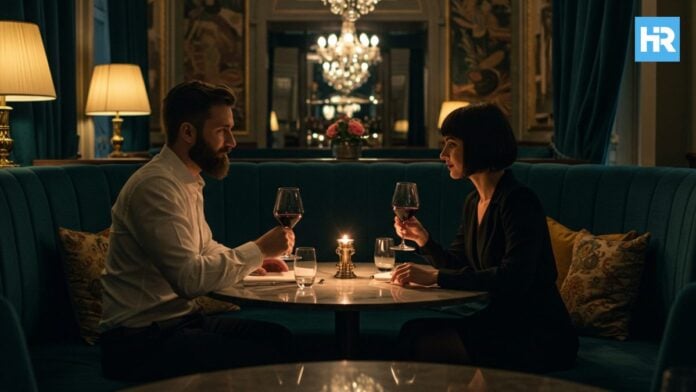
Every relationship has its ups and downs. Between work, stress, and everyday routines, it’s easy to slip into the habit of doing the same things over and over. That’s why a well-planned, fancy dinner out can do wonders. It can help you reconnect, talk without distractions, and enjoy something new together.

This list shows some of the most romantic restaurants in New Jersey – the places perfect for when you want something more special than the usual night out. And the best part: all of them serve incredible food in a quiet, cozy setting, ideal for you lovebirds.

The Highlawn – West Orange, NJ

Website: www.highlawn.com
Phone: (973) 731-3463
Address: 1 Crest Drive, West Orange, NJ 07052

The Highlawn is a fine dining restaurant located at 1 Crest Drive in West Orange, New Jersey. It’s inside a restored 1909 building on top of Eagle Rock Reservation, about 20 miles from Manhattan. It’s considered one of the best restaurants in NJ with a view—it has large windows that look out over the New York City skyline, especially beautiful at sunset and nighttime. The dining room has crystal chandeliers, a grand piano, white tablecloths, and candlelight. In the warmer months, there’s a garden terrace and an outdoor bar where guests can sit outside.

The menu is New American, which means it includes modern versions of American dishes. The most popular items include dry-aged ribeye, filet mignon, pan-seared scallops, and oysters from the raw bar. The chef also creates seasonal specials depending on what’s fresh. Prices are high: most main courses cost between $30 and $50, and if you include drinks, appetizers, and dessert, the total can go over $100 per person.

This restaurant is a popular place for celebrations like anniversaries, birthdays, and marriage proposals. Many couples choose it because of the romantic view and quiet atmosphere. They recommend making a reservation, especially if you want a table by the window or are going on a weekend. The dress code is business casual at a minimum. Most men wear jackets at dinner, and many women wear dresses or nice outfits.

Saddle River Inn – Saddle River, NJ

Website: saddleriverinn.com
Phone: (201) 825-4016
Address: 2 Barnstable Ct, Saddle River, NJ 07458

Saddle River Inn is a fine dining restaurant at 2 Barnstable Court in Saddle River, New Jersey. Located right next to the Saddle River, this establishment is, in fact, a renovated barn from the 1700s. The space has wood beams, soft lighting, a working fireplace, and candlelit tables. It’s quiet and private—children under 10 are not allowed.

The menu is French-American with a focus on seasonal ingredients. Dishes include foie gras, black truffle pasta, dry-aged steaks, scallops, and crème brûlée. Chef Jamie Knott changes the menu twice each season to use fresh, local food. The restaurant is BYOB, and there’s no corkage fee, so guests can bring their own wine.

Entrées usually cost over $40. A full dinner for two with appetizers, entrées, dessert, and your own wine typically costs between $150 and $200. There’s also a small private loft space that can seat up to 20 people, often used for proposals or private parties.

As the Saddle River Inn is one of the most sought-after date night restaurants in NJ, reservations are required and should be made in advance, especially for weekends. The dress code is formal. Hats, shorts, jerseys, sneakers, and flip-flops are not allowed. Most men wear jackets, and guests are expected to dress nicely.

Matisse 167 – Rutherford, NJ

Website: matisse167.com
Phone: (201) 935-2995
Address: 167 Park Ave, Rutherford, NJ 07070

Matisse 167 is a fine dining restaurant located at 167 Park Avenue in Rutherford, New Jersey. It’s a small BYOB spot with only about 10 tables, so the space is quiet and private. The dining room has colorful artwork, Victorian-style decor, candlelit chandeliers, and a garden room in the back. The setting is calm and romantic, often picked for anniversaries and proposals.

The restaurant serves a 4-course prix-fixe tasting menu from Wednesday to Sunday. Chef Greg Power creates seasonal dishes using French cooking techniques with modern twists. The menu changes throughout the year, and each dish is carefully plated. On some nights, they offer a 3-course version of the menu at a lower price. Matisse 167 is BYOB, and the staff will chill or decant your wine.

Dinner costs around $115 to $125 per person, not including tax or tip. The price includes all four courses. Since it’s BYOB, guests can save money by bringing their own wine or champagne.

Reservations are required, and they should be made early since the restaurant is very small and fills up quickly. The dress code is smart casual or nicer. Most guests wear jackets or cocktail attire, especially on weekends.

Restaurant Lorena’s – Maplewood, NJ

Website: restaurantlorena.com
Phone: (973) 763-4460
Address: 160 Maplewood Ave, Maplewood, NJ 07040

Restaurant Lorena’s is a fancy French restaurant at 160 Maplewood Avenue in Maplewood, New Jersey. It has an extremely welcoming, calm atmosphere, with its white tablecloths, soft lighting, comfy chairs, and light background music. It’s a good spot for date nights or special dinners. On weekends, they also have a live jazz brunch for a relaxed daytime meal.

The menu is modern French and changes with the seasons. Chef Humberto Campos Jr. is especially known for his duck dishes, which vary throughout the year. Popular items include wild mushroom bisque, chicken liver pâté, and seasonal entrées made with fresh ingredients.

Lorena’s is BYOB, but the good news is that there’s a great selection of wines at the shop across the street, so you can always grab a bottle there before you head in.

Appetizers usually cost around $15–$20, and entrées range from $35 to $50. A full dinner for two, including appetizers and dessert but not wine, usually costs around $150 or more. On holidays like Valentine’s Day, Lorena’s may offer a seasonal tasting menu or a wine-pairing dinner.

Reservations are strongly recommended since the restaurant is small and often booked. The dress code is business casual or better. Most people wear jackets or stylish outfits, especially in the evening.

Bonus: Maybe you and your loved one want to make a weekend of it, in which case check out the best wineries in New Jersey.

Restaurant Latour – Hamburg, NJ

Website: crystalgolfresort.com/dine/latour
Phone: (844) 833-3253
Address: 1 Wild Turkey Way, Hamburg, NJ 07419

Restaurant Latour is an elegant fine-dining restaurant located inside Crystal Springs Resort at 1 Wild Turkey Way in Hamburg, New Jersey. It sits next to a AAA Four-Diamond lodge and overlooks the mountains and golf course through floor-to-ceiling windows. The dining room is small, quiet, and designed with natural wood and stone. Children under 12 are not allowed, which keeps the setting peaceful and adult-focused.

The menu is a chef’s tasting format, offering either a 3-course or 7-course prix-fixe meal. The menu changes with the seasons and includes dishes like Dover sole, venison, foie gras, truffles, and caviar. The 3-course menu costs around $115 to $130 per person. The 7-course tasting is about $195 or more per person. Wine pairings are available at an extra cost.

Latour is also known for its wine program. The cellar holds over 6,000 bottles and has won Wine Spectator’s Grand Award every year since 2006. Sommeliers help guests pick wines for each course. For a private experience, guests can request the Chef’s Table inside the wine cellar.

Reservations are required. The restaurant is open Thursday through Sunday and often books out weeks ahead. The dress code is formal. Men are expected to wear jackets, and women should wear elegant attire. Jeans, sneakers, and shorts are not allowed.

Chart House – Weehawken, NJ

Website: chart-house.com
Phone: (201) 348-6628
Address: 1700 Harbor Blvd, Weehawken, NJ 07086

Chart House is a waterfront restaurant at 1700 Harbor Boulevard in Weehawken, New Jersey. It’s known for its direct views of the Hudson River and Manhattan skyline. Nearly every table in the dining room has a clear view of landmarks like the Empire State Building and Midtown. The space has floor-to-ceiling windows, a large open dining area, and polished décor. At night, the skyline lights up and creates a popular backdrop for proposals and special celebrations.

The menu offers mostly seafood and steak, and it’s cooked to an extremely high quality. Favorites include crab cakes, seared ahi tuna, grilled lobster tail, and filet mignon. For dessert, many guests order the Hot Chocolate Lava Cake, which is made for sharing. Entrées cost between $30 and $50. A full meal for two, including appetizers, drinks, and dessert, usually totals between $75 and $100 per person.

Chart House is a top choice for romantic dinners, especially around sunset or after dark when the view is best. They also serve a Sunday brunch buffet with river views during the day. The restaurant offers valet parking, and guests can request a window seat when booking.

Reservations are recommended, especially on weekends and holidays. The dress code is smart casual. Most people wear collared shirts, slacks, or nice dresses. Beachwear, flip-flops, and overly casual clothes are not allowed.

The Frog and The Peach – New Brunswick, NJ

Website: frogandpeach.com
Phone: (732) 846-3216
Address: 29 Dennis St, New Brunswick, NJ 08901

The Frog and The Peach is a well-known restaurant located at 29 Dennis Street in New Brunswick, New Jersey. It’s set inside a renovated factory space with a modern design and a garden room filled with greenery. The garden area, with white tablecloths and large windows, is a favorite for date nights and special dinners. In warmer months, there’s outdoor patio seating surrounded by plants. The setting is quiet, and the most fitting for an evening of good conversation.

The menu is New American and focuses on farm-to-table cooking. Ingredients come from local farms and change often based on what’s in season. Dishes include black truffle risotto, scallops, duck breast, and grass-fed steaks. They also offer tasting dinners with wine pairings and host special events like truffle menus or holiday meals.

Main courses usually cost between $30 and $45. A full dinner for two, with appetizers, wine, and dessert, usually costs around $150 to $180. The restaurant also serves a Sunday brunch with a separate menu.

The Frog and The Peach is often picked for birthdays, anniversaries, or business dinners. The staff is experienced with celebrations and can provide extras like printed menus or desserts with messages. Wine dinners are announced on their website throughout the year.

Reservations are strongly recommended, especially on weekends. The dress code is business casual. Men often wear button-down shirts or jackets, and women wear dresses or dressy tops with slacks.

Rat’s Restaurant – Hamilton, NJ

Website: ratsrestaurant.com
Phone: (609) 584-7800
Address: 16 Fairgrounds Rd, Hamilton Township, NJ 08619

Rat’s Restaurant is located inside the Grounds For Sculpture park at 16 Fairgrounds Road in Hamilton, New Jersey. The restaurant is built to look like a French countryside village, with stone walls, wooden beams, and views of ponds, gardens, and sculptures. Inside, there are chandeliers, rustic décor, and a stone fireplace that make the space feel warm and romantic. Many tables overlook the gardens or water features, and in warmer months, guests can sit outside on the patio.

The menu is French-inspired American cuisine. Dishes include French onion soup, duck à l’orange, steak frites, and artisanal cheeses. The menu also includes seasonal items that change throughout the year. Appetizers usually cost $15–$20, and main dishes are in the $30–$45 range. A full dinner for two, with starters, entrées, and dessert, is typically between $130 and $170, not including drinks.

Rat’s is popular for birthdays, anniversaries, and proposals. Guests can walk through the sculpture park before dinner (park admission may be required). The staff often helps with special touches, like reserving a specific table or adding a surprise to dessert. The restaurant also hosts special events like wine-pairing dinners, paint nights, and live music.

Reservations are recommended, especially on weekends or if you want a fireplace or garden-view table. The dress code is smart casual. Men often wear jackets or blazers, and women wear cocktail dresses or dressy outfits. While the dress isn’t strictly formal, most guests dress up for the experience.

The Ryland Inn – Whitehouse Station, NJ

Website: rylandinnnj.com
Phone: (908) 534-4011
Address: 115 Old Hwy 28, Whitehouse Station, NJ 08889

As elegant restaurants in NJ go, The Ryland Inn just might take the win. Located at 115 Old Highway 28 in Whitehouse Station, New Jersey, sitting on a 10-acre property, housed in a restored 226-year-old country estate, its focus is fine dining.

The dining room has stone fireplaces, wood beams, and large chandeliers, giving it a warm feel. Guests come for anniversaries, proposals, and private events. There are also guest cottages on the property if you want to stay overnight.

The menu is contemporary American with a focus on farm-to-table cooking. Ingredients come from local farms and change with the seasons, so it’s worth trying their grass-fed beef tartare, risotto with heirloom vegetables, seared scallops, and seasonal game like duck or venison. Appetizers usually cost $15–$25, and main courses range from $30 to $50. A full three-course dinner for two with drinks typically costs between $150 and $200.

The Ryland Inn offers different dining options. The main dining room serves a formal menu, while the Landmark Tavern on-site offers the same food in a slightly more casual setting. They also host cooking classes, wine dinners, and private tasting events. For special occasions, guests can reserve private dining rooms, a chef’s kitchen table, or a restored barn for larger celebrations.

Reservations are recommended and often necessary on weekends. The dress code is business casual to semi-formal. Men usually wear jackets or sweaters, and women wear dresses or dressy outfits. Shorts, flip-flops, and very casual clothes are not appropriate for the setting.

il Nido – Marlboro, NJ

Website: ilnidonj.com
Phone: (732) 851-6347
Address: 184 Route 9 North, Marlboro, NJ 07726

il Nido is a high-end Italian restaurant at 184 Route 9 North in Marlboro, New Jersey. The name means “The Nest” in Italian, and the space feels warm and private with soft lighting, rustic wood beams, and a fireplace. The most requested table is a small two-top next to the fireplace, often used for birthdays, anniversaries, or proposals. Despite being in a shopping plaza, the interior is elegant and quiet, with Italian music playing softly in the background.

The food is Italian with a farm-to-table focus. The kitchen uses organic local produce and imports ingredients from Italy, including the pasta flour. The menu changes with the seasons and includes hand-rolled pasta like pappardelle and garganelli, Wagyu beef meatballs, branzino, veal chops, and daily seafood specials.

Appetizers are $18–$25, pastas around $30, and main courses usually start at $40. A full dinner for two with wine costs around $150–$200. il Nido also has a full bar with Italian-style cocktails and a curated wine list.

On some Wednesdays and Thursdays, they offer a three-course prix-fixe menu at a set price. If you’re celebrating, you can request the fireplace table and ask for a special dessert plate or message.

Reservations are recommended, especially on weekends. The dress code is smart casual. Men typically wear collared shirts or sweaters, and women wear dresses or nice separates.

Dock’s Oyster House – Atlantic City, NJ

Website: docksoysterhouse.com
Phone: (609) 345-0092
Address: 2405 Atlantic Ave, Atlantic City, NJ 08401

Ending with perhaps the most romantic restaurant in NJ, Dock’s Oyster House is a well-known seafood and steak restaurant at 2405 Atlantic Avenue in Atlantic City, New Jersey. It opened in 1897 and has been serving fresh seafood ever since. The dining room has an old-school look with a big wooden bar and a classic feel.

The biggest highlight is that, at night, they have a piano player, and the music really sets the mood for date nights or special dinners. Even though it’s in the middle of the casino area, the restaurant feels calm and comfortable.

The menu has a lot of seafood options, including a raw bar with oysters and clams. Oysters can be ordered in many styles—on the half shell, broiled, Rockefeller, or with wasabi. They also have oyster stew. Other dishes include fried shrimp, crabmeat sautée, filet mignon, and prime rib.

Oysters cost about $2–$4 each. Appetizers are around $15, and most seafood and steak entrées cost in the $30s. A full dinner for two with drinks usually costs about $120 to $150. The food comes in big portions and you can tell it’s made with care, so you can’t go wrong.

The wine list has plenty of choices, including many by the glass. If you’re new to oysters, the sampler is a good way to try different types. You can sit at the bar without a reservation, but if you want a table for a special occasion, it’s best to book ahead.

Reservations are recommended, especially on weekends or in summer. The dress code is casual but neat. Men usually wear collared shirts and jeans or slacks. Women often wear dresses or nice tops. T-shirts, shorts, and flip-flops are not a good fit for the setting.

Plan the Night You Both Deserve

You’ve seen the best romantic restaurants in New Jersey—now it’s time to choose one and make it happen. Don’t wait for a special occasion. Don’t wait until things feel “less busy.” Your relationship deserves time and attention now.

Pick a place that fits your style. Maybe it’s a quiet table by the fireplace, a seat with a skyline view, or a cozy room with great pasta and wine. Make a reservation, turn your phones off, and spend a night just the two of you, in the most fitting atmosphere.

Just before you go: have you been to the best places to visit in the Garden State? There’s nothing stopping you from making your date night a date day.

Colleges That Have Produced the Most No. 1 NBA Draft Picks

Being selected as the No. 1 overall pick in the NBA Draft is one of the most exclusive honors in professional basketball. Not every great player has received this designation—Michael Jordan, Kobe Bryant, Kevin Durant, Giannis Antetokounmpo, and 2024 NBA Finals MVP Jaylen Brown were never selected first overall. The list of colleges that have produced even one No. 1 NBA pick is much smaller. Since the draft began in 1947, only 46 schools have achieved this distinction.

The NBA Draft’s first overall selection has frequently come from a Division I college basketball program, with the first-ever pick, Clifton McNeely, coming from Texas Wesleyan in 1947. Since then, college programs have continued to supply elite talent to the NBA. Here is a breakdown of every college that has produced a No. 1 overall pick in NBA Draft history.

Key Takeaways
  • Duke has produced the most No. 1 NBA Draft picks with five: Art Heyman (1963), Elton Brand (1999), Kyrie Irving (2011), Zion Williamson (2019), and Paolo Banchero (2022).
  • Only 46 colleges have had a No. 1 NBA Draft pick, with Kentucky producing three, and 16 schools tied with two each, including Kansas, UCLA, and LSU.
  • The last three NCAA No. 1 picks were Paolo Banchero (Duke, 2022), Cade Cunningham (Oklahoma State, 2021), and Anthony Edwards (Georgia, 2020), while France produced the top picks in 2023 and 2024.

Duke: The Only Program With Five No. 1 Picks

Duke University leads all schools with five No. 1 NBA Draft picks, more than any other program. The school’s first No. 1 selection was Art Heyman, drafted in 1963 by the New York Knicks. Elton Brand was selected first overall in 1999 by the Chicago Bulls. In 2011, the Cleveland Cavaliers drafted Kyrie Irving at No. 1. Zion Williamson went first in 2019, selected by the New Orleans Pelicans, and Paolo Banchero was picked No. 1 in 2022 by the Orlando Magic.

Among these players, Irving is the only one who has led his team to an NBA Championship, winning with the Cavaliers. Collectively, Duke’s No. 1 picks have received three NBA Rookie of the Year awards and 13 NBA All-Star selections. All five were named to the NBA All-Rookie First Team. Duke’s next possible addition is Cooper Flagg, who is widely projected as the No. 1 pick for the 2025 NBA Draft.

The school’s long-standing success, especially under high-profile coaches and in nationally televised games, has also made Duke games a regular favorite for fans engaged in New York sports betting, where interest in college basketball and NBA draft odds keeps rising.

Kentucky: Three First Overall Picks from a Powerhouse Program

The University of Kentucky has produced three No. 1 picks: John Wall in 2010, Anthony Davis in 2012, and Karl-Anthony Towns in 2015. Wall was drafted by the Washington Wizards, Davis by the New Orleans Hornets, and Towns by the Minnesota Timberwolves.

Each of these Kentucky players earned a spot on the NBA All-Rookie First Team. Towns won the NBA Rookie of the Year award for the 2015–16 season. Davis won an NBA championship with the Los Angeles Lakers in 2020.

Colleges With Two No. 1 NBA Draft Picks

Sixteen schools have produced exactly two No. 1 overall NBA Draft picks. These are:

  • Cincinnati: Oscar Robertson (1960), Kenyon Martin (2000)
  • Duquesne: Dick Ricketts (1955), Si Green (1956)
  • Georgetown: Patrick Ewing (1985), Allen Iverson (1996)
  • Houston: Elvin Hayes (1968), Hakeem Olajuwon (1984)
  • Indiana: Walt Bellamy (1961), Kent Benson (1977)
  • Kansas: Danny Manning (1988), Andrew Wiggins (2014)
  • Kansas State: Howie Shannon (1949), Bob Boozer (1959)
  • LSU: Shaquille O’Neal (1992), Ben Simmons (2016)
  • Maryland: John Lucas (1976), Joe Smith (1995)
  • Michigan: Cazzie Russell (1966), Chris Webber (1993)
  • North Carolina: James Worthy (1982), Brad Daugherty (1986)
  • Purdue: Joe Barry Carroll (1980), Glenn Robinson (1994)
  • UCLA: Kareem Abdul-Jabbar (1969), Bill Walton (1974)
  • UNLV: Larry Johnson (1991), Anthony Bennett (2013)
  • Utah: Bill McGill (1962), Andrew Bogut (2005)
  • West Virginia: Mark Workman (1952), Hot Rod Hundley (1957)

Schools With One No. 1 Pick in NBA History

Thirty-one schools have produced one No. 1 overall NBA Draft pick. These are:

  • Arizona: Deandre Ayton (2018)
  • Bowling Green: Chuck Share (1950)
  • Bradley: Gene Melchiorre (1951)
  • Davidson: Fred Hetzel (1965)
  • DePaul: Mark Aguirre (1981)
  • Furman: Frank Selvy (1954)
  • Georgia: Anthony Edwards (2020)
  • Illinois State: Doug Collins (1973)
  • LIU Brooklyn: Ray Felix (1953)
  • Louisville: Pervis Ellison (1989)
  • Loyola Chicago: LaRue Martin (1972)
  • Marshall: Andy Tonkovich (1948)
  • Memphis: Derrick Rose (2008)
  • Michigan State: Magic Johnson (1979)
  • Minnesota: Mychal Thompson (1978)
  • Navy: David Robinson (1987)
  • NC State: David Thompson (1975)
  • Notre Dame: Austin Carr (1971)
  • Ohio State: Greg Oden (2007)
  • Oklahoma: Blake Griffin (2009)
  • Oklahoma State: Cade Cunningham (2021)
  • Pacific: Michael Olowokandi (1998)
  • Providence: Jimmy Walker (1967)
  • Seattle: Elgin Baylor (1958)
  • St. Bonaventure: Bob Lanier (1970)
  • Syracuse: Derrick Coleman (1990)
  • Texas Wesleyan: Clifton McNeely (1947)
  • Texas Western: Jim Barnes (1964)
  • Virginia: Ralph Sampson (1983)
  • Wake Forest: Tim Duncan (1997)
  • Washington: Markelle Fultz (2017)

Conferences Producing the Most NBA Talent

Based on draft history through 2022, the Atlantic Coast Conference (ACC) had 285 first-round picks, representing about 20 percent of all Division I players selected in that span. Other top-performing conferences include the Big Ten, SEC, and Pac-12.

As of 2024, Kentucky leads all schools in total first-round NBA Draft picks with 60, followed by Duke with 56, and North Carolina with 54. UCLA has had 43, Kansas 36, and schools like Michigan, Indiana, and Ohio State each fall between 25 and 30.

Recent No. 1 Picks and Trends

The most recent No. 1 NBA Draft pick, selected in 2024, was Zaccharie Risacher, a French prospect chosen by the Atlanta Hawks. This marked the second consecutive year that a French player was selected first overall. In 2023, the San Antonio Spurs drafted Victor Wembanyama, also from France.

In 2022, Paolo Banchero from Duke was selected No. 1 by the Orlando Magic. Cade Cunningham from Oklahoma State went No. 1 in 2021, and Anthony Edwards from Georgia was the top pick in 2020, selected by the Minnesota Timberwolves. Cunningham and Edwards were the first No. 1 picks in their respective schools’ histories.

Latest News

Do Jersey City Children Have a Right to Local School?

Jersey City Preschoolers Bused 5 Miles—Do They Have the Right to...

In Downtown Jersey City, widely described as one of the most walkable neighborhoods in the United States, many daily errands can be done on...
New Jersey Bomb Cyclone Travel Ban and Snowfall

New Jersey Bomb Cyclone 2026: Travel Bans, Transit Shutdowns, and Record...

The February 2026 blizzard in New Jersey was officially classified as a “bomb cyclone.” The designation applies when a storm undergoes bombogenesis — a...
Vetoed Bird-Safe Ordinance 26-008 Back in Debate

Jersey City Council Reopens Fight Over Bird-Safe Building Costs

Ordinance 26-008, which regulates bird-safe materials for buildings, has been reintroduced to the Jersey City Council agenda. The measure is identical to the version...
Rob Menendez Slams Trump Over Hudson Tunnel Funding Freeze

Rob Menendez Urges End to Hudson Tunnel Funding Dispute After Court...

In Hoboken, after a press conference concerning an unrelated federal funding allocation, U.S. Rep. Rob Menendez (D-8) discussed the restoration of approximately $205 million...
Hudson County NAMI Caregiver Support Programs

Hudson County Caregivers Get February Mental Health Support

Hudson County residents caring for youth with mental health symptoms can participate in a six-session NAMI Basics course offered this February through NAMI Hudson...