Home Blog Page 7

Giants Reportedly Target Notre Dame’s Marcus Freeman in Head Coach Search

Marcus Freeman and Giants Rumors

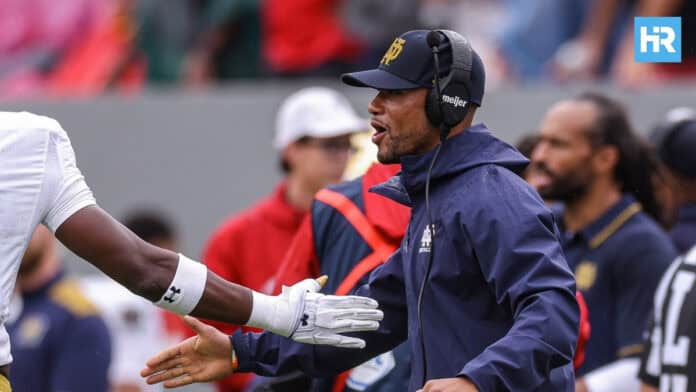
There is rarely a quiet moment around Notre Dame football, and that pattern continued on Sunday when reports connected head coach Marcus Freeman to the New York Giants’ vacant head coaching position. Notre Dame had just come off a weekend dominated by uneventful College Football Playoff games, and attention quickly shifted back to Freeman as speculation around his future resurfaced.

The reports tied Freeman directly to the Giants as the franchise begins its coaching search ahead of the 2026 NFL season. While Freeman has no NFL coaching experience, his name has steadily gained traction in league circles, and this latest round of reporting is the strongest public connection yet.

Key Takeaways
  • Notre Dame head coach Marcus Freeman has been reported as the top college candidate for the New York Giants’ head coaching search for the 2026 NFL season.
  • Freeman’s résumé includes a 43–12 record at Notre Dame, a College Football Playoff national championship game appearance, and a reputation for leadership and defensive excellence.
  • Even with strong NFL interest, multiple insiders believe Freeman will listen but ultimately remain at Notre Dame, citing quarterback uncertainty and the Giants’ long-term struggles.

Why the Giants Are Actively Considering Marcus Freeman

NFL Network reporter Mark Garafolo confirmed that Freeman is firmly on the Giants’ radar and stands out among college candidates.

Marcus Freeman, mentioned as a guy that should be in their coaching search. Yes, that is the case and I expect him to be the foremost among the college candidates,” Garafolo said.

Garafolo also reported that the Giants plan to interview a wide range of candidates, including defensive-minded coaches and veteran NFL assistants. This hiring cycle differs from last year’s, when offensive play-callers drew heavy attention. There is no offensive candidate comparable to Ben Johnson, who accepted the Chicago Bears head coaching job last season in part because of quarterback Caleb Williams.

Freeman’s profile aligns with what the Giants are seeking. At 39 years old, he has compiled a 43–12 record over four full seasons at Notre Dame. Last season, he led the Fighting Irish to the College Football Playoff national championship game, where they lost to Ohio State after a postseason run that included wins over Indiana, Georgia, and Penn State. His reputation centers on leadership, player development, and adapting schemes to his roster.

Betting and Prediction Markets Tracking Freeman’s Candidacy

As Freeman’s name surfaced repeatedly in reporting, betting and prediction markets showed noticeable movement. While major sportsbooks, such as DraftKings, FanDuel, BetMGM, Caesars, and PointsBet, do not typically offer official “next head coach” odds, aggregated odds boards, prediction markets, and offshore books have tracked the shift.

A Fox Sports odds board published roughly four days ago listed Marcus Freeman at +1200 to become the next Giants head coach. The same reporting noted that Freeman had been listed at +5000 just over a month earlier, marking a significant change in his perceived chances.

On that Fox Sports board, Freeman shares the +1200 price with Mike Kafka. Other candidates listed include Chris Shula at +500, Klint Kubiak and Jeff Hafley at +650, Kliff Kingsbury at +900, and Mike McCarthy and Lou Anarumo at +1000.

Prediction markets provided percentage-based estimates. A Kalshi snapshot dated December 10, 2025, listed Chris Shula at 22 percent, Lou Anarumo at 19 percent, Marcus Freeman at 18 percent, Mike McCarthy at 15 percent, and Jeff Hafley at 11 percent. A separate Kalshi update cited by the New York Post on December 9, 2025, showed Shula at 28 percent, Freeman at 22 percent, McCarthy and Anarumo each at 19 percent, Klint Kubiak at 14 percent, and Hafley at 10 percent.

One offshore sportsbook, SportsBetting.ag, listed Freeman as a -200 favorite, with Mike McCarthy and Chris Shula each at 5/1, Klint Kubiak and Mike Kafka at 9/1, and Jeff Hafley at 10/1.

The Giants’ Situation and Roster Context Driving the Search

The Giants’ coaching search follows a difficult season. The team fired head coach Brian Daboll on November 10, 2025, after a 2–8 start. Mike Kafka was named interim head coach. After a loss to the Minnesota Vikings, New York stands at 2–13, and the franchise will have finished below .500 in 11 of the last 13 seasons once the year concludes.

Aside from the rough record, the roster includes young talent. Rookie quarterback Jaxson Dart has shown flashes during his first season, and wide receiver Malik Nabors has been identified as a foundational offensive piece. Defensively, the Giants are built around a strong front that includes Brian Burns, Abdul Carter, and Dexter Lawrence, along with a young secondary.

Freeman’s defensive background as a former linebacker and defensive coordinator has been cited as a point of appeal, particularly for a team looking to strengthen its defensive identity while maintaining continuity elsewhere on the roster.

Why Multiple Insiders Expect Freeman to Stay at Notre Dame

Although the Giants’ interest and betting movement are clear, several insiders have publicly stated they do not expect Freeman to leave Notre Dame. College football analyst Josh Pate addressed the situation directly on X.

I expect Marcus Freeman to listen and I also expect Marcus Freeman to be the head coach at Notre Dame next season,” Pate wrote.

Freeman has previously declined interest from other major college programs, including Penn State and Florida. Notre Dame is coming off a 10–2 2025 season that ended controversially. Despite remaining ranked in the top 10 for weeks, the Fighting Irish were dropped outside the top 12 and left out of the College Football Playoff. Following that decision, Notre Dame opted out of the Pop-Tart Bowl and shifted focus to the transfer portal and preparation for the 2026 season.

Freeman is under a long-term contract, and Notre Dame athletic director Pete Bevacqua has stated the school’s intent to keep Freeman among the highest-paid coaches in college football.
New York Knicks History: Complete Franchise Story From 1946 to Today

New York Knicks History

The New York Knicks, based in Manhattan and competing in the NBA’s Eastern Conference, are one of the NBA’s longest-running franchises. They play home games at Madison Square Garden, the shared home of the Knicks and the NHL’s New York Rangers.

The Knicks are one of two NBA teams located in New York City, the other being the Brooklyn Nets, and alongside the Boston Celtics, they are one of only two original NBA teams still playing in their original city.

Since their founding in 1946, the Knicks’ history has included championship highs, long rebuilding stretches, and renewed relevance in the modern era.

Key Takeaways
  • Founded in 1946 by Ned Irish, the New York Knicks are one of the NBA’s original franchises.
  • The team has won two NBA championships (1970 and 1973) and plays home games at Madison Square Garden.
  • The franchise’s history spans championship dominance, prolonged rebuilding periods, and a modern resurgence led by Jalen Brunson and Karl-Anthony Towns.

Founding of the New York Knicks and the Birth of the NBA (1946–1949)

The Knicks were founded in 1946 by Ned Irish, a retired sportswriter, college basketball promoter, and president of Madison Square Garden. On June 6, 1946, Irish attended a meeting at the Commodore Hotel in New York City, where Max Kase, Walter A. Brown, and seventeen others established the Basketball Association of America (BAA).

Although Kase initially intended to operate the New York franchise himself, league rules required Madison Square Garden to own any professional team playing in the venue. As a result, the franchise was awarded to the Irish. Seeking a name that reflected New York’s identity, Irish convened his staff for a vote, which resulted in the name Knickerbockers. The term originated from Washington Irving’s book A History of New York and referred to descendants of the city’s original Dutch settlers before becoming a general term for New Yorkers.

The Knicks played their first game on November 1, 1946, defeating the Toronto Huskies 68–66 at Maple Leaf Gardens in front of 7,090 spectators. Leo Gottlieb scored 14 points to lead New York. This game is also the first contest in league history.

Early Competitive Identity and Joe Lapchick’s Era (1946–1956)

With no college draft in the league’s first season, the Knicks focused on signing local college players to build interest in professional basketball. The team held its first training camp at the Nevele Country Club in the Catskill Mountains, inviting 25 players for a three-week session.

The Knicks finished their inaugural season 33–27, earned a playoff berth, defeated the Cleveland Rebels in the quarterfinals, and were eliminated by the Philadelphia Warriors in the semifinals. In 1947, Joe Lapchick became head coach and implemented a fast-paced system built on ball movement.

That same year, the Knicks signed Wataru Misaka, making him the first non-Caucasian player in the BAA. Under Lapchick, the Knicks made nine consecutive playoff appearances beginning in 1947. Between 1951 and 1953, the Knicks reached the NBA Finals three straight times, losing to the Rochester Royals once and the Minneapolis Lakers twice.

Key players during this period included Carl Braun, Harry Gallatin, Dick McGuire, and Nathaniel “Sweetwater” Clifton, who became the first African American player signed by an NBA team. Lapchick resigned in January 1956, citing health-related issues, ending the franchise’s first sustained run of success.

Coaching Turnover and the Wilt Chamberlain Game (1956–1967)

Following Lapchick’s departure, the Knicks entered a period marked by frequent coaching changes and inconsistent results. Coaches during this span included Vince Boryla, Andrew Levane, Carl Braun as a player-coach, and Eddie Donovan.

One of the most infamous moments in franchise history occurred on March 2, 1962, when the Knicks played the Philadelphia Warriors in Hershey, Pennsylvania. In a 169–147 loss, the Knicks allowed Wilt Chamberlain to score an NBA-record 100 points.

Stability began to return in 1964 when the Knicks drafted Willis Reed, who made an immediate impact and was named NBA Rookie of the Year. Despite continued coaching changes, Reed’s presence laid the groundwork for a turnaround that accelerated with the hiring of Red Holzman midway through the 1967–68 season.

Championship Dominance Under Red Holzman (1967–1975)

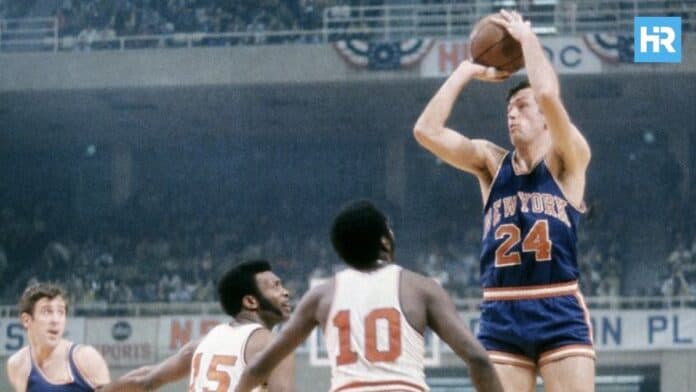
Red Holzman’s arrival marked the most successful period in franchise history. The Knicks’ roster featured Willis Reed, Walt “Clyde” Frazier, Dave DeBusschere, Dick Barnett, Bill Bradley, Earl “The Pearl” Monroe, and Jerry Lucas.

During the 1969–70 season, the Knicks won 18 consecutive games, finished the regular season 60–22, and advanced to the NBA Finals against the Los Angeles Lakers. In Game 5, Reed tore a muscle in his right leg and missed the remainder of the game. Despite his absence, New York rallied from a 16-point deficit to win.

After losing Game 6, the Knicks returned home for Game 7, where Reed famously entered the court despite his injury, scored the Knicks’ first two baskets, and inspired a 113–99 victory. That season, Reed was named NBA MVP, NBA Finals MVP, and NBA All-Star MVP, becoming the first player to win all three awards in the same season.

The Knicks captured their second NBA championship in 1973, again defeating the Lakers in five games. Following a loss to the Boston Celtics in the 1974 Eastern Conference Finals, Reed announced his retirement, signaling the end of the championship core.

Post-Championship Transition and Mixed Results (1975–1985)

After the championship era, the Knicks recorded their first losing season in eight years during 1974–75. Red Holzman stepped away, returned, and later retired as one of the winningest coaches in NBA history.

Although the team continued to make playoff appearances, they did not return to the NBA Finals. This period also saw the rise of Bernard King and continued roster turnover. Holzman’s influence extended beyond the Knicks, as former Knicks player Phil Jackson later credited him as a major influence on his coaching philosophy.

Patrick Ewing Era and 1990s Playoff Rivalries (1985–2000)

In 1985, the Knicks won the first NBA Draft Lottery and selected Patrick Ewing with the first overall pick. During his rookie season, Ewing averaged 20 points and 9 rebounds per game and won NBA Rookie of the Year.

Under head coaches Pat Riley and, later down the line, Jeff Van Gundy, the Knicks developed a defense-first identity and became perennial playoff contenders. The team built intense rivalries with the Chicago Bulls, Indiana Pacers, and Miami Heat.

The Knicks reached the NBA Finals in 1994, losing to the Houston Rockets in seven games, and again in 1999, losing to the San Antonio Spurs in five games. Ewing played for the Knicks from 1985 to 2000 and remains the franchise leader in points, rebounds, blocks, and minutes played. He was traded on September 20, 2000, formally ending the era.

Decline and the Isiah Thomas Leadership Period (2000–2008)

After Ewing’s departure, the Knicks initially remained competitive but failed to advance deep into the playoffs. Head coach Jeff Van Gundy resigned on December 8, 2001, stating he had “lost focus.”

In 2003, Isiah Thomas was named team president and later head coach. Despite adding Stephon Marbury, the Knicks struggled on the court and faced significant off-court controversy, including a sexual harassment lawsuit that resulted in an $11.5 million settlement. During this period, the team tied franchise records for worst seasons, including multiple 23–59 finishes.

Rebuilding With Mike D’Antoni, Stoudemire, Carmelo, and Linsanity (2008–2013)

In 2008, Donnie Walsh became team president and hired Mike D’Antoni as head coach, shifting the franchise toward salary cap flexibility.

On July 5, 2010, the Knicks signed Amar’e Stoudemire to a five-year, $100 million contract. In February 2011, the Knicks acquired Carmelo Anthony via trade.

During the 2011–12 season, Jeremy Lin entered the rotation on February 4, 2012, leading the Knicks to a seven-game winning streak that became known as “Linsanity”, drawing widespread national and international attention.

The Knicks won the Atlantic Division in the 2012–13 season, finished 54–28, defeated the Boston Celtics in the first round of the playoffs, and were eliminated by the Indiana Pacers in the second round. Carmelo Anthony won the NBA scoring title that season.

Phil Jackson Presidency and Franchise Low Point (2013–2017)

Phil Jackson was named president of basketball operations in 2014. During his tenure, the Knicks drafted Kristaps Porziņģis in 2015, but on-court performance declined sharply.

The team finished 17–65 in the 2014–15 season, the worst record in franchise history, and endured a 16-game losing streak, the longest in team history. Jackson was dismissed in 2017, with the Knicks compiling an 80–166 record during his presidency.

Modern Revival Under Leon Rose and Tom Thibodeau (2020–Present)

Leon Rose was appointed president on March 2, 2020, and hired Tom Thibodeau as head coach. In the 2020–21 season, the Knicks finished 41–31, recording their first winning season since 2012–13.

That season, Julius Randle was named NBA Most Improved Player, and Thibodeau earned NBA Coach of the Year honors. The Knicks returned to the playoffs, ending an eight-year drought.

In 2022, the Knicks signed Jalen Brunson to a four-year contract. The team finished 47–35 in 2022–23, 50–32 in 2023–24, and 51–31 in 2024–25, reaching the conference semifinals twice and the conference finals once.

During the 2024 off-season, the Knicks traded Julius Randle, Donte DiVincenzo, and Keita Bates-Diop to the Minnesota Timberwolves in exchange for Karl-Anthony Towns.

In the 2025–26 season, the Knicks won the 2025 NBA Cup, defeating the San Antonio Spurs, with Jalen Brunson named Cup MVP.

Madison Square Garden, Retired Numbers, and Franchise Records

The Knicks have played home games at Madison Square Garden since 1968. The franchise has retired the numbers of Willis Reed (19), Walt Frazier (10), Patrick Ewing (33), Dave DeBusschere (22), Bill Bradley (24), Earl Monroe (15), Dick McGuire (15), Dick Barnett (12), and head coach Red Holzman (613).

The Knicks have won two NBA championships, eight conference titles, and five division titles, maintaining a continuous presence as one of the NBA’s most historically significant franchises.

1888 Studios Breaks Ground in Bayonne as Paramount Commits to 10-Year Lease

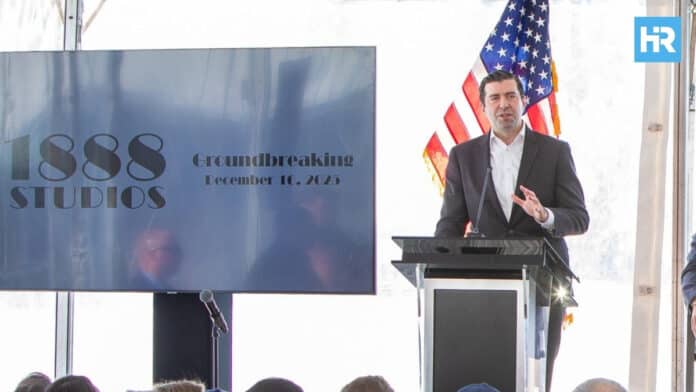
New Jersey officials held a groundbreaking ceremony on Tuesday, December 16, 2025, in Bayonne for 1888 Studios, a new film and television production campus developed in partnership with Paramount. The event marked the start of construction on a large-scale entertainment facility planned on a former industrial waterfront site.

Key Takeaways
  • 1888 Studios in Bayonne will be the largest film and TV production facility in the Northeast, featuring 23 sound stages across a 1.6-million-square-foot campus.
  • Paramount has signed a minimum 10-year lease, committing more than 285,000 square feet and establishing a major production hub in New Jersey.
  • The project is expected to create more than 4,300 jobs and strengthen New Jersey’s growing reputation as “Hollywood East.”

Location, Size, and Development Timeline

1888 Studios is being built on a waterfront property in Bayonne, New Jersey, on land previously used for oil refineries. The site spans between 58 and 60 acres and has completed full environmental remediation. During cleanup, the land was raised by about 18 feet using clean soil. State officials confirmed the remediation process is finished, and the studio complex is expected to be completed within the next two to three years.

The project will total 1.6 million square feet once finished. It will be the largest film and television production facility in the Northeast and one of the largest in the country. The site is located less than 30 minutes from Manhattan and falls within the 25-mile union radius of Columbus Circle. Due to this proximity, film productions have already begun shooting at the location.

Studio Design and Production Capacity

The campus was designed by global architecture firm Gensler and is being developed by Togus Urban Renewal. Project renderings show an art deco design intended to echo imagery from Hollywood’s Golden Age.

The completed facility will contain more than 1.1 million square feet of production space. Plans include 23 sound stages with minimum 40-foot clear ceilings, along with production support areas, flexible post-production space, offices, mills, base camp and backlot areas, and lighting and grip facilities. The campus layout is structured to support every phase of film and television production at one site.

The studio’s name, 1888 Studios, comes from the year Thomas Edison filed a preliminary patent for an early motion picture camera in New Jersey, linking the project to the state’s early role in film history.

Paramount’s Lease and Industry Commitment

Paramount has signed a minimum 10-year lease at 1888 Studios and will occupy more than 285,000 square feet of the campus. Through New Jersey’s Film and Digital Media Tax Credit program, Paramount has received Studio Partner status for the project.

Andy Gordon, chief strategy officer and chief operating officer for Paramount, said the company’s expansion into New Jersey supports its long-term strategy to scale production and grow its slate of entertainment. He said Paramount is investing in the United States and the region to support job creation and economic growth, pointing to New Jersey’s competitive tax credit programs as a key factor that has drawn production to the tri-state area.

Tax Credits and Economic Activity

New Jersey provides film and television productions tax rebates ranging from 35% to 40% for eligible expenses and hiring. The Film and Digital Media Tax Credit program was expanded in 2025, giving the New Jersey Economic Development Authority the authority to designate three Studio Partners and three Film-Lease Partner Facilities tied to large infrastructure commitments.

Governor Phil Murphy said the state receives about $7 in economic activity for every $1 spent on incentive programs. The 1888 Studios project is expected to generate more than 4,300 jobs, including at least 2,300 construction positions and about 2,000 jobs connected to ongoing studio operations and related activity. Construction of the campus will be completed by union workers.

Community Response in Bayonne

The development has drawn attention throughout Bayonne. Residents have raised concerns about possible effects on rent levels, while local business owners have spoken about the opportunity created by increased activity tied to film production. A Bayonne restaurant owner said visiting production crews and actors could bring new customers and additional visibility to local businesses.

Additional Studio Projects Across New Jersey

1888 Studios joins other large film and television developments currently underway in New Jersey. Netflix is building a multi-phase East Coast production hub at Fort Monmouth. The $903 million project spans 289 acres across Oceanport and Eatontown and includes several sound stages. The development required approvals from officials in both municipalities and has been planned over several years.

Lionsgate Newark Studios is also under development. The project involves a $125 million, 300,000-square-foot film and television studio planned for the former site of the Seth Boyden Court public housing complex in Newark’s industrial South Ward. Construction on the Lionsgate facility began last week, and the studio is scheduled to open in 2027. In 2022, the New Jersey Economic Development Authority granted Lionsgate studio partner status under the Garden State Film and Digital Media Jobs Act, giving the company access to tax credits.

Statewide Expansion of Film and Television Production

Governor Phil Murphy described New Jersey as an innovative economy where film, television, and digital media continue to grow. He said the state has become a globally significant competitor in the entertainment industry through the arrival of world-class studios, the creation of high-quality jobs, infrastructure development, and economic growth across communities.

With construction underway in Bayonne and continued development in Fort Monmouth and Newark, New Jersey’s role in film and television production continues to expand across the East Coast.

NJ TRANSIT Advances Bergen Light Rail Extension and Transitway Design

NJ TRANSIT Advances Bergen Light Rail Extension FI

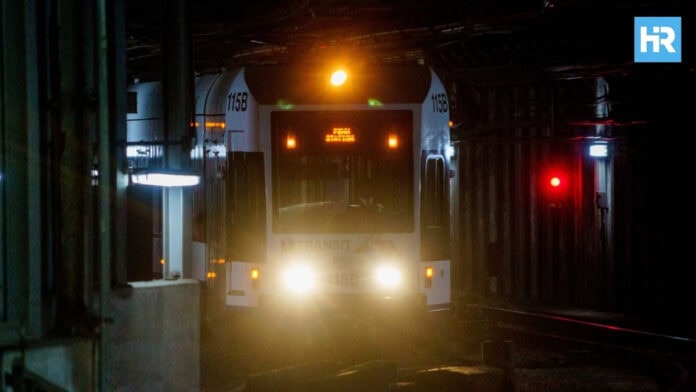
NJ TRANSIT is moving forward with two major initiatives aimed at expanding transit access, reducing road congestion, and supporting environmental and economic goals across northern New Jersey. These efforts include progress on the long-planned Hudson-Bergen Light Rail extension into Bergen County and a newly approved contract to advance the Meadowlands–Jersey City Transitway project.

Key Takeaways
  • NJ TRANSIT has issued a Request for Proposals to prepare a Draft Environmental Impact Statement for a 10-mile Hudson-Bergen Light Rail extension into Bergen County.
  • The Federal Transit Administration required a new environmental review due to changes since 2007 involving floodplains, stormwater management, and air quality.
  • NJ TRANSIT approved a Phase 2 design contract valued at no more than $22.28 million, plus 10 percent for contingencies, for the Meadowlands–Jersey City Transitway.

Environmental Review Process Reopened for Hudson-Bergen Light Rail Extension

NJ TRANSIT, the nation’s largest statewide public transportation system, has issued a Request for Proposals seeking a contractor to prepare a Draft Environmental Impact Statement for the Hudson-Bergen Light Rail extension into Bergen County. The action restarts the environmental review phase for the long-standing Northern Branch project.

The proposed extension would add roughly 10 miles to the current light rail system. Service would begin at the existing terminus at Tonnelle Avenue in North Bergen and continue north to a proposed endpoint at Englewood Hospital. Trains would operate along West Side Avenue in North Bergen and then transition onto an existing railroad right-of-way owned by CSX Transportation, running between 91st Street in North Bergen and the northern boundary of Englewood.

The project plan includes seven new station stops located within North Bergen, Ridgefield, Palisades Park, Leonia, and Englewood. NJ TRANSIT President and CEO Kris Kolluri stated that issuing the RFP reflects the agency’s commitment to extending light rail service into Bergen County and to expanding mass transit access throughout New Jersey.

Federal Transit Administration Action Drives New Environmental Impact Statement

The renewed environmental review follows a 2023 decision by the Federal Transit Administration to withdraw its previous Notice of Intent related to NJ TRANSIT’s earlier environmental impact statement for the project. The FTA cited changes in environmental conditions that have taken place since 2007, including issues related to floodplains, stormwater management, and air quality.

NJ TRANSIT concluded that the scope of work needed to address these updated conditions required a new environmental impact statement rather than revisions to the existing document. Following that determination, the agency began preparing the requirements that are now outlined in the current Request for Proposals.

State and county officials expressed support for continuing the project. State Senator Paul Sarlo described the Northern Branch as critical to the economic health of northern New Jersey and an important transportation option for Bergen County residents. Assemblyman Clinton Calabrese, who chairs the Assembly Transportation Committee, said the extension aligns with the original goal of connecting Bergen and Hudson counties through a modern light rail system. Bergen County Executive James Tedesco said the project would provide needed mass transit options in one of the state’s most densely populated counties.

Phase 2 Design Work Approved for Meadowlands–Jersey City Transitway

In addition to the light rail project, NJ TRANSIT is advancing the Meadowlands–Jersey City Transitway after its board approved an extension of its contract with engineering firm HNTB Corp. The approval, announced on December 11, allows Phase 2 engineering and design work to move forward.

The Phase 2 contract authorizes spending of up to $22.28 million, with an additional 10 percent allocated for contingencies. This phase focuses on designing the section of the Transitway that would connect Secaucus Junction and Jersey City, including a dedicated right-of-way.

The Transitway initiative began in 2021 and is intended to improve travel between Jersey City, Secaucus, and the Meadowlands Sports and Entertainment Complex. Destinations served by the corridor include MetLife Stadium, the Meadowlands Racetrack, the Meadowlands Arena, and the American Dream complex.

Route Features and Environmental Standards for the Transitway

The planned Transitway will include multiple stops and support several vehicle types, excluding rail. The route will make use of the former Boonton rail line and the Bergen Arches corridor. NJ TRANSIT has identified two primary objectives for the project: increasing capacity and efficiency for travel between the Meadowlands Entertainment Complex and Secaucus Junction, and creating a new transit route through a heavily populated section of North Jersey.

Environmental considerations are a central part of the design criteria. NJ TRANSIT has stated that vehicles operating along the corridor must be capable of zero-emission operation or be easily converted to zero-emission technology in the future. The design is also expected to allow for a transition to fully autonomous vehicle operations as technology advances.

NJ TRANSIT Board Chair and State Transportation Commissioner Fran O’Connor said the project’s advancement represents an important milestone. Kris Kolluri, who is set to assume the role of NJ TRANSIT President and CEO effective January 15, 2025, described the Transitway as a key public transportation project that supports environmentally responsible travel and economic growth.

NJ TRANSIT first selected HNTB for work on the Transitway in 2021, awarding the firm a $3.42 million contract for conceptual development and preliminary design during Phase 1.

Drake Powell Answers Nets Coach’s “Shows That He Cares” Message

Drake Powell Responds to Tough Love

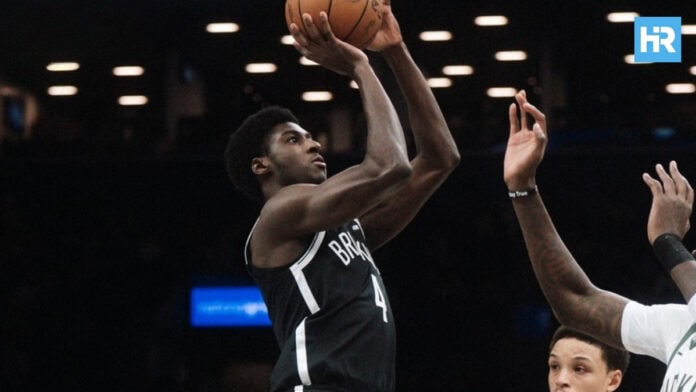
Brooklyn Nets rookie Drake Powell encountered an early test in his NBA season after his role was sharply reduced in a loss to the Dallas Mavericks, drawing direct feedback from head coach Jordi Fernández.

In Brooklyn’s 119-111 loss to Dallas on Friday, Powell played 2 minutes and 41 seconds off the bench during the first quarter. The No. 22 pick in the 2025 NBA Draft recorded one turnover, two fouls, one block, and one assist in that span. After the game, Fernández said Powell and fellow rookie Egor Dëmin lacked “readiness to play,” pointing to mistakes made during their limited minutes. Powell’s reduced role also coincided with Nolan Traore receiving time in the rotation, though Fernández tied the decision to execution rather than long-term status.

Key Takeaways
  • Drake Powell took head coach Jordi Fernández’s tough criticism seriously after a poor showing against Dallas and used it as motivation.
  • Powell and fellow rookie Egor Dëmin responded with strong performances in a historic 127-82 win over the Bucks.
  • Veterans and coaches continue to support Brooklyn’s young core as the team focuses on long-term development.

A Message Powell Recognized Immediately

The comments resonated with Powell, who said the message matched feedback he had heard earlier in his basketball life.

It was obviously some of the things I’ve heard before with my player development coach and even when I was younger, going through AAU,” Powell said after practice on Tuesday. “I respect him [Fernández] for that. It just shows that he cares, not only about me as a basketball player but as a human being.”

Powell later spoke with Dëmin about the feedback, and both rookies agreed their response needed to come through their play on the court.

Betting Markets Move With Brooklyn’s Rotation and Injuries

As Brooklyn continued adjusting its lineup, sportsbooks posted varied odds ahead of the Nets’ Dec. 18 home game against the Miami Heat at Barclays Center.

DraftKings opened Miami as a 6.5-point favorite with a 227.5-point total, while FanDuel listed the Heat at -7.5 with a 228.5 total. BetMGM also posted Heat -6.5 and 227.5, while odds boards showed some sportsbooks pushing the spread into double digits. Moneylines ranged from Miami -258 to nearly -300, with Brooklyn priced between +210 and +240.

In the futures market, the Nets sat at +25000 to win the NBA championship, with season win totals set at 15.5, numbers shaped by Brooklyn’s rebuilding timeline and reliance on young players.

Injuries further affected the market. Brooklyn entered the Heat game without Cam Thomas and Nolan Traore, and Miami listed Tyler Herro and Nikola Jovic as out. During the game, Powell exited with a right ankle sprain, prompting sportsbooks to pull his live player props.

A Clear On-Court Response in Milwaukee

Two days earlier, Powell had already delivered his response. On Sunday, Brooklyn defeated the Milwaukee Bucks 127-82, the largest blowout win in the Nets’ franchise history, in a game Milwaukee played without Giannis Antetokounmpo.

Dëmin scored 17 points, while Powell finished with 13 points, four rebounds, three assists, and one steal in 23 minutes, posting a plus-31, the highest mark in the game. Since joining the rotation on Nov. 7, Powell has averaged 21.1 minutes per game and has played at least 13 minutes in every appearance.

Veteran guard Terance Mann, acquired in the same trade that brought Powell to Brooklyn, described the approach veterans have taken with the team’s young players.

Every game isn’t going to be perfect for them,” Mann said. “Just go out there and give a ton of effort. We try to lead by example.”

Fernández’s Expectations for Young Players

Fernández watched the Milwaukee game from home while dealing with an illness and addressed the rookies’ performance afterward, saying the effort met team standards while also pointing to the need for consistency over a full season.

He spoke about the challenges young players face in the NBA, and both Powell and Dëmin responded by doing what was best for the group.

Powell’s Role and Daily Preparation

Powell, a 20-year-old former North Carolina Tar Heel, has earned steady minutes through defensive effort. Since entering the rotation, he has averaged 6.9 points on 47 percent shooting and 2.3 assists per game. Across 18 games, he is averaging 6.3 points, 1.8 rebounds, and 2.1 assists, while shooting 48.8% from the field and 37.8% from three-point range.

He has pressured ball handlers such as Cade Cunningham and Jalen Brunson, switched assignments in the half-court, and disrupted passing lanes. Powell attributed his early impact to film study and preparation with the coaching staff.

At the end of the day, it’s basketball,” Powell said. “There’s ups and downs. I think it’s just important to stay levelheaded.”

Hudson River Plane Crash: When Did Sully Land in the Hudson?

On a frigid January afternoon in 2009, Flight 1549 went from routine takeoff to a split-second fight for survival  and ended with an airliner gliding onto the icy Hudson River.

The “Miracle on the Hudson” stunned the world, rewriting what many thought was possible in a worst-case aviation scenario and spotlighting calm, expert decision-making under pressure.

More than 16 years later, it remains a defining moment in modern aviation and its impact still shapes how the industry thinks about training, safety, and crisis response.

Remembering Flight 1549’s Hudson River Landing

The answer to when did the plane land in the Hudson is January 15, 2009. On that date, US Airways Flight 1549 experienced the unthinkable: dual engine failure minutes after takeoff from New York’s LaGuardia Airport that ended with a plane in Hudson river. This event is commonly referred to as the Hudson River plane crash.

Captain Chesley “Sully” Sullenberger made the split-second decision to land the plane on the Hudson River, a maneuver fraught with risk but ultimately the only option to save the lives aboard.

Miraculously, all 155 passengers and crew survived the splashdown, thanks in part to Sully’s adept piloting and the rapid response of nearby boats and emergency responders.

The rescue operation was a show of human solidarity and efficiency. Ferry operators, Coast Guard vessels, and emergency teams converged on the scene, braving the frigid waters to ensure every soul was safely brought to shore.

Amid the chaos, passengers stood on the wings of the sinking plane, a vivid tableau of vulnerability and hope.

This seamless coordination of efforts underscored the event’s miraculous nature, turning a potential tragedy into a story of survival and heroism that captivated the world.

Captain Sully: Hero of the Hudson

At the heart of the Miracle on Hudson stood Captain Chesley “Sully” Sullenberger, whose calm demeanor and expert piloting instantly catapulted him into the annals of heroes.

A veteran aviator with over 40 years of experience, Sully’s decisive action and mastery under pressure were pivotal in averting what could have been a catastrophic tragedy.

His remarkable skill in gliding the aircraft onto the water’s surface showcased not just his profound expertise but also his courage. In the aftermath, Sully became a symbol of hope and resilience, embodying the best of human potential in the face of dire adversity.

Aviation Safety Reforms Post-Hudson River Incident

In the years following the Miracle on the Hudson, the aviation industry embarked on a journey of introspection and reform.

Captain Sully’s heroic water landing underscored the critical need for enhanced safety protocols and sparked significant changes in aviation regulations and pilot training programs.

By 2024, these reforms have become deeply embedded in the fabric of aviation safety, leading to more rigorous bird strike awareness and prevention methodologies, as well as advanced simulator training for pilots, preparing them for rare but potentially catastrophic scenarios.

The incident also activated improvements in engine durability and stricter inspection routines, ensuring that aircraft are better equipped to withstand bird strikes.

Furthermore, the role of crew resource management (CRM) has been magnified, promoting greater communication and teamwork among flight crews—a testament to the seamless coordination between Captain Sully and First Officer Jeffrey Skiles during the crisis.

These enhancements reflect a broader commitment within the industry to learn from past incidents and proactively safeguard against future emergencies. Not every captain can land a plane in the Hudson River, and protocols are required to avoid these incidents.

Survivor Stories: 16 Years After the Hudson Miracle

Sixteen years after the Miracle on the Hudson captivated the world, the stories of those who lived through it continue to resonate.

These real survivor tales not only echo the harrowing moments of survival but also reveal the profound, lasting impact the event has had on their lives.

  • Vallie Collins’ Harrowing Texts: As CNN reports, Vallie Collins experienced sheer terror as Flight 1549 plummeted towards the Hudson. In those dire moments, she texted her husband, believing they might be her last words. This poignant testament to the human spirit highlights the emotional turmoil of facing one’s mortality head-on. Moments after her texts, the plane lands in the Hudson River, and the rest is history.
  • Tribute to Heroism on the 16th Anniversary: On January 15, 2025, communities marked the 16th anniversary of Flight 1549’s emergency landing on the Hudson River, honoring the skill and courage of Captain Chesley “Sully” Sullenberger, his crew, and first responders. The remembrance highlighted how calm leadership saved all 155 people, turning a near disaster into a lasting story of resilience and hope.
  • Survivors Relive the Experience: On the 16th anniversary of the Miracle on the Hudson, aviation enthusiasts and visitors went to the Sullenberger Aviation Museum on Wednesday. Crane (a survivor) recalled the plane shaking violently, the order to “brace for impact,” and the eerie silence as the engines shut down, with whispers of birds spreading through the cabin.

Reflecting on 16 Years Since the Hudson River Miracle

The story of the Miracle on the Hudson doesn’t just belong to history books; it continues to ripple through our collective consciousness, a beacon of human tenacity and ingenuity.

It’s not merely a tale of survival against the odds but a narrative rich with lessons in leadership, teamwork, and the unfaltering spirit of humanity.

This event’s legacy goes beyond the waters of the Hudson – it serves as a lighthouse guiding the future of aviation safety and emergency preparedness.

By reflecting on this remarkable moment, we don’t just commemorate an incident; we celebrate the enduring power of hope and the invaluable insights gained from adversity.

Hoboken Agrees to End Residency Rule in Affordable Housing Case

On December 15, 2025, New Jersey confirmed a settlement between the Division on Civil Rights and the City of Hoboken that alters the city’s approach to affordable housing eligibility. The agreement resolves a complaint examining whether Hoboken’s residency-based preference complied with the New Jersey Law Against Discrimination.

Key Takeaways
  • A state civil rights review concluded Hoboken’s local residency preference may have produced unequal racial outcomes in affordable housing access.
  • The city will replace the Hoboken-only rule with a four-county regional preference and reinstate affected waitlist positions.
  • The settlement includes a minimum $30,000 commitment to affordability and fair housing initiatives, along with required staff education.

Residency Ordinance Review Followed Civil Rights Complaint

The Division on Civil Rights initiated its review after a Black Jersey City resident submitted a complaint stating she was unable to apply for an affordable housing unit in Hoboken, even though she had remained on the waitlist for five years. The complaint asserted that the policy resulted in discrimination based on race.

The review centered on Municipal Ordinance Amendment B-175, adopted in 2019. This ordinance prioritized current Hoboken residents when allocating affordable housing units. It replaced an earlier policy that extended residency consideration across a four-county area consisting of Hudson, Bergen, Passaic, and Sussex counties.

Although the ordinance did not explicitly reference race, the Division assessed whether it caused a disparate impact under the Law Against Discrimination. The LAD bars housing discrimination related to race, national origin, and other protected characteristics, including policies that appear neutral but generate disproportionate effects. The review identified concerns that the Hoboken-only preference may have limited access for residents of nearby municipalities that are more racially diverse than Hoboken.

Policy Revision Restores Regional Preference and Waitlist Status

As part of the settlement, Hoboken agreed to revise its ordinance by removing the city-only residency requirement. The city will return to a regional preference covering the four COAH Region 1 counties: Hudson, Bergen, Passaic, and Sussex.

This regional standard will apply to newly constructed affordable housing units used to meet Hoboken’s affordable housing obligations from 2025 through 2035, in accordance with the Mount Laurel doctrine and applicable affordable housing laws.

The settlement also outlines corrective actions for individuals affected by the prior rule. Applicants who were denied or bypassed on the waitlist because of the residency preference will regain their original waitlist placement. Individuals removed from the waitlist due to missed annual recertifications may request reinstatement if their initial application occurred before the ordinance revision. Those previously skipped or removed will be evaluated for opportunities to apply for affordable housing units, provided eligibility requirements are met.

Funding Commitments and Administrative Requirements

Under the agreement, Hoboken will dedicate no less than $30,000 to additional affordability assistance and fair housing-related projects or training efforts. City employees involved in affordable housing administration will be required to complete instruction on housing discrimination laws.

The settlement establishes that affordable housing opportunities in Hoboken will be accessible to a more diverse applicant pool, aligning the city’s housing practices with state civil rights requirements.

Yankees Reunite With Amed Rosario on $2.5M One-Year Deal

Yankees Re-Sign Amed Rosario

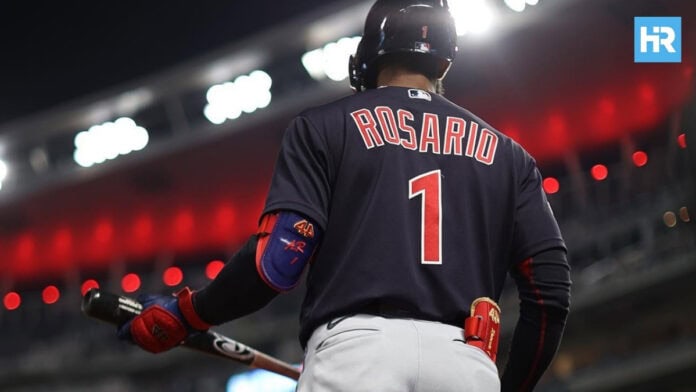
The New York Yankees and Amed Rosario are in agreement on a one-year, $2.5 million contract, sources told ESPN on Saturday, bringing the two sides back together after a short but productive stint last season. The deal includes incentive bonuses reported between $225,000 and $250,000, and Rosario is represented by Octagon.

Rosario, 30, originally joined the Yankees on July 26, when New York acquired him from the Washington Nationals at the trade deadline. In that deal, the Nationals received right-handed pitcher Clayton Beeter and minor league outfielder Brown Martinez. The Yankees targeted Rosario then for his versatility and right-handed bat — it was the same traits that drove the decision to bring him back.

Key Takeaways
  • The Yankees and Amed Rosario agreed to a one-year, $2.5 million contract that includes up to $225,000–$250,000 in performance incentives.
  • Rosario’s biggest value comes from his strong production against left-handed pitching and his ability to play multiple positions.
  • New York sees Rosario as a solution to its heavily left-handed lineup and as important infield depth, especially early in the season.

Addressing a Left-Handed Lineup With a Proven Right-Handed Option

Yankees general manager Brian Cashman has identified the club’s left-handed-heavy lineup as a problem he wanted to address this offseason. Speaking at the Winter Meetings, Cashman explained why adding accessible right-handed hitters has been challenging.

I definitely want to give Aaron Boone some legitimate choices so he can match up when we’re facing a left-handed starter because obviously we’re so left-handed that it’s a vulnerability right now,” Cashman said. “There’s not a lot of right-handed bats in the game that are accessible.

Rosario fits directly into that plan. After nine major league seasons, his strongest offensive skill remains his performance against left-handed pitching. During the 2025 season, he batted .302 with four home runs and an .819 OPS in 122 plate appearances against lefties. Over his career, he owns a .298/.336/.464 slash line in 1,196 plate appearances against southpaws.

At the time of Rosario’s re-signing, major sportsbooks continued to list the Yankees among the leading teams in World Series futures markets. DraftKings listed New York at +750 in early November, while FanDuel showed +700 during the same period. BetMGM and Action Network futures boards also listed the Yankees at +750, and Covers listed them at +700. PointsBet markets showed the Yankees at +850 in one listing and 9.50 in decimal odds in another.

These figures, posted across November and December, placed the Yankees consistently within a narrow futures range.

Rosario’s Production Following the Trade Deadline

After arriving in New York last July, Rosario contributed right away despite limited opportunities. He appeared in 16 regular-season games with the Yankees and batted .303, going 10-for-33 with a .788 OPS. His playing time was reduced by a 10-day stint on the injured list due to a left sternoclavicular joint sprain, but his offensive production met expectations.

Across the full 2025 season with the Nationals and Yankees combined, Rosario posted a .276 batting average and a .745 OPS, with six home runs and 23 RBIs. He also appeared in four postseason games for New York, making two starts and going 3-for-10.

Versatility Across the Diamond and Depth in the Infield

Rosario played mostly third base for the Yankees last season and is expected to fill a similar role again, likely platooning with left-handed hitter Ryan McMahon. McMahon is considered a strong defender, but Rosario is expected to receive more playing time against left-handed pitching. He also saw action at second base and in right field, giving manager Aaron Boone multiple options.

Flexibility is especially relevant early in the season. Anthony Volpe is expected to miss the start of the year while recovering from shoulder surgery, and if Jose Caballero handles extended shortstop duties, Rosario’s presence helps fill the utility role on the bench.

Reports have also linked the Yankees to Brendan Donovan and, more loosely, All-Star Bo Bichette.

A Veteran Role Player Finds Stability in the Bronx

Once considered one of baseball’s top prospects in the New York Mets’ farm system, Rosario later produced solid but uneven results as a regular with the Mets and Cleveland Guardians. His overall effectiveness was limited by low walk rates, struggles against right-handed pitching, and subpar defense at shortstop.

Now entering his age-30 season, Rosario has settled into a part-time, multi-position role. While he does not provide significant defensive value at any single position, his ability to hit left-handed pitching remains his defining strength.

Since the start of the 2023 season, Rosario has played for six different teams, signing one-year deals with the Tampa Bay Rays and Washington Nationals before returning to New York. The Yankees had interest in him during each of the past two offseasons, and this time they were able to complete a deal that brings him back for a full season. The contract represents a slight raise from the $2 million deal he signed with Washington last winter.

Knicks Beat Spurs to Win NBA Cup, Brunson Named MVP

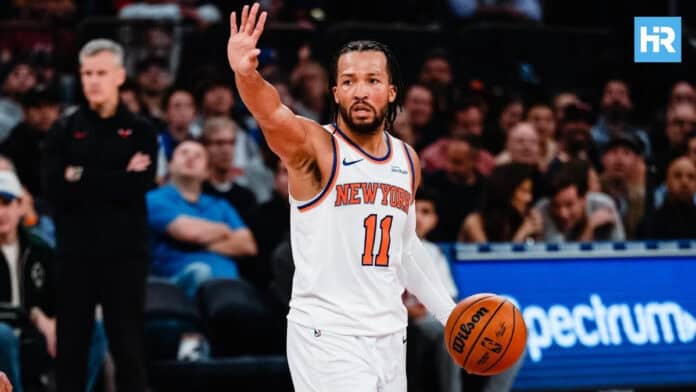
Jalen Brunson Claims NBA Cup MVP as Knicks Win

New York Knicks guard Jalen Brunson was named the Most Valuable Player of the 2025 Emirates NBA Cup. He became the third player to win the award, joining LeBron James and Giannis Antetokounmpo.

Brunson received 19 of 20 votes from a panel of media members, with teammate OG Anunoby earning the remaining vote. Fan voting counted for five total votes, and Brunson received two of those tallies.

Key Takeaways
  • Jalen Brunson was named the 2025 Emirates NBA Cup MVP after receiving 19 of 20 media votes and averaging 33.3 points, 6.7 assists, and 3.7 rebounds during the tournament.
  • The New York Knicks defeated the San Antonio Spurs in the NBA Cup championship after erasing a double-digit deficit, with final scores reported as 124-113.
  • Bench contributions, strategic coaching decisions, and repeated success in pressure situations defined the Knicks’ Cup run.

Knicks Defeat Spurs To Capture NBA Cup Championship

The Knicks won the 2025 NBA Cup on Tuesday night by rallying past the San Antonio Spurs in the championship game. The final score of the game was 124-113, and the victory completed an 11-point comeback after New York trailed late in the third quarter.

Brunson finished the championship game with 25 points, eight assists, and four rebounds. He scored six points in the fourth quarter and played 41 minutes while being defended by Spurs guards Stephon Castle, De’Aaron Fox, and Dylan Harper. When Brunson was on the floor, the Knicks were 18 points better than the Spurs.

San Antonio entered the final after defeating the 24-2 Oklahoma City Thunder in the semifinals. Victor Wembanyama, who had returned in that game, increased his playing time from 21 minutes in the semifinal to 25 minutes in the championship. The Spurs built an 11-point lead late in the third quarter and had seven players score in double figures.

OG Anunoby led all scorers in the championship game with 28 points on 10-of-17 shooting. He also recorded nine rebounds and three assists. Karl-Anthony Towns was temporarily sidelined by an apparent first-half injury and was shown grimacing earlier in the game.

Jordan Clarkson scored 15 points off the bench and hit two consecutive three-pointers after entering the game shooting 28% from three-point range. Mitchell Robinson played 18 minutes and collected 15 rebounds, including 10 offensive rebounds, while occupying Wembanyama in the paint. Those rebounds frequently led to possessions that resulted in the Knicks’ 15 made three-pointers. Tyler Kolek ran the offense late and dished out critical assists over the final three minutes.

Every Knicks player earned $530,933 in prize money for the win, while Spurs players received $212,373 each as runners-up.

Betting Markets Reflect Knicks’ Rising Profile

As the Knicks advanced through the tournament and completed their comeback in the championship game, betting markets adjusted accordingly. Before the title game in Las Vegas, New York was listed as a slight favorite, with multiple betting previews showing the Knicks favored by 2.5 points, a total of 227.5, and a moneyline of -135, while the Spurs were listed at +115.

After the championship win, futures markets continued to move in response to New York’s performance. Sportsbook listings showed the Knicks with NBA title odds ranging from +1000 at Caesars to +1300 at both BetMGM and DraftKings, while FanDuel listed New York at +1100. An opening price of +750 was also cited for comparison. FanDuel’s separate NBA Finals futures page listed the Knicks at +1500.

Eastern Conference odds also tightened, with one listing placing New York at +300 to win the East. At the individual level, Brunson’s performances carried betting relevance as well. He was listed at +1700 in Finals MVP markets at FanDuel, +8000 in NBA MVP opening odds at Covers, and +25000 in NBA MVP odds at BetMGM. Brunson also appeared at +4000 in BetMGM’s Clutch Player of the Year market.

Brunson’s Production Defined The Tournament

Across NBA Cup play, Brunson averaged 33.3 points, 6.7 assists, and 3.7 rebounds. His scoring totals during the tournament were 29, 33, 37, 35, 40, and 25 points. He also shot 46% from three-point range.

In the quarterfinals, Brunson scored 35 points against the Toronto Raptors, shooting 13-for-19 from the field and 6-for-9 from beyond the arc. In the semifinals, he scored 40 points against the Orlando Magic, helping the Knicks reach their first title game of any kind since 1999, when they lost to the Spurs.

After the championship game, Brunson credited his teammates. “Without Tyler Kolek, OG Anunoby, Mitchell Robinson, and Jordan Clarkson, we don’t win this game,” he said while accepting the MVP award. At the final buzzer, Brunson embraced Kolek, Clarkson, and Robinson.

This is a goal of ours that we get to check off,” Brunson said. “It’s an important stepping stone for us. We can still learn from this game and get better, as well. I’m very thankful for the opportunity presented to ourselves.

Pressure Situations Highlight Growth Under Mike Brown

The Knicks were coached by first-year head coach Mike Brown, who valued the NBA Cup’s single-elimination format. “During the course of the year, you try to find situations to put pressure on your group,” Brown said. “This is a single-elimination tournament when you get to a certain point. Every game counts.”

Brown used Kolek alongside Brunson to counter San Antonio’s guards and leaned heavily on the bench. Brown said the pressure created by the tournament “is manufactured without you as a coach having to try to do it all the time,” adding that success in those moments can build confidence throughout the organization.

Brunson described the start of his relationship with Brown, saying the coach called him and met him for dinner, where they talked for two to three hours without discussing basketball. “I really appreciated the time he spent coming down to see me,” Brunson said. “It was a great first impression.

Knicks’ Standing And Historical Context

The Knicks are 18-7 and sit second in the Eastern Conference, 2.5 games behind the Detroit Pistons. Their NBA Cup run included wins over the Charlotte Hornets and Milwaukee Bucks in group play, followed by victories against the Toronto Raptors, Orlando Magic, and Spurs.

New York has not reached the NBA Finals since 1999, and they have not won a championship since 1973, a span of 52 years. That championship came a year after the birth of Rick Brunson, Jalen Brunson’s father, a former Knicks player and current assistant coach.

While the NBA Cup championship game does not count toward regular-season statistics, the Knicks viewed the experience as meaningful. “A game like this, an environment like this, you don’t really see around the NBA too often,” Brunson said.

I always focus on staying levelheaded through the positives, through the negatives,” he added. “You can’t get too high, can’t get too low. This is great. We’re going to enjoy this. But once we leave tomorrow, we’re moving on.

The Last Shot: The Complete Story Behind Michael Jordan’s Iconic Game 6 Photograph

The Last Shot: Complete Story

No sports documentary during the pandemic commanded attention the way The Last Dance did, drawing viewers back into the final chapter of Michael Jordan’s career with the Chicago Bulls. As the series approached its conclusion, the focus narrowed to Jordan’s final possession in Game 6 of the 1998 NBA Finals, the last shot he would take in a Bulls uniform and the play that secured the championship.

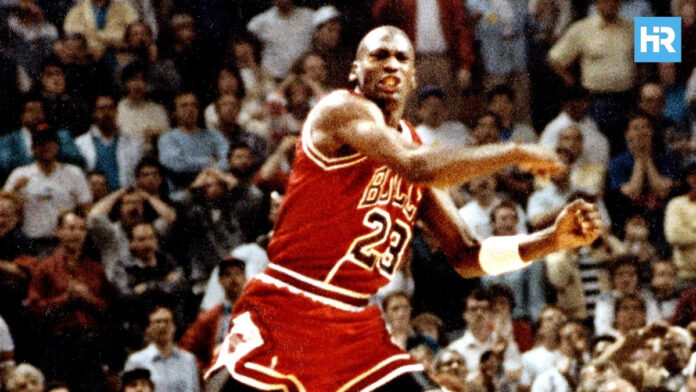
The jumper secured a title, became one of the most documented plays in basketball history, and produced an image later ranked number one on Sports Illustrated’s “100 Greatest Sports Photos of All Time.” The photograph was captured by Fernando Medina, positioned on the baseline while working for the NBA, at the instant Jordan released the shot that ended the Bulls’ dynasty.

Key Takeaways
  • Michael Jordan scored 45 points and hit the game-winning 20-footer with 5.2 seconds left to secure an 87–86 Game 6 victory and the Bulls’ sixth NBA title in eight years.
  • Fernando Medina captured the iconic photograph of the final shot, which was later ranked No. 1 on Sports Illustrated’s 100 Greatest Sports Photos of All Time.
  • The photograph was created using the Flash Wizard system, linking multiple film cameras operated by NBA Photos during the 1998 NBA Finals.

Fernando Medina’s Early Life and Entry Into NBA Photography

Fernando Medina’s journey into professional sports photography began well before his presence on NBA baselines. At the age of 3, Medina and members of his family fled Cuba for the United States following Fidel Castro’s rise to power. His parents concluded that communist Cuba was “no place to raise a family or run a business.” Prior to leaving the country, the family had established itself as successful entrepreneurs. Medina’s father, Rosendo, operated a cardboard business, while his mother, Diolanda, worked with photographers producing wedding photo albums that included embedded music boxes.

After high school, Medina continued the family’s entrepreneurial tradition by starting an audio-visual company with friends. Connections formed through that business eventually led to an opportunity with the Orlando Magic. In 1989, he became part of the franchise’s inaugural photography team, working under Tony Smith. His initial responsibilities did not involve shooting games; instead, he was tasked with delivering slide photographs.

Medina developed his photographic skills through hands-on experience, learning alongside respected figures in the industry such as Barry Gossage, Andrew D. Bernstein, Nathaniel Butler, and Walter Iooss. His role expanded over time, and in 1996, he was appointed official team photographer for the Magic. The position allowed him to cover NBA games on a full-time basis and travel to document NBA Finals, All-Star Games, and additional league events for both the NBA and Getty Images.

Throughout his career, Medina’s photographs were distributed globally and appeared in publications including Sports Illustrated, ESPN, SLAM, Hoops, Beckett, Bravo Sport, Dunkshoot, and Forbes, in addition to various websites and hardcover books. His work was also featured by The New York Times, The Los Angeles Times, USA Today, The Sporting News, and NBA.com. While Medina never submitted his images to photography competitions, two of his photographs were selected as NBA Photo of the Year by Getty Images, and his work also received recognition from Sports Illustrated.

Game 6 of the 1998 NBA Finals

Game 6 of the 1998 NBA Finals was played on June 14, 1998, at the Delta Center in Salt Lake City, Utah, between the visiting Chicago Bulls and the Utah Jazz — the championship series for the 1997–98 NBA season and a rematch of the previous year’s Finals.

Both teams finished the regular season with identical 62–20 records. Utah defeated the Los Angeles Lakers in the Western Conference Finals, while Chicago beat the Indiana Pacers in the Eastern Conference Finals. The Jazz swept the Bulls 2–0 during the regular season, giving Utah home-court advantage.

The Jazz won Game 1, the Bulls won Games 2 through 4, and Utah extended the series by winning Game 5 at the United Center 83–81 after Michael Jordan missed a potential game-winning three-pointer at the buzzer. None of the Bulls’ previous five Finals appearances had gone to a Game 7.

In Game 6, the Jazz led 49–45 at halftime and 66–61 after the third quarter. Scottie Pippen aggravated a back injury on the opening basket and was limited to 8 points on 4–7 shooting in 26 minutes. Michael Jordan attempted 35 of the Bulls’ 67 shots, scoring 45 points in 44 minutes. Karl Malone led Utah with 31 points, 11 rebounds, and 7 assists.

With 41.9 seconds left, John Stockton hit a three-pointer to give Utah an 86–83 lead. Jordan responded with a layup, cutting the deficit to one. With 18.9 seconds remaining and Utah in possession, Jordan stole the ball from Karl Malone in the low post and dribbled down the court. Guarded by Bryon Russell, Jordan drove inside the three-point line, executed a quick crossover, and hit a 20-footer with 5.2 seconds left to give Chicago an 87–86 lead.

Stockton missed a final three-point attempt, and the Bulls won their sixth championship in eight years. It was the final shot Jordan would take as a member of the Chicago Bulls, his 25th game-winning shot for the team.

The Technology and Teamwork Behind “The Last Shot” Photograph

The photograph that captured Jordan’s jumper was not the result of chance alone. It was the culmination of more than five years of research and development by NBA Photos, which had been testing a system originally used by Sports Illustrated photographers known as the Black Box, later referred to as the Flash Wizard system.

At the time, photographers had to bring and install their own strobe lights in arenas. The Flash Wizard system allowed multiple cameras to fire simultaneously using a single burst of strobe lighting, accounting for lag times across different 35mm and 120mm film cameras. Development included hiring an engineer from MIT and testing shutter lag down to milliseconds, while working within the limits of 36 frames per roll, or 24 frames for Hasselblad cameras.

During Game 6, photographers Andrew D. Bernstein, Scott Cunningham, and Fernando Medina worked together. Bernstein was positioned in the lower corner, Cunningham in an elevated position near center-court TV cameras, and Medina on the opposite baseline. Bernstein controlled the remote trigger, while Medina and Cunningham acted as “human drones,” continuously composing and maintaining focus without pressing the shutter themselves.

NBA Photos credited images to the photographer who was holding and composing the camera, while stationary cameras were credited to the photographer who installed them. When Jordan rose for the shot, Bernstein’s view became obstructed, resulting in a blurred image, but Medina and Cunningham captured the moment cleanly.

The final image stood out because it included sideline-to-sideline framing, the shot clock, the scoreboard, and the fans. Among them was a young boy in a Bulls jersey surrounded by Jazz fans, holding up six fingers in anticipation of Chicago’s sixth championship.

Broadcast Records, Legacy, and Continued Discussion

NBC broadcast Game 6 live as part of NBA on NBC. The game earned a 22.3 Nielsen rating and a 38 share, averaging 35.9 million viewers. At least 72 million people in the United States watched some portion of the game, making it the most-watched NBA game in history.

The shot remains one of the most discussed plays in league history. In 2010, John Hollinger of ESPN ranked it fourth among the 50 best single-game performances. Officiating decisions involving Howard Eisley and Ron Harper continue to be debated decades later. Bryon Russell later stated, “Whether he pushed off or not, he was making that shot.”

Latest News

Rob Menendez Slams Trump Over Hudson Tunnel Funding Freeze

Rob Menendez Urges End to Hudson Tunnel Funding Dispute After Court...

In Hoboken, after a press conference concerning an unrelated federal funding allocation, U.S. Rep. Rob Menendez (D-8) discussed the restoration of approximately $205 million...
Hudson County NAMI Caregiver Support Programs

Hudson County Caregivers Get February Mental Health Support

Hudson County residents caring for youth with mental health symptoms can participate in a six-session NAMI Basics course offered this February through NAMI Hudson...
Portal Bridge Cutover Reduces NJ Transit Service

Portal Bridge Cutover Slashes 53% of NJ Transit Service

Beginning Feb. 15, Amtrak will start a month-long “cutover” project to transfer train traffic from the existing Portal Bridge to the new Portal North...
NJ Teacher in “Baby Rapist” Chat Pleads Guilty

Former NJ Teacher in ‘Baby Rapist’ Chat Pleads Guilty to Child...

On Wednesday, February 11, 2026, Senior Counsel Philip Lamparello announced that Matthew Ozol, 40, of Jersey City, pleaded guilty before U.S. District Court Judge...
Jersey City Faces $250M Deficit, Mayor Takes $1 Salary

Jersey City Releases Report Showing $250 Million Budget Deficit

On February 4, 2026, Mayor James Solomon released a document titled A Report to the People of Jersey City, outlining what it calls a...