


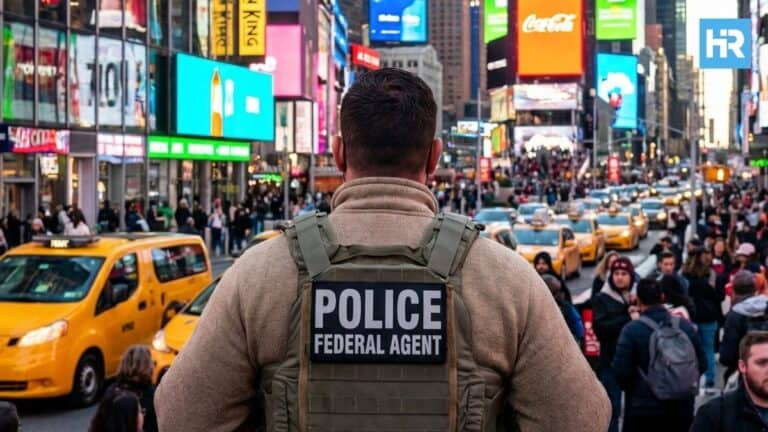
I’ve been following immigration enforcement in New York City closely this year, and what I’ve seen unfold has been dramatic enough to reshape how many people here navigate daily life.
Over the past few months, data, firsthand accounts, and community reports all show the same trend: ICE arrests in New York City have risen sharply. The pattern is changing, affecting a larger share of the immigrant population than before. In this article, I break down the numbers, enforcement changes, who’s affected, and what it means for NYC immigration.
A Surge That Can’t Be Ignored
Since January 2025, ICE arrests across the New York area have risen dramatically, with the total number of people detained exceeding the number of arrests for all of the previous year. Reports indicate that over the first half of 2025, a growing majority of those arrested, potentially reaching 73% or higher, had no criminal convictions. Before May 2025, ICE arrests leaned heavily toward individuals with criminal convictions or pending charges. But by mid-May, something changed.
ICE agents have started appearing inside courthouses, at required check-ins, and near legal-aid offices. These are places people normally visit to follow immigration rules. This shift meant that individuals who were doing what the system asked of them suddenly found themselves detained. By the first 10 days of June, reports say ICE agents made 495 arrests. It’s more than double the number for the entire month of June the previous year.
The composition of these arrests has shifted just as dramatically. Instead of focusing primarily on convicted offenders, ICE is now sweeping in many immigrants whose cases are purely civil in nature.
What Changed, and Why Now?
After reviewing data, public statements, and on-the-ground accounts, several factors seem to explain the spike in NYC ICE arrests:
- Targeting of courthouses and check-ins: Starting in mid-May, ICE began treating these locations as active enforcement zones.
- Federal enforcement realignment: The administration’s expanded interior-enforcement strategy has resulted in more agents, more operations, and fewer restrictions.
- Prioritization of civil cases: Many recent NYC immigration arrests target individuals with outstanding immigration violations, not criminal charges.
This doesn’t look like a short-term enforcement push. It appears to represent a long-term recalibration in how ICE interacts with immigrant communities in New York City.
Who Is Affected: More Than Just “Criminal Aliens”
Policymakers claim they’re targeting “dangerous criminals,” but NYC immigration arrest data tells a more complex story. A growing majority of those arrested in 2025 have no criminal history at all. Instead, they’re individuals with pending asylum cases, expired visas, removal orders issued years ago, or unresolved paperwork.
Arrests increasingly occur at or near:
- Immigration courts
- Mandatory check-in centers
- Government buildings
- Public transit hubs
This puts even long-time residents — people who work, raise families, and pay taxes — at risk. The idea that “only criminals need to worry” simply no longer matches the ground reality.
Historical Context: How Today’s ICE Activity Compares to Previous Years
To understand the gravity of the current surge, I looked back at enforcement trends over the past decade. The contrast is stark.
Between 2016 and 2019, ICE activity rose nationwide, but New York City’s sanctuary-city policies limited cooperation with federal officers. Arrests happened, but they were more targeted and often data-driven. In 2020-2022, ICE activity fell sharply due to COVID restrictions, court closures, and shifting federal priorities. Arrests during those years were historically low.
Between 2023 and 2024, enforcement activity ticked upward, but NYC ICE arrests remained lower than pre-2020 levels. Non-criminal enforcement was still relatively restrained. Then 2025 arrived — and within just six months, NYC immigration arrests surpassed the totals of many previous years.
Understanding this history matters because it shows this isn’t a routine cyclical spike. It represents an intentional, coordinated escalation that breaks from nearly a decade of New York’s enforcement norms.
Consequences for Deportations, Bond, & Detention
The ripple effect of rising arrests is visible across detention centers and immigration courts. More detainees lead to additional bond hearings and longer case timelines. This adds pressure to courts that are already backlogged.
Recent data show the median bond amount in New York dropped from about $6,500 in January to roughly $3,500 by June 2025. While that makes release more accessible for many, it also reflects the growing number of cases judges now must handle.
But it’s important to note that deportations haven’t risen at the same rate. Many people remain in custody or in months-long removal proceedings. Families are separated, households disrupted, and uncertainty grows as people wait for their day in court.
Voices from the Ground: Fear, Uncertainty, & Community Impact
Walking through neighborhoods like Jackson Heights, Sunset Park, and Mott Haven over the past months, I’ve heard the same stories again and again. People are afraid to leave their homes for anything involving government buildings.
Adam told me they had plans for the upcoming Hoboken Holiday Market Series and Fireworks Yacht Party, but he is now worried. Routine tasks like picking up court papers, attending asylum check-ins, even walking into a school building now feel risky. With the increase in crime in Midtown West, immigrants in the area are growing more concerned.
Parents have told me they have backup guardians designated for their children “just in case” they don’t return home one day. Others speak of carrying documents or attorney information on them at all times. The emotional and psychological pressure is heavy, and it’s reshaping how immigrant communities engage with the city around them.
Political Reactions: Local vs. Federal Conflict
The rise in ICE arrests has triggered a political clash between New York City leadership and federal authorities. Local officials argue that courthouse arrests undermine trust, discourage cooperation with law enforcement, and erode the integrity of the justice system.
New York’s sanctuary policies restrict city agencies from aiding ICE, but those protections don’t prevent federal officers from acting independently. What we’re seeing now is a kind of “shadow jurisdiction” — a federal presence that operates parallel to city policy, often contradicting it.
State lawmakers have demanded explanations, while federal officials insist they’re enforcing the law as written. The tension between these two perspectives is growing, and NYC may soon become a legal battleground over the limits of federal immigration power.
Impact on Families and Children
One of the most heartbreaking aspects of this surge is its effect on families — especially children. I’ve spoken to educators who say some students suddenly fear coming to school. Counselors report rising anxiety among kids worried their parents might not be home when they return at the end of the day.
For mixed-status households, every knock at the door becomes a moment of panic. Families have created emergency plans: who to call, where to go, how to access important documents, and how to prepare children for the possibility of sudden separation.
What Immigrants Are Doing to Protect Themselves
As enforcement intensified, communities have adapted. I’ve noticed several trends:
- Safety planning: Families keep documents, attorney numbers, and power-of-attorney forms accessible.
- Avoidance of high-risk locations: Some immigrants choose to skip check-ins or reschedule court dates if they sense danger.
- Legal preparedness: More people are seeking consultations, even if they don’t yet have active cases.
- Know-your-rights training: Community groups are hosting packed workshops on how to respond if ICE approaches.
- Encrypted communication: Some rely on group chats, messaging apps, or neighborhood alert networks to share real-time warnings of ICE activity.
These actions show resilience. They also reveal a troubling reality: many immigrants feel they must protect themselves from the system meant to oversee their cases.
Broader National Implications
Although New York is receiving significant attention, this surge isn’t isolated. ICE has increased operations in cities like Chicago, Los Angeles, and Houston. They target courthouses, transit hubs, and other key locations, even in sanctuary cities.
NYC, however, stands out as a kind of test case. If federal authorities can execute large-scale interior enforcement in a city with strong historic immigrant advocacy, similar strategies may roll out nationwide.
If New York’s legal and community systems struggle to keep up, smaller cities may be hit even harder. What happens in NYC could shape the future of federal immigration enforcement across the country.
Looking Ahead — What to Watch For
As I continue monitoring NYC ICE arrests and broader enforcement trends, there are several questions I can’t help but ask:
- Will the arrest surge continue into next year, or will court challenges slow it down?
- How will NYC balance sanctuary principles with a federal government ramping up enforcement?
- Will deportations eventually rise in proportion to arrests, or will detention facilities become even more overwhelmed?
- What long-term effects will this have on immigrant participation in schools, healthcare, and city programs?
The answers will shape not just policy but the everyday lives of hundreds of thousands of New Yorkers.
FAQs
With ICE arrests rising in NYC, uncertainty is growing in immigrant communities. I’ve noticed the same questions keep coming up — from families, advocates, and local New Yorkers wanting clarity on ICE actions. The FAQs below address the most common points of confusion and provide a clear, accessible snapshot of what residents are trying to make sense of during this moment.
Why Are ICE Arrests Rising so Sharply in NYC Now?
The surge stems from mid-2025 changes in enforcement strategy, expanded federal authority, and new operations at courthouses and check-ins.
Are Most of Those Arrested Criminals?
No. A growing majority of those arrested have no criminal record.
What Happens After Someone Is Arrested?
Many are detained, and bond hearings have increased. Deportations haven’t grown proportionately, leaving many in prolonged proceedings.
Are Arrests Happening Only in Neighborhoods?
No — ICE is increasingly active at courthouses, check-ins, and government buildings.
How Is This Affecting Families?
Fear, stress, and uncertainty are widespread, especially among children and mixed-status households.
Could Arrests Rise Even Further?
Yes. If current policies continue, NYC and other major cities could see even higher arrest numbers.