


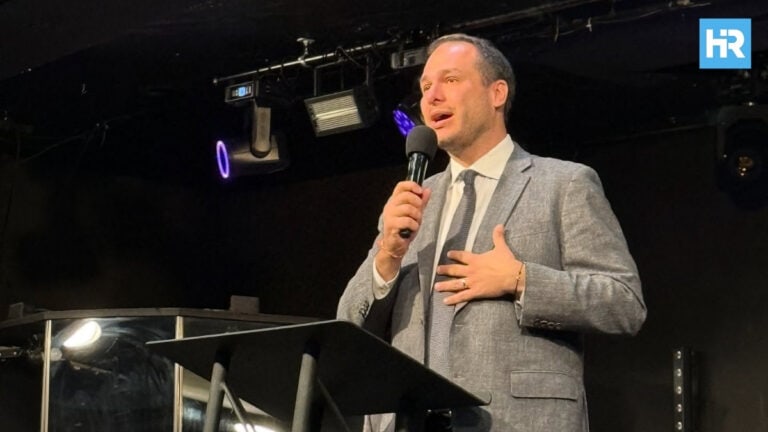
James Solomon has been elected mayor of Jersey City after defeating former New Jersey Gov. Jim McGreevey in a runoff election held Tuesday. With 93% of votes counted, Solomon led with 68% compared to McGreevey’s 32%, according to election results. The Associated Press projected the outcome less than an hour after polls closed. About 33,000 voters participated.
- James Solomon won the Jersey City mayoral runoff with 68% of the vote, while Jim McGreevey received 32%.
- The runoff followed a Nov. 4 election in which seven candidates competed, and none reached 50%.
- Housing affordability, rent control, taxes, development, and public safety dominated the campaign.
How the Election Reached a Runoff and Why the Race Drew Attention
The runoff election followed the Nov. 4 general election, when seven candidates ran for mayor, and none received more than 50% of the vote. In that first round, Solomon finished first with 29% of the vote, while McGreevey placed second with 25%. Both candidates are Democrats, although party affiliation did not appear on the ballot.
The contest was viewed as a choice between Jersey City’s Democratic establishment and its progressive base. McGreevey entered the race with backing from Hudson County political leaders, though that support largely faded after his second-place finish. Solomon gained endorsements from three candidates eliminated in the first round, as well as support from U.S. Sen. Andy Kim and Newark Mayor Ras Baraka.
Solomon described the outcome as a victory against entrenched political power and stated that the election sent a message that Jersey City residents could not be influenced by developers or special interests. He pledged to lead as a mayor focused on residents rather than political insiders.
Solomon’s Political Background and Policy Priorities
Solomon is 41 years old and was first elected to the Jersey City Council in 2017, representing neighborhoods that include downtown and the waterfront. During a debate last month, he said that, as mayor, he plans to improve city schools, implement new rent controls, and oversee the development of additional affordable housing.
His platform focused heavily on cost-of-living concerns, particularly those linked to new development aimed at affluent commuters from New York City. Solomon argued that Jersey City has built a large amount of housing but has absorbed unmet demand created by New York City’s failure to build enough homes.
In addition to housing policies, Solomon has said he plans to hire 100 new police officers and supports the creation of a civilian complaint review board similar to New York City’s police oversight agency.
Solomon grew up in Millburn and earned a master’s degree from Harvard University’s Kennedy School of Government. He previously worked as an aide to former Boston Mayor Thomas Menino. He moved to Jersey City in 2013 and is a married father of three.
In 2015, about a month after his wedding, Solomon was diagnosed with Hodgkin’s lymphoma. Now in full remission, he has said the experience influenced his decision to pursue public office, citing the support he received from Jersey City during that time.
Jim McGreevey’s Return to Politics and Concession
McGreevey, 68, returned to electoral politics for the first time in more than two decades during this mayoral race. A Jersey City native, he previously served as a state assemblyman, mayor of Woodbridge, and governor of New Jersey. He was elected governor in 2001 and resigned in 2004 after admitting to an extramarital affair with a man he had hired as an aide.
His resignation was also tied to controversy over his decision to appoint Golan Cipel, a former Israeli naval officer, as New Jersey’s homeland security adviser in 2002 despite Cipel lacking proper qualifications and being unable to obtain required security clearances.
After leaving office, McGreevey stepped away from electoral politics and later returned to Jersey City more than a decade ago, where he managed a prison reentry program. This election is the first time in over 20 years that his name appeared on a New Jersey ballot.
Following the runoff, McGreevey conceded defeat, congratulated Solomon, and said he does not plan to run for public office again.
Affordability, Housing, and Safety at the Center of the Campaign
Affordability emerged as the defining issue of the runoff election. On Election Day, both candidates traveled through Jersey City neighborhoods during rainy conditions to encourage residents to vote.
Solomon focused his message on limiting rent increases and holding developers accountable for building affordable housing. McGreevey emphasized requiring that 20% of new market-rate housing developments include affordable units within the same buildings.
Voter concerns centered on these issues. Jersey City resident Mike Liu said property taxes rose by approximately 20% to 30% in 2022. Another resident, Nisrit Osman, said affordability had declined to the point where multiple household incomes are often necessary to support one home.
The candidates also exchanged criticism over responsibility for rising property taxes. McGreevey said property taxes rose significantly while Solomon was in the city government. Solomon countered by blaming developers and political leaders, whom he said supported McGreevey.
Despite sharp disagreements, both candidates said the city needs safer streets and more police officers.
Transition of Leadership at City Hall
Solomon will take office in January, succeeding Mayor Steve Fulop. Fulop is stepping down after three terms following an unsuccessful run for the Democratic nomination for governor in June and plans to lead a business advocacy group.