


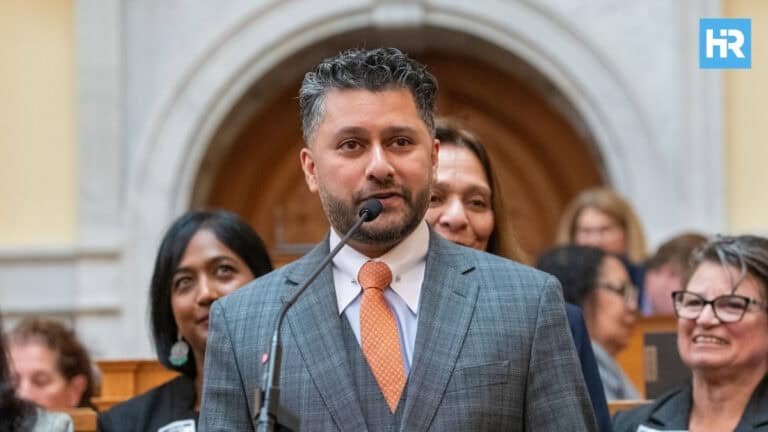
The New Jersey State Senate has approved Bill S-4219, sponsored by State Senator Raj Mukherji of Hudson County and co-sponsored by State Senator Angela McKnight of the 31st Legislative District. The bill revises payroll tax law for specific municipalities by expanding information sharing between state agencies and local governments, requiring additional payroll reporting from employers, and establishing a funding mechanism to support enforcement.
The legislation applies to municipalities operating under the Local Tax Authorization Act, which permits cities with populations exceeding 200,000 residents to adopt ordinances imposing an employer payroll tax on certain businesses within their boundaries.
- The New Jersey State Senate approved Bill S-4219 to strengthen payroll tax enforcement in municipalities with populations above 200,000, including Jersey City and Newark.
- After targeted audits and outreach in 2024, Jersey City payroll tax revenue rose from $67.7 million in 2023 to $103 million in 2024.
- The legislation increases payroll data disclosure, sets fixed quarterly payment deadlines, permits interest on late payments, and creates a funding structure for enforcement.
Changes to Payroll Data Disclosure Between State and Local Governments
Existing law generally restricts the director of the Division of Taxation within the New Jersey Department of the Treasury from releasing state tax return information. This limitation includes large portions of payroll-related data relied upon by municipalities such as Jersey City and Newark. Current disclosures are discretionary and limited to wage and tax withholding information supplied by employers through filings under the New Jersey gross income tax.
Bill S-4219 expands required disclosures by directing the Division of Taxation to provide municipalities with information identifying which employers subject to the payroll tax did report payroll data and which did not for a preceding calendar quarter. By connecting state and municipal data systems, the bill allows local governments to confirm payroll tax compliance and detect employers that fail to report payroll information.
Senator Mukherji stated that providing municipalities access to state wage and withholding data supports fair and consistent payroll tax collection, protects public school funding, and reduces reliance on property taxes. He also stated that the bill advances equal educational opportunity for students in Abbott districts, including Jersey City and Hoboken.
Jersey City Enforcement Actions and Documented Revenue Increases
Jersey City Mayor-elect James Solomon welcomed the Senate’s passage of the bill, citing its importance for taxpayers and public schools. Payroll tax enforcement was a priority during his service on the Jersey City Municipal Council and the 2024 campaign.
In 2024, Solomon drew attention to a Jersey City internal audit that identified several large corporations that had never registered for the payroll tax, despite legal requirements, or had discontinued payments. Following the audit, the city launched a mass mailing campaign targeting unregistered businesses and sent direct correspondence to specific large employers identified as noncompliant.
The audit and compliance review process led to more than 100 businesses newly registering for the payroll tax. Employers that had previously stopped paying also submitted back payments. Payroll tax revenue increased by more than 50%, rising from $67.7 million in 2023 to $103 million in 2024.
Solomon stated that audits of major employers revealed widespread payroll tax noncompliance that reduced funding available to public schools. He also stated that Senator Mukherji collaborated with the Jersey City Board of Education and the mayor’s office to develop legislation that strengthens enforcement authority and improves verification of employer reporting.
Quarterly Payment Schedule, Interest Charges, and Enforcement Authority
Under Bill S-4219, employers must report and pay payroll taxes for each preceding calendar quarter by the last day of April, July, October, and January. Municipal ordinances must outline enforcement mechanisms and define penalties for failure to remit payment.
For late payments, municipalities may impose interest charges of up to 8% annually on the first $1,500 of delinquent taxes and up to 18 percent annually on amounts exceeding $1,500. The bill also establishes a funding mechanism intended to support municipal payroll tax enforcement operations.
Jersey City officials have publicly sought stronger payroll tax enforcement since at least 2021, with a coalition of elected officials forming in January 2024 to press the issue. Separately, during the summer, Senator Mukherji introduced a budget resolution aimed at restoring $4 million in proposed funding cuts to the Jersey City Board of Education.