Home Blog Page 14

Jason Kidd Agrees to Multiyear Contract Extension With Dallas Mavericks

Jason Kidd Signs Multiyear Extension With Mavericks

Jason Kidd is staying in Dallas. The Mavericks’ head coach has agreed to a multiyear contract extension with the franchise, according to NBA insider Marc Stein. The full details of the deal have not been disclosed.

Kidd, a 10-time NBA All-Star, has served as the Mavericks’ head coach for four seasons, during which he has compiled a 179–149 record. Under his leadership, Dallas reached the 2024 NBA Finals and the 2022 Western Conference Finals.

In July, Stein reported that Kidd was “expected” to sign an extension before the 2025–26 NBA season. The new agreement fulfills that expectation, finalizing Kidd’s position with the team before the upcoming season begins.

Although the number of additional years in the extension has not been revealed, Kidd had two years remaining on his prior contract before this new deal was completed.

Key Takeaways
  • Jason Kidd has agreed to a multiyear contract extension with the Dallas Mavericks, according to NBA insider Marc Stein.
  • The New York Knicks expressed interest in Kidd during the offseason, but Dallas denied permission for an interview.
  • Kidd has a 179–149 record in four seasons as Mavericks head coach and will enter his fifth year leading the team.

Knicks Showed Interest Before Dallas Finalized Deal

The extension follows months of speculation connecting Kidd to another potential head coaching opportunity. Over the summer, the New York Knicks and Kidd reportedly expressed mutual interest in working together.

A source confirmed to The New York Post in June that Kidd, despite being under contract with Dallas, was “intrigued” by the Knicks’ opening. The Knicks, who were searching for a new head coach, requested permission to interview him, but the Mavericks denied the request.

Mavericks general manager Nico Harrison publicly dismissed the idea that Kidd would leave, signaling that the organization intended to keep its coach.

Kidd has a connection to the Knicks franchise as a player. He spent the 2012–13 NBA season with New York, the final year of his playing career, where he was teammates with Carmelo Anthony, Amar’e Stoudemire, and Tyson Chandler.

After the Mavericks refused the interview request, the Knicks turned their attention elsewhere and eventually hired Mike Brown as head coach following a prolonged search.

Stein announced the extension on X (formerly Twitter), writing: “BREAKING: The Mavericks have signed coach Jason Kidd to a multiyear contract extension, @TheSteinLine has learned. Kidd drew interest from the Lakers and Knicks over the past two summers and Dallas has now responded with a contract extension both times.”

This marks the second time in as many years that Dallas has extended Kidd’s contract amid outside interest. Two summers ago, the Los Angeles Lakers were reportedly interested in hiring Kidd to coach LeBron James & Co., which prompted the Mavericks to issue him an extension at that time as well.

Kidd’s Coaching Career and Record

Kidd, who was inducted into the Naismith Memorial Basketball Hall of Fame, began his head coaching career with the Brooklyn Nets in the 2013–14 season. After one season, he took over as head coach of the Milwaukee Bucks, leading the team from 2014–15 through 2017–18.

He remained in Milwaukee until midway through the 2017–18 campaign. Following his departure from the Bucks, Kidd worked as an assistant coach with the Los Angeles Lakers for two seasons (2019–20 and 2020–21) before being hired by Dallas.

Kidd became the Mavericks’ head coach in 2021 and has remained in the role since. In his four seasons with the team, he has reached the Western Conference Finals in 2022 and the NBA Finals in 2024.

Across nine seasons as a head coach, Kidd has a combined record of 362–339.

During his tenure in Dallas, Kidd also guided the team through significant roster changes. On February 2, 2025, the Mavericks traded franchise star Luka Doncic, yet Kidd still led the team to another deep playoff run that season.

Dallas Prepares for 2025–26 Season Under Kidd’s New Deal

The Mavericks’ new deal with Kidd comes as the team begins a transition into a new era. Following their postseason success in 2024, Dallas enters its first full season without Luka Doncic later this month.

After favorable lottery results, the Mavericks selected Cooper Flagg with the No. 1 overall pick in the 2025 NBA Draft. Kidd will now coach the highly touted rookie forward as the team builds for the future.

Kidd is entering his fifth season as the Mavericks’ head coach. The team will open the 2025–26 regular season at home on October 22 against the San Antonio Spurs.

Recent Betting Outlook for the Mavericks and Kidd

Following news of Kidd’s extension, several sportsbooks, including DraftKings, FanDuel, BetMGM, PointsBet, and Caesars, updated their betting lines for the Mavericks’ upcoming season.

According to the most recent lines, Dallas enters its October 22 home opener as a 2.5-point favorite against the San Antonio Spurs. The game total is set around 225.5 points. The spread originally opened at Dallas -1.5 before shifting to -2.5, a movement attributed in part to reports that Spurs forward Jeremy Sochan is expected to miss the game with a wrist sprain.

The Mavericks’ season win total sits at 41.5 games across multiple sportsbooks, reflecting expectations of a competitive but transitional season.

Dallas’ NBA Championship odds range between +3000 and +3500, placing them in the mid-tier of futures markets entering the 2025–26 campaign.

Rookie Cooper Flagg is listed as the heavy favorite to win Rookie of the Year. FanDuel currently lists Flagg at -220, DraftKings between -170 and -175, and Caesars near -185. His odds have remained steady since draft night.

Mothership Art Store and Arcade Opens in Hoboken as a New Creative Destination

Mothership Art Store and Arcade

Hoboken has welcomed a new space made for creativity and connection. Mothership, located at 257 1st Street, officially opened on October 11th, 2025, from 11 AM to 6 PM. It’s designed to bring together art, gaming, and culture in one space where people can create, learn, and relax.

The idea for Mothership came from five local creatives who wanted to make a community space that feels open and welcoming. They describe it as a “third space” — not home or work, but somewhere to meet others, explore ideas, and enjoy creative experiences.

The founders were inspired to build Mothership after noticing how technology and isolation had made personal connections harder. Their goal was to create a place that helps people reconnect through art, design, and creativity.

Key Takeaways
  • Mothership opened on October 11th, 2025, at 257 1st Street, Hoboken, with free arcade play for its first two weeks.
  • The space was started by five local creatives who wanted to rebuild real-world connections through art and shared culture.
  • Plans include STEM and animation classes, an analog lab, and a coffee shop offering specialty teas and drinks.

The Inspiration Behind Mothership

Mothership began as an idea shared by two of its founders who met while studying art in New York City. Their shared love of creative culture led to the plan for a space that celebrates art, music, and media.

They spent time visiting community art centers and media stores across the United States, including Central Arts in Dallas and Vinegar Syndrome in Boston. These visits showed them how creative spaces can help people connect. A visit to the National Museum of African American History and Culture in Washington, D.C., where Parliament-Funkadelic’s famous Mothership is on display, inspired them to turn their dream into reality and gave the project its name.

Fast forward to 2025, and that idea has landed right in Hoboken. Mothership is now open and ready to welcome anyone who loves art, games, or hanging out in a creative space.

Inside Mothership

Mothership is a mix of an art gallery, game room, and old-school media store. The place has vinyl records, comics, collectibles, and trading card games, plus arcade machines and claw games that add a bit of retro fun.

The space also features interactive art displays that let visitors experience creativity firsthand. Beyond the retail section, Mothership hosts events, workshops, and activities that bring the community together. Regular programming includes DJ nights, movie screenings, trivia events, and art workshops for both adults and children.

An early highlight on the calendar is a movie and trivia night on October 23rd, hosted by a guest known for appearing on HBO’s The Rehearsal with Nathan Fielder.

In the coming months, Mothership will add more creative programs, including STEM and animation classes, an analog computer lab, and a coffee bar serving specialty teas and drinks. The goal is to make the space a creative hub that keeps growing and evolving with the community.

Grand Opening and Hours

The grand opening on October 11th, 2025, gave visitors a first look at what Mothership has to offer. Guests enjoyed snacks and drinks imported from Japan and Korea, fresh popcorn, a TV installation, and a live DJ set that brought the space to life.

For the first two weeks, all arcade games are free, while claw machine tokens can be purchased at the counter.

Mothership’s regular hours are:

  • Wednesday, Thursday, and Sunday: 11AM – 5PM
  • Friday and Saturday: 10AM – 5PM
  • Monday and Tuesday: Closed (used for pop-ups and collaborations)
  • After-hours events: 6PM – 11PM, Wednesday through Sunday

These flexible hours give visitors plenty of time to explore, attend events, and take part in evening programs.

Craig Guy Career Center Opens at Bayonne High School for 400 Students

Craig Guy Career Training Center

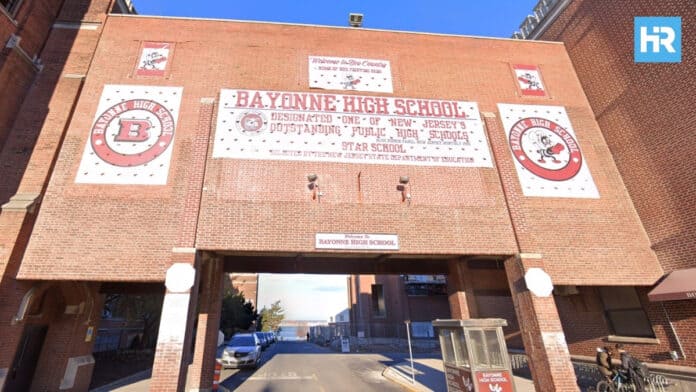
Hudson County officials, educators, and community leaders gathered this week to celebrate the opening of the Hudson County Schools of Technology Craig Guy Center at Bayonne High School.

The ribbon-cutting ceremony, held on Friday, was attended by Hudson County Executive Craig Guy, Bayonne Mayor Jimmy Davis, school leaders, and several local and state representatives. The center is part of the Hudson County Schools of Technology (HCST) network, which offers programs for academic studies with hands-on job training.

The facility will welcome about 400 students who will study programs in mechanical trades, construction, finance, medical and clinical sciences, criminal justice, digital communications, electrical work, plumbing, carpentry, and cosmetology. These programs are designed to help students prepare for skilled and growing industries throughout New Jersey.

Key Takeaways
  • The Craig Guy Center at Bayonne High School will educate 400 students in career and technical programs.
  • The 36,000-square-foot, LEED-certified facility focuses on practical training in fields such as construction, finance, and healthcare.
  • The project took over 12 years to complete and was built with union labor, highlighting teamwork between the county, schools, and the community.

A Modern and Sustainable Facility

The Craig Guy Center covers 36,000 square feet and is LEED certified for energy efficiency and environmental design. County leaders described it as a center of opportunity and innovation, created to give students real-world experience in technical fields.

Hudson County Commissioner Kenny Kopacz (D-1), who is also the deputy superintendent of schools in Bayonne, said the project was a strong example of partnership between schools, local government, and labor organizations. The facility was built entirely by union labor, connecting education and the skilled trades practically.

HCST Superintendent Tom Macagnano called the center a sign of collaboration and progress. He said the school was created with a focus on equity, providing a supportive space for students from diverse backgrounds to learn and build careers.

Years of Planning and Teamwork

The plan for the Craig Guy Center began more than a decade ago. The Bayonne Superintendent of Schools noted that the project received planning board approval in February 2022 and construction began in August 2023. Mayor Jimmy Davis, who is also the Democratic nominee for sheriff, said the project took 12 years from concept to completion.

City and county officials worked closely to bring the project to life. The new center was described as an investment in local youth and an opportunity for students to develop their skills and discover future career paths through practical, hands-on learning.

Honoring County Executive Craig Guy

The school is named for Hudson County Executive Craig Guy, who served on the HCST board for nearly 20 years, many of those as chair, before taking office as county executive. He said the new center represents Hudson County’s commitment to helping all students, especially those who may not plan to attend college, find meaningful and sustainable career paths.

Guy said that Hudson County is one of the most diverse areas in the state and that this center gives students access to training programs that meet the demands of today’s job market. The facility aims to prepare graduates to enter the workforce with valuable technical skills that strengthen both their futures and the local economy.

Collaboration Among Leaders and Labor

U.S. Representative Rob Menendez (D-8) described the opening of the Craig Guy Center as an example of effective government partnership, showing how collaboration between public offices, schools, and trade unions can benefit the community.

The building was constructed entirely with the support of organized labor. Hudson County Building Trades and Construction Council President Patrick Kelleher said the partnership between the county and the trades remains strong and continues to support new development in education and training.

The center joins other HCST campuses in Secaucus and downtown Jersey City, both of which offer similar programs linking academics with career-based instruction. Guy said these investments in education, especially the new Bayonne facility, represent a milestone for the county’s ongoing work to expand learning opportunities.

Mike Brown Drops Playbook, Knicks Embrace Read-and-React Offense

Knicks Learn to Play Without a Playbook

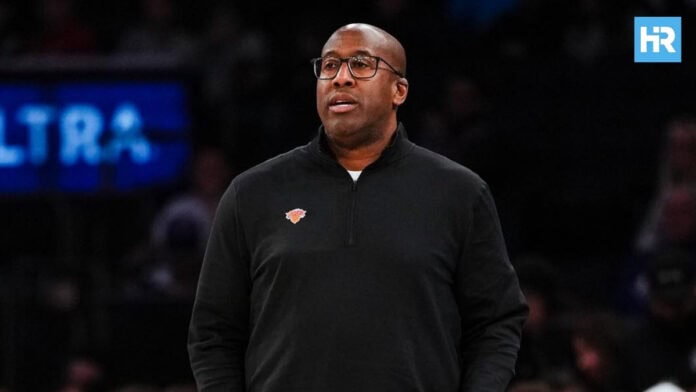
New York Knicks head coach Mike Brown has chosen not to install any offensive plays during the 2025 preseason. Following Thursday’s victory, Brown stated that he wants his players to learn by playing rather than memorizing set schemes.

He said, “We want to play this way most of the time. We’ll have play calls because we want the ball in this person’s hands at this time and we want this guy here and that guy there. So we will do that. But right now, especially in the preseason, I just want them to be able to get used to playing this basketball and taking what the defense gives them.”

This philosophy stands in sharp contrast to the methods of former head coach Tom Thibodeau, who was famous for detailed preparation and thick playbooks. Guard Miles McBride once estimated that Thibodeau’s playbook was about five inches thick, a reflection of how structured the team’s previous approach had been.

Key Takeaways
  • Mike Brown said he has installed zero offensive plays for the Knicks during preseason, teaching players to read the defense and react instead of following set systems.
  • Mikal Bridges explained that for the first three quarters, the Knicks play without structured calls, using fast pace and open concepts to confuse defenses.
  • Jalen Brunson is adjusting to spending more time off the ball as Brown stresses floor spacing, corner runs, and accountability in every possession.

The Learning Curve in Preseason Play

The Knicks’ offense has shown both promise and inconsistency during the adjustment period. In their overtime win against the Minnesota Timberwolves, they scored only 38 points in the first half. Despite the low total, players said the team created open looks and simply missed shots.

Mikal Bridges explained, “He just wants to implement playing fast because, honestly, especially the first three quarters, until mid-fourth, you don’t really need plays. You kind of just have concepts and you read and react, and it makes it tougher for the defense. They don’t know what’s happening because we’re reacting to what they do.

Bridges said that set plays become more necessary in the final minutes when possessions slow down.

Deuce McBride described the experience as an opportunity to develop decision-making skills. “A coach can drop a play anytime and you know exactly what to do,” McBride said. “But to be able to read and react to what’s out there, that’s what matters. He’s on the sideline, but we have to play. We have to move the ball, play the right way, and get guys involved.

When asked if the system could work so close to the start of the regular season, McBride replied, “He’s the coach. If that’s his philosophy, that’s his philosophy. We’re going to follow it to the best of our ability.

Knicks Betting Markets Show Steady Confidence

While the Knicks continue to adjust under Brown, major sportsbooks have shown consistent belief in the team’s potential.

As of October 15, 2025, FanDuel lists New York at +1100 to win the NBA championship and +380 to win the Eastern Conference. During the summer, those odds ranged between +900 and +1000 before leveling out near +1100 as the preseason progressed. BetMGM currently lists New York’s regular-season win total at 53.5, with both sides priced at -110. DraftKings shows the Knicks as strong playoff favorites with Yes at -5000 and No at +1600.

FanDuel’s preseason awards board includes Jalen Brunson at +8000 for MVP and Mike Brown at +1000 for Coach of the Year. Brown officially replaced Thibodeau on July 7, 2025, and betting confidence in New York increased following the coaching change and early training camp developments.

Accountability and On-Court Communication

Although Brown’s offense removes traditional structure, his approach demands precision and accountability. Mikal Bridges described Brown and his coaching staff as organized and direct. “Just being on guys, holding guys accountable, preaching everything every single day. Him and his coaches all run a tight ship. Whatever we’re doing, they’re all on the same page no matter what,” Bridges said.

He added, “He pushes us. If you’re not doing the right thing, he’ll let you know. He’s not Mr. Nice Guy. He has to hold people accountable. He doesn’t do it in a disrespectful way. He wants greatness out of everybody.”

Jalen Brunson, who previously led the team as a high-usage ball handler, is adapting to playing more off the ball. “What we’re working on is just the basics of our offense and everything,” Brunson said. “It’s going to take time. It’s not always going to be perfect, but we have to continue to trust it and learn it. When things aren’t going well, we can’t revert to who we were before. We have to keep improving.

Brown pointed out a play from the Knicks’ two preseason games against the Philadelphia 76ers in Abu Dhabi to illustrate Brunson’s adjustment. During a fast break, Brunson sprinted to the corner, which opened space for OG Anunoby to drive and lob to Mitchell Robinson for an alley-oop.

Brown explained, “Because Jalen filled the corner, it flattened the defense. Whoever was guarding him was scared he was going to get a three-pointer, so they stayed out. That created space for OG to get downhill. Little things like that don’t show up in the stat sheet, but they make you a great offensive team.

Tactical Tweaks and the Three-Guard Lineups

Along with eliminating playbooks, Brown has experimented with new lineup combinations. During preseason, the Knicks often used three-guard lineups featuring Jalen Brunson, Deuce McBride, Malcolm Brogdon, and Landry Shamet.

Josh Hart’s absence due to back spasms contributed to the smaller rotations. He missed the October 13 loss to the Washington Wizards, which ended 120–103 after Brown rested several starters. These lineups align with Brown’s focus on pace and spacing.

In the previous season, New York used three-guard lineups in only 6.3 percent of total possessions, or 613 of 9,716, but those units outscored opponents by 6.9 points per 100 possessions. Brown’s preseason combinations suggest he intends to explore this option further.

Giants Face NFL Probe After Daboll’s Tent Visit During Jaxson Dart Injury Check

Jaxson Dart Injury Protocol

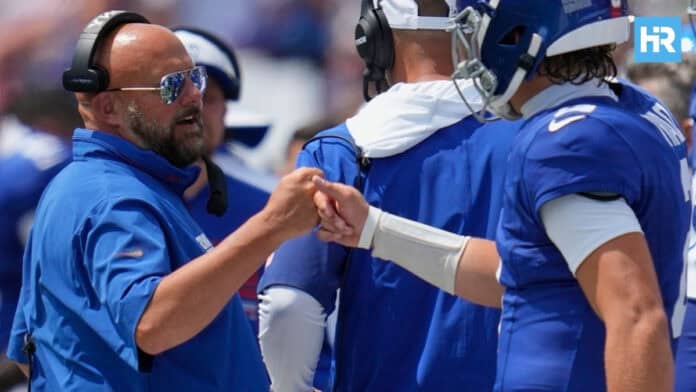
The New York Giants are being investigated after head coach Brian Daboll was caught on camera leaning into the team’s medical tent during a concussion evaluation for rookie quarterback Jaxson Dart in Thursday night’s game against the Philadelphia Eagles at Lincoln Financial Field. Dart had been taken to the sideline after being sacked by Eagles linebacker Patrick Johnson and colliding with Azeez Ojulari late in the third quarter.

The NFL and NFL Players Association (NFLPA) confirmed that they launched a joint review to determine whether the team violated the league’s concussion protocol. Under those rules, only authorized medical personnel, including the team physician, an independent neurological consultant, and possibly a team athletic trainer, may be inside the tent during a concussion evaluation.

According to FOX Sports insider Jay Glazer, the Giants are “bracing for a hefty fine,” but, at this stage, no suspension or draft-pick penalty is expected.

Key Takeaways
  • The NFL and NFLPA are jointly investigating the Giants for a potential violation of concussion protocol involving head coach Brian Daboll and quarterback Jaxson Dart.
  • Daboll admitted to leaning into the tent but denied trying to influence the medical evaluation.
  • The team expects a fine, while league officials consider whether competitive motives affected the situation.

Daboll’s Explanation and Apology

After the game, Brian Daboll told reporters he leaned into the tent briefly to check on Dart but insisted he did not interfere with the medical process.

I went in—didn’t actually go in—just stuck my head in to see how our quarterback was doing,” Daboll said on Friday. “Just asked him, ‘How you doing?’

He explained that his main concern was the timing of the evaluation, as the Giants were preparing for a possible fourth-down play.

I was wondering if it took 10 minutes, if it takes an hour, or if it takes two minutes,” Daboll said. “That’s really where I was when I asked the question on the sideline about making a decision on the game. Health and safety are important to us; it’s important to me.

Daboll also confirmed that he apologized directly to team physician Dr. Scott Rodeo, who was conducting the concussion check.

We were getting ready to go for it on a potential fourth down,” he said. “I would have burned a timeout if he could have come out there. I was asking how long it was going to take. You want your guy out there, not at risk of anything else.

He later emphasized that he respected the process and would continue to follow all concussion-related rules moving forward.

League and Player Reactions

The NFL’s chief medical officer, Dr. Allen Sills, reiterated that the concussion protocol allows only a small group of authorized individuals in the medical tent.

There are specific rules about who can be in the tent during a concussion evaluation—namely, the player, a team physician, an independent specialist, and potentially a team athletic trainer,” Sills said. “Never more than those people. Never any coaches in here, never any other players in here, never anybody else in here.

Rookie running back Cam Skattebo also poked his head into the tent during Dart’s evaluation, later explaining that he was simply checking on his teammate.

I was making sure that Jaxson wasn’t hurting anybody in the injury tent,” Skattebo joked. “When I was in there, he was a little fired up, but we know we have to go through protocol and do all that stuff to make sure we can get back on the field. I went in there and kind of said, ‘We’re good, man, we’ve got you,’ and that’s it.

For Jaxson Dart, the evaluation felt familiar. It was at least the third time, including the preseason, that he had undergone a concussion check during a game.“It felt so long,” Dart said. “A few guys popped in. I was just trying to get back there on the field. I understand they have protocol and whatnot. I was just trying to get out there fast.

When Dart was removed for testing, former starter Russell Wilson entered and threw one incomplete pass before the Giants punted.

Giants’ Betting Outlook and Market Reaction

The investigation has coincided with measurable movement in betting markets for the Giants’ upcoming game against the Denver Broncos. Sportsbooks including DraftKings, FanDuel, BetMGM, PointsBet, and Caesars opened with Denver favored by 7.5 points, and the line later shifted to -7, reflecting minor betting support for New York after its recent 34–17 win over Philadelphia.

Totals across major books have remained steady between 40.0 and 41.0 points, with most betting activity leaning toward the under, a response to Dart’s uncertain status and the Giants’ offensive inconsistency.

In futures markets, New York’s odds to make the playoffs have slightly lengthened, while most sportsbooks have temporarily adjusted or removed Jaxson Dart’s individual props pending confirmation of his medical clearance. Analysts have linked these adjustments directly to the ongoing NFL investigation and the possibility that Dart could miss time if concussion symptoms persist.

Giants’ Leadership Response and Possible Penalties

Team owner and CEO John Mara issued a statement the following day confirming the club’s cooperation with the league’s investigation.

While I firmly believe, as he has stated, that he was not trying to influence the process in any way, he understands the appearance of going to the tent is inappropriate,” Mara said. “We have protocols in place to ensure player safety, and we need to allow our medical staff to execute those protocols without interference.”

On Saturday, the NFL sent a memo to all teams reminding them that coaches and players are not permitted in the medical tent during concussion evaluations. The memo outlined possible disciplinary actions, including reprimands, remedial training, fines, and the loss of draft picks if the violation is determined to have been motivated by competitive considerations.

Because Daboll admitted he wanted to know whether Dart would be cleared before deciding whether to call a timeout, the review will determine whether that constitutes a competitive factor.

Ongoing Review and Expected Outcome

The NFL and NFLPA continue to gather statements and review footage. Witness interviews are in progress, and league officials are expected to issue a final decision within the week. If investigators determine that Daboll’s actions were an attempt to influence or expedite the process, the team could face harsher penalties beyond monetary fines.

As of now, reports indicate that the Giants expect to be fined but do not anticipate suspensions or loss of draft picks. The outcome will clarify whether the violation was procedural or competitive, and how the league intends to enforce the rules governing player health and medical independence.

Jackie Robinson Breaks Baseball’s Color Barrier with 1947 Debut

Jackie Robinson

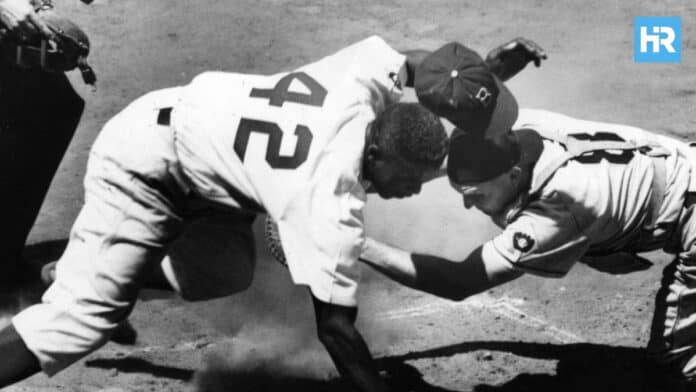
On April 15, 1947, Jackie Robinson made history at Ebbets Field in Brooklyn, New York, by becoming the first African American player in Major League Baseball’s modern era. At age 28, he played for the Brooklyn Dodgers, breaking a color barrier that had divided professional baseball for more than 50 years.

Robinson’s debut ended the long-standing segregation that had kept Black athletes confined to the Negro Leagues since the late 19th century. His first appearance for the Dodgers symbolized the beginning of a new chapter in both sports and American social history.

Exactly fifty years later, on April 15, 1997, Major League Baseball Commissioner Bud Selig honored Robinson’s legacy at Shea Stadium in New York City. During a ceremony attended by over 50,000 fans, Selig announced that Robinson’s uniform number, 42, would be retired across all Major League Baseball teams – the first number in league history to receive that honor.

Key Takeaways
  • On April 15, 1947, Jackie Robinson, age 28, became the first African American player in Major League Baseball’s modern era when he joined the Brooklyn Dodgers at Ebbets Field.
  • Branch Rickey, the Dodgers’ general manager, began his plan to integrate baseball in 1942 and signed Robinson to a minor league contract on October 23, 1945, as part of his “great experiment.”
  • Robinson’s achievements included being named Rookie of the Year (1947), National League MVP (1949), six-time All-Star (1949–1954), and helping the Dodgers win the 1955 World Series, leading to his 1962 induction into the Baseball Hall of Fame.

Early Life and Education: From Georgia to California

Jack Roosevelt Robinson was born on January 31, 1919, in Cairo, Georgia, to a family of sharecroppers. His mother moved the family to Pasadena, California, in 1920, where Robinson grew up and developed his athletic talent.

He attended John Muir Technical High School and Pasadena Community College before transferring to the University of California, Los Angeles (UCLA). At UCLA, he became the first athlete to letter in four varsity sports: baseball, football, basketball, and track.

Financial hardship forced Robinson to leave UCLA before completing his degree. In 1942, he entered the United States Army and was commissioned as a second lieutenant. While stationed in Texas, Robinson protested racial discrimination on a military bus. He was court-martialed in 1944 but acquitted, and later received an honorable discharge.

After his military service, Robinson played in the Negro American League for the Kansas City Monarchs during the 1945 season, appearing in 47 games and the East–West All-Star Game.

Branch Rickey’s Plan to Integrate Baseball

By the 1940s, organized baseball had been racially segregated for many years. The Black press and some white sportswriters actively campaigned for integration. Among them, Wendell Smith of The Pittsburgh Courier was particularly outspoken. The experience of World War II further encouraged Americans to question segregation.

Branch Rickey (1881–1965), the Brooklyn Dodgers’ general manager, took direct action to challenge the “color line.” Rickey had been active in baseball for over 60 years, working as a player, coach, manager, and owner. His Hall of Fame plaque credits him with both creating the farm system in the 1920s and signing Jackie Robinson.

Rickey’s interest in integration began earlier in his career. While working with the St. Louis Cardinals, he was disturbed by the exclusion of African Americans from grandstand seating. In 1942, after joining the Dodgers, Rickey quietly began planning to bring Black players into Major League Baseball.

He referred to this effort as his “great experiment.” Rickey understood that the first Black player in the majors would be subjected to extreme scrutiny and hostility. He therefore sought an individual with athletic ability and exceptional self-control.

The Meeting Between Branch Rickey and Jackie Robinson

In August 1945, Jackie Robinson, then a member of the Kansas City Monarchs, met Branch Rickey at the Brooklyn Dodgers’ office. Clyde Sukeforth, a Dodgers scout, told Robinson that Rickey was assembling a new team called the Brown Dodgers, but during the meeting, Rickey revealed his true intention: to bring Robinson to the Major Leagues.

Rickey simulated scenes Robinson might face, including verbal abuse and provocation, to test his reactions, though Robinson remained calm. Rickey then told him directly that he was looking for a player with the strength “not to fight back.”

Following the meeting, on October 23, 1945, Robinson officially signed a contract with the Dodgers’ Triple-A affiliate, the Montreal Royals. The signing was publicized nationally through Look magazine and in the Black press by Wendell Smith of The Pittsburgh Courier.

Before finalizing the agreement, Rickey verified that Robinson was not bound by a formal contract with the Monarchs. Robinson confirmed this in writing in a letter preserved in the Branch Rickey Papers.

Robinson spent the 1946 season with the Montreal Royals, where his success on the field prepared him for the next step.

The 1947 Major League Debut

After his season in Montreal, Jackie Robinson joined the Brooklyn Dodgers in April 1947, officially breaking the Major League color barrier. Wearing number 42, Robinson became a star infielder and outfielder for the Dodgers.

During his rookie season, Robinson helped lead the Dodgers to the National League pennant and was named the National League’s Rookie of the Year. In 1949, he was voted the Most Valuable Player (MVP) and became the league batting champion.

Between 1949 and 1954, Robinson was selected for the National League All-Star team each year. Over the course of his career, he helped the Dodgers win six National League pennants and their first World Series championship in 1955.

Racism and Resistance During Robinson’s Career

Robinson faced widespread racial discrimination throughout his playing years. Many fans and even fellow players expressed hostility toward him. Jim Crow laws in the South prevented him from using the same hotels and restaurants as his white teammates. Despite these obstacles, he continued to perform at the highest level.

His success paved the way for other African American players to enter Major League Baseball. The Brooklyn Dodgers later signed Roy Campanella (1948), Don Newcombe (1949), and Jim Gilliam (1953). In the American League, Larry Doby integrated the Cleveland Indians in 1947, followed by future stars such as Hank Aaron and Willie Mays.

Life After Baseball

Jackie Robinson retired from Major League Baseball in 1957. After his playing career, he became a businessman and civil rights activist. He supported the work of Dr. Martin Luther King Jr. and participated in civil rights demonstrations.

In 1960, Robinson joined a picket line in Cleveland, Ohio, organized by the NAACP, to protest racial discrimination at southern lunch counters.

In 1962, Robinson became the first African American inducted into the National Baseball Hall of Fame in his first year of eligibility.

He died on October 24, 1972, at age 53, in Stamford, Connecticut.

Legacy and Ongoing Recognition

Although the Brooklyn Dodgers relocated to Los Angeles after the 1957 season, Robinson’s legacy remained deeply connected to Brooklyn. Ebbets Field, where he made his debut, was eventually demolished, but its historical significance endured.

Citi Field, home of the New York Mets, features the Jackie Robinson Rotunda, honoring his contribution to the sport. A statue of Jackie Robinson and Pee Wee Reese stands outside the Coney Island stadium of the Brooklyn Cyclones, symbolizing unity and respect.

Every year, on April 15, Major League Baseball observes Jackie Robinson Day, during which all players wear his number, 42, to commemorate his achievements.

Hoboken Mayor Honors Local Green Businesses and Youth Climate Innovators

Green Businesses and Youth Innovators

The City of Hoboken held its annual Green Fair on Saturday, October 4, led by Mayor Ravi S. Bhalla, the Hoboken Green Team, and the Department of Climate Action & Innovation. The event brought together local entrepreneurs, organizations, and residents to celebrate progress in sustainability and environmental awareness.

Through the city’s Green Business Recognition Program, 16 businesses were honored for their efforts to protect the environment, which included actions like reducing waste, recycling, using energy-saving lights, and cutting down on packaging by buying in bulk. Many also support environmental causes in Hoboken and beyond.

Each business received a certificate, a green decal to display in their store, a digital version for online use, and recognition on the city’s website. The awards show how local businesses are helping Hoboken become a greener city through simple, steady changes.

Key Takeaways
  • Local businesses were honored for their ongoing commitment to sustainability and environmental responsibility.
  • Each participant received official recognition for helping reduce waste, improve energy use, and support green practices.
  • Young innovators shared climate projects funded by Bloomberg Philanthropies, introducing creative ways to support environmental goals.

Youth Projects Bring Fresh Ideas to Climate Action

For the first time, the Green Fair also featured young people supported by the Youth Climate Action Fund, a program backed by Bloomberg Philanthropies. The fund gave $85,000 to 11 youth-led projects working on local climate issues.

Several projects were presented at the fair, focusing on hands-on solutions such as reducing plastic in waterways, promoting composting to cut food waste, teaching safe battery recycling, and using 3D printing to support clean energy education.

Hoboken Encourages Residents to Get Involved

The city continues to encourage residents, entrepreneurs, and students to join in these efforts through education, volunteer work, and eco-friendly business operations.

Residents interested in getting involved or learning more can explore the following city programs and resources:

  • Hoboken Green Business Recognition Program: www.hobokennj.gov/resources/hoboken-green-businesses
  • Youth Climate Action Fund: www.hobokennj.gov/resources/youth-climate-action-fund
  • Hoboken Green Team: www.hobokennj.gov/resources/green-team
  • Join the Green Team: Email [email protected]

Hoboken’s Howl-O-Ween Pet Parade Returns for Its Fourth Year

Hoboken Howl-O-Ween Pet Parade

The Hoboken Community Center (HCC) will host its 4th annual Howl-O-Ween Pet Costume Contest and Parade on Saturday, October 25, 2025, from 3:30 PM to 5 PM at the Sinatra Park Amphitheater, located at 340 Sinatra Drive in Hoboken, New Jersey. The event aims to raise awareness about pet food insecurity and to support the HCC Pantry Programs, which provide food and essential resources to pets and families in need.

The event will begin with a parade at 3:30 PM, followed by judging at 4 PM. Dog owners are invited to participate by dressing their pets in seasonal or themed costumes, joining other residents in a community activity that combines fun with a meaningful cause. The contest is open to all, but registration is limited to one pet per entry, and early registration is encouraged due to limited space.

Key Takeaways
  • The 4th annual Howl-O-Ween Pet Parade and Costume Contest will take place on Saturday, October 25, from 3:30 PM to 5 PM at Sinatra Park Amphitheater in Hoboken, New Jersey.
  • Hosted by the Hoboken Community Center (HCC), the event supports the HCC Pantry Programs and raises awareness about pet food insecurity.
  • Early bird tickets cost $20 until October 24, and general admission is $25 afterward, with one pet allowed per registration.

Event Details and Registration

Registration for the contest is available on Eventbrite, where participants can purchase early bird tickets for $20 until October 24. After that date, tickets will be available for $25 per entry. Each registration covers one dog and includes access to the parade and contest activities.

The Howl-O-Ween event will also feature local pet-related vendors, food and beverage stands, prizes, and community partners. Sponsors, volunteers, and donors are invited to participate by supporting contest prizes, hosting tables, or contributing to the event’s fundraising goals. All proceeds will benefit the Hoboken Community Center Pantry Programs, which assist residents and their pets who face food insecurity.

The HCC encourages those interested in participating or sponsoring the event to contact the team through Instagram (@hobokencommunitycenter) or via email at [email protected].

Continuing a Community Tradition

The Howl-O-Ween event has become a recurring fundraiser for the Hoboken Community Center, drawing participation from residents and local organizations. In previous years, the event has been hosted at Church Square Park, including the 2023 Howl-O-Ween Dog Costume Contest and Parade Fundraiser, which took place on Saturday, October 28, 2023. That year’s event included live entertainment, local vendors, and contest prizes, with early bird registration priced at $15 and on-site registration at $20. Funds raised from that event also supported the HCC’s pet pantry program.

Did Giannis Antetokounmpo Secretly Push for a Trade to the Knicks?

Giannis Knicks trade

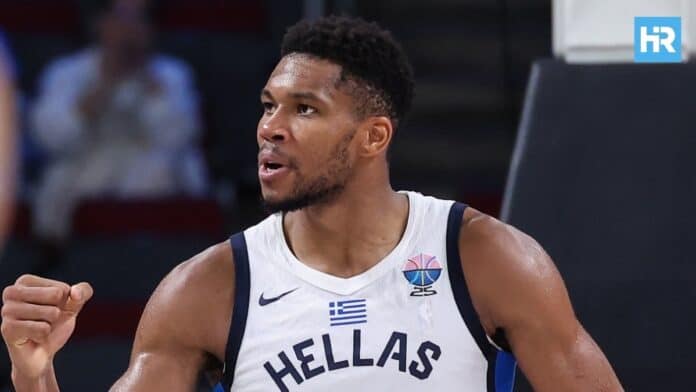
ESPN has reported that Milwaukee Bucks star Giannis Antetokounmpo has shown genuine interest in joining the New York Knicks. According to sources, the Bucks and Knicks held talks over the summer about Giannis’s desire to be traded to New York if his time in Milwaukee were to end. The conversations were described as exploratory and did not generate significant traction, ESPN said.

For years, it has been well known across NBA circles that the Knicks have closely monitored Giannis’s situation. The franchise’s interest dates back several seasons, and for the first time, reports now indicate that interest may be mutual.

Knicks beat writer James L. Edwards III and national reporter Fred Katz analyzed the situation, offering insight into how these preliminary talks came to light and how they align with New York’s aggressive approach to acquiring stars.

Key Takeaways
  • Giannis Antetokounmpo reportedly showed interest in joining the Knicks, with discussions taking place between Milwaukee and New York this past summer.
  • The Knicks lack the draft picks and young assets to make a competitive offer, limiting their ability to trade for a player of Giannis’s caliber.
  • Both teams face critical decisions ahead: Milwaukee must either build a title contender to keep Giannis, while New York must decide if pursuing him is worth sacrificing its strong core.

How the Trade Rumors Emerged

When asked if he was surprised that Milwaukee and New York discussed a trade, Edwards said he wasn’t.

The Knicks have been eying the statuses of several household NBA names over the years, per league sources, and Antetokounmpo is at the top of the list,” he explained.

Edwards also said that Giannis’s preference for New York isn’t surprising. Antetokounmpo has often spoken about his admiration for the city, his enjoyment of playing at Madison Square Garden, and his continued desire to compete for another NBA title.

What caught Edwards off guard was that Milwaukee was reportedly willing to engage in the conversation at all. He pointed out that the Knicks lack the future assets needed to entice a franchise to part with a generational player like Giannis.

To illustrate the tone of the talks, Edwards humorously imagined how they might have been behind closed doors:

Giannis: “If you trade me, I’d like to go to New York.
Jon Horst (Bucks GM): “OK, let me call them and see what they have to offer.
Leon Rose (Knicks president): “Hey, Jon! Finally ready to trade Giannis?
Horst: “No, but I’ll hear what you have to offer …
Rose: “You can have Karl-Anthony Towns, OG Anunoby, and a bunch of bad picks.
Horst: click

Katz added that this approach aligns perfectly with the Knicks’ reputation for diligence and league-wide engagement.

New York is notoriously known for calling around the league, gauging the market from stars to scrubs,” Katz said. “More than once, I’ve spoken with executives who wondered whether a Knicks call stemmed from genuine interest or just homework.

This “always-checking” strategy is the Knicks’ identity, Katz said, especially when a player names them directly, as ESPN reported Giannis did.

Knicks’ Offseason Moves and Timing

Katz revealed that one reason the Knicks delayed finalizing Mikal Bridges’ contract extension this offseason was their anticipation of potential movement around Antetokounmpo.

Once Bridges signed, he wouldn’t become trade-eligible for six months,” Katz explained. “The front office didn’t want to commit if Giannis suddenly became available.

Eventually, New York signed Bridges early enough to maintain trade flexibility before the February deadline, but by then, it was clear Giannis wasn’t being moved.

Antetokounmpo remains one of basketball’s most valuable players, a two-time MVP and perennial All-Star whose presence guarantees 40-plus wins a season. But New York’s asset base is limited. Following last year’s massive trades for Bridges and Karl-Anthony Towns, the Knicks no longer hold meaningful draft leverage.

They possess pick swaps in 2026, 2028, 2030, and 2032, plus a 2026 protected first-round pick via Washington that will likely become two second-rounders. They lack enticing young prospects. As a result, their trade packages can’t match those of teams like the Houston Rockets or San Antonio Spurs, who hold deep collections of draft picks and young talent.

Sports Betting Markets React Cautiously

While news of Giannis’s reported interest in New York captured headlines, the betting markets reacted with caution. Despite speculation that a blockbuster trade could shift the NBA landscape, sportsbooks such as DraftKings, FanDuel, and BetMGM left odds largely unchanged.

As of early October 2025, the Knicks remain in the +850 to +1000 range to win the NBA championship, according to consensus data aggregated from DraftKings and Covers. Their Eastern Conference odds sit near +340, while BetMGM lists their win total at 53.5 games (-110).

The Milwaukee Bucks, by contrast, are viewed as a long shot, priced between +5000 and +7500 to win the title and projected for 42.5 wins. Analysts attribute those numbers to an aging roster, uncertainty following the Damian Lillard trade, and limited future draft flexibility.

In the MVP race, Giannis’s odds have shifted modestly over the summer. He opened around +700 at DraftKings but has since lengthened to +1200, placing him behind frontrunners like Nikola Jokić and Shai Gilgeous-Alexander. Sportsbooks attribute the movement to Milwaukee’s diminished championship outlook rather than individual performance concerns.

Why a Trade Still Doesn’t Add Up

Edwards stressed that even if the Bucks wanted to explore a trade, the Knicks’ limited resources make it nearly impossible. “New York gave away most of its interesting draft capital last summer,” he said, referencing the four unprotected first-round picks, one unprotected pick swap, a protected first-rounder, and a second-round pick traded for Bridges.

Additionally, because Bridges signed his extension on August 1, he is ineligible to be traded until late January. That leaves the Knicks reliant on moving players like Towns, Anunoby, and Josh Hart, whose collective trade value isn’t high enough to sway Milwaukee.

The combination of those players and bottom-tier picks isn’t blowing the Bucks away,” Edwards said. “I don’t see how the Knicks could land Antetokounmpo without at least one more team being involved.

Katz agreed that potential offers from Houston or San Antonio, with young talent and high-value draft assets, would likely eclipse anything New York could put together. Still, he pointed out that the NBA’s trade environment is fluid.

What if Antetokounmpo’s first choice is New York and the Bucks honor his wishes?” Katz said. “What if he makes it clear he’ll re-sign only there? That could shrink the market fast.

Should the Knicks Even Want Giannis Right Now?

Edwards took a surprising position when asked whether New York should pursue Giannis immediately.“I can’t believe I’m going to say this … No,” he admitted. “They should want him — but not at this point, not with what it would cost.”

He pointed to the NBA’s new first- and second-apron rules, which punish teams with oversized payrolls and little depth. “The winners of both conferences last season were among the deepest teams in the league,” he said. “The Knicks would have to give up multiple starters just to have a shot.”

Currently, New York has four players who would start on any NBA team and three others who could start elsewhere. The roster is balanced, and the Eastern Conference has been weakened by key injuries. “The Knicks are in a great position to compete right now,” Edwards said. “I don’t see the need to risk the future when the present already looks good.

Katz echoed that sentiment that the decision may resolve itself over time.“If the Knicks jell under new coach Mike Brown and run away with the East, Giannis might not be worth the cost,” he said. “But if they disappoint, adding a generational talent could quickly become an option again.

Best Way to Play Roulette (Beyond Hudson County)

Best-Way-To-Play-Roulette

Roulette has long been a centerpiece of casino culture, its spinning wheel symbolizing both the thrill of chance and the promise of calculated wagers.

Whether in an Atlantic City hall or a night spot beyond Hudson County, the game offers suspense and possibility. The appeal lies in the wheel itself as well as the strategies, etiquette, and choices players bring.

From single-zero wheels with stronger odds to rules that alter the mathematics, knowing how to approach roulette can shift an evening from quick losses to sustained entertainment. Understanding structure, risks, and differences among versions is the first step toward playing with confidence.

Versions, Rules, and House Edge: Exploring the Structure of Roulette

The foundation of understanding the best way to play roulette effectively begins with the various versions of the game itself.

Choosing between American, European, or French formats influences the house edge, available wagers, and even the rhythm of play. Subtle rule variations, such as La Partage or En Prison, can further determine how much value is retained when the ball lands on zero.

European, American, and French Variations

American roulette wheels feature both a single zero and a double zero, resulting in 38 outcomes and a 5.26 percent house edge.

European roulette features only a single zero, narrowing outcomes to 37 and reducing the edge to 2.70 percent.

French roulette often employs special rules when the ball lands on zero during even-money wagers, making European and French formats statistically more favorable.

French terminology can intimidate newcomers; however, it’s nothing to shy away from. La Partage lets players recover half their stake when zero appears on an even-money bet, while En Prison carries the wager over to the next spin. Both reduce expected losses, and clear layouts and rule signage help confirm which system is in place before sitting down.

Understanding Payouts and Verifying Rules

Regardless of the version, understanding how payouts work is crucial for making informed wagers. A straight-up bet pays 35 to 1, while a split returns 17 to 1, with other options like corner bets and dozens carrying their own ratios.

Reviewing the felt layout and the casino’s printed or digital information can prevent confusion once play begins. Because of this, many experienced gamblers recommend making a mental ‘Rule & Edge Card’ that compares the main versions side by side, highlighting differences in house advantage and standard payouts.

Being deliberate about this step avoids unnecessary surprises and ensures that the chosen wheel aligns with the player’s expectations. Having this practical awareness not only strengthens decision-making but also helps align strategy with realistic outcomes.

Smart Betting Approaches: Playing Outside Bets vs Inside Bets

Understanding the probabilities behind different wagers is a significant part of approaching roulette with purpose. While no wager can eliminate the house edge, selecting bets with steadier returns and avoiding those with disproportionate risk can extend playing time and create a more engaging session.

The most +EV (positive expected value), or least -EV (negative expected value), path lies in focusing on risk management, rather than chasing unlikely payouts.

Safer Options With Outside Bets

Outside bets cover broader portions of the wheel, such as red or black, odd or even, or larger groupings of numbers. Although these bets pay at even money or slightly higher, their higher probability of success makes them the most reliable choice for managing volatility.

Choosing these wagers reduces the variance that can quickly deplete a bankroll, especially during a short session. Many players seeking to explore what is the best roulette strategy in practical terms find that outside wagers provide both steadier action and a more sustainable experience.

The stability of outside bets has made them central to several structured systems.

For example, the James Bond roulette strategy relies heavily on covering the entire table to balance risk and reward. While no approach eliminates losses, broad wagering patterns help maintain engagement for longer stretches of play.

For players who prefer digital play, comparing platforms amongst the best online casinos can also help pinpoint environments with more straightforward rules and fairer return-to-player (RTP) rates.

Wagers to Approach With Caution

Inside bets, such as single numbers or splits, offer larger payouts, but significantly lower odds of success. Among the least favorable is the five-number bet found only on American wheels, which increases the house edge beyond the standard rate.

Avoiding common roulette mistakes often comes down to steering clear of this particular wager, as well as resisting the temptation to focus entirely on straight-up numbers without a plan.

For players who enjoy experimentation, inside bets can be layered into a broader session, but keeping them limited is key. The difference between a memorable casino night and a swift exit often lies in recognizing how frequently unlikely outcomes fail to appear.

Responsible selection of wagers reinforces the broader principle that roulette rewards those who balance risk and patience.

Systems and Strategies: Fact vs Fiction

The history of roulette is filled with attempts to outwit the wheel. From mathematical progressions to psychological tricks, players have long searched for a path that guarantees profit.

While these methods can add structure to a session, the house edge remains constant, making it vital to understand where strategies can inform play and where they can mislead.

Examining Classic Progressions

The Martingale Strategy explained involves doubling a wager after each loss to eventually recover all previous losses, plus a profit equal to the initial stake. In theory, this system seems practical, but in reality, table limits and bankroll restrictions make it highly risky.

The Fibonacci Roulette System, which uses the famous numerical sequence to structure bet sizes, reduces some of this risk by slowing escalation, though it still cannot eliminate the house advantage.

Variations such as the D’Alembert strategy or the James Bond roulette strategy each introduce their own patterns, but all remain subject to the same mathematical boundaries.

Answering the question, “Does any roulette strategy actually work?” is central to analyzing these systems.

The short answer is that no strategy can consistently overcome the built-in edge. What these progressions do provide, however, is a framework for pacing wagers and managing emotional swings. For many, that structure can be more important than the illusion of beating the wheel.

Speed, Variants, and Modern Twists

Today’s roulette formats extend beyond the traditional table. Live dealer games replicate the physical experience, while random number generator versions move more quickly and can magnify long-term expected losses due to faster play.

Multiplier-based titles, often modeled after game-show styles, add bursts of excitement by offering boosted payouts on select numbers. These variants shift the volatility curve, creating higher highs but usually lower overall returns.

Exploring new versions highlights the importance of context. Some players may value the entertainment of flashy animations, while others prefer traditional wheels that offer clearer rules.

For those evaluating digital platforms, considering alternatives like the best offshore casinos can help identify environments that offer roulette variants and table conditions that align with personal preferences.

Bankroll and Session Management: Tips for Managing Your Bankroll

Even with careful bet selection and an understanding of strategy systems, roulette demands discipline.

Bankroll management determines how long a session lasts, as well as how enjoyable the experience feels. Establishing limits and sticking to them is the most reliable way to manage volatility and avoid unnecessary stress.

Structuring Bets and Bankroll

Determining wager size relative to total bankroll lays the groundwork for steady play. Many risk only a small share of the balance per spin, often 1 to 5 percent. This conservative method allows for streaks without draining funds too quickly.

Systems like the D’Alembert strategy emphasize gradual bet adjustments over extreme swings.

A structured plan supports sustainability; without it, players often chase losses or quit too soon. Aligning play with financial boundaries helps avoid one of the most common roulette mistakes: wagering recklessly without a concrete approach.

Setting Session Goals and Timeouts

Another critical element of roulette discipline involves defining session goals before playing. Establishing a stop-loss amount helps prevent damaging downturns, while setting a stop-win target can lock in profits and avoid overextension.

Adding a planned timeout ensures mental clarity, especially in fast-paced environments where consecutive spins may cloud judgment.

These principles are as valuable online as they are in physical casinos. Digital operators offer multiple table formats, and reviewing platforms such as no-KYC casinos can reveal where withdrawal processes and table limits support effective bankroll management.

Choosing settings that encourage discipline transforms roulette from a short-lived gamble into an experience of sustained engagement.

Table Experience and Etiquette: Choosing the Right Roulette Table

Roulette may be a game of numbers, but the atmosphere at the table shapes the overall experience. From the clarity of posted rules to the pace of the dealer, practical choices about where and how to sit down matter.

Etiquette also plays a role in ensuring a respectful and enjoyable environment for everyone involved.

Practical Selection Factors

Before settling at a table, verifying the posted rules and payout structures is essential. Casinos often provide layouts that detail whether La Partage or En Prison rules are in effect, along with the minimum and maximum betting limits.

Choosing the right roulette table can also depend on whether it is a single-zero or double-zero format, as the house edge varies accordingly.

For online players, these same principles apply. Table selection tools allow filtering by limit, wheel variation, or rule set. Some platforms even provide side-by-side comparisons of different roulette versions, making it easier to align play with long-term goals.

Reviewing options, such as the best sweepstakes casinos, can give additional perspective on digital environments that emphasize both fair play and accessible wagering structures.

Etiquette and Shared Play

Respecting table etiquette enhances the overall enjoyment of the roulette experience. Waiting until the dealer signals the end of betting before placing chips, refraining from interfering with other players’ wagers, and handling chips appropriately are all key aspects.

Even in online settings, similar courtesies are observed, such as refraining from disruptive chat behavior during live dealer sessions.

Etiquette is less about formality and more about sustaining the rhythm of the game. Adhering to it ensures smoother gameplay, helps maintain the dealer’s focus, and creates a positive atmosphere that reflects the traditions of casino culture.

When combined with thoughtful table selection, etiquette helps make roulette a balanced experience of strategy, chance, and social interaction.

Taking Advantage of the Best Way to Play Roulette

Roulette remains a game where structure, awareness, and discipline guide the experience more than luck.

Understanding wheel variations, applying practical betting strategies, recognizing the limitations of strategy systems, and managing bankroll decisions all support a more informed approach to play. Attention to etiquette and table selection completes the foundation, elevating casino nights beyond just Hudson County.

Roulette continues to evolve as both physical and digital venues introduce new formats and technologies.

Staying informed ensures that players adapt and enjoy the game in ways that align with their goals. Being aware of updates on the best way to play roulette is essential as new insights continue to emerge.

Latest News

Vetoed Bird-Safe Ordinance 26-008 Back in Debate

Jersey City Council Reopens Fight Over Bird-Safe Building Costs

Ordinance 26-008, which regulates bird-safe materials for buildings, has been reintroduced to the Jersey City Council agenda. The measure is identical to the version...
Rob Menendez Slams Trump Over Hudson Tunnel Funding Freeze

Rob Menendez Urges End to Hudson Tunnel Funding Dispute After Court...

In Hoboken, after a press conference concerning an unrelated federal funding allocation, U.S. Rep. Rob Menendez (D-8) discussed the restoration of approximately $205 million...
Hudson County NAMI Caregiver Support Programs

Hudson County Caregivers Get February Mental Health Support

Hudson County residents caring for youth with mental health symptoms can participate in a six-session NAMI Basics course offered this February through NAMI Hudson...
Portal Bridge Cutover Reduces NJ Transit Service

Portal Bridge Cutover Slashes 53% of NJ Transit Service

Beginning Feb. 15, Amtrak will start a month-long “cutover” project to transfer train traffic from the existing Portal Bridge to the new Portal North...
NJ Teacher in “Baby Rapist” Chat Pleads Guilty

Former NJ Teacher in ‘Baby Rapist’ Chat Pleads Guilty to Child...

On Wednesday, February 11, 2026, Senior Counsel Philip Lamparello announced that Matthew Ozol, 40, of Jersey City, pleaded guilty before U.S. District Court Judge...