Home Blog Page 32

Mets’ Skid Grows to Seven as Carlos Mendoza Sees Montas Pulled Early in Milwaukee

Mets’ Skid Hits Seven

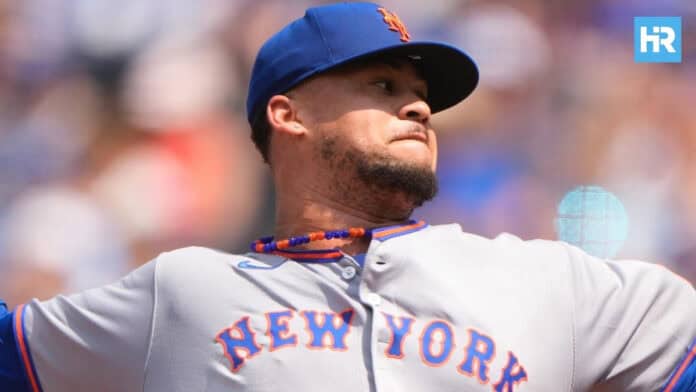
On Saturday, August 9, 2025, at American Family Field in Milwaukee, the New York Mets used Reed Garrett as an opener against the Milwaukee Brewers to avoid Frankie Montas’ first-inning struggles, and Garrett retired all three batters in the first inning. Montas entered in the second, gave up consecutive one-out singles, issued a two-out walk to load the bases, and saw a fielding error by shortstop Francisco Lindor bring in two runs.

In the third inning, Montas issued a walk and threw a wild pitch, but did not give up a run, then in the fourth inning, Brice Turang hit a solo home run, his second in consecutive games. Montas threw 72 pitches over three innings, surrendering three runs (one earned) on three hits and two walks.

The outing forced the Mets to use high-leverage relievers Gregory Soto and Tyler Rogers earlier than planned, and including Garrett, they used six pitchers in the game, which ended in a 7-4 Brewers win and the Mets’ sixth straight loss.

Key Takeaways
  • Frankie Montas lasted only three innings after following opener Reed Garrett, allowing three runs (one earned) as his Mets ERA rose to 6.38 in eight outings.
  • The Mets blew a 6-1 lead in a 7-6 loss to the Brewers, their seventh straight defeat, falling 5.5 games behind the Phillies in the NL East.
  • Mets starters have gone 51 consecutive games without two different pitchers reaching six innings, forcing the bullpen to throw 209.2 innings over the last 49 games.

Mendoza Addresses Montas’ Rotation Status

Before Sunday’s series finale in Milwaukee, Mets manager Carlos Mendoza was asked about Montas’ rotation status, saying, “We haven’t made a decision. As of now, he’s still in line. Have to get through today’s game… right now, we haven’t had any discussions.

Montas, 32, signed a two-year, $34 million contract with the Mets in the offseason, but a right lat strain during early spring training delayed his debut until the summer. In eight appearances (seven starts) with the Mets, he has a 6.38 ERA, a 1.56 WHIP, and 7.9 strikeouts per nine innings while giving up eight home runs in 36.2 innings, and during six minor league rehab starts, he had a 12.05 ERA and gave up eight home runs in 18.2 innings.

Rotation Options and Injury Updates

If the Mets change their rotation, Triple-A Syracuse pitchers Brandon Sproat and Nolan McLean are candidates, with Sproat giving up three runs over six innings on Thursday, August 7, and McLean pitching four innings of one-run ball on Sunday, August 10, in his first start on four days’ rest this season.

Veteran Paul Blackburn, recovering from a right shoulder impingement, gave up three runs (two earned) over 5.2 innings in his fourth rehab start for Syracuse on Friday, and in six games (four starts) with the Mets this season, he is 0-3 with a 7.71 ERA and a 1.98 WHIP. Tylor Megill, recovering from a right elbow sprain, threw live batting practice on Thursday and may soon begin a rehab assignment. And in 14 starts this year, he is 5-5 with a 3.95 ERA and a 1.36 WHIP.

Mets Lose Lead in Series Finale Against Brewers

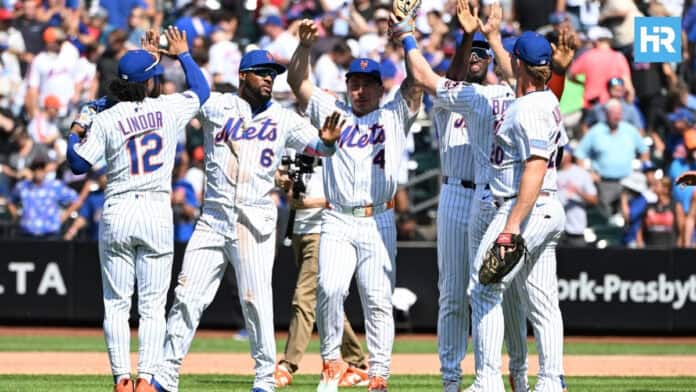
On Sunday, August 10, 2025, the Mets lost 7-6 to the Brewers after leading 6-1, as Milwaukee tied the game 6-6 in the eighth inning and Isaac Collins hit a walk-off home run off Edwin Díaz in the ninth. The loss was the Mets’ seventh in a row and 11th in their last 12 games, dropping them 5.5 games behind the first-place Philadelphia Phillies. Mendoza said, “It’s hard to describe. Tough, frustrating. But we’ve got to turn the page. We have to keep going. We have to find a way to start getting victories. That wasn’t a good showing. They pretty much outplayed us.

Betting Market Movement During Losing Streak

For Tuesday, August 12, 2025, against the Atlanta Braves at Citi Field, multiple sportsbooks list the Mets as slight favorites with moneyline odds around -140, totals set at 8 runs, and the run line at Mets -1.5 near +150, with FanDuel and DraftKings listing similar numbers and Oddsshark projecting a close score simulation slightly favoring Atlanta.

In World Series futures, BetMGM lists the Mets at +1400, VegasInsider’s consensus lists them at +1000, and FanDuel recently had them near +850; in December 2024, after signing Juan Soto, their odds moved to +800 at DraftKings and FanDuel, and Caesars’ opening post-2024 line had the Mets at +700.

Slumps Among Key Hitters

Francisco Lindor is batting .191 with a .602 OPS over his last 50 games since June 12, Pete Alonso — who tied Darryl Strawberry for second on the Mets’ all-time home run list with 252 — is batting .168 with a .593 OPS over his last 26 games, Brandon Nimmo has struck out 26 times in his last 58 at-bats and has a .476 OPS with a .269 on-base percentage, and Juan Soto is batting .189 with a .757 OPS over his last 25 games.

Nimmo said, “We can go on a run. We’ve still got time. It just takes putting it together, playing some good baseball. I don’t think the division is slipping away. We’re still within shot. This team specifically has been known to go on runs. We can easily rattle off a winning streak, especially with the people we got here. But it’s going to take turning it around.”

Rotation Struggles and Bullpen Usage

Mets starting pitchers have gone 51 consecutive games without two different pitchers recording at least six innings in a start, the longest single-season streak since at least 1901, and since June 13, Mets starters have pitched 220 innings while the bullpen has pitched 209.2 innings.

Mendoza said, “We saw [Taylor] Rogers a third day in a row [on Sunday]. We’re asking a lot of the bullpen. Reed Garrett, before you know it, he’s pitching in the fifth inning [after opening on Saturday]. Raley went two ups on Friday, he’s not available [Saturday], and then we ask him to pitch a full inning [Sunday]. We have to get our starters going.

Current Standings and Remaining Schedule

The Mets are 19-31 in their last 50 games, the third-worst record in the majors over that span, and hold the final NL Wild Card position 1.5 games ahead of the Cincinnati Reds. They will face the Phillies seven more times, beginning later in August at Citi Field, and will next play the Atlanta Braves, who recently won four of five games against the Miami Marlins.

Mendoza said, “We just gotta go out and do it. We have the talent, we have the players, but we have to start playing better baseball and just go out and get the job done. I know it’s frustrating, we’re all frustrated in here, but we just have to keep going because nobody said it was going to be easy.

Yankees Manager Aaron Boone Defends Team After 7-1 Loss to Astros

Aaron Boone Confronts Slump

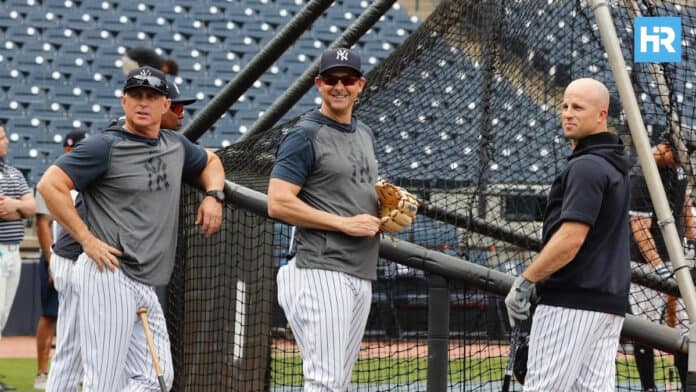
On Sunday, August 11, 2024, the New York Yankees lost 7-1 to the Houston Astros at Yankee Stadium. The defeat was the Yankees’ seventh in their last ten games. Manager Aaron Boone was removed from the contest in the third inning after disputing a strike call.

Speaking to reporters afterward, Boone stressed that the Yankees remain in postseason contention despite two months of poor results.

The game is littered with dead and buried teams,” Boone told The Athletic. “We’re in playoff position right now. We’ve been through two bad months where we haven’t performed at a level we need to. Go back the year before, the year before, you can pick out a number of teams that are sitting in a worse position than we are right now that go on a run. We have the people to do that, no doubt in my mind. It’s just sitting here as talk right now.

He contrasted this year’s circumstances with the 2023 season, when he did not think the team could mount the surge required to compete.

We haven’t been good enough the last two months. This is different than ’23 where I didn’t think we were necessarily capable of that run that we needed to really get hot. We were out of it at that point. This is different. We’re in a position right now where we’re in control of things. We’re in a playoff spot, technically. I believe we have the people to get it done. We got to play consistent baseball, period.

Following the loss, New York was ahead of the Cleveland Guardians by half a game for the American League’s final wild-card berth.

Key Takeaways
  • The Yankees have lost 7 of their last 10 games, including a 7-1 loss to the Astros on August 11, 2024, but remain a half-game ahead of the Cleveland Guardians for the final AL wild-card position.
  • Aaron Boone was ejected for the fifth time in 2024 during the August 11 game and continues to express confidence in the team, with Joe Torre and Jorge Posada publicly defending him.
  • The Yankees are without Gerrit Cole, Clarke Schmidt, Oswaldo Cabrera, and several relievers due to injury, and Aaron Judge missed games earlier in the season.

Boone’s Position and Player Availability

Ethan Sears of the New York Post reported that Boone could face significant questions about his position if the Yankees do not reach the postseason.

At the Yankees’ annual “Old-Timers’ Day” on Saturday, August 10, 2024, Hall of Fame manager Joe Torre said Boone would get a run out of these guys. Former Yankees catcher Jorge Posada said, “It’s not his fault.”

Posada said some players are not at 100% health.

He’s got some guys banged up, not at 100 percent. So it’s not his fault that some guys are not playing at their potential. … Obviously, they went through a stretch, lost a lot of key guys. Health really matters.”

Among the team’s injuries, Gerrit Cole has been out since before the season started, Luis Gil only recently made his debut, and Clarke Schmidt and Oswaldo Cabrera have been ruled out for the year. Several relievers are sidelined, and Aaron Judge has missed games earlier in the season.

Betting Lines and Futures Odds

Futures odds from major sportsbooks placed the Yankees between +800 and +1400 to win the World Series. BetMGM listed the Yankees at +800. ESPN’s latest snapshot listed the Yankees at +1400.

For the Tuesday, August 12, 2024, home game against the Minnesota Twins, BetMGM’s line on Monday was Yankees -175. On game day, lines at DraftKings, FanDuel, and Caesars moved to Yankees -220, Twins +178, with a total of 9 runs (Over -116 / Under -105). The Yankees were -1.5 runs at -105.

In American League MVP betting markets, Aaron Judge was listed as the favorite, with prices between -125 and -150 depending on the sportsbook. Seattle Mariners player Cal Raleigh was next, near even money.

On Monday, August 10, 2024, the Yankees beat the Twins 6-2. In that game, the Yankees hit four solo home runs. Starting pitcher Will Warren threw 6⅔ innings, allowed 3 hits, recorded 7 strikeouts, and did not issue a walk.

Boone’s Fifth 2024 Ejection

In the third inning on August 11, Boone argued a low strike call from pitcher Jason Alexander to Ryan McMahon. Plate umpire Derek Thomas told him, “I’ve heard you enough Aaron,” before ejecting him. Boone continued the discussion for about one minute before third base umpire Jordan Baker intervened, and McMahon’s at-bat resumed, ending with a flyout to center field.

The Astros were leading 2-0 at the time. In the fifth, Cam Smith hit a two-run double after Atlanta pitcher Max Fried did not receive a called third strike, increasing the lead to 4-0.

It definitely would have been nice,” Fried said. “No one’s going to look back and really care. You got to be able to make the pitch and get out of it.”

Houston went on to win 7-1. Boone later said,

It was the first couple of innings. I was on him a lot. That’s over and done with and it is what it is and that isn’t the reason we lost this game.

This was Boone’s fifth ejection of 2024 and the 44th since he became Yankees manager in 2018. He was ejected six times last season.

Is Online Gambling a Gateway to Tech Careers? Local Colleges and Startups Bet on It

Online Gambling a Gateway to Tech Careers

As tech reshapes the job market, some of the most unexpected ideas are gaining traction. The notion that skills from online gambling could translate into NJ tech careers sounds provocative,  but in some classrooms and startups, it’s already being tested. Not as a gimmick, but as a genuine response to how people learn, think, and make decisions under pressure.

What’s unfolding isn’t a glamorization of gambling — it’s a shift in how we value real-time strategy, risk analysis, and adaptability. In an industry obsessed with data and speed, the line between gaming and work is blurring. And for students and job seekers, especially in New Jersey, that opens new doors — not just to coding roles, but to the growing world of online gambling industry jobs in analytics, UX, and platform design.

It’s not a silver bullet, and it’s definitely not a shortcut. But it might be a signal: the skills people build outside the classroom,  in games, in simulations, even in bets, are finally being seen for what they are. Useful. Transferable. And maybe worth a second look.

The Billion-Dollar Betting Industry Meets Tech

Online gambling isn’t just surviving,  it’s exploding. Once dismissed as a fringe activity or a digital vice, the global online gambling and betting market has matured into a tech-fueled juggernaut. According to data from IMGL and Harvard Business Review, the market was valued at $58.2 billion in 2021 and is projected to surge past $145 billion by 2030. That’s not a slow creep,  it’s a 12% compound annual growth rate. And behind the spinning wheels and flashing reels? A lot of code, algorithms, and data science.

This isn’t just Vegas with better servers. Online gambling today operates more like a fintech product than a casino floor. With dynamic odds engines, AI-driven risk models, and personalized user experiences,  the tech behind the industry rivals that of high-frequency trading platforms or streaming services. It’s fast, reactive, and built for optimization at scale.

Startups have taken notice. According to Tracxn, there were 285 gambling-tech startups operating in the U.S. as of early 2025, with five new ones entering the space just in the first quarter. Many of them aren’t traditional operators; they’re building infrastructure, analytics tools, gamified finance platforms, and user experience layers. Think Stripe for sweepstakes, or Discord for live poker.

What’s fascinating is how these companies are rethinking talent. While most tech startups hunt for bootcamp grads or ex-FAANG engineers, gambling-tech startups are widening the net. There’s a growing belief that strategic gamblers — people who thrive on probabilities, fast data, and behavioral reads — might already have the intuition these companies need. No formal training required, just a brain wired for the game.

And this shift isn’t just about novelty hiring practices. It reflects a broader truth: online gambling has become a testing ground for the same skills that tech companies value,  decision-making under pressure, user flow analysis, and predictive modeling. It’s not about glorifying the bet. It’s about recognizing the backend systems — and the brains — that make it all tick.

What Skills Translate?

Gambling and tech may seem worlds apart,  one the domain of flashing slot machines, the other of keyboards and clean code. But look closer, and you’ll find similar demands: pattern recognition, risk-taking, adaptability, and focus. As new research piles up, it’s clear that the gap between high-stakes gameplay and high-performance careers is smaller than we thought.

Thinking on Your Feet (and Fast)

A massive study analyzing data from 16,000+ gamers found that different games sharpen different thinking styles. Strategic titles built logic and problem-solving; role-playing games cultivated planning and coordination,  traits common in managers and team leads. Gamers weren’t just escaping reality; they were rehearsing for it.

In online gambling, these same cognitive muscles are in play. Whether you’re making a last-second call on a blackjack hand or adjusting your bets in a volatile crypto casino, you’re thinking fast under pressure. That kind of mental agility is prized in startup environments where decisions happen in real time,  often with incomplete data.

Reading the Patterns

Winning players, especially in skill-based games like poker or sports betting, don’t rely on luck. They observe, identify patterns, and act accordingly. Spotting when another player bluffs? That’s behavioral analysis. Knowing when odds quietly shift in your favor? That’s real-time data tracking,  not so different from A/B testing or UX research.

Harvard Business Review has highlighted how these same skills — intuitive pattern recognition, situational awareness, and attention to data — are vital in everything from cybersecurity to digital product design. A gambler may not call it “insights mining,” but that’s exactly what they’re doing.

Calculated Risk, Not Just Gut Feeling

If there’s one myth worth debunking, it’s that gamblers are reckless. In reality, long-term winners are masters of calculated risk. They know their bankroll, understand variance, and act when probability aligns with opportunity. They’re not guessing,  they’re analyzing.

That same discipline shows up in tech, especially among product managers, growth strategists, and startup founders. Should you launch the feature now or test it longer? Should you spend budget on ads or redesign the homepage? Every move has upside and risk,  and the people who thrive are those who’ve trained themselves to make calls when the future isn’t guaranteed.

It’s Not All Solo Play

While we often picture gamblers alone at their screen or table, many online gambling formats are deeply social. Poker rooms, fantasy sports leagues, even competitive casino tournaments,  they all demand negotiation, reading opponents, and sometimes teaming up to outwit others.

A 2024 study in Taylor & Francis confirmed that collaborative gamers outperformed traditional learners in team tasks. These aren’t just “people skills” in a vague sense. They’re real-time communication tools,  exactly the kind tech teams need to survive cross-functional meetings, feedback loops, and conflict resolution.

Adapting on the Fly

One week you’re mastering a game’s mechanics. The next, the rules change. That’s the nature of online gambling: platforms evolve, strategies get patched, and what worked yesterday might get you wiped out today. The best players don’t panic; they adapt.

That mindset is gold in tech. With product lifecycles accelerating and consumer behavior shifting constantly, adaptability has become one of the most prized traits in the job market. A recent Inside Higher Ed report even ranked it above technical proficiency for entry-level roles. Tech doesn’t care what you knew last year; it cares how fast you can learn now.

Mental Stamina Is Underrated

There’s something to be said for just staying in the game. Online gambling — especially long-form formats like tournaments or day-long betting events — demands not only focus, but emotional regulation. One loss can’t spiral into ten. One win can’t distract you. That’s discipline.

Tech is no less demanding. Developers, analysts, and creatives alike face long hours, shifting priorities, and endless troubleshooting. And burnout is real. But those who’ve trained their minds to handle pressure, to breathe through volatility, and to focus without cracking? They’re often the ones who don’t just survive,  they thrive.

Colleges Are Rolling the Dice

A few years ago, if you told a college board that iGaming mechanics would end up in the classroom, they might’ve laughed you out of the room. Today? At least one New Jersey institution is embracing the overlap between gambling systems and tech training,  and it’s doing so without apology. As part of a new pilot program, this college is experimenting with coursework that mirrors the decision-making logic of online gambling,  real-time dashboards, simulated betting scenarios, and dynamic risk modeling.

This isn’t about turning students into gamblers. It’s about training them to think fast, assess data under pressure, and make calculated decisions when time and information are limited,  core components of both gaming and modern tech work. The pilot ties directly into the college’s broader focus on gaming education NJ, which seeks to prepare students for roles in fintech, app development, and user experience design using unconventional methods.

Professor Maria Vega, who leads the Department of Digital Innovation, puts it bluntly: “Our students don’t need more theory,  they need mental agility. And online gambling, when stripped down, is really a pressure simulator. It forces you to think clearly in chaos.” In her class, students might simulate a crypto market fluctuation or react to real-time shifts in user behavior,  all while racing the clock and backing their decisions with data. It’s a far cry from multiple choice.

The approach reflects a wider trend: New Jersey is becoming a national leader in gaming and iGaming education infrastructure. A 2025 report from the state’s Responsible Gaming Task Force, backed by Governor Phil Murphy, even suggested incorporating gambling decision-making literacy into education frameworks. Meanwhile, NJ regulators have been early adopters of skill-based iGaming, approving digital games where chance and strategy blur,  signaling a shift in how the industry and institutions view gambling systems: as teachable, deconstructable, and applicable beyond entertainment.

Early results from the program are encouraging. Students say they’ve grown more confident in reading live data, adapting strategies, and defending decisions,  all pillars of iGaming skill development. One senior called it “analytics with adrenaline.” Another compared it to “real-world stress, without real-world consequences.” That controlled intensity seems to be the point: train the brain for volatility, before volatility trains you.

Naturally, there’s been pushback. Some faculty members worry about the optics,  that it blurs the line between education and entertainment, or worse, gambling. But the college insists that ethics are baked into the program. “We’re not celebrating casinos,” a spokesperson clarified. “We’re deconstructing systems that millions interact with every day,  and using those mechanics to teach critical thinking.”

Whether this becomes a model for other institutions remains to be seen. But in a state where both gaming and tech are booming, it makes a certain kind of sense. Gaming education in NJ is no longer about game design alone; it’s becoming a vehicle for training decision-makers, analysts, and product thinkers. In that light, a little simulated risk might be the smartest move of all.

Startups Spot the Potential

It’s not just colleges experimenting with the crossover between gambling and tech. Startups — especially those working in the iGaming, data science, and behavioral analytics space — are taking the idea and running with it. For many of them, the skillsets cultivated in strategic gaming environments aren’t just relevant. They’re a competitive edge. In an industry where instinct, agility, and data fluency rule the day, traditional résumés are starting to share space with betting histories and leaderboard screenshots.

A Burgeoning Ecosystem

As of early 2025, there are over 245 gambling-tech startups operating in the U.S., according to startup tracker Tracxn. And while the term “gambling-tech” might conjure images of slot machines in disguise, the reality is far broader: think real-time analytics platforms, odds engines powered by AI, and behavioral modeling tools used by sportsbooks and online casino apps. These are companies that live on the edge of entertainment and data science,  and they need minds that can do the same.

Some of the most active players in this space are based in New Jersey, with Hudson County startups — including BetMGM’s Jersey City headquarters — helping turn the region into a growing hub for iGaming innovation and tech-driven betting platforms.

Betting Experience as a Hiring Signal

Some of these startups are no longer shy about where they source talent. BetAI Labs, for example — a startup developing AI-driven risk prediction models for sportsbooks — now explicitly looks for applicants with a background in strategic betting. “Players with experience in odds-making often demonstrate a rare mix of intuition and math,” says Javier Mendes, the company’s CTO. “It’s not about gambling habits. It’s about being able to read uncertainty like a language.”

From Hobby to Hiring Test

Other startups have taken it a step further: incorporating gaming-style assessments into their hiring process. Instead of a traditional logic test or take-home project, candidates might be asked to solve a live game simulation, participate in a betting-market scenario, or optimize a virtual bankroll. It’s part of a broader trend inspired by companies like Siemens, Walmart, and Unilever, which now use gamified hiring tools to evaluate traits like adaptability, cognitive speed, and emotional regulation.

Not Just Coders

What makes this shift interesting is how it stretches beyond engineering roles. UI/UX designers with experience in competitive gaming understand frictionless navigation under stress. Marketing leads who’ve played poker grasp behavioral hooks better than most. Even operations teams can benefit from the kind of probability fluency honed in games of chance and skill. For many of these startups, iGaming skill development isn’t a niche; it’s a foundational layer of their internal culture.

Gamified Tools, Real Impact

The startups themselves often use gamification internally,  not just as product features, but as operational tools. At firms like OddsFrame and ReelSync, teams use real-time dashboards modeled after betting markets to manage OKRs and forecast pivots. It’s a subtle cultural cue: this company moves fast, rewards calculated risk, and isn’t afraid of volatility. Candidates who’ve thrived in competitive games — or even gambling settings — tend to find this environment more intuitive than intimidating.

Caveats and Criticisms

The buzz around gaming and gambling as training grounds for tech careers is loud—and in some cases, deserved. But not everyone is sold. Beneath the excitement, a quieter chorus of caution continues to raise important questions. What are the limits of these skills? Where do we draw the line between simulation and promotion? And most importantly, are we mistaking correlation for causation?

Correlation Isn’t a Career Plan

Multiple researchers, including those publishing on ResearchGate, warn against conflating behavioral patterns with professional readiness. Just because a gamer or strategic bettor demonstrates high-level decision-making in one domain doesn’t automatically translate to career success.

Yes, there are overlaps—but without formal training, credentials, or hands-on experience in tech, the leap from poker table to product team isn’t guaranteed. Pattern recognition is useful, but it’s not a substitute for education.

Not All Skills Travel Well

It’s tempting to view gaming as a Swiss Army knife of modern skills, but the data tells a more measured story. A 2025 study published in the International Journal of Educational Technology in Higher Education found that while sandbox gaming significantly boosted collaboration, gains in creativity, critical thinking, and communication were limited. In other words, some soft skills stick, others don’t. What works in-game doesn’t always translate to the boardroom.

The Ethics of Simulation

There’s also a moral line worth minding. Advocacy groups and behavioral psychologists have expressed concern that bringing gambling-inspired systems into classrooms—even as simulations—might blur boundaries.

If not handled responsibly, these mechanics could normalize risky behavior or desensitize students to the real-world harms of gambling addiction. Most institutions, to their credit, insist their programs are entirely free of monetary stakes—but the optics matter, and so does intent.

The Bigger Picture: Tech Talent Crunch

This shift toward gamers and unconventional candidates isn’t happening in a vacuum; it’s unfolding against the backdrop of a tightening tech labor market. According to SignalFire’s State of Talent report, entry-level hiring in Big Tech is down 25% year-over-year, and startups have pulled back by 11%. The pipeline from computer science degrees to junior developer roles is no longer as reliable or wide as it once was. As a result, companies are rethinking who counts as “hireable,” and where new talent might be hiding.

What’s emerging is a growing openness to nontraditional paths. Adult learners, bootcamp graduates, and even part-time tinkerers are being taken more seriously,  especially if they come armed with problem-solving skills, adaptive thinking, or data fluency. Gamers, in this context, aren’t just niche enthusiasts. They’re potential hires with real-time systems thinking and decision-making under pressure,  two assets tech companies can’t get enough of. And when the alternative is an empty seat or a burned-out hire, companies are more willing to take a second look.

It’s also worth noting where this change is taking root. While Silicon Valley still dominates the headlines, tech job growth is booming in places like Austin, Raleigh, and Newark, where startup scenes are less rigid and more open to talent with unorthodox résumés.

A recent report from Fullstack Academy found that employers are now prioritizing practical skills over pedigree, and in some regions, portfolio-based hiring is becoming the norm. In that environment, your strategic poker habit or time spent mastering simulation games might not be a liability; it might be your way in.

What It Means for Students

The idea that gaming — or even gambling — could count as career prep may still feel a little far-fetched to some students. But as the tech industry broadens its definition of valuable skills, it’s worth asking: how do you turn that experience into something employers can actually see? The answer isn’t just about what you’ve done,  it’s about how you frame it and how you build on it.

Connect the Dots

If you’ve led teams in e-sports, competed in strategy games, or developed a deep understanding of odds and risk from online poker, don’t downplay it. Instead of listing “gamer” vaguely, translate your experience into language that tech recruiters understand: risk analysis, decision-making under pressure, data-driven strategy. These aren’t filler lines; they’re relevant skills when properly framed.

Build on the Foundation

Game sense helps,  but credentials still matter. Pair your gameplay experience with tangible coursework or certifications: think analytics workshops, UX design courses, coding bootcamps. These programs are often more accessible than traditional degrees and give employers something concrete to work with. The goal isn’t to replace formal training,  it’s to enhance it with real-world instinct and adaptability.

Simulate, Don’t Gamble

Finally, skill development doesn’t have to come with financial risk. There are plenty of gamified or simulated environments where you can practice strategic thinking,  from mock trading platforms to open-source betting simulations. These safe spaces offer the same learning curve without the dangers of real-money gambling. If you’re serious about turning gaming into a stepping stone, start there. Treat it like training,  because done right, it is.

Final Bet: Worth a Shot?

Online gambling won’t get you hired,  but it can highlight instincts that matter: risk analysis, pattern recognition, and quick decision-making. In a shifting tech landscape, those traits are getting harder to ignore.

Colleges and startups are starting to catch on, blending gaming logic into hiring and learning. It’s not about glamorizing gambling,  it’s about recognizing useful mental frameworks in unexpected places.

If strategy is your thing, don’t hide it. Pair it with real skills, put it in context, and treat it like what it is: a starting point, not a shortcut.

15 Mets Highlights That Made Fans Suffer, Cheer, and Never Forget

Being a Mets fan isn’t always easy. The franchise has had its share of heartbreak, bad trades, and seasons that ended long before they should have. But when the Mets do deliver, they deliver in a way that burns the moment into baseball history. Over the past 50-plus years, they’ve given us miracle runs, clutch heroics, and plays so wild they’re still replayed decades later.

These highlights are baseball legends, known to fans everywhere, and are the kind of gems only longtime Mets diehards still talk about. But every single one helped shape the identity of this unpredictable, never-boring team.

Here are the 15 most incredible Mets highlights of all time, and exactly how they happened.

Key Takeaways
  • Robin Ventura’s 1999 NLCS “Grand Slam Single” ended a 5-hour-46-minute Game 5 at Shea Stadium when he cleared the fence in the 15th inning but was mobbed before rounding the bases, officially scoring only one run in a 4–3 win over the Braves.
  • Mike Piazza’s September 21, 2001 two-run homer in the bottom of the 8th at Shea Stadium gave the Mets a 3–2 win over the Braves in New York’s first pro sporting event after 9/11, honoring 41,000 fans and first responders.
  • In the 1986 World Series, Mookie Wilson’s Game 6 grounder through Bill Buckner’s legs forced Game 7, where Ray Knight’s home run and Jesse Orosco’s final strikeout clinched an 8–5 championship win before 55,032 fans at Shea Stadium.

15. Robin Ventura’s “Grand Slam Single” – Game 5 of the 1999 NLCS

On October 17, 1999, during Game Five of the NLCS at Shea Stadium against the Braves, the Mets were tied 3–3 in the bottom of the 15th inning. A walk to Todd Pratt forced in the tying run, and then Robin Ventura stepped up to face Kevin McGlinchy. He launched a 2–1 fastball over the right-center field wall, a shot worthy of a grand slam, but he never made it past first base. Pratt, not realizing the ball was out, tackled Ventura in celebration, and a team-wide stampede ensued. The hit was ruled an RBI single, famously dubbed the “Grand Slam Single,” even though it cleared the fence. The game clocked in at 5 hours and 46 minutes, then a postseason record. NBC’s Bob Costas had dubbed it, “A drive to right… back to Georgia! Gone, a grand slam! The Mets win… 4–3!” before chaos took over.

14. Endy Chávez’s Game-Saving Catch – Game 7 of the 2006 NLCS

On October 19, 2006, in Game Seven of the NLCS with the Mets and Cardinals tied at 1–1, Endy Chávez produced one of postseason baseball’s most breathtaking moments. Scott Rolen hit a deep fly toward the left-field wall—what looked like a go-ahead home run. Chávez leaped, bringing it back in for the out, then quickly doubled off Jim Edmonds to end the inning. Despite this electric play, the Mets ultimately lost the game and series to the Cardinals.

13. Al Leiter’s Playoff Clincher – 1999 NL Wild Card Tiebreaker

On October 4, 1999, in a one-game playoff (Game 163) at Cinergy Field in Cincinnati, the Mets and Reds, both finishing 96–66, battled for the National League Wild Card. Al Leiter, who struggled early in the season (2–5 with a 6.39 ERA) but turned it around to go 10–7 with a 3.55 ERA in the second half, took the mound. Leiter delivered a complete-game, two-hit shutout, blanking the Reds 5–0 in front of 54,621 fans, with the game lasting 3 hours and 3 minutes. In the scoring, Rickey Henderson homered in the first, Edgardo Alfonzo added RBIs in the first and third, and Henderson again homered in the fifth. Leiter later quipped, “I think I’m deaf in my left ear from where John Franco screamed” after the win. This masterpiece advanced the Mets to the postseason for the first time in 11 years.

12. Gary Carter’s Debut Walk-Off – Opening Day, 1985

On April 9, 1985, Gary Carter made his Mets debut at Shea Stadium in a much-anticipated Opening Day clash. The Mets were trailing when the game reached the 10th inning. Carter faced Neil Allen and crushed a hanging curveball into left field—it snuck over the glove of Lonnie Smith and cleared the fence in front of the visiting bullpen for a walk-off home run, sealing a 6–5 win. Aside from the dramatic finish, Carter had one miscue earlier, a passed ball in the third inning that allowed a run. He ended the season with 32 home runs and 100 RBIs, anchoring the lineup in his first year.

11. Todd Hundley’s Catcher Home Run Record – 1996

On September 14, 1996, at Shea Stadium, catcher Todd Hundley hit his 41st home run of the season against Greg McMichael of the Braves, breaking the MLB single-season record for home runs by a catcher, which had stood since Roy Campanella. It also surpassed Darryl Strawberry’s Mets single-season mark of 39. The Mets won that game 6–5 in 12 innings. That year, Hundley batted .259 with career highs not only in home runs but also in doubles, hits (140), and RBIs (112).

10. Dave Mlicki’s First Subway Series Shutout – June 16, 1997

On June 16, 1997, in the very first regular-season Subway Series game, pitcher Dave Mlicki took the mound at Yankee Stadium against Andy Pettitte. In front of 56,188 fans, he threw a masterful complete-game shutout, striking out eight batters and leading the Mets to a 6–0 win. It remains the only complete-game shutout by a Mets pitcher against the Yankees. The performance earned Mlicki National League Player of the Week honors. To this day, he remembers the game as “without a doubt the best game of my life.”

9. Mike Piazza’s Post-9/11 Home Run – September 21, 2001

On September 21, 2001, Shea Stadium hosted New York’s first professional sporting event since the September 11 attacks. The Mets played the Braves before 41,000 fans. FDNY, NYPD, and EMTs were honored before the game; Diana Ross sang “God Bless America,” and Liza Minnelli performed “New York, New York” during the seventh-inning stretch. In the bottom of the eighth inning, with the Mets trailing 2–1, Mike Piazza hit a two-run home run to left-center, giving the Mets a 3–2 lead and the win. Piazza’s jersey from that game is displayed at the Hall of Fame, the National September 11 Memorial & Museum, and Citi Field.

8. Tommie Agee’s Game Three Heroics – October 14, 1969

On October 14, 1969, in Game Three of the World Series at Shea Stadium, Tommie Agee led off with a home run off Jim Palmer. He made two defensive plays that saved five runs: a backhanded catch near the warning track in left-center on Elrod Hendricks’ drive with runners on first and third in the fourth inning, and a diving catch of Paul Blair’s line drive with the bases loaded and two outs in the seventh inning. The Mets won 5–0.

7. Todd Pratt’s NLDS Walk-Off – October 9, 1999

On October 9, 1999, in Game Four of the NLDS against the Diamondbacks at Shea Stadium, backup catcher Todd Pratt, starting for injured Mike Piazza, won the game in the 10th inning. With one out and the score tied 3–3, Pratt hit a fly ball to straightaway center field that cleared Steve Finley’s glove for a 4–3 walk-off win and a series clincher.

6. Bobby Jones’ One-Hit Shutout – October 8, 2000

On October 8, 2000, at Shea Stadium, Bobby Jones pitched a complete-game one-hit shutout to clinch Game 4 of the NLDS, sending the Mets to the NLCS. The lone hit was Jeff Kent’s fifth-inning double. Jones retired the side in order in eight of nine innings. Robin Ventura added a critical two-run homer in the first inning, while Edgardo Alfonzo delivered a two-run double in the fifth for insurance. This was just the sixth complete-game one-hitter in postseason history and the fewest hits allowed in a postseason complete game for the Mets at that point. The Mets won 4–0 before 52,888 fans in a 2-hour, 48-minute game.

5. Mike Hampton’s NLCS MVP Shutout – October 16, 2000

In Game 5 of the 2000 NLCS at Shea Stadium, Mike Hampton delivered a masterful complete-game shutout, allowing just three hits, one walk, and striking out eight, as the Mets defeated the Cardinals 7–0 to win the pennant and advance to the World Series. Hampton had also dominated in Game 1 at Busch Stadium. His Game 5 performance earned him the NLCS Most Valuable Player award.

4. Game Six of the 1986 NLCS – October 15, 1986

On October 15, 1986, at the Astrodome before 45,718 fans, the Mets and Astros battled through 16 innings, the longest in LCS history, in a 7–6 Mets victory. Trailing 3–0 going into the ninth, Lenny Dykstra tripled to spark the rally. Mookie Wilson and Keith Hernandez followed with hits to tie the game. Jesse Orosco came in and struck out Kevin Bass on a slider with runners at the corners to end the marathon and clinch the pennant, sending the Mets to the World Series.

3. The 1969 Miracle Mets World Series Win

The Mets ended seven losing seasons with a 100–62 record in 1969, finishing eight games ahead of the Cubs to win the NL East. Starting September 3, the Mets surged while the Cubs collapsed, clinching the division on September 24. Managed by Gil Hodges, they swept the Braves in the first NLCS and defeated the heavily favored Orioles 4–1 in the World Series.

Tom Seaver went 25–7 with a 2.21 ERA to win the Cy Young Award. Jerry Koosman posted 17–9 with a 2.28 ERA. Tommie Agee hit 26 home runs and 76 RBIs, and Cleon Jones batted .340, third in the league. Donn Clendenon, World Series MVP, hit .357 with three home runs and four RBIs. Ron Swoboda made a diving catch in Game 4, and Al Weis contributed timely hits.

2. Game Seven of the 1986 World Series – October 27, 1986

At Shea Stadium, in front of 55,032 fans, the Mets trailed the Red Sox 3–0 before scoring three runs in the 6th off Bruce Hurst. In the 7th, Ray Knight hit a go-ahead home run as part of a three-run inning. Two more runs in the 8th secured an 8–5 win and the franchise’s second championship. Knight, batting .391 with one double, one home run, and five RBIs, earned World Series MVP honors. Reliever Jesse Orosco struck out the final batter, dropped to his knees, and threw his glove into the air.

1. Game Six of the 1986 World Series – October 25, 1986

On October 25, 1986, the Mets trailed the Red Sox 5–3 in the 10th inning with two outs. Gary Carter singled, Kevin Mitchell singled, and Ray Knight singled to score Carter and cut the deficit to one. Bob Stanley replaced Calvin Schiraldi and threw a wild pitch, allowing Mitchell to score the tying run. On the 10th pitch of Mookie Wilson’s at-bat, his grounder rolled through Bill Buckner’s legs, scoring Knight and forcing Game Seven. The Mets won the next game and the championship.

We Tried Everything at Raising Cane’s NJ — Here’s What’s Worth Your Money

Raising Cane’s NJ

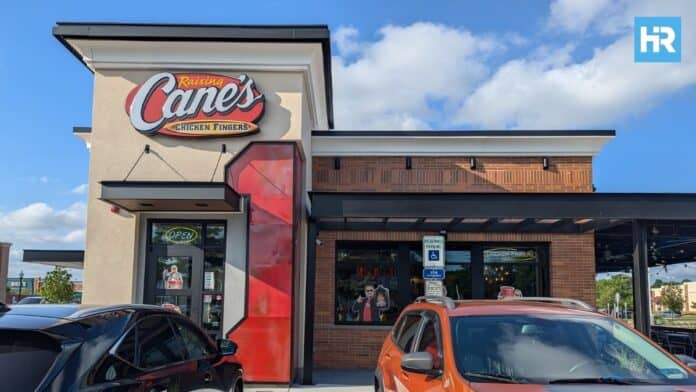
Raising Cane’s Chicken Fingers is one of those places people either love or don’t get the hype about, and honestly, both sides have a point. It’s a fast-food chain that’s all about one thing: chicken fingers. No burgers, no nuggets, no salads pretending to be healthy. Just hot, crispy chicken, fries, and a couple of sides. Todd Graves started it in 1996 in Baton Rouge, Louisiana, named it after his dog “Cane,” and stuck to the “One Love” motto — focus on one thing and do it well.

They’ve definitely nailed the “focus” part. The chicken is fresh, juicy, and served piping hot. But the sides, well, not everyone’s lining up for coleslaw and crinkle-cut fries. Still, Cane’s has blown up across the South and Midwest, with over 800 locations and a fan base that treats Cane’s Sauce like it’s magic.

In 2024, New Jersey finally got its first Cane’s. Since then, more have opened across South Jersey, and every grand opening still draws a crowd. In this guide, I’ll show you the full New Jersey menu, rank every item from worst to best, share some insider tips, list all NJ locations with hours, and tell the story of how Cane’s went from a small Louisiana shop to a national favorite.

Raising Cane’s New Jersey Full Menu

If you’ve been to Raising Cane’s anywhere else, you already know the New Jersey menu — because it’s exactly the same. Cane’s doesn’t bother with seasonal specials or random experiments. They stick to chicken fingers, fries, Texas toast, coleslaw, drinks, and that famous Cane’s Sauce. Simple is their thing, for better or worse.

Here’s the full menu you’ll find at NJ locations:

Combo Meals

Every combo is basically the same core items, just in different amounts or on bread:

  • The Box Combo® – 4 chicken fingers, fries, 1 Cane’s Sauce, Texas toast, coleslaw, and a 22 oz. drink (fountain drink or tea).
  • The Caniac Combo® – 6 chicken fingers, fries, 2 Cane’s Sauces, Texas toast, coleslaw, and a large 32 oz. drink.
  • The 3-Finger Combo® – 3 chicken fingers, fries, 1 Cane’s Sauce, Texas toast, and a 22 oz. drink.
  • The Sandwich Combo – 3 chicken fingers on a toasted bun with lettuce and Cane’s Sauce, plus fries and a 22 oz. drink.
  • The Kids Combo – 2 chicken fingers, fries, 1 Cane’s Sauce, and a small 12 oz. kids’ drink (no toast, smaller portion).

Tailgate Packs (Party Trays)

If you’re feeding a crew or just yourself over a weekend, here’s what they’ve got:

  • 25 Fingers – serves about 6–8 people, includes 8 Cane’s Sauce cups.
  • 50 Fingers – serves about 13–15, includes 16 Cane’s Sauce cups.
  • 75 Fingers – serves about 20–22, includes 25 Cane’s Sauce cups.
  • 100 Fingers – serves about 27–29, includes 33 Cane’s Sauce cups.
  • (Extra sauce can be bought separately.)

Extras (Sides & More)

You can add these to any order:

  • Chicken Finger – marinated and fried to order (about 130 calories each).
  • Crinkle-Cut Fries – golden, wavy fries (about 400 calories per order).
  • Texas Toast – thick bread grilled with garlic butter (about 150 calories a slice).
  • Coleslaw – creamy cabbage slaw (about 100 calories per serving).
  • Cane’s Sauce – tangy dipping sauce (about 190 calories per cup).
  • Chicken Sandwich – 3 chicken fingers on a bun with lettuce and Cane’s Sauce (about 780 calories), sold without sides.

Drinks

Simple but fresh options:

  • Freshly Squeezed Lemonade – made in-store every day; sweet and tart (extra charge in combos).
  • Freshly Brewed Iced Tea – sweetened or unsweetened, brewed all day.
  • Half & Half (Arnold Palmer) – half lemonade, half tea (extra charge in combos).
  • Fountain Drinks – Coca-Cola brand sodas (sizes vary, 0–430 calories).
  • Large Jugs – gallon jugs of lemonade or tea for groups (about 1,750 calories per gallon of lemonade).

Sauces

  • Cane’s Sauce – their signature creamy, tangy sauce (a mix of mayo, ketchup, and spices). Every combo includes it, and many fans get extra.
  • Honey Mustard – sometimes available if you ask, but Cane’s Sauce is the main one.
  • Ketchup and other basic condiments are available if requested.

Ranking Menu Items: Worst to Best

Look, Cane’s doesn’t have a big menu, so it’s not like we’re comparing lobster to pizza here. But some items are clearly better than others. I’ve eaten it all, more than once, and here’s the truth, from the stuff you could skip to the thing you absolutely need to order.

#5 – Crinkle-Cut Fries (Worst)

The fries are… okay. They’re crispy when hot and salty enough, but they taste like something you could make at home from a frozen bag. Once they cool down, they get soft fast. Good with Cane’s Sauce, but most fast-food places have better fries.

#4 – Coleslaw

Fresh, cold, creamy, but coleslaw is one of those foods you either love or push to the side. Even Todd Graves, the guy who started Cane’s, usually skips it for more toast, which tells you something. The dressing leans sweet and heavy on mayo, and a lot of people swap it out without a second thought. If you love coleslaw, it’s fine. If not, trade it for extra toast and don’t look back.

#3 – Texas Toast

This one surprised me when I first tried it. Cane’s doesn’t phone it in here — it’s thick pull-apart bread brushed with garlic butter and grilled until the edges are golden and crispy. The middle stays soft and fluffy. People even order it “BOB” (buttered on both sides) for extra flavor. Honestly, it’s so good it could be the main dish if Cane’s decided to go rogue.

#2 – Chicken Sandwich

While many fast-food chains compete with over-the-top “chicken sandwich” creations, Cane’s keeps it simple: three chicken fingers on a toasted bun with lettuce and Cane’s Sauce. The chicken is juicy, the bread is soft, and the sauce adds the right tangy flavor to every bite. It’s simple, but kind of brilliant.

#1 – Chicken Fingers (Best)

This is what Cane’s is famous for, and it’s obvious why. The chicken is fresh, never frozen, marinated for flavor, hand-battered, and fried until it’s golden and crispy on the outside while staying tender and juicy inside. They actually taste like chicken (which is more than I can say for certain fast food chains). And yes, they’re even better when you dunk them in Cane’s Sauce. If you go to Cane’s and don’t get these, you’re wasting your trip.

Raising Cane’s Locations in New Jersey

Right now (mid-2025), New Jersey has six Raising Cane’s, all bunched up in the southern half of the state. If you live in North Jersey, sorry, you’re still waiting, though Cane’s says Fairfield, Edison, and Watchung are coming soon. About time.

Here’s where you can actually get Cane’s in NJ right now:

  • Burlington (Burlington Twp) – 2329 Burlington Mount Holly Road, Burlington, NJ 08016. Open Sunday–Thursday 10 AM to midnight, Friday and Saturday until 1 AM. The first NJ location and still one of the busiest.
  • Cherry Hill – 2014 Route 70 West, Cherry Hill, NJ 08002. Same hours as Burlington. Close to the mall, so expect a line if you go on weekends.
  • Deptford – 1860 Deptford Center Road, Deptford, NJ 08096. Also 10 AM to midnight most days, 1 AM on weekends. Convenient spot if you’re shopping in the area.
  • Glassboro – 695 Delsea Drive, Glassboro, NJ 08028. Same hours. Packed with Rowan University students — don’t try to get in at midnight unless you like waiting.
  • Marlton – 800 Route 70 West, Marlton, NJ 08053. Same hours. Easy to get to, but the drive-thru can back up fast during dinner.
  • Turnersville (Washington Twp) – 5241 NJ-42, Turnersville, NJ 08012. Same hours. Good spot if you’re in Gloucester County and don’t feel like driving to Deptford.

All of these locations have dine-in seating, drive-thru, and takeout. Most of them stay open until midnight, and push it to 1:00 AM on Fridays and Saturdays for the late-night chicken crowd. Hours can shift on holidays, and new spots can pop up fast, so it’s worth checking the official site or calling before you head out, especially if you’re driving far.

History and Expansion of Raising Cane’s

Raising Cane’s started as a college idea that almost didn’t happen. Back in 1994, founder Todd Graves pitched a chicken-fingers-only restaurant in a business class at LSU. His professor gave him the worst grade in the class, basically saying it would never work. Todd didn’t listen. He worked tough jobs as a boilermaker and a fisherman to save money, then opened the first Raising Cane’s on August 28, 1996, right by the LSU campus in Baton Rouge, Louisiana.

The name came from his yellow Lab, “Raising Cane,” who used to hang around the construction site. The first location was small, had a retro vibe, and instantly became a hit with college students. It didn’t take long for people outside Louisiana to start hearing about the place.

Through the late ’90s and 2000s, Cane’s spread across Louisiana and the South, building a loyal fan base for its hot, fresh chicken fingers and friendly service. By the 2010s, the chain picked up speed, moving into Texas, the Midwest, and beyond. By 2020, Raising Cane’s was one of the fastest-growing fast-food chains in the country.

For years, people in New Jersey only heard about Cane’s from friends in other states. That changed in 2024 when the first NJ location opened on January 18 in Burlington Township. It drew huge lines on day one, with fans and curious first-timers waiting for hours to try the Box Combo and Cane’s Sauce.

The openings came quickly after that: Cherry Hill in March 2024, then Deptford, Marlton, Turnersville, and Glassboro (which opened in January 2025). By mid-2025, there were six Cane’s locations in New Jersey, all in the southern half of the state.

The growth isn’t stopping. A location in Edison will be the first in Central Jersey, and the first North Jersey Cane’s is set for Fairfield (Essex County) in late 2025. There’s also a planned spot in Watchung.

So far, every grand opening has been packed with “Caniacs”, that’s what the diehard fans call themselves, lining up for their chicken fix. In less than two years, Cane’s has gone from zero presence in New Jersey to being one of the most talked-about new chains in the state.

WWE Fans Wait Hours in Bayonne Hoping to See John Cena During Netflix Filming

WWE Fans

On Tuesday, August 6, hundreds of people assembled outside Bayonne Medical Center in Bayonne, New Jersey — as reported by TAPinto Bayonne. They were there during the second consecutive day of filming for the Netflix comedy Little Brother, starring John Cena and Eric André.

Among those present was Jimi Charles, who arrived in a wheelchair while holding a replica wrestling championship belt. He attended on behalf of his son, who is a wrestling fan and was unable to be there due to illness.

Bayonne officials extended an invitation for Cena to appear at the city’s annual Night Out Against Crime event, which was held in another part of town that day. According to information provided to TAPinto Bayonne, his filming schedule may have prevented him from attending.

Despite more than six hours of waiting by fans, Cena did not make an appearance outside the medical center.

Key Takeaways
  • On August 6, hundreds of people waited outside Bayonne Medical Center for over six hours during John Cena’s second day filming Little Brother at the site, but the actor did not appear in public.
  • The Bayonne filming ran two consecutive days, starting at 7:30 a.m. and lasting more than 12 hours each day, with additional production across multiple northern New Jersey locations.
  • The film stars Cena as a straight-laced real estate agent and Eric André as his eccentric younger brother, with Netflix yet to announce a release date.

Two Days of Filming in Bayonne and Multiple Locations in New Jersey

The Bayonne Medical Center shoot lasted for two days, concluding on August 6. Hospital staff confirmed that filming began each day at 7:30 a.m. and continued for more than 12 hours.

According to members of the production crew, Little Brother has also been filmed in Jersey City, Hoboken, Cedar Grove, Montclair, and other locations in northern New Jersey.

In the film, Cena plays a straight-laced real estate agent whose routine is disrupted by the arrival of his eccentric younger brother, portrayed by Eric André.

On Monday, August 5, one day before the Bayonne shoot ended, Cena and André were seen filming in the Heights section of Jersey City. Scenes were shot at the basketball court in Riverview Park on Ogden Avenue.

Additional filming has also taken place in Montclair and other parts of northern New Jersey. Netflix has not announced a release date for the film.

Crowd Atmosphere Outside Bayonne Medical Center

Although Cena did not step outside to meet the assembled fans, the crowd remained active throughout the day. People brought wrestling memorabilia, including championship belts, and gathered on the hospital lawn.

John Cena joined WWE in 2001 and became the heavyweight champion 17 times during his wrestling career. He has also starred in films including The Marine, Trainwreck, Ferdinand, Bumblebee, and F9, as well as the HBO Max series Peacemaker.

Some in attendance described the gathering as a WWE-themed event, with children and families participating in activities on the lawn while waiting for any sight of the actor.

Recent Earthquakes in NJ Match Rutgers Scientist’s Long-Standing Prediction

Recent New Jersey Earthquake

A 2.7-magnitude earthquake in Bergen County, New Jersey, occurred last week, days after a separate tremor in Hasbrouck Heights. According to Alexander Gates, a geology professor at Rutgers University Newark campus, such events are consistent with a long-term 40-year cycle of earthquakes affecting the New York metropolitan area.

In 2020, Gates and his graduate student, Michael Kalczynski, analyzed available data and concluded the region would see an upswing in earthquakes over the next several years. Their findings projected that the area was overdue for an earthquake of magnitude 3.8 or greater.

On April 5, 2024, a 4.8-magnitude earthquake struck Tewksbury Township, New Jersey, with shaking felt in New Jersey, New York, and neighboring states. Gates stated that this earthquake supported the prediction made four years earlier. The findings were presented at a meeting of the Geological Society of America but were not published. Gates said that if the work had been published, he would be famous.

Key Takeaways
  • Rutgers’ research identified a repeating 40-year cycle of earthquakes in the New York–New Jersey region, with recent events matching the pattern.
  • A 2020 forecast of a magnitude 3.8 or higher quake was followed by the April 5, 2024, magnitude 4.8 earthquake in Tewksbury Township.
  • The Ramapo Fault is traditionally seen as the main source of quakes, but Gates attributes recent activity to younger, 65-million-year-old faults.

Seismic Activity in 2024 and 2025

Gates reported that around 200 earthquakes occurred in the region in 2024. Smaller events have continued in 2025, including Tuesday’s 2.7-magnitude quake near Hillsdale and Saturday’s quake in Hasbrouck Heights.

He explained that the April 2024 earthquake released tension along certain fault lines while creating tension in others, leading to subsequent earthquakes. This type of low-level seismic activity, according to his data, can last for several years. His records indicate that the cycle he identified has been occurring since at least 1884.

Disagreement Over the Ramapo Fault Theory

The Ramapo Fault, about 200 million years old, has traditionally been considered the source of earthquakes in the area. It runs from Pennsylvania through New Jersey, passing through Hunterdon, Somerset, Morris, Passaic, and Bergen counties, and ending in Westchester County, New York.

Gates said the recent quakes, including the Hasbrouck Heights event, are not close to the Ramapo Fault. He attributes them to younger faults, about 65 million years old, created by the pulling of the region’s tectonic plates to the east. These faults run through the region and extend under New York City.

Earthquake Characteristics in the Northeast

In North Jersey, earthquakes are often shallow, so people hear them as well as feel them. Gates has explained that the sound comes from the cracking of rock.

Seismological data cited in the source show that:

  • About 900,000 earthquakes of magnitude 2.5 or less occur annually worldwide, usually unfelt.
  • Around 30,000 earthquakes each year range from magnitude 2.5 to 5.4 and may cause minor damage.
  • About 500 earthquakes annually measure magnitude 5.5 to 6.0 and may cause slight building damage.
  • Approximately 100 earthquakes each year range from 6.1 to 6.9 and can cause significant damage.
  • Around 20 earthquakes annually fall between magnitude 7.0 and 7.9 and are considered major.
  • Earthquakes of magnitude 8.0 or greater occur on average once every five to ten years and can destroy communities near the epicenter.

Regional Earthquake Data and Expert Assessments

Since 1900, the New Jersey area has experienced 355 earthquakes of magnitude 1.0 or greater. Only 20 of those reached magnitude 3.0 or higher, which are generally felt by people.

Andrew Lloyd, assistant research professor at Columbia University’s Lamont-Doherty Earth Observatory, stated that the two recent quakes could be aftershocks from the April 2024 event, and that the quake on Tuesday was likely triggered by Saturday’s event.

He noted that while California is located on a plate boundary with frequent earthquakes, the New York region is within a tectonic plate—an intraplate setting—where earthquakes are still possible.

Folarin “Fola” Kolawole, assistant professor of structural geology at Columbia, said ancient faults in the New York–New Jersey region are active and can remain dormant for long periods. He stated there is potential for an earthquake greater than magnitude 5.0.

Why East Coast Quakes Travel Farther

East Coast earthquakes can be felt over larger distances than similar events in the West. This is due to older, harder, and less fractured bedrock in the eastern U.S., which transmits seismic energy more efficiently. The younger, more fractured rock of the West Coast absorbs energy more quickly, limiting how far shaking can travel.

Earthquake Safety Recommendations

The U.S. Geological Survey advises that during an earthquake, individuals should:

  • Drop to hands and knees.
  • Cover the head and neck with arms.
  • Hold on to a sturdy table or desk until the shaking stops.
  • People should stay away from windows and heavy furniture, check for injuries, and inspect for damage to gas, water, and electrical lines.

Yankees’ Aaron Boone Sticks With Devin Williams Despite Costly Loss to Rangers

Yankees Stick With Struggling Williams

On Tuesday night, August 5, 2025, at Globe Life Field in Arlington, Texas, the New York Yankees lost 2-0 to the Texas Rangers – The Pinstripes’ fifth consecutive defeat since the trade deadline last Thursday. The loss dropped their record to 60-54, cutting their lead over the Rangers (60-55) for the third and final American League wild-card spot to just half a game.

Reliever Devin Williams was central to the game’s turning point for the second night in a row. On Monday, Williams surrendered a game-tying home run to Joc Pederson in the ninth inning, leading to an eventual Yankees loss in extra innings. On Tuesday, with the game tied 0-0 in the bottom of the eighth, Yankees manager Aaron Boone again called on Williams.

Williams retired Marcus Semien to start the inning, but then allowed a one-out double to Adolis García. Left fielder Jasson Domínguez got a glove on García’s line drive but could not make the catch. Boone described it as a “tough play” and said, “It’s hard to expect him to catch that ball.” Williams said, “He got a glove on it… you can’t expect that to be caught.”

Williams then walked Pederson and Wyatt Langford, loading the bases with one out.

Key Takeaways
  • Yankees lost 2-0 to Rangers, marking their fifth straight loss since the trade deadline.
  • Manager Aaron Boone kept struggling reliever Devin Williams on the mound despite loading the bases and blowing a save the night before.
  • Boone cited lack of bullpen options and matchup hopes as reasons for sticking with Williams, even though better pitchers were warming up.

Boone’s Rationale for Not Using Bednar or Leiter

At that point, right-handed relievers Mark Leiter Jr. and David Bednar were warming up in the Yankees’ bullpen. Bednar, acquired at the trade deadline from the Pittsburgh Pirates, had held left-handed batters to a .455 OPS before Tuesday’s game. Leiter had been activated from the injured list earlier in the day and had not pitched in a major league game since July 6, 2025.

Bednar had thrown 11 pitches in Monday’s game, and Leiter had not yet appeared since returning from injury. Based on these factors, Boone did not make a pitching change. Williams remained in the game to face former teammate Rowdy Tellez, a left-handed batter, who produced a 10-pitch at-bat ending with a two-run single up the middle.

Left-handed reliever Tim Hill, who last pitched on Saturday, August 2, was not used. The decision factored in the possibility that the Rangers could replace Tellez with a right-handed hitter, such as Kyle Higashioka or Ezequiel Duran. Right-handed batters had a .765 OPS against Hill this season.

Williams’ 2025 Season Performance and Related Betting Odds

Williams,acquired by the Yankees during the 2024–2025 offseason from the Milwaukee Brewers, has a 5.44 ERA in 47 appearances this season. He has allowed 26 earned runs in 2025, the same number he surrendered over the previous three seasons combined. He has given up runs in six of his last eight appearances and has blown two saves in his past four games.

Before Tuesday’s game, Boone said the Yankees would rotate closers instead of using Williams exclusively. He identified command problems and walks as contributing factors to Williams’ recent performance issues. Boone said, “Times when he gets behind in the count have hurt him a little bit. We have to get him turned around.

Sportsbook odds before Tuesday’s game listed the Yankees at -330 to make the playoffs, an implied probability of 76%. The Rangers were listed at +115. The Yankees’ World Series odds remained around +1000 in recent weeks. Williams’ performance has been reflected in player prop betting markets, with save and strikeout totals adjusted in response. Earlier in the season, he recorded a 1.90 ERA in 25 appearances. Since early July, he has posted a 6.00 ERA over 12 innings, with 17 strikeouts and five walks.

Yankees’ Offensive Output and Player Support

The Yankees recorded two hits in Tuesday’s game. After the loss, Boone said, “Not good. We got to put it on record. If we don’t win, it doesn’t matter. We play like this and don’t string wins together, it doesn’t matter. I remain confident in this group, but we continue to say that and we have to make it happen.”

Aaron Judge, who returned from the injured list on Tuesday, commented on Williams’ role, “He’s been so good for us the past month, month and a half… He’s won a lot of ballgames for us, and you’re going to hit some rough parts like that, but you’ve just got to be there to support him. He’s picked us up quite a bit throughout the year, and we’ve got to pick him up sometimes.”

Williams said, “I’ll just continue to work and keep trying to execute and help the team any way that I can.”

Morris Museum Hosts Tula Telfair: NATURE Does Not Locate Itself

Tula Telfair Solo Exhibition

The Morris Museum, located at 6 Normandy Heights Road, Morristown, New Jersey 07960, is presenting Tula Telfair: NATURE Does Not Locate Itself from June 26 through October 5, 2025. This is the first solo museum exhibition of Tula Telfair’s work in the New York City metropolitan area in the past 15 years.

Key Takeaways
  • The Morris Museum is hosting Tula Telfair’s first solo museum exhibition in the NYC-metro area in 15 years, running June 26 – October 5, 2025.
  • The exhibition features 33 works, including 21 large-scale paintings created between 2014 and the present, exploring the intersection of realism, imagination, and nature.
  • The show is accompanied by a fully illustrated catalog and a unique installation pairing Telfair’s works with minerals and cultural artifacts from the museum’s collection.

Exhibition Content

The exhibition includes 33 works, among them 21 monumental canvases painted between 2014 and the present. It examines Telfair’s work at the intersection of realism and imagination, as well as art and the natural world.

The paintings are hyper-realistic and immersive. They are created from memory, imagination, and emotion, rather than direct observation. The works convey the grandeur of nature, its capacity to inspire awe and wonder, and its unnerving power.

Additional Features

A fully illustrated catalog accompanies the exhibition. The catalog contains essays addressing Telfair’s aesthetics, techniques, creative rhythms, and her position within the tradition of American painting.

The installation also features a curated selection of minerals and global material culture from the Morris Museum’s collection, all of which were selected by the artist and are displayed alongside her paintings.

Support and Availability

The presentation of Tula Telfair: NATURE Does Not Locate Itself is supported by Melanie and Alan Levitan, with installation assistance from Novartis. The exhibition catalog is available for purchase in the Morris Museum shop and through its online store.

Best Online Casinos 2026 – Real Money Casino Sites, Rated by Experts

Best Online Casinos

Online casinos are more accessible than ever before, but knowing where they’re available (or even legal) remains a challenge for players across the U.S.

U.S. gambling laws vary significantly by state, with some jurisdictions regulating online casinos and others prohibiting them entirely. In this article, we’ll break down the current legal landscape, outline what types of games are available in different regions, and highlight key legal considerations that players should know before participating.

Is Online Gambling Legal in the U.S.?

The state of online gambling in the United States is complex, messy, and varies significantly from state to state. While federal laws provide a loose framework, individual states have the authority to regulate or outright prohibit online gambling within their borders.

Federal Laws

At the federal level, two primary laws impact online gambling:

  • The Wire Act of 1961: Originally aimed at curbing organized crime, this law prohibits certain types of betting businesses from using wire communication to transmit bets or wagering information across state lines.
  • The Unlawful Internet Gambling Enforcement Act (UIGEA) of 2006: This act targets the financial transactions associated with online gambling, making it illegal for businesses to knowingly accept payments related to unlawful internet gambling.

It’s important to note that these federal laws do not make online gambling illegal outright, but focus on specific aspects of the pastime, such as interstate transmissions and financial transactions.

State Regulations

Since the Supreme Court’s 2018 decision to overturn the Professional and Amateur Sports Protection Act (PASPA), states have gained the autonomy to legalize and regulate online gambling activities, including sports betting and casino games. As a result, the legal landscape has started to get interesting.

  • Online Sports Betting: As of 2025, 30 states, along with Washington D.C. and Puerto Rico, have legalized online sports betting in some form.
  • Online Casinos: Currently, only seven states have legalized online casino gaming, giving players state-regulated access to games like slots, poker, and blackjack for real money.

In states where online gambling isn’t explicitly legalized, some players turn to overseas casinos. However, these platforms operate outside U.S. jurisdiction, and players should exercise caution due to the potential legal and financial risks involved.

Legal Online Casinos By State (2025)

Category States
Online Casinos & Sports Betting NJ, MI, PA, CT, DE, WV, RI
Online Sports Betting Only AZ, AR, CO, IL, IN, IA, KS, KY, LA, ME, MD, MA, NV, NH, NY, NC, OH, OR, TN, VT, VA, WA, WY
No Online Gambling Legislation AL, AK, CA, GA, HI, ID, MN, MO, OK, SC, TX, UT

Note: This table reflects the status as of 2025. Laws are subject to change, and it’s advisable to consult official state resources for the most current information.

What Casino Games Can You Play Online in the U.S.?

The types of casino games available online in the U.S. depend heavily on where you live. In states where online casino gaming is legal, players can find a full suite of digital gambling options, including:

  • Video Slots – the most popular and widely played online casino game in the U.S., available in thousands of variations.
  • Blackjack – Typically offered in both automated and live dealer formats
  • Roulette – Including American, European, and live-dealer versions
  • Poker – Both peer-to-peer games played against other players and house-banked video poker options are widely available throughout the United States.
  • Live Dealer Games – Streamed in real-time from professional studios, these blend online convenience with a traditional casino feel, thanks to the real-life croupiers and dealers.

Fun Fact: Slot machines make up over 70% of all casino floor space in land-based casinos. This popularity is mirrored by online casinos, with a significant portion of their libraries being made up of classic, video, and jackpot slots.

The Evolution of Online Gambling Laws in the U.S.

The online gambling laws we’re faced with today in the United States didn’t spring into being all at once, they’ve been forged by decades of shifting federal priorities, court rulings, and, more recently, state-level legislation.

What began as a gray area has gradually evolved into a fragmented but increasingly regulated industry.

From Federal Prohibition to State Control

For much of the 20th century, gambling in the U.S. was strictly regulated — and almost entirely offline. The Wire Act of 1961, passed in the name of fighting organized crime, banned interstate sports betting via telecommunication. That law stood, largely unchallenged, until the rise of the internet.

In 2006, Congress passed the Unlawful Internet Gambling Enforcement Act (UIGEA), targeting financial institutions that processed payments tied to online gambling. While UIGEA didn’t criminalize gambling itself, it made it harder for U.S.-based players to fund accounts on gambling platforms, a move that effectively pushed the market underground.

A Turning Point: The Fall of PASPA

The real shift came in 2018, when the U.S. Supreme Court struck down the Professional and Amateur Sports Protection Act (PASPA). That ruling gave states the power to regulate sports betting independently — and many were quick to jump on this new revenue opportunity.

Some states even expanded further, adding online casino games and poker to their regulatory frameworks.

Who’s Shaping the Online Casino Industry Now?

Since then, gambling expansion has largely been a state-by-state story. In many cases, tribal governments, casino operators, and state legislatures have negotiated the terms, often clashing over who gets access to licenses and (more importantly) the revenue.

At the federal level, the Department of Justice has occasionally reinterpreted the Wire Act, though recent court decisions have favored a narrower reading, focused on sports betting alone.

How the U.S. Online Casinos Compare to Other Markets

Unlike many countries with centralized gambling laws, the U.S. operates on a state-by-state basis, resulting in a patchwork of regulations. This contrasts sharply with countries like the United Kingdom or Canada, where federal or provincial bodies provide consistent rules across regions.

In the U.K., for example, all legal online gambling is regulated by the UK Gambling Commission, with nationwide licensing for sports betting, casino games, and poker.

Similarly, Ontario launched its own regulated online gambling market in 2022, now home to dozens of approved operators.

By comparison, only a handful of U.S. states allow both online casino gaming and online sportsbooks, while more than half have no legal online casino options at all. This regional disparity has created uneven revenue generation and has fueled ongoing competition between states.

Economic Impact and Competitive Pressures

States that have legalized both verticals — such as New Jersey, Michigan, and Pennsylvania — consistently report billions in online gambling revenue, much of it from casino games.

These earnings have put pressure on neighboring states to consider legalization, especially as lawmakers look for new sources of tax revenue.

2024 Online Gambling Revenue by State

State Online Casino Revenue Online Sports Betting Revenue
New Jersey $2.39 billion $1.09 billion
Michigan $2.44 billion $460.5 million
Pennsylvania $2.2 billion $511.1 million

As more states come online, the potential for a federally coordinated framework remains unlikely.  However, the economic success of these early adopters continues to influence policy conversations at the state level.

Who Shapes U.S. Gambling Policy?

Modern online gambling policy in the United States is shaped by a mix of tribal governments, commercial casino operators, state lawmakers, and advocacy groups — each with competing interests and priorities.

In some states, tribal nations hold exclusive rights to gambling under longstanding legislative compacts, making them central to any talks of expansion into online betting. For example, the Seminole Tribe of Florida recently regained control of online sports betting through a legal settlement with the state (though a new group has formed and is readdressing the issue after the Florida Supreme Court threw last year’s ruling out on a procedural issue).

Commercial operators, meanwhile, have lobbied aggressively for access to digital markets. In Illinois, a proposed bill to legalize online casinos drew pushback from smaller casino owners concerned about competition. On the policy side of things, organizations like the National Council of Legislators from Gaming States (NCLGS) are drafting model legislation to help all states navigate online expansion.

Over the years, NCLGS President Shawn Fluharty has argued that states must take the lead when it comes to developing clear and consistent policies to avoid leaving players vulnerable to unregulated markets.

Practicing Responsible Online Gambling in the United States

Online gambling can be an exhilarating way to pass the time, but it is not without risk. Financial loss, addiction, and mental health strain are all very real concerns, especially when gambling moves beyond entertainment and into compulsion.

The 24/7 accessibility of online platforms can make it harder for some players to disconnect. To encourage safer play, many legal platforms offer tools like deposit limits, time reminders, and self-exclusion options. But support is also available for those who need it, regardless of where or how they gamble.

National Support Resources

National Problem Gambling Helpline

National Council on Problem Gambling

GamTalk (Peer Support Community)

Self-Exclusion Tools

Many states offer digital self-exclusion lists through their gaming commissions or partner platforms.

The most important step you can take, however, is to know your limits and reach out if gambling stops feeling like a game.

What’s Next for Real Money Online Casinos in the U.S.?

It’s impossible to tell at this juncture what the future of gambling in the states will look like. While sports betting has rapidly expanded, online casino legalization has moved more slowly, often facing greater political and regulatory resistance.

Still, momentum is building. States like Illinois, Indiana, and New York have explored bills to legalize internet casino platforms, and tribal negotiations continue to shape digital access in others.

At the same time, emerging technologies and platforms — including mobile-first casinos and live dealer innovations — are pushing the industry forward. As more lawmakers weigh the tax benefits of legalization against regulatory challenges, players can expect continued debate, state-level experimentation, and a slow-but-steady shift towards broader online access.

We’ve spent hours digging through the best online casinos so you don’t have to – testing games, checking payout speeds, reading the fine print on bonuses, and seeing which sites actually treat players right.

What we found? A handful of casinos that really stand out – like our top pick overall, Ignition. They’re safe, legit, and packed with perks. Think high-paying games, generous promos, and smooth withdrawals.

Ready to explore more? Let’s dive right in.

Best Online Casinos

Ignition Best overall – $3,000 in welcome bonuses
Slots.lv Millions in must-drop jackpots monthly
Super Slots Top live casino
Slots of Vegas Low bonus wagering requirements
Wild Casino Best for crypto

Important: The sites listed in this guide are targeting English speakers around the world. Please remember to check your local laws to ensure online gambling is legal where you live. Also Adblock might get confused so please disable it if you have any issues with our links.

Curious to discover what sets Ignition Casino apart and how the other great online casinos in our lineup manage to measure up? Let’s jump right in and uncover all the details!

1. Ignition – Best Online Casino Overall

Ignition Casino US

Pros:

  • Generous welcome offer worth up to $3,000
  • Extensive selection of 300+ slots and classic table games
  • More than 30 blackjack tables with live dealers
  • Quick withdrawals available
  • Top online poker platform with active tournaments
  • Around-the-clock live chat assistance

Cons:

  • Best bonuses are aimed at cryptocurrency users
  • Locating the live chat feature may initially feel tricky

Ignition Casino is best known for its poker platform, but also delivers strongly across other gaming categories. With over 300 titles from top providers, players can enjoy slots like Golden Buffalo, Aloha King Elvis, and classics like Mythic Wolf.

Table games include American and European roulette, craps, single- and double-deck blackjack, and various video poker options. Poker fans get access to guaranteed prize tournaments and anonymous tables.

Crypto users get two 150% bonuses up to $1,500 each, both with a low 25x wagering requirement. Traditional deposits also unlock a dual welcome bonus: 100% up to $1,000 for poker and 100% up to $1,000 for casino games.

Payment methods include Visa, Mastercard, Bitcoin, Litecoin, Ethereum, and Tether. MatchPay is also available, supporting PayPal and Apple Pay.

>> Enjoy your $3,000 bonus

2. Slots.lv – Best Online Real Money Casino for Slot Games

Slots.lv Casino US

Pros:

  • Generous bonus up to $3,000 plus 30 free spins
  • 250+ slot and table games
  • Over 30 progressive jackpots
  • Live roulette, blackjack, and baccarat
  • Engaging specialty games
  • Payouts within an hour

Cons:

  • No telephone customer support
  • Fewer promotions after initial welcome bonus

Slots.lv is a top pick for jackpot hunters, offering progressive jackpots, bingo, and card games. The game library features providers like RealTime Gaming, Betsoft, Rival, and Woohoo, with titles ranging from classics like Luxe 555 to jackpot slots like Cyberpunk City and Shopping Spree, which recently topped $2 million.

New crypto users at this real money online casino receive a 200% bonus up to $3,000 and 30 free spins on Golden Buffalo. Traditional payment users get a 100% bonus up to $2,000 plus 20 free spins.

Deposits are easy via Visa, Mastercard, Bitcoin, Ethereum, and more. MatchPay supports e-wallets. Crypto withdrawals are unlimited, while bank wire payouts are capped at $2,000 weekly.

>> Grab a $3,000 bonus offer

3. Super Slots – Top Casino Online for Real Money Live Dealer Games
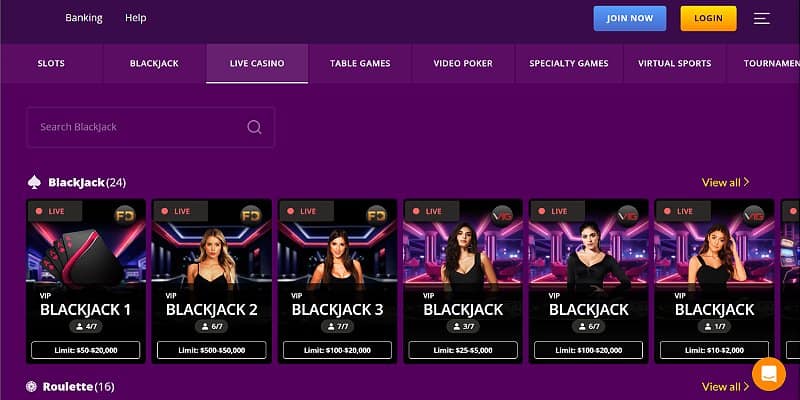
Super Slots Casino US

Pros:

  • 300 free spins offer
  • Over 1,000 slot and table games
  • 70+ live dealer games
  • Wide range of banking methods
  • Daily competitive tournaments
  • Diverse bonus opportunities

Cons:

  • Game filtering could be improved
  • Mobile interface needs refinement

Super Slots stands out with a massive slot selection and strong live dealer offerings, especially for blackjack fans.

It features over 1,000 slots from BGaming, Rival, Betsoft, and Yggdrasil, including hits like Gemhalla. Players can enjoy around 20 blackjack variants and a wide range of live dealer games. Daily tournaments offer prize pools up to $35,000.

New players at this real money online casino get 300 free spins over 10 days (30 spins daily) on a mystery slot.

The site supports various traditional payment methods and 15+ cryptocurrencies, with fast cashouts and flexibility.

>> Enjoy 300 free spins

4. Slots of Vegas – Best Real Money Casino Online for Bonuses

Slots of Vegas Casino US

Pros:

  • $2,500 bonus + 50 free spins
  • Offers unique table‑game variants like Suit ’Em Up and Perfect Pairs
  • Free games in practice mode
  • High‑quality live‑dealer games
  • Low wagering requirements

Cons:

  • Average payment method variety
  • Must log in to see live dealer games

Slots of Vegas is a top pick for bonuses, offering a $2,500 welcome package with quality real money games.

It features titles from RealTime Gaming, including popular slots like Samba Jackpots, Big Cat Links, and Legend of the High Seas, plus over a dozen video poker games like Deuces Wild and Aces & Eights. Live dealer tables are available after login.

New players get a 250% match up to $2,500 + 50 free spins (code WILD250) with a $30 minimum deposit. The 10x wagering requirement is low, though the bonus applies only to slots, keno, and specialty games.

There are 20+ recurring bonus codes and a VIP program with faster payouts and higher limits.

Deposit with cards or Bitcoin and withdraw via Bitcoin, bank wire, or check. Crypto offers fast, fee-free withdrawals, while fiat methods take longer but start at just $30.

>> Get your $2,500 welcome offer

5. Wild Casino – Best Casino Online for Crypto
Wild Casino US

Pros:

  • 250 free spins offer
  • Daily tournaments available
  • 650+ slot and table game offerings
  • Supports 16 cryptocurrencies
  • Quick and efficient payouts

Cons:

  • Game navigation could be improved
  • Mobile site needs refinement

Wild Casino is a top pick for crypto players, offering a wide range of digital payment options and fast, secure withdrawals, often processed in under an hour.

As one of the highest-paying online casinos for slots fans, it features over 650+ slot machines and a solid variety of table and poker games. Popular titles include Golden Dragon Inferno. Daily roulette, blackjack, and slot tournaments offer prize pools up to $35,000.

New players get 250 free spins over 10 days (25 per day), each linked to a different slot. Winnings carry no wagering requirements, just a $20 deposit to claim.

Payment options at this real money online casino include credit cards, bank transfers, and numerous cryptocurrencies like Bitcoin, Ethereum, and Dogecoin.

>> Enjoy 250 free spins

Best Online Casino Sites – Our Ranking Criteria

Safety and Security

It’s always better to be safe than sorry, don’t you agree? This quote is very true when it comes to online casinos because you are trusting them with your personal and financial information.

To avoid any negative consequences, we stick to safe and secure online casinos, so your funds are always protected.

Variety of Online Casino Games

Your online casino experience should be as fun as possible, which is why we prioritized casinos offering a diverse selection of games. Whether you’re spinning slots, hitting the tables, joining live dealer sessions, or even sports betting, each featured casino covers all your gaming preferences.

Software Providers

It’s not just about the quantity of games, quality counts too. That’s why every casino we’ve recommended features reputable and trusted providers like Pragmatic Play, Visionary iGaming, NetEnt, and many others, ensuring top-notch gameplay every session.

Bonuses & Promotions

A strong welcome bonus isn’t just an incentive, it’s your introduction to what the casino does best. We’ve evaluated casinos not only on the generosity of their bonuses but also on the fairness of their wagering terms and how effectively these offers enhance your gaming.

Flexible and Secure Payment Methods

Enjoying games and bonuses means little without reliable payment options. All casinos highlighted in our list provide multiple secure and efficient ways to deposit and withdraw funds, including traditional methods and crypto-friendly solutions like Dogecoin and Solana, allowing you to manage your money with ease.

Mobile Compatibility

Gaming on the go has never been more essential. Each casino we recommend provides an optimized mobile experience, either through dedicated apps available for Android and iOS or via fully responsive mobile sites for a smooth gameplay wherever you are.

Customer Support Options

All the top online casinos have a stand-out customer support team. You never know when bad luck is going to hit the fan.

Although you’d hope never to need the assistance of a competent representative, it’s a great safety net to have. We prioritized casinos that offer 24/7 support!

We used similar criteria to rank the best online casinos in Europe.

Real Money Online Casinos VS. Crypto Casinos

When it’s time to choose between real money online casino sites and crypto casinos, the difference boils down to the currency you use and the overall experience. Let’s break it down.

Traditional Payments and Digital Coins: In real money casinos, you’re working with standard payment methods like credit cards, bank transfers, and e-wallets. These are tried-and-true options, but they can come with fees. Crypto casinos, on the other hand, operate with digital currencies like Bitcoin, Ethereum, or Litecoin.

Privacy and Anonymity: When you play with cryptocurrencies, your transactions don’t require personal details like your name or address. Traditional casinos rely on personal data for account verification and withdrawals.

Bonus Structure and Rewards: Real money casinos tend to offer standard bonuses like welcome packages, free spins, or loyalty rewards, often tied to wagering requirements. The same is true for crypto casinos, but generally, crypto promotions are larger than traditional ones.

Security and Regulation: Real money casinos often come with a layer of regulation, meaning they must adhere to strict guidelines to ensure fair play and secure transactions. Crypto casinos, while becoming more regulated, generally lack the same level of oversight.

Popular Games to Play at the Best Online Real Money Casinos

With so many slot games and virtual table games at your fingertips, it can be hard to figure out the best game to play at online casinos!

If you’re a beginner and have no idea where to start, check out all the popular games available at our recommended real money casino sites.

Slot Games

Slots are the ultimate go-to game for those who want instant action and a variety of themes. There are thousands of titles available, all with dynamic features like expanding wilds, free spins, and bonus rounds.

Blackjack

Many people think that blackjack is a boring game, only about drawing cards and trying to come close to 21. But it’s more about understanding the odds, counting cards (if you’re feeling ambitious), and knowing when to stand or hit.

Real money online casino websites have a variety of blackjack variants to test your skills, including Classic Blackjack, European, or even Blackjack Switch.

Roulette

Roulette is as much about suspense as it is about winning. Whether you’re playing European, American, or French roulette, the game’s charm comes from the myriad ways you can place your bets. From simple red/black wagers to more advanced inside bets, roulette keeps things exciting, no matter your strategy.

Poker

Poker is a game of mental battle. Each hand is a test of strategy, psychology, and sometimes, your ability to bluff. Whether you prefer Texas Hold’em, Omaha, or more exotic variations like Pineapple, poker lets you make the game your own.

The best online casinos for real money offer poker tournaments that can turn a great hand into a massive payday.

Live Dealer Games

Live dealer games are perfect for those who are too lazy to get up and visit a land-based casino. They allow you to interact with real dealers and players online, from any place you want, through a smaller screen.

Best High Payout Online Casinos

When we picked the top offshore online casinos for this list, we didn’t just focus on flashy bonuses or big game libraries; we also made sure each site gives you a real shot at winning. These casinos were handpicked with high payouts in mind, offering games with some of the best RTP rates you’ll find online.

Whether you want to play high RTP slots or try out table games like Unlimited Blackjack with a low house edge, these casinos are built to give players fair chances. That doesn’t mean wins are guaranteed, but your money simply goes further when you’re playing at sites where the odds are better.

If you’re serious about making the most out of your play, choosing a casino with strong payouts is a smart move, and that’s exactly what you’ll find here.

How to Calculate Chances at the Best Payout Online Casinos

Let’s break it down: RTP stands for “Return to Player,” and it’s basically a percentage that shows how much a game pays back over time. For example, if a slot has a 97% RTP, it means that on average, it pays back $97 for every $100 wagered. The higher the RTP, the better your chances in the long run – simple!

But RTP isn’t just for the fine print; it can actually help you make smarter choices. Here’s how:

  • Stick to games with 96% or higher RTP, especially if you’re playing slots.
  • Go for skill-based games like blackjack or video poker, where smart play can tip the odds in your favor.
  • Look for games with a low house edge; some versions of blackjack or baccarat have just a 1% edge.
  • Use casino bonuses wisely – they can stretch your budget if the terms are fair (watch out for high wagering requirements).
  • Don’t confuse RTP with luck, as you might still hit a dry streak. However, over time, high RTP games offer better value.

Guide to Online Casino Banking Methods

Making secure deposits and speedy withdrawals is just as important as picking the right games. That’s why we’ve taken a closer look at the most popular online casino banking methods – so you know exactly what to expect before you fund your account.

Credit and Debit Cards: Visa and Mastercard are the go-to options for many online gamblers. They’re accepted at almost every casino, easy to use, and perfect for first-time players. Just plug in your card details, set your deposit amount, and you’re ready to go. Withdrawals, however, can be a bit slower and may not be supported at all sites.

Cryptocurrencies: Crypto is where things get fast. Options like Bitcoin, Ethereum, and Litecoin are favored for their blazing withdrawal speeds, often under 24 hours. Many top online casinos also boost your bonus if you deposit using crypto. Just keep in mind that some platforms may require a bit of setup if you’re new to digital wallets.

E-Wallets: E-wallets like PayPal, Neteller, and Skrill are rising stars in the casino banking world. They offer a great middle ground – faster than cards, more familiar than crypto. Plus, they add an extra layer of security since you won’t need to share your banking info with the casino directly.

Bank Transfers: While not the flashiest method, bank transfers remain a solid choice for larger transactions. They’re dependable and widely accepted, especially for cashing out. That said, they’re usually the slowest of the bunch, with payouts taking several business days to clear.

MatchPay & Alternative Methods: Some sites offer peer-to-peer platforms like MatchPay, allowing you to use popular services like Venmo or Cash App indirectly. Others might accept money orders, prepaid cards, or even checks. These tend to be niche options, but they’re great for players who prefer a more traditional route.

Best Online Casinos – FAQs

Can I Play for Real Money at the Best Online Casinos?

Yes, you can play for real money at the best casinos online! Our top casino online list is packed with sites authorized to pay real money whenever you win a game.

However, you’ll need to deposit a certain amount of your own cash before playing big payout online casino games for real money prizes.

The best online casinos accept credit and debit cards in addition to several e-wallets and multiple forms of cryptocurrency. They’ve made it easy and convenient to deposit and withdraw funds! If you win real money, you’ll receive a payout to your bank or crypto wallet.

It’s just like playing your favorite poker games, slot games, and table games in the flesh.

Are Online Casinos Legit?

Yes! Online casinos are legit! So long as you’re gambling with a licensed online casino for real money, you can rest assured that you’re dealing with a legitimate platform.

For your protection and convenience, our team only reviews online gambling sites with a valid license from the Curacao Gaming Authority. This reputable authority monitors top casino sites in the industry to ensure their integrity.

You can rest assured that the games are fair, with the same odds you’d have at your preferred in-person casino. Additionally, licensed online gambling sites guarantee fair bonuses and timely payouts.

What are the Most Trusted Online Casinos?

After checking dozens of sites, we can say that Ignition is the most trusted online casino right now. It has been around for over a decade now, and it has managed to become a trusted brand.

What Online Casino Lets You Cash Out Instantly?

If you’re looking for truly lightning-fast withdrawals, Slots.lv is the standout, routinely processing crypto cash-outs in under an hour, effectively as close to “instant” as it gets in the online casino world.

Its streamlined cashier, paired with Bitcoin, Litecoin, and Tether support, means most players see funds land in their wallets in the same session. Ignition and Wild Casino also offer same-day crypto payouts, but Slots.lv edges them out with that sub-60-minute turnaround.

What Online Casino Game Are You Most Likely To Win?

When it comes to the best odds, blackjack is your most reliable shot at beating the house, thanks to a razor-thin edge that can dip below 1% when you follow basic strategy.

Single-deck and live-dealer tables at sites like Super Slots and Ignition keep the rules player-friendly, letting skilled bettors maximize every hand.

Top Online Casinos for Real Money – Quick Comparison

Ignition: The best online casino offers high RTP slots, table games, and a top-tier poker platform. New players can claim up to $3,000 across the casino and poker sections.  It’s no wonder Ignition is also ranked among the best online casinos in Texas and Florida.

Slots.lv: Offering more than 35 progressive jackpot games, Slots.lv features various Hot Drop Jackpots with prizes awarded Hourly, Daily, and as Super Jackpots. New players can receive up to $3,000 in online casino bonuses and 30 free spins on Golden Buffalo upon signing up.

Super Slots: A paradise for card players, Super Slots offers over 15 single and multi-hand blackjack games, daily tournaments, and two live dealer studios with a wide range of engaging choices. This is in addition to a welcome package that includes 300 free spins.

Slots Of Vegas: This RTG-powered real money online casino stands out for its generous 250% welcome bonus up to $2,500 + 50 free spins. With a solid lineup of real money slots, unique table game variants, and low wagering requirements, it’s one of the best sites for casino bonuses.

Wild Casino: Wild Casino’s impressive 600+ casino game offering, daily tournaments, and 250 free spins welcome package make it an excellent choice for blockchain enthusiasts.

How to Sign Up & Start Playing Casino Games Online

Ready to start gambling at the best online casinos? Here’s a step-by-step guide to signing up using our top choice, Ignition, as an example. Follow these steps and you’ll be spinning the reels in no time.

1. Create A New Online Casino Account

  • Head over to the Ignition website
  • Click the orange “JOIN NOW” button.
  • Enter any required personal info.
  • Certify that you’re of age to gamble.
  • Click “Register” to create your account!

2. Verify Your Email & Mobile Phone Number

  • Check your primary & secondary email inbox for a message.
  • Click the attached link to confirm your personal information.
  • Go back to the Ignition website and go to the cashier section.

3. Deposit Funds & Claim Your Welcome Bonus!

  • Choose your preferred payment method.
  • Toggle the switch to activate your bonus.
  • Deposit $20 or more.
  • Claim a welcome bonus.

4. Start Playing Online Casino Games

  • Explore the casino lobby.
  • Select a title you want to play.
  • Adjust your bet.
  • Enjoy!

Tips for Playing at Real Money Online Casinos

In this section, we’ve compiled some tips and tricks to ensure you can maximize your online casino gaming experience.

Explore all the Games Available at the Casino: If certain online slot games or video poker games aren’t producing the results you’re after, don’t be afraid to move around and try different titles. Sometimes, the best thing you can do to win real money is to expand your horizons and broach new territory!

Check RTP Percentages: Slots, table games, and live dealer games each have a certain RTP percentage. This figure dictates how much you can expect to get back in the long term from wagers placed on the game. For the highest chance of walking away with a profit, you should play the best online casino games with a 96%+ RTP.

Claim Welcome Bonuses: If you’re new to online gambling, claiming a deposit bonus gives you the chance to play online slots and table games without spending all your own hard-earned money. Leveraging a bonus correctly offers more opportunities to win real money on the house.

So, What Are the Best Real Money Online Casino Sites?

We’ve taught you everything we know about the best casino sites online, so you’re ready to get out there and make informed decisions on where to play regular and progressive jackpot slots, table games, and even live dealer games.

While we think that Ignition Casino is the best pick for gambling online because of its generous welcome bonus offer and exciting gambling options, we’re confident you’d do well with any of the best rated online casinos on this list.

Wherever you decide to play, remember that we’re all here to have fun — so get out there, play some games, and stick to responsible gambling.


Important information for our readers:

Participation is restricted to adults 21+.

Gambling carries financial risk and may lead to addiction.

Never gamble with money you can’t afford to lose.

Check your local laws to confirm online gambling is allowed where you live.

If you need help, call 1‑800‑GAMBLER for free, confidential support any time.

More details: https://www.ncpgambling.org/

Latest News

Jersey City Faces $250M Deficit, Mayor Takes $1 Salary

Jersey City Releases Report Showing $250 Million Budget Deficit

On February 4, 2026, Mayor James Solomon released a document titled A Report to the People of Jersey City, outlining what it calls a...

Hundreds Rally Against ICE in Jersey City After Recent Immigration Arrests

On one of the coldest days of the year, hundreds of people gathered in Jersey City on Friday to oppose recent actions by U.S....

Coast Guard Conducts Daily Icebreaking Mission to Keep Hudson River Ferries...

Prolonged freezing temperatures have turned large portions of the Hudson River into a hazardous mix of drifting ice and hardened formations that threaten commuter...

Davenport Says NJ Will Investigate and Prosecute ICE When Rights Are...

The Senate Judiciary Committee convened in Trenton on Monday for Acting New Jersey Attorney General Jennifer Davenport’s confirmation hearing, a session that quickly centered...

Ali Accuses Menendez of Copying ICE Abolition Stance in NJ-8 Primary

The Democratic primary in New Jersey’s 8th Congressional District has become a direct fight over immigration enforcement and political credibility, with challenger Mussab Ali...