
Home Blog Page 61

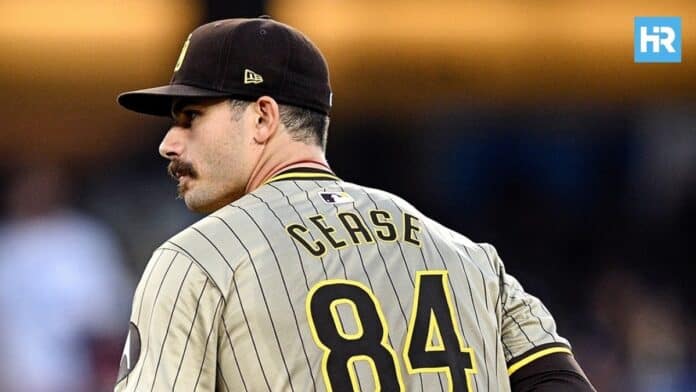
Could Dylan Cease Be the Yankees’ Missing Piece? Inside the $13.7M Trade Proposal Shaking MLB

Here we are again, talking about the New York Yankees and their love affair with blockbuster trades.

But this time, there’s a twist.

The Yankees are rumored to be circling Dylan Cease, the San Diego Padres’ $13.75 million ace, in a deal that feels equal parts bold and desperate.

FanSided’s MLB analyst Thomas Carannante floated a tantalizing four-player trade idea.

The Yankees give up Clarke Schmidt, Everson Pereira, and Jorbit Vivas to bring Cease to New York.

On paper, it’s a straightforward blockbuster: an MLB-ready pitcher and two prospects for one of baseball’s most reliable arms.

But nothing is ever simple with the Yankees or the Padres.

Let’s break this down.

Key Takeaways
  • The Yankees are looking to trade for Padres pitcher Dylan Cease in a deal that could involve Clarke Schmidt, Everson Pereira, and Jorbit Vivas. Cease is one of the most dependable pitchers, with just one year left on his contract.
  • The Padres are dealing with money issues and may trade Cease to cut his $13.75 million salary. In return, they could get good value with Schmidt and two top prospects from the Yankees.
  • If the Yankees get Cease, their pitching staff will become one of the strongest in baseball, joining big names like Gerrit Cole and Max Fried as they prepare for a strong 2025 season.

Why Dylan Cease Is Worth the Fuss

Dylan Cease has won the hearts of Yankees fans, and it’s no surprise, either.

Cease has the numbers and the durability; then you throw his star power in there to top it all off.

Last year with the Padres, Cease went 14-11 with a solid 3.47 ERA over 33 starts.

And over the last three seasons, he’s posted a 3.40 ERA and racked up 665 strikeouts.

That’s the level of consistency you can’t fake.

Four straight seasons with at least 32 starts are almost unheard of in today’s game, plus the fact that he’s finished top five in the Cy Young conversation twice means he’s a franchise-changer.

But he’s only got one year left under team control, and he’s made it pretty clear he plans to test free agency.

With a projected five-year, $108 million payday looming, Cease isn’t sticking around unless someone pays up big.

For the Yankees, this makes him a short-term fix.

But with Gerrit Cole, Carlos Rodón, Max Fried, and Luis Gil already in the rotation, adding Cease would make their pitching staff absurdly good.

The Padres’ Mess

Let’s talk about the Padres, a team that can’t seem to decide what it wants to be.

In March 2024, they went all-in to grab Cease from the White Sox, but now they’re looking to unload him in classic San Diego fashion.

But the reality is that the Padres are financially underwater.

Reports from The Athletic make it clear: they’re over the luxury tax threshold and haven’t signed a single MLB free agent this offseason.

This is a franchise trying to dig itself out of a hole and trading Cease as their best shovel.

If they trade him, Clarke Schmidt could be a great replacement.

He’s a solid, affordable pitcher with a 2.85 ERA over 16 starts in 2024.

Not to mention, he’s under control until 2025, and that makes him a perfect budget replacement for Cease.

Add Everson Pereira, the Yankees’ 10th-ranked prospect, and Jorbit Vivas, ranked 17th, and you’ve got a package that could help the Padres patch things up—at least for now.

The Yankees’ Calculated Risk

Now, here’s where it gets interesting.

The Yankees don’t need Dylan Cease.

Their rotation is already strong, and they have enough firepower to compete in the AL.

But this isn’t about need—it’s about dominance.

Adding Cease would give them one of the scariest rotations in baseball, the kind that can carry a team deep into October.

Still, it’s not without risk.

Cease is a rental.

The Yankees would have him for one season unless they decide to pay more than $100 million to keep him.

And losing Schmidt, Pereira, and Vivas isn’t anything, especially for a player who might walk after one year.

Carannante argues that the Yankees should strike now before the Padres decide to hold onto Cease until the trade deadline when his value will skyrocket.

It’s a gamble, but one that could pay off in a big way.

Michael King Might Be in Play, Too

When you thought this story couldn’t get more convoluted, let’s talk about Michael King.

The Yankees traded him to the Padres in the Juan Soto deal, and now San Diego might be looking to send him back to New York.

King had a breakout 2024 season, posting a 2.95 ERA with 201 strikeouts over 173 2/3 innings.

But as he’s only making $8 million and won’t be a free agent until after 2025, it’s an enticing option for the Yankees.

With Marcus Stroman likely on the trading block, King could slot into the Yankees’ rotation or provide depth if injuries strike.

And if the Padres are as desperate as they seem, the Yankees could potentially snag Cease and King in a blockbuster mega-deal.

What’s Really Going On Here?

At its core, this trade rumor is about two teams with very different problems.

The Yankees are trying to build a juggernaut.

They’ve got the money, the prospects, and the ambition to make moves like this.

The Padres, meanwhile, are scrambling to clean up their financial mess.

Trading Dylan Cease might hurt San Diego in the short term, but it could help them avoid bigger problems down the road.

For the Yankees, this is about going all-in for 2025.

Adding Cease—or even Cease and King—could be the difference between another disappointing postseason exit and a parade in the Bronx.

But as we all know, none of this is guaranteed.

The Padres could well hold onto Cease until the trade deadline and hope to spark a bidding war.

The Yankees may decide the price is too high and walk away.

Or some other team could swoop in and steal the spotlight.

Whatever happens, one thing is clear: this offseason isn’t as quiet as it seems.

The Yankees and Padres are playing chess while everyone else watches, and the next move could change everything.

Stay tuned. This story is far from over.


Yankees Roll the Dice on Roansy Contreras and Allan Winans: Calculated Risk or Mere Filler?

You can call it shrewd, you can call it calculated, or you can even call it desperate, but the Yankees’ decision to claim Roansy Contreras and Allan Winans off waivers this week isn’t your typical roster-tinkering.

On the surface, it’s two waiver claims.

Depth moves.

Shrug-worthy transactions, even.

But dig deeper, and you start to see it’s a move that screams, “We’re not leaving any stone unturned in 2025.”

Let’s start with Contreras.

Here’s a guy who’s been on what can only be described as a whirlwind tour of MLB organizations this offseason.

Pirates, Angels, Rangers, Reds, Orioles, and finally—the Yankees.

You’d think a guy with a 4.35 ERA over 68.1 innings last year wouldn’t be hopping around the league like a baseball vagabond, but here we are.

Key Takeaways
  • The Yankees claimed Roansy Contreras and Allan Winans to add depth and versatility to their pitching staff for the 2025 season.
  • Contreras, 25, brings experience as a starter and reliever despite control issues and a chaotic offseason bouncing between multiple teams.
  • Winans, 29, has shined in Triple-A with a strong track record but has struggled to find success at the Major League level.

Roansy Contreras: A Return to Familiar Soil

Once upon a time, Contreras was part of the Yankees’ system.

The Dominican-born righty was signed as a non-drafted free agent in 2016 and steadily climbed the ranks until January 2021, when he became part of the Jameson Taillon trade package.

At that point, he was shipped to the Pittsburgh Pirates, where he bounced between roles.

Starter.

Reliever.

Spot starter.

Closer.

And last season, Contreras split time between Pittsburgh and Los Angeles.

His numbers were serviceable but not eye-popping: 2-4 with two saves, a 4.35 ERA, and a WHIP of 1.38.

He struck out 63 batters in 68.1 innings, which is respectable, but walked 27—again, that control issue that seems to follow him wherever he goes.

And then, there’s the endless waiver wire carousel.

After his stint with the Angels, Contreras was claimed by the Rangers in October.

Then the Reds in December.

Then the Orioles in January.

And now, the Yankees.

But here’s the thing: the Yankees saw something in him once.

Maybe they see it again.

Maybe they’re betting that coming back to familiar surroundings will bring out the best in him.

Or maybe they just needed a guy who could plug multiple holes in a long 162-game season.

Allan Winans: A Mystery Wrapped in Minor League Stardom

And then there’s Allan Winans, the 29-year-old “Triple-A ace” who has struggled to make a dent at the Major League level.

Winans was drafted by the Mets in 2018—a 17th-round pick, mind you, which isn’t exactly where you find franchise-altering players—and then languished in the minors for years before finally breaking through with the Braves in 2023.

Winans’ MLB career to date is, frankly, underwhelming.

Over eight starts, he’s 1-4 with a 7.20 ERA.

His 2024 numbers are downright ugly: two starts, 5.2 innings, 15.26 ERA.

Yes, you read that right—15.26.

If you’re a Yankees fan, you’re probably wondering why they even bothered.

But here’s where it gets interesting.

In Triple-A, Winans is an entirely different pitcher.

Over three seasons with the Braves’ Triple-A affiliate, the Gwinnett Stripers, he’s posted a 16-10 record and a 3.23 ERA in 51 appearances (36 starts).

Last June, he was named the International League’s Pitcher of the Month after putting up a microscopic 1.16 ERA over five starts.

So, which version of Winans are the Yankees getting?

The minor league star who dominated Triple-A hitters?

Or the big-league struggler who couldn’t get through five innings without giving up a crooked number?

Depth or Desperation?

The Yankees’ rotation is already stacked.

Gerrit Cole is the ace.

Max Fried and Carlos Rodón are as good at 2-3 punch as you’ll find in baseball.

Luis Gil is the wild card with an upside.

Clarke Schmidt is in the mix, and Marcus Stroman is still around—though let’s not ignore the trade rumors swirling around him.

On paper, the Yankees don’t need Contreras or Winans.

But depth isn’t a luxury in today’s MLB—it’s a necessity.

Injuries happen.

Slumps happen.

And when they do, guys like Contreras and Winans can make or break a season.

Still, these moves feel… unconventional.

Contreras, with his wandering career and control issues, is a gamble.

Winans, with his Triple-A dominance and MLB struggles, is a question mark.

Together, they represent the kind of low-risk, high-reward moves that could either pay off in a big way or fade into the background of a forgettable season.

Are We Overthinking This?

Maybe.

Maybe the Yankees needed extra arms and decided these two were the best available.

Maybe this is all about filling out the back end of the roster and keeping options open for later in the year.

But there’s something about these moves that feels intentional, even bold.

If the Yankees can tap into their potential, they might end up being far more than just waiver-wire pickups.

Or not.

This all could be smoke and mirrors, and we’ll be looking back in August wondering why the Yankees bothered.

The Full Story of MotoGP History: Legendary Champions, Iconic Races, and Decades of Thrilling Competition

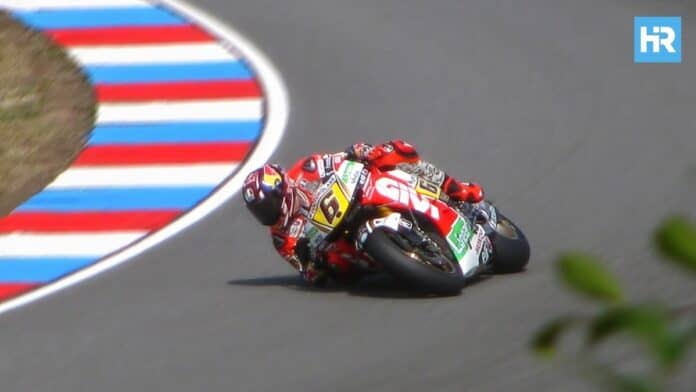
MotoGP is the ultimate motorcycle racing championship.

Filled with thrilling races, legendary riders, and groundbreaking technology, its history is rich and exciting, starting from the first motorcycle world championship in 1949 to the modern-day global spectacle.

Let’s take a ride through the journey of MotoGP and explore how it became the exciting sport we know today.

Key Takeaways
  • MotoGP originated as the motorcycle world championship in 1949 and evolved into the modern premier racing class in 2002.
  • Legendary figures like Giacomo Agostini and Valentino Rossi have defined the sport’s history, setting unmatched records in wins and titles.
  • Technical advancements, including engine capacity changes and innovations, have shaped MotoGP into the thrilling spectacle it is today.

The Origins of MotoGP

MotoGP, as we know it today, started in 2002 when it replaced the 500cc class as the top level of motorcycle racing.

But its history goes back much further, all the way to 1949 when the Fédération Internationale de Motocyclisme (FIM) held the first-ever world championship for motorcycles.

Nevertheless, motorbikes had already captured the hearts of speed fans by the time the world championship came around.

In 1894, the first mass-produced motorbike with a petrol engine, the Hildebrand & Wolfmüller, was introduced.

By 1907, the world saw its first official motorcycle race, the Isle of Man TT, which paved the way for organized motorcycle competitions.

It wasn’t until 1949 that the FIM launched the first official world championship.

This championship included categories for bikes ranging from 125cc to 500cc, and there was even a 600cc sidecar category for riders who raced with a partner.

In the early days, British and Italian manufacturers dominated the races.

Brands like Norton, Gilera, and MV Agusta were at the top of the sport.

The races were divided into different engine-size classes so that competitors could showcase their machines’ capabilities in various categories.

One of the first great riders to emerge from this era was Giacomo Agostini, an Italian racer born in 1942.

Agostini made his debut at Monza in 1963 and quickly became a legend in the sport.

He won an incredible 122 races out of 194 starts and claimed 15 world championships, a record that remains unbeaten to this day.

The Road to MotoGP

Over time, the motorcycle world championship went through big changes to keep up with new technology and make racing safer.

In the 1980s, some categories were removed to simplify the championship.

The 350cc class was dropped in 1983, and the 50cc class was replaced with an 80cc category the next year.

To improve safety, the traditional push-start race format, where riders had to push their bikes to start, was replaced by standing starts.

And in the 1990s, more changes were made.

The 80cc class and sidecar events were taken out of the championship.

By 2001, the races were focused on three main categories: 125cc, 250cc, and 500cc.

At the same time, the Superbike World Championship (SBK) was created for bikes closer to the ones you’d see on the street.

This competition, backed by big Japanese manufacturers like Honda, Yamaha, Kawasaki, and Suzuki, added more variety to motorcycle racing.

A major turning point came at the start of the 2000s.

Manufacturers, especially Honda, pushed for changes to keep the sport modern and competitive.

In 2002, the 500cc class was replaced by MotoGP, which allowed bikes with four-stroke engines and a maximum engine size of 990cc.

This change made the championship more advanced and helped it grow into the global spectacle it is today.

The Early MotoGP Years: Rossi Takes Over

When MotoGP started in 2002, it coincided with the rise of a superstar: Valentino Rossi, also known as “The Doctor.”

Rossi had already won the final 500cc world championship in 2001, and his winning streak continued in MotoGP.

From 2002 to 2005, Rossi won four straight titles, first riding for Honda and later for Yamaha.

Rossi’s thrilling overtakes, daring moves, and fun celebrations made him a favorite among fans all over the world.

By the time he retired in 2021, Rossi had achieved 89 premier-class wins and seven MotoGP titles, making him one of the greatest and most loved riders in the sport’s history.

While Rossi dominated the early years of MotoGP, changes were also happening in the smaller bike categories.

In 2010, the 250cc class was replaced by Moto2, which used 600cc four-stroke engines provided by Honda.

Two years later, in 2012, the 125cc class was replaced by Moto3, introducing 250cc four-stroke engines.

Essentially, these changes made the smaller classes more modern and kept them aligned with MotoGP’s standards.

Technical Changes of Engine Sizes and Safety Measures

MotoGP has always been about going as fast as possible, but keeping riders safe has also led to many changes.

In 2007, the maximum engine size was reduced to 800cc to slow down the bikes, but it didn’t work as planned.

Instead, riders started taking corners faster, which caused more crashes.

By 2012, the engine size had been increased back to 1000cc, which created a better balance between speed and safety.

The same year, Claiming Rule Teams (CRTs) were introduced to help smaller, lower-budget teams compete in MotoGP.

Over the years, the technology behind MotoGP bikes has improved drastically.

Today’s bikes are incredibly powerful, producing 260 to 300 horsepower and reaching speeds over 360 km/h.

In fact, the fastest speed ever recorded was 362.4 km/h, set by Johann Zarco on a Ducati at the Losail International Circuit in Qatar.

Since 2016, MotoGP bikes must weigh at least 157 kilograms, according to the rules.

There’s no limit on how much power the bikes can have, which keeps the competition between manufacturers like Honda, Yamaha, Ducati, Suzuki, and KTM exciting.

They’ve also introduced new technologies, like aerodynamic winglets and seamless-shift gearboxes, to make their bikes even better.

As MotoGP continues to grow, each year brings faster bikes, safer designs, and amazing innovations.

MotoGP Legends and Unbreakable Records

MotoGP is a sport built on speed, skill, and determination. Over the years, some truly legendary riders and teams have shaped its incredible history.

While Valentino Rossi is often the face of MotoGP for fans around the world, many others have left a lasting impact on the sport.

Let’s look at these legends and the records that define their careers.

1. Giacomo Agostini

Agostini is one of the greatest riders of all time, with 68 premier-class wins and a record 8 world titles.

His career peaked during the 1960s and 1970s, a time when motorcycle racing was extremely dangerous, but that just made his success even more remarkable.

Out of just 120 races, he won an incredible 57% of the time, a stat that stands as a testament to his dominance.

Agostini was a clear pioneer in the sport, racing in an era where technology was less advanced and safety measures were minimal.

2. Marc Márquez

Known as “The Ant of Cervera,” Marc Márquez is one of the most exciting and daring riders in MotoGP history.

Since his debut in 2013, Márquez has won 6 MotoGP titles and set a record with 66 pole positions—proof of his unmatched one-lap speed.

Fans love his aggressive riding style and ability to pull off seemingly impossible recoveries from extreme lean angles, often pushing the bike to its absolute limits.

Márquez’s career has been defined by thrilling moments, and despite injuries in recent years, he continues to inspire awe with his raw talent and fearlessness.

3. Jorge Lorenzo

Jorge Lorenzo was a master of precision and consistency, which earned him 3 MotoGP world titles and 114 podium finishes during his career.

His smooth riding style and ability to maintain control at high speeds made him a fierce competitor on the track.

One of the highlights of Lorenzo’s career was his intense rivalry with Valentino Rossi. Their on-track battles provided some of the most memorable moments in MotoGP history.

Legendary Teams and Manufacturers

The teams and manufacturers are just as important to the success of MotoGP teams as the riders.

They’ve helped the sport grow, brought in new technology, and created some of the most unforgettable moments in racing history.

1. Honda

Honda is the most successful manufacturer in MotoGP history, with an astonishing 313 race wins and 25 constructors’ championships.

Over the years, Honda has worked with some of the greatest riders, including Mick Doohan, Marc Márquez, and Valentino Rossi.

2. Yamaha

Yamaha is another powerhouse in MotoGP, with 245 wins and 14 constructors’ titles.

The partnership between Yamaha and Valentino Rossi in the mid-2000s remains one of the most iconic in the sport, leading to multiple world championships.

3. Ducati

Ducati has grown into one of MotoGP’s strongest teams.

And in 2022, Francesco Bagnaia brought Ducati back to the top by winning the MotoGP world championship.

Ducati is also famous for its innovative technology, such as its aerodynamic designs, which have helped it stay ahead of the competition.

MotoGP Today: Bigger and Better

The 2023 MotoGP season was one of the biggest yet, with 21 races, the most in the sport’s history.

New tracks in Kazakhstan and India were added to the calendar, showing how MotoGP continues to grow worldwide.

The championship also introduced Sprint Races on Saturdays, which are shorter, high-intensity races.

Jorge Martin quickly became known as the “Sprint King,” winning 16 sprint races so far.

In recent years, manufacturers like Ducati and KTM have challenged traditional giants like Honda and Yamaha, so the competition is more fierce than ever.

Ducati’s Francesco Bagnaia won the 2022 title, becoming the first Italian world champion since Rossi.

Looking Back and Moving Forward

MotoGP has come a long way since its early days in 1949.

From the Isle of Man TT to the modern circuits of today, the sport has evolved into a global phenomenon.

Legendary riders like Valentino Rossi, Marc Márquez, and Giacomo Agostini have shaped its history, while technological advancements have pushed the limits of speed and performance.

As MotoGP gears up for the future, one thing is clear: the excitement, passion, and bravery of the riders will continue to inspire fans around the world.

Here’s to more unforgettable moments on the track!

Walking Along the West Hollywood Sunset Strip as a Jersey Resident

Walking Along the West Hollywood Sunset Strip

As a Jersey resident, I thought I already knew what good nightlife looked like – but walking along the West Hollywood Strip was a whole different kind of fun. This legendary stretch was alive and full of energy with flashing neon signs and iconic venues.

However, it’s not just about the nightlife. The Strip has a way of combining fun and history – every corner feels like it has a story to tell, and I was ready to listen to each of these stories carefully.

In today’s article, I’ll share my experience walking along the West Hollywood Strip.

Planning my journey from Hudson, NJ, to West Hollywood

The first step in any dream trip is getting there, of course. I was flying out of Newark Liberty International Airport and was lucky enough to snag a direct flight to Los Angeles International Airport on short notice. Pro tip: don’t rely on luck like I did – plan your trip at least a couple of weeks in advance to secure the best options. Once I landed, the next challenge was making my way to West Hollywood. While public transportation is available, I opted for a car rental because you won’t get far in LA without a car. The drive from LAX to my hotel near the Sunset Strip took about 40 minutes, and I didn’t mind. It was the perfect chance to soak in the palm trees and iconic boulevards – a world apart from Hudson County.

Arriving in Los Angeles – First Impressions as a Jersey Resident

Walking-Along-West-Hollywood-Sunset-Strip_INT06

Overwhelming but thrilling, that’s what I’ll say about LA. I was struck by how different LA felt compared to the compact streets of Jersey. The skyline stretches wide rather than high – there’s an undeniable energy in the mix of cars, culture, and creative people, too.

Finding the perfect place to stay near the Sunset Strip

For my stay, I chose the former Jeremy Hotel (now The 1 Hotel), just steps from Sunset Boulevard. A nice blend of calm and convenience, if you ask me. One of the biggest perks was being within walking distance of the top spots on the Sunset Strip, which meant I didn’t have to stress about parking – a major win in this part of LA.

The hotel’s modern, eco-friendly design was another standout feature, complete with a stunning rooftop bar where I could unwind after a day of exploring. The views were truly breathtaking, showcasing the glittering city skyline on one side and the Hollywood Hills on the other. And, of course, the rooftop pool was a personal favorite, offering a relaxing escape with LA lights as the backdrop.

Stepping onto the Sunset Strip

Walking-Along-West-Hollywood-Sunset-Strip_INT01

From the moment I set foot on the Sunset Strip, it was clear – I had entered a place filled with stories. Towering billboards loomed overhead, advertising everything from luxury brands to the latest Netflix series. The sidewalks were alive with energy: tourists snapping photos, musicians carrying guitars, and locals walking their dogs.

The Strip has its own rhythm, which is best experienced by walking its length. Stretching about 1.5 miles from Doheny Drive to Crescent Heights, it’s manageable for most people and offers plenty to see along the way. I began at the western end and slowly made my way east, soaking in the unique atmosphere. Along the way, I spotted the massive, rotating billboards showcasing movies, music, and celebrities. Tucked between high-end clothing stores were boutique shops waiting to be discovered. Every step felt like uncovering a new layer of LA’s iconic culture.

Music history and legendary venues

The Strip is all about the music, like walking through a piece of history – rock ‘n’ roll history, to be exact. I had to stop at the Whisky-a-Go-Go. Everyone from Led Zeppelin to The Doors performed here. A little farther down is the Roxy Theatre, another iconic spot. The bright red exterior makes this one impossible to miss.

My favorite musical moment, though, was visiting the outside of the Rainbow Bar & Grill. I spotted a group of rock fans taking selfies next to a Lemmy statue (from Motörhead, yes).

Popping into iconic bars and restaurants

Walking-Along-West-Hollywood-Sunset-Strip_INT02

Walking builds up an appetite, and the Strip delivers, oh yes! My first stop – Pink Taco. Fun, vibrant place where I downed some carnitas tacos with a spicy margarita. Later, I stopped by BOA Steakhouse to check out the chic décor and those fancy filets. At night, I ventured into The Viper Room, a dimly lit bar once owned by Johnny Depp. Live music set the tone, and I slowly sipped an Old Fashioned while basking in the space’s history.

Street art & shopping

Walking-Along-West-Hollywood-Sunset-Strip_INT04 (2)

One unexpected highlight, you ask? The street art. Between the murals lining the walls of various establishments and the oversized billboards, this place is teeming with creativity everywhere. Now, I also ducked into the Sunset Plaza. That is a cute shopping area with boutique stores like Zadig & Voltaire. And if high-end fashion isn’t your thing, fear not – there are plenty of quirky stores scattered across the Strip selling everything from vintage vinyl to custom jewelry.

Unexpected gems and personal favorites

The famous venues and restaurants were exciting, but what I loved most were the small, unexpected moments – stuff like watching a local artist sketch on the sidewalk, spotting a Chihuahua in a rhinestone jacket outside a café, or just catching a street performer belting out ‘80s rock classics. It’s details like that that make all the difference.

Want more of my travels? Check out my article about restaurants in Texas.

Exploring West Hollywood beyond the Sunset Strip

Walking-Along-West-Hollywood-Sunset-Strip_INT04

For the traveler with extra time, don’t stop at the Strip. Just a few streets away is Melrose Avenue, where you can find more shopping and spots like Commissary Coffee. Take a short drive to the Hollywood Hills for unbeatable views of the city. It’s a big city after all!

My thoughts on walking along the West Hollywood Sunset Strip

Walking-Along-West-Hollywood-Sunset-Strip_INT03

Walking along the Sunset Strip was a mix of awe, nostalgia, and good, clean fun. Coming from Hudson, NJ, I was drawn to the energy, not gonna lie. The history fused with modern LA cool is hard to resist. It was all like a reminder of how vibrant and diverse our world can be. If you haven’t walked the Strip, add it to your list. It’s not just a destination – it’s a story waiting to unfold, one neon light at a time. Stay safe, and thanks for tuning in!

Walking along the West Hollywood Sunset Strip – FAQs

Is it safe to walk around Sunset Blvd?

Yes, walking along Sunset Boulevard is generally safe, especially around the busy and well-lit Sunset Strip. The area is lively, with plenty of people around, including tourists and locals. Just like in any city, it’s a good idea to stay aware of your surroundings, especially at night, and stick to the main areas. As long as you use common sense, you’ll be fine exploring this iconic stretch.

Why is Sunset Blvd so famous?

Sunset Boulevard is famous because it’s a symbol of LA’s history and culture. The Sunset Strip, in particular, is known for its iconic music venues, buzzing nightlife, and massive billboards showcasing everything from movies to celebrities. It’s been featured in countless films, songs, and stories, making it a huge part of Hollywood’s legacy.

Is West Hollywood walkable?

Yes, West Hollywood is very walkable, especially around popular areas like the Sunset Strip and Santa Monica Boulevard. Many restaurants, shops, and attractions are close to each other, making it easy to explore on foot. However, keep in mind that some parts of the city are hilly, so comfortable shoes are a good idea.

North Bergen 1st Saturday Outdoor Winter Flea & Collectible Market – February 2026 (Weather Permitting)

The North Bergen Outdoor Winter Flea and Collectible Market is coming back on Saturday, February 1, 2025.

The market will be held from 9:00 AM to 4:00 PM at J. Braddock Hudson County Park, Bergenline Avenue, and JFK Boulevard in North Bergen, NJ.

The event also serves as a fundraiser hosted by the North Bergen Community Police, with proceeds benefiting the New Jersey Special Olympics.

What a wonderful opportunity to support a great cause while enjoying a day out in the community.

Key Takeaways
  • The North Bergen Outdoor Winter Flea Market takes place on February 1, 2025, at J. Braddock Hudson County Park, from 9 AM to 4 PM.
  • Proceeds benefit the New Jersey Special Olympics, hosted by the North Bergen Community Police.
  • Spaces are first-come, first-served, with a $65 fee. Admission for shoppers is free.

Market Details for Shoppers and Vendors

The flea market has become popular over the years, and it brings together a variety of vintage items, collectibles, crafts, retail products, second-hand goods, and more.

Admission for visitors is free, so it is an accessible event for everyone.

Vendors can participate by securing a space for $65 per spot, but spaces are limited and given out on a first-come, first-served basis.

Vendors should plan to arrive between 6:00 AM and 8:00 AM to set up their booths.

Public shopping starts at 9:00 AM.

The vendor setup location is inside J. Braddock Hudson County Park.

To enter, head to the park entrance at Bergenline Avenue and JFK Boulevard, across from the Delta gas station at 9280 John F. Kennedy Boulevard.

Once there, vendors will see cars lining up to secure spaces.

Vendors should join the line to wait for their turn.

Be aware that spaces fill up quickly, and there is no guarantee of availability for latecomers.

Special rules apply to those planning to sell food.

Only licensed food businesses with liability insurance and the ability to pass health inspections are allowed.

Homemade food cannot be sold unless these requirements are met.

For more information, vendors can email [email protected].

Weather and Updates

Since the flea market is held outdoors, it depends on the weather.

So, the organizers suggest checking their website, social media pages, or phone hotline for the latest updates.

And if the weather is bad, the event might be canceled at the last minute.

Check for updates before you leave to avoid any trouble.

If the weather is good, the market will stay open until 4:00 PM, giving plenty of time to shop, sell, and enjoy the outdoor setting at J. Braddock Hudson County Park.

Supporting a Meaningful Cause

The best part of this event is the opportunity to support a good cause.

The market’s proceeds are donated to the New Jersey Special Olympics, which organizes sports training and competitions for children and adults with intellectual disabilities.

This flea market has become a recurring event in North Bergen, running on the first and third Saturdays of each month, weather permitting, throughout the year.

It provides a consistent platform for the local community to gather, shop, and give back.

Don’t Miss Out!

If you’re a vendor eager to reserve your spot or have additional questions, email [email protected] or contact JC Promotions at [email protected].

Mark your calendars for this exciting event, and join the North Bergen community in making February 1, 2025, a day to remember!


North Hudson Sewerage Authority Set to Complete Major Infrastructure Upgrades in Weehawken

The North Hudson Sewerage Authority is wrapping up a major project to improve Weehawken’s sewer and stormwater systems.

The upgrades aim to modernize the town’s infrastructure, prevent flooding, and improve water management during heavy rains.

The project focused on key locations, including Boulevard East, Highwood Avenue, Hudson Place, and the Hamilton Avenue Pump Station.

The pump station’s structure and main connections are already finished, and testing of the entire system will also be finalized by the end of January 2025.

Key Takeaways
  • Crews have successfully completed major upgrades, including a new 48” PVC sewer line, stormwater piping, and pump station installation.
  • Upcoming work will focus on final spot repairs and sidewalk curb adjustments on Highwood Avenue and Hudson Place.
  • Traffic control and public safety measures, including on-site police and posted signs, will ensure minimal disruption to the community.

What Has Been Accomplished

One of the biggest accomplishments of the project was installing a brand-new 48-inch PVC combined sewer system.

This large pipe ran from 700 Boulevard East to Hamilton Avenue, replacing old, outdated infrastructure that could no longer meet the town’s needs.

The new system included manholes, lateral pipes for homes and businesses, and cleanouts to make maintenance easier and improve overall water flow.

In Highwood Avenue, new stormwater pipes were installed, while in Hudson Place, new catch basins and manholes were added throughout the neighborhood.

One of the key parts of the project was installing the stormwater force main along Highwood Avenue.

This pipe was connected to the Hamilton Avenue Pump Station, which also underwent major upgrades.

The pump station’s structure and main connection were completed, and the entire system will be tested by the end of January 2025.

Wrapping Up the Work

In early January 2025, the project moved into its final stages.

From January 6 to January 10, the team worked mainly on fixing sidewalk curbs at the intersection of Hudson Place and Highwood Avenue.

On January 8 and January 9, workers focused on the northeast and southeast corners of these streets so that the sidewalks were safe and easy for pedestrians to use.

The following week, on January 13, crews worked on asphalt and concrete repairs on the southeast corner of Hudson Place and Highwood Avenue.

Keeping the Community Safe

Throughout the project, the North Hudson Sewerage Authority worked hard to minimize disruption for residents.

They ensured no equipment, vehicles, or materials were left on sidewalks or in front of driveways.

Traffic control was also a priority, with the Weehawken Police Department on-site as needed to manage traffic flow.

Signs were placed around work areas to guide drivers and pedestrians safely through the town.

How This Helps Weehawken

Now that the project is almost done, the benefits for Weehawken are easy to see.

The new sewer and stormwater systems will manage water much better and help lower the chances of flooding in important areas around town.

The Hamilton Avenue Pump Station, now fully up and running, will help control stormwater and keep streets safer during heavy rains.

From Boulevard East to Hudson Place, the updated infrastructure will improve life for residents and businesses.

The North Hudson Sewerage Authority worked hard to make this happen while also making sure they didn’t cause too many problems for people living nearby.

People in Weehawken can feel proud of their improved streets and feel secure knowing the town is better prepared to handle storms and heavy rain.

Hudson Theatre Works to Move Into New Weehawken Waterfront Performing Arts Center

Hudson Theatre Works Move Into New Weehawken Waterfront Performing

A new Performing Arts Center is being built on the Weehawken waterfront, meaning exciting changes are underway in the community.

Hudson Theatre Works, a group that has been producing great, affordable theater for over ten years, will move to this new space.

The project is supported by HRPAC, which is a group that works to grow the arts in the area.

This center will give people more chances to enjoy live shows, attract visitors, and help the local economy.

Key Takeaways
  • Hudson Theatre Works will have a new home at the Weehawken waterfront Performing Arts Center, allowing more people to enjoy their shows and programs.
  • HRPAC has been improving the arts in the area for years with free concerts, famous performers, and programs for local students.
  • The new Performing Arts Center will bring more visitors, help the local economy, and make it easier for everyone to enjoy live performances.

A Bright Future for Arts in Weehawken

For more than ten years, Hudson Theatre Works has brought live theater to Weehawken.

The non-profit group has worked hard to make theater affordable for everyone.

Ultimately, their goal has always been to keep ticket prices low to appeal to a wide audience.

The organization has been based in the former Woodrow Wilson School, where it has spent a decade creating and performing shows in a space that feels personal and connected to the community.

Now, they are preparing to move into a new home.

Hudson Theatre Works has been given the opportunity to use the new Performing Arts Center that is being built on the Weehawken waterfront.

This new venue will provide more space and better facilities for productions, classes, and workshops. It will also make their work more accessible to a larger audience.

The organization expressed gratitude for this opportunity and is looking forward to the future in this improved location.

The Plan Behind the New Arts Center

The new Performing Arts Center is being built with help from the Hudson Riverfront Performing Arts Center, Inc. (HRPAC), a non-profit group that has worked for years to improve the arts in the area.

Their dream has always been to build a special place for performances on the Weehawken waterfront, and it is finally turning to fruition.

HRPAC has already built a strong reputation for supporting the arts. They host two free concert series: Summer Concerts on the Hudson and the UBS Atrium Series.

The events have featured many talented performers, including Grammy and Tony Award winners, and have brought entertainment to thousands of people in the area.

In addition to performances, HRPAC works to provide arts education for young people.

Their free programs have reached thousands of students in eight school districts across Hudson County, helping to bring the arts to a new generation and giving students opportunities to explore their creativity.

The new Performing Arts Center will be located at 1200 Harbor Boulevard in Weehawken.

It is being designed as a space where local and world-class artists can perform, and the community can gather to enjoy a wide range of cultural events.

HRPAC describes the center as a place where the arts can grow and inspire for years to come.

A Special Place for the Community

The new Performing Arts Center will be built along the Hudson River, with beautiful views of the river and the New York City skyline.

The center will have something for everyone. It will host live theater, music, and classes for kids and adults. People will come together to enjoy art and culture.

The center will also help the local economy. Visitors will see performances and spend money at nearby shops and restaurants, creating jobs and bringing more energy to the area.

Hudson Theatre Works will be a big part of the center’s success. Their shows, workshops, and classes will help make the space exciting and full of life.

They will continue their mission of sharing the arts with as many people as possible.

A New Chapter for Weehawken

This new Performing Arts Center shows how much Weehawken cares about the arts. It will unite people and give the town a place to celebrate creativity.

Hudson Theatre Works and HRPAC are working hard to make this vision a reality. They believe that art can make life better, and this center will help bring that belief to life.

If you want to learn more about the Hudson Riverfront Performing Arts Center, you can visit them at 1200 Harbor Boulevard, 1st Floor, Weehawken, NJ.

You can also call them at (201) 430-6881 or email them at [email protected].

Will the New York Knicks Trade Mitchell Robinson or Bet on His Recovery Before the February 6 Deadline?

jalen brunson / knicks trade news

It’s hard to tell whether the Knicks are approaching the NBA trade deadline as cautious strategists or restless dreamers.

They’ve done well this season, climbing to the third seed in the East, because of a certain chemistry between Jalen Brunson and Karl-Anthony Towns—two All-Stars who now wear their status-like crowns.

But for all their progress, a central question remains unanswered.

What will happen to Mitchell Robinson, the 26-year-old enigma who’s spent his entire season in recovery from foot surgery?

As we can see, the Knicks have plenty to consider.

And with the February 6 trade deadline quickly approaching, they don’t have much time to figure it out.

What complicates everything is Robinson’s $14 million contract. It’s sitting on their books and feels like a question that demands an answer—one the Knicks can’t avoid for much longer.

Key Takeaways
  • Mitchell Robinson hasn’t played this season because of foot surgery, and his future with the Knicks is uncertain.
  • His $14 million contract could help the Knicks trade for players they need or be a gamble if they keep him.
  • With the February 6 deadline near, the Knicks must decide if trading Robinson is worth the risk during their strong playoff push.

The Robinson Conundrum

Robinson hasn’t played a single minute this season, but he’s everywhere in trade discussions, both inside and outside Madison Square Garden.

This is a player who, when healthy, defines rim protection and owns the glass like few others in the league.

Over the past three seasons, Robinson averaged more than four offensive rebounds per game—a stat that matters when playoff games often hinge on second-chance points.

He’s the Knicks’ longest-tenured player, trusted by head coach Tom Thibodeau in tight rotations, and one of the few who can single-handedly shift the tide of a game.

But there’s a problem.

Robinson’s foot surgery last spring has kept him out longer than expected, and no one is willing to bet the house on his full recovery.

It doesn’t help that his $14 million salary could open doors for the Knicks to improve their bench or even patch up their shaky defense.

In a world where playoff positioning matters more than nostalgia, Robinson’s sentimental value to the franchise might not be enough to save him from being traded.

What Could the Knicks Get for Robinson?

If the Knicks do decide to move Robinson, the possibilities are exciting yet terrifying.

Imagine a deal with the Washington Wizards, who could send Jonas Valančiūnas to New York in exchange for Robinson and two second-round picks in 2026.

Valančiūnas, a reliable veteran center, might not have Robinson’s upside, but he brings consistency—a rare and valuable trait in a league built on chaos.

For New York, this trade would shave a few million dollars off the payroll, a subtle but important step toward financial flexibility.

Yet, this is not just a Knicks problem.

The Wizards, locked in an endless rebuild, would need to gamble on Robinson’s health.

Their reward?

There is a chance to flip him later for assets if he regains his form.

But Wizards beat writer Josh Robbins argues that Washington might prefer reclaiming its heavily protected first-round pick from New York rather than taking on more second-round picks.

There’s also the wild idea of a three-team trade involving Detroit and Chicago.

Here, the Knicks could snag Isaiah Stewart, the Pistons’ gritty young big man, and veteran wing Torrey Craig.

Detroit, in turn, would receive Zach LaVine, whose scoring could elevate their already-surprising season.

And the Bulls would get Robinson, Tim Hardaway Jr., Simone Fontecchio, plus a smattering of second-round picks to fuel their long-overdue rebuild.

This deal would give the Knicks depth in two critical areas.

Stewart’s versatility as a defender and Craig’s experience as a wing could provide immediate relief for a bench that’s struggled all year.

But the risks are just as apparent.

Stewart is one of Detroit’s most beloved players, and his departure could disrupt the Pistons’ chemistry.

Meanwhile, the Bulls would be betting on Robinson’s recovery to justify trading away LaVine.

If big moves feel like a leap too far, the Knicks could opt for a quieter approach.

For instance, Trading Jericho Sims for Javonte Green would barely ripple the waters.

Sims is young, athletic, and occasionally brilliant on defense, but his offensive limitations make him expendable.

Green, by contrast, is a hard-nosed veteran who’s shot 36% from three over the past four seasons.

He wouldn’t change the Knicks’ destiny, but he could steady the ship when needed.

The All-Star Equation

And what about Jalen Brunson and Karl-Anthony Towns?

The two stars are central to the Knicks’ resurgence. Both were named starters in the 2024 NBA All-Star Game.

Brunson, averaging 26 points and 7.3 assists per game, has cemented himself as the team’s clutch performer.

His 55-point outburst earlier this season remains the highest-scoring game by an Eastern Conference guard.

Towns, meanwhile, has brought MVP-level dominance, averaging 25.1 points and 13.9 rebounds.

Together, they’ve become the first Knicks duo since Walt Frazier and Earl Monroe in 1975 to start in the All-Star Game—a testament to the franchise’s revival.

With these two leading the charge, the Knicks have a real shot at a deep playoff run.

But they need reinforcements.

The question is whether those reinforcements come from a Robinson trade or his long-awaited return.

Is Stability More Valuable Than Potential?

Trading Robinson is more of a philosophical decision than a practical one, mainly because it forces the Knicks to decide what matters more—stability or potential, reliability or ambition.

On paper, Robinson is the perfect big man for a playoff team: an elite rebounder, a defensive powerhouse, and a player who understands Thibodeau’s system.

But the Knicks aren’t dealing with the Robinson of the past; they’re dealing with the Robinson of now—a player whose foot surgery raises more questions than answers.

At the same time, the team’s other bigs—Precious Achiuwa, Ariel Hukporti, and Sims—have struggled to fill the void.

Achiuwa averages just 5.5 points and 5.5 rebounds in nearly 19 minutes per game, while Hukporti and Sims have been mostly invisible offensively.

In this context, Robinson’s potential return could feel like a midseason miracle, a moment when everything clicks at just the right time.

Yet miracles are hard to plan for.

And with the February 6 deadline looming, the Knicks might not have the luxury of waiting.

They must decide whether to trade their longest-tenured player, a decision that could define their season—or even their future.

No Easy Answers

This is the Knicks’ reality: a team on the rise, weighed down by the complicated legacy of one player.

Trading Mitchell Robinson might solve some problems, but it could also create new ones.

Keeping him means doubling down on a risk that could either pay off spectacularly or backfire just as dramatically.

For now, all eyes are on Madison Square Garden, where the clock ticks louder with each passing day.

The Knicks have two weeks to decide their future, but the truth is, they might already know the answer.

Only time will tell if they’ve made the right call.

Jersey City Board of Education Elects Noemi Velazquez as President and Welcomes New Members for 2026

The Jersey City Board of Education started 2025 with new leaders and a focus on working better as a team.

Trustee Noemi Velazquez was chosen as president, and Christopher Tisdale became vice president after close votes.

The board also welcomed two new members, Matt Schneider and Tia Rezabala, and reelected Natalia Ioffe.

As they begin the year, the board is still discussing some changes made by former president DeJohn Morris, working to balance new ideas with what’s best for the students in Jersey City schools.

Key Takeaways
  • Noemi Velazquez was elected president, and Christopher Tisdale was chosen as vice president of the Jersey City Board of Education.
  • The board is debating whether to keep shorter caucus meetings introduced by the former president, DeJohn Morris, as some members feel more time is needed to prepare for decisions.
  • Matt Schneider, Tia Rezabala, and reelected Natalia Ioffe have joined the board, bringing fresh ideas and experience to focus on improving education for students.

A New Start for the Jersey City Board of Education

The Jersey City Board of Education began the new year with big changes in its leadership.

During the reorganization meeting on January 7, 2025, Noemi Velazquez was chosen as the new president by a close 5-4 vote.

Velazquez’s election was a major comeback after being removed as vice president in 2024.

In another surprise move, Christopher Tisdale was elected vice president with six votes in his favor.

This shows that the board members are ready to work together for the schools and students, even after disagreements in the past.

The election ended a year of leadership changes and conflicts within the board.

In early 2024, Natalia Ioffe and Velazquez held leadership roles, but DeJohn Morris later replaced Velazquez as president, with Younass Barkouch briefly serving as vice president.

Barkouch was soon replaced by George Blount.

Now, Velazquez is focused on working with others as president.

She wants to guide the board through decisions and discussions, not control them.

She is committed to listening to everyone and making decisions that will help all the students in the district.

Lessons From Last Year’s Challenges

DeJohn Morris, the outgoing president, introduced several changes during his time in leadership.

One of his most talked-about decisions was shortening caucus meetings, which used to be held twice a month and lasted over four hours.

Under Morris, these meetings were cut down to one hour and held right before regular board sessions.

While some board members appreciated this effort to save time, others, including Velazquez and Ioffe, argued that the shorter meetings didn’t give them enough time to prepare for important votes.

The board decided to review this policy through its committee before deciding whether to continue it or go back to the old schedule.

Despite the disagreements, even those who voted against Morris recognized the positive changes he brought to the board.

Velazquez thanked him for his contributions and noted that some of his ideas might remain in place.

She made it clear that her leadership style would focus on teamwork and collaboration.

Welcoming New Members

In addition to the leadership changes, the board welcomed two new members, Matt Schneider and Tia Rezabala, along with reelected trustee Natalia Ioffe.

Their swearing-in ceremony was held on the same day and was attended by city leaders and former board members.

Council President Joyce Watterman and Hudson County Commissioner Bill O’Dea led the ceremony, with Watterman swearing in Schneider and Rezabala and O’Dea swearing in Ioffe.

The election results showed strong support for the new trustees.

Schneider received 21,653 votes, Rezabala got 19,603, and Ioffe earned 19,073.

Since their addition to the board brings fresh ideas and experienced leadership, many believe it will help the board make better decisions for the district.

Not to mention, the ceremony also brought attention to the need for unity.

Watterman and O’Dea, both running for mayor of Jersey City, discussed the importance of the board’s cooperation.

Watterman reminded the trustees that disagreements should not prevent them from doing what’s right for students, while O’Dea urged the board to stop fighting with the city and focus on the schools’ needs.

Mussab Ali, a former board president and another mayoral candidate, also attended.

He acknowledged the challenges of leading the board and expressed confidence in the trustees’ ability to put students first.

Can New Jersey Politics Catch a Break in 2026, or Will It Heat Up Even More?

Can New Jersey Politics Catch Break 2025 Will It Heat

When it comes to politics in New Jersey, things never slow down, and 2025 is no different.

After a wild 2024 filled with shocking events and big decisions, this year looks like it will be just as eventful.

With Governor Phil Murphy preparing to leave office, a heated race to find his replacement is underway, and the state’s major issues are still unresolved.

This means New Jersey is in for another year of nonstop political action.

Key Takeaways
  • Murphy’s last year focused on major projects like the 2026 FIFA World Cup and America’s 250th anniversary while dealing with budget issues.
  • Top Democrats and Republicans, like Mikie Sherrill, Ras Baraka, Jack Ciattarelli, and Bill Spadea, are fighting to replace Murphy.
  • All 80 Assembly seats are up for grabs, with national issues like SALT relief and reproductive rights influencing local debates.

As Governor Murphy’s Time Ends, His Legacy Is on the Line

As Governor Phil Murphy approaches the end of his eight years in office, he races against time to finish some big projects.

When Murphy started his second term, he probably hoped his final year would be about celebrating his accomplishments.

Instead, he faces the challenge of wrapping up important work that will shape how people remember him.

One of the highlights of Murphy’s final year is New Jersey’s role in the upcoming 2026 FIFA World Cup.

During his budget speech in February 2024, Murphy proudly held up the World Cup trophy to remind everyone of the global spotlight the state will enjoy as a host for this huge event.

While this is exciting, it also comes with a lot of responsibility and planning to make sure everything goes smoothly.

At the same time, Murphy is leading preparations for America’s 250th anniversary in 2026, known as the semiquincentennial.

The celebration will be another big moment for New Jersey, but it requires careful planning and resources.

These big projects are happening alongside financial challenges that Murphy must address.

Murphy has already asked state departments to prepare for a tighter budget as they work on the 2026 fiscal plan.

Programs, like the StayNJ property tax relief plan for seniors, still haven’t been fully implemented.

Problems with the state’s pension system and the school funding formula also need to be fixed.

How Murphy deals with these challenges in his final months will determine how people see his leadership.

The Race to Replace Murphy Is in Full Swing

The race to replace Governor Murphy is heating up as his time in office comes to an end.

Both Democrats and Republicans have several well-known candidates, making the competition strong.

On the Democratic side, big names are fighting for the nomination.

Mikie Sherrill and Josh Gottheimer, both members of Congress, bring national experience and broad support.

Newark Mayor Ras Baraka and Jersey City Mayor Steve Fulop are popular local leaders looking to win support across the state.

Former Senate President Steve Sweeney is another strong contender with deep connections in South Jersey politics.

Sean Spiller, head of the New Jersey Education Association, is also running with strong support from teachers.

The Republican side also has strong candidates in the race.

Jack Ciattarelli, who nearly beat Murphy in the 2021 election, is back for another try.

State Senator Jon Bramnick presents himself as a steady and practical choice for voters.

Ed Durr, the former truck driver who shocked everyone by winning a Senate seat in 2021, is running as a voice for regular people.

Bill Spadea, a well-known radio host with a big fan base, is also making a splash in the race.

With so many well-known candidates on both sides, the primary elections will be highly competitive.

Once the nominees are chosen, the general election is expected to be one of the most exciting in New Jersey’s history.

The Assembly Is Up for Grabs, Too

While the governor’s race is getting most of the attention, another important election is happening in 2025.

All 80 seats in the state Assembly are up for grabs.

Right now, Democrats hold a 52-28 majority, but that balance could change depending on how the elections go.

With so much at stake, these races are as important as the fight for the governor’s office.

Adding to the complexity of New Jersey politics is the impact of national events.

With Donald Trump returning to the White House for a second term, his policies will influence what happens in the state.

Issues like support for Ukraine, reproductive rights, and state and local tax (SALT) relief are expected to dominate discussions at the state and national levels.

SALT relief, in particular, is a major issue for New Jersey residents, especially those in high-tax areas who rely on federal deductions to ease their financial burden.

What’s Next for New Jersey?

If you thought New Jersey politics might slow down in 2025, think again.

This year is shaping up to be busy, with big decisions and major changes coming our way.

For the people of New Jersey, this is a big chance to get involved.

It’s the year to vote, speak up, and pay attention to the issues that matter most to you.

But one thing’s for sure: politics in New Jersey this year will never be boring.

Latest News

Jersey City Defends Immigrant Rights After ICE Activity at Light Rail

In Jersey City this week, federal immigration enforcement at the 9th Street Light Rail Station has placed Jersey City at the center of a...
Jersey City College Towers Fire Kills Elderly Resident

Jersey City Fire at College Towers Claims Life of Elderly Resident,...

A fire at the College Towers apartment building in Jersey City on Wednesday night resulted in one death and displaced seven residents, according to...
Jersey City Council Reviews Snowstorm Response

Jersey City Council Presses Officials After Two-Day Snow Shutdown

A winter storm forced Jersey City public schools and municipal buildings to close for two days, prompting a formal review of the city’s snow...
Route 1 Reopens in Edison After 36-Hour Water Main Repair

Route 1 Reopens in Edison After 36-Hour Water Main Repair

After roughly 36 hours of continuous repair work, a section of Route 1 in Edison reopened Wednesday morning, ending a closure that began Monday...
Mayor Solomon Signs Executive Order Expanding Jersey City Sanctuary Protections

Mayor Solomon Signs Executive Order Expanding Jersey City Sanctuary Protections

On January 23, 2026, the Mayor of Jersey City, James Solomon, formally approved a new executive order during a press conference at Liberty State...