Home Blog Page 69

10 Best Golfers of All Time: Greatest Legends Who Shaped the Sport

When it comes to golf, there are good players, great players, and then there are legends.

But, it is impossible to compare legends like Jack Nicklaus to someone from a completely different era, like Old Tom Morris.

The game has changed so much over the years. But what hasn’t changed is the impact these players have had on golf.

In putting together this list of the top 10 greatest golfers of all time, we didn’t just look at who has the most wins or major titles.

We also considered those moments that made us all sit up and say, “Wow!”—the kind of moments that make these players legends.

So, without further ado, here are the 10 greatest golfers of all time, ranked.

Key Takeaways
  • Jack Nicklaus and Tiger Woods are legends for their number of wins and how they dominated the sport over many years.
  • Arnold Palmer and Gary Player helped popularize golf worldwide, which made it accessible to new audiences and set the stage for future generations.
  • Players like Sam Snead and Tom Watson remained threats on the course for decades, showing that lasting greatness is about more than just short-term success.

1. Jack Nicklaus—The Golden Bear 

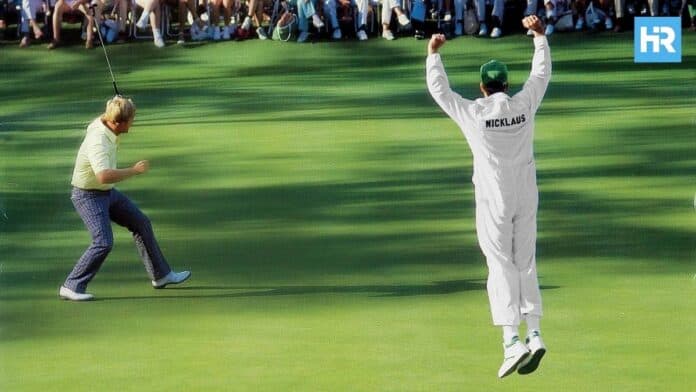
Jack Nicklaus, born in 1940 in Columbus, Ohio, is often called the best golfer ever. He’s famous not just for winning 18 major championships but also for changing the game of golf.

His first big win was the 1962 U.S. Open, where he beat Arnold Palmer in a playoff, starting a legendary rivalry.

Over his career, Jack Nicklaus earned his place among golf greats by winning six Masters, five PGA Championships, four U.S. Opens, and three British Opens—the only golfer to win each major at least three times.

Known for staying calm under pressure and playing smart, Nicklaus left a lasting legacy in the sport.

Even after he stopped competing full-time, he continued to shape the sport as a golf course designer and through his charity work, especially with the Nicklaus Children’s Health Care Foundation.

2. Tiger Woods—The Modern Icon 

Tiger Woods, born in 1975 in Cypress, California, undeniably changed golf with his incredible skills, power, and style. From the moment he went pro in 1996, he was a force to be reckoned with.

His first major win was at the 1997 Masters, where he won by a record 12 strokes, making a huge statement.

Over the next decade, Woods dominated golf, winning 15 major championships, including four Masters, three U.S. Opens, three British Opens, and four PGA Championships.

Throughout his career, Woods has experienced incredible highs and some tough lows. Despite serious injuries and personal challenges that knocked him off the top, he made an epic comeback by winning the 2019 Masters, his fifth and first in 14 years.

This win undoubtedly showed his resilience and love for the sport. Woods also brought a younger, more diverse crowd to golf, which helped the game grow worldwide.

So, it’s no surprise that Woods is considered one of the best golfers ever, with an impact on the sport that has transformed it.

3. Arnold Palmer—The King 

Arnold Palmer, born in 1929 in Latrobe, Pennsylvania, was a famous golfer who became much more than a great player—a cultural icon who helped make golf popular on TV.

Known for his charismatic personality and bold playing style, Palmer became one of the first golf superstars.

He won 62 PGA Tour titles, including four Masters, two British Opens, and one U.S. Open. His first major win was the 1958 Masters, a tournament he would dominate throughout his career.

Palmer’s charm went beyond golf. Notably, he made the sport more accessible, dispelling the idea that golf was just for the elite. His fans, known as “Arnie’s Army,” followed him passionately.

Off the course, Palmer was a successful businessman, helping to grow the sport through ventures like the Golf Channel and his golf equipment line. His influence on the business side of golf is still felt today, and his legacy as “The King” lives on.

4. Ben Hogan—The Hawk 

Ben Hogan, born in 1912 in Stephenville, Texas, is famous for his incredible dedication and near-perfect golf technique.

He’s often considered one of the best ball strikers in golf history. Hogan’s story is especially inspiring because he made a huge comeback after a near-fatal car accident in 1949.

Doctors weren’t sure he’d walk again, let alone play golf, but Hogan proved them wrong. Against all odds, he returned to the game and won six of his nine major championships after the accident.

Incredibly, Hogan won four U.S. Opens, two Masters, two PGA Championships, and one British Open. Remarkably, his win at the 1953 British Open is legendary because it was the only time he played in that event, which made his victory even more impressive.

Besides his wins, Hogan is known for his careful approach to the game, focusing a lot on practice and perfecting the golf swing.

His book, “Ben Hogan’s Five Lessons: The Modern Fundamentals of Golf,” is still a go-to for golfers. And the book shows his belief that you could perfect your swing through discipline and understanding.

5. Sam Snead—Slammin’ Sam 

Sam Snead, born in 1912 in Ashwood, Virginia, is one of golf’s all-time winningest players, holding a record 82 PGA Tour victories, a number only matched by Tiger Woods.

Snead’s swing is often cited as the smoothest and most natural in golf history, and many people have tried to copy it.

Despite all his wins, Snead never won the U.S. Open, finishing second four times, which earned him the title of maybe the greatest golfer never to win that tournament.

Snead had an incredibly long career, winning tournaments over nearly three decades. At 52, he was the oldest player to win a PGA Tour event.

In total, he won seven major championships, including three Masters, three PGA Championships, and one British Open.

His nickname, “Slammin’ Sam,” reflects how great he was on the course and how he stayed at the top level for many years.

6. Gary Player—The International Ambassador 

Gary Player, born in 1935 in Johannesburg, South Africa, is considered one of the most influential golfers to play the sport, especially for helping golf grow worldwide.

Known as the “Black Knight” because he always wore black, Player was the first non-American to win all four major championships, completing the career Grand Slam.

He won nine major titles: three Masters, three British Opens, two PGA Championships, and one U.S. Open.

Remarkably, Player was ahead of his time by focusing on physical fitness, including weight training and a strict diet, which wasn’t common in golf back then. His commitment to staying fit helped him compete at a high level even as he got older.

Beyond his playing career, Player has also made a significant contribution as a golf course designer, working on over 400 projects in 41 countries. Moreover, as a philanthropist, he has supported underprivileged kids through his foundation.

Amazingly, his work helped spread golf’s popularity, especially in Africa and Asia, making him one of the best golfers ever and a global ambassador for the sport.

7. Tom Watson—The Open Champion 

Tom Watson, born in 1949 in Kansas City, Missouri, is famous for being a master at links golf, especially at the British Open, where he won five times (in 1975, 1977, 1980, 1982, and 1983). Only Harry Vardon has won it more times, with six wins.

Watson has won eight major championships, including two Masters and one U.S. Open. His 1977 British Open win, known as the “Duel in the Sun” against Jack Nicklaus at Turnberry, is one of the most famous moments in golf.

Watson was a top player in the 1970s and 1980s, but what’s impressive is how long he stayed competitive.

In 2009, at 59 years old, he almost won his sixth British Open but lost in a playoff to Stewart Cink. More than 30 years after his first major win, this fantastic performance shows just how skilled and competitive he remained.

Watson is also known for his sportsmanship and the respect he earned from other players and fans.

8. Bobby Jones—The Amateur Legend 

Bobby Jones, born in 1902 in Atlanta, Georgia, was a golf genius who became a legend despite never becoming a professional.

He’s best known for an incredible achievement in 1930 when he won all four major golf tournaments in one year: the U.S. Open, the British Open, the U.S. Amateur, and the British Amateur.

This accomplishment, called the Grand Slam, has never been matched and secured his place as one of the greatest golfers ever.

Surprisingly, Jones retired from competitive golf at just 28 to focus on his career as a lawyer and other interests.

However, his influence on the game continued, primarily through co-founding the Masters Tournament and designing Augusta National Golf Club, where the Masters is held annually.

Aside from his incredible skill, Jones earned a reputation for his sportsmanship. In fact, he was widely respected as a true gentleman of the game, and it set a high standard that future golfers would look up to.

9. Walter Hagen—The Showman

Walter Hagen, born in 1892 in Rochester, New York, was among the first big stars in professional golf.

He won 11 major championships, a record that stood for a long time and is still the third-highest ever. His wins include four British Opens, two U.S. Opens, and five PGA Championships.

Hagen wasn’t only known for his success on the course—he was also famous for his flashy style and charisma, which helped make professional golfers more popular with the public.

Hagen’s impact on golf went far beyond his tournament victories. He was instrumental in raising the status and earnings of professional golfers, who were often seen as second-class citizens in the early 20th century.

Determined to change this, Hagen made sure professionals got the same respect as amateurs, even renting limousines to show up at clubhouses that didn’t allow pros inside. As a result, his efforts helped future golfers gain more recognition and better financial rewards.

10 Phil Mickelson—The People’s Champion 

Phil Mickelson, born in 1970 in San Diego, California, is one of the most popular and successful golf legends of modern times.

Known as “Lefty” because he swings left-handed (even though he’s right-handed in most other things), Mickelson has won 45 PGA Tour events, including six major championships.

And these include three Masters, two PGA Championships, and one Open Championship.

Mickelson is famous for his daring playing style and amazing short game, especially his ability to pull off creative shots from tough spots. His rivalry with Tiger Woods was a big part of golf in the 2000s.

Although he was often seen as the underdog, his determination and exciting play won him many fans.

In 2021, Mickelson made history by becoming the oldest major champion at 50 when he won the PGA Championship, cementing his place as one of golf’s all-time greats.

Who’s Your Pick for the Greatest Golfer of All Time?

So, there you have it—the top 10 golfers who have genuinely earned their spots in the history books. These players dominated, inspired, and left a lasting legacy on the sport we love.

So, who’s your pick for the greatest of all time? Do you think someone else deserves to be on this list?

But golf is constantly evolving, and new talents are always emerging. Who knows? The next Tiger or Jack could be out there right now, learning the ropes and dreaming of their first major win.

The history of golf is still being written, and it’s exciting to think about who might join these legends in the future.

Check out their iconic moments, watch some classic tournaments, or even get out on the course yourself!

And if you’re interested in other sports legends, don’t miss our article on the top 12 swimming legends in history.


Bayonne Man Charged with Attempted Murder for Setting Fire to Metuchen Home

In a shocking turn of events, a family in Metuchen woke up in the middle of the night to discover their home engulfed in flames.

Nearly two months later, authorities have arrested and charged a Bayonne man, Walid Beshai, with multiple serious crimes, including attempted murder, for his alleged involvement in the incident.

Key Takeaways
  • A Bayonne man is charged with attempted murder for allegedly setting fire to a Metuchen home while people were asleep inside.
  • The fire happened on June 27, forcing four people to leave their homes due to the damage.
  • Police are investigating similar incidents and asking anyone with information to contact the Metuchen Police Department.

The Incident: A Terrifying Midnight Blaze

On June 27, in the early morning hours, a fire broke out at a multifamily home in Metuchen while the residents were sound asleep.

According to the Metuchen Police Department, the blaze was not accidental but a deliberate act of arson. The Bayonne fire also spread to the family’s vehicle, compounding the damage and danger.

Fortunately, the quick response from volunteer firefighters, who arrived on the scene around 1:30 a.m., prevented the flames from spreading further into the residence.

Despite the efforts to contain the fire, the severity of the blaze caused four people to be displaced from their homes, leaving them without shelter in the aftermath of the disaster.

Arrest and Charges: A String of Serious Offenses

In major Bayonne news, Metuchen police arrested 36-year-old Walid Beshai at his Bayonne residence on a Wednesday. Notably, this came after a thorough investigation.

Beshai now faces a multitude of charges, including attempted murder, aggravated arson, burglary, criminal mischief, stalking, harassment, and cyber harassment.

To be sure, these charges highlight the severity of the crimes he’s accused of committing, and the danger posed to the victims.

As it stands, the charges against Beshai stem from meticulous work by the Metuchen Police, who continue to pursue leads in the case.

Authorities have also indicated that Beshai may be linked to other similar offenses in the area, suggesting a possible criminal behavior pattern extending beyond this single incident.

Ongoing Investigations and Public Appeal for Information

As the investigation continues, the Metuchen Police Department remains vigilant, working tirelessly to uncover the full extent of the crimes. In addition, their efforts will focus on identifying any additional suspects or incidents connected to Beshai.

In light of this, the public is urged to come forward with any information that might assist the ongoing investigations.

Detective Chris Fiore of the Metuchen Police Department leads the investigation and can be reached at 732-632-8116.

Vikings Face QB Shake-Up Following J.J. McCarthy’s Injury

The Minnesota Vikings’ 2024 season took a blow when their rookie quarterback, J.J. McCarthy, suffered a season-ending knee injury during the preseason opener against the Raiders.

McCarthy, who was picked 10th overall in the draft, was supposed to lead the offense this year. But with his torn meniscus, he’s out for the season, so the Vikings are forced to shift gears.

Now, veteran QB Sam Darnold is stepping up to fill McCarthy’s shoes, and the team has also brought in Matt Corral—a quarterback with a rocky but hopeful career path.

Key Takeaways
  • J.J. McCarthy’s injury forces the Vikings to rethink their quarterback plan. Sam Darnold steps in as the new starter, while Matt Corral is added for backup.
  • Matt Corral’s journey has had its ups and downs, similar to how legendary QBs overcame challenges early in their careers.
  • The Vikings are sticking to their plan for the season, relying on Darnold’s experience and Corral’s resilience to carry them through.

Sam Darnold Takes Over for McCarthy

Sam Darnold, who was originally set to start the season before handing the reins to McCarthy, now finds himself as the team’s starting quarterback for the entire year.

It’s clear that the Vikings are counting on Darnold, who has been through his share of ups and downs in the NFL.

With experience from his time with the Jets and Panthers, Darnold brings a wealth of experience to the team that the Vikings need to navigate this unexpected challenge.

In addition, Veteran linebacker Andrew Van Ginkel expressed his confidence in Darnold’s ability to lead the Vikings’ offense.

He said, “He’s got a lot more playmakers now than he did with the Jets. You can tell he’s a vet. He’s been in this league for a while. He understands who he is, how he can manipulate defenses or get the ball to his playmakers in space.”

Despite the disappointment surrounding McCarthy’s injury, the team believes Darnold can successfully guide them through the season.

Matt Corral’s Unexpected Opportunity

In a surprising move, the Vikings signed Matt Corral to add depth to their quarterback lineup. Corral’s career has been a rollercoaster, not unlike some NFL legends who had to fight their way up.

Recently, Corral led the Birmingham Stallions to their third consecutive UFL title, which proves he can perform when it counts.

Corral’s resolve has been evident since his college days at Ole Miss, where he set multiple records before a leg injury cut his final season short.

Even with a strong collegiate performance, Corral wasn’t drafted until the third round by the Carolina Panthers in 2022.

Unfortunately, his rookie NFL season ended prematurely due to another injury, leading to a brief hiatus from football before joining the UFL.

However, his perseverance has now led him to an opportunity with the Vikings, where he will compete for the No. 3 quarterback position.

Stallions coach Skip Holtz praised Corral’s determination, saying, “Matt is a very talented individual, but more than anything, today is an unbelievable lesson in resolve… It would have been real easy for him to hang his head, sulk, pout, and yet, he’s been completely in it and ready for his opportunity.”

Without a doubt, this kind of attitude will be essential for Corral as he tries to make his mark in Minnesota.

What’s Next for the Vikings’ QB Situation?

With McCarthy out, the Vikings’ quarterback room now consists of Sam Darnold as the starter, Nick Mullens, Jaren Hall, and the newly signed Matt Corral.

While the chances of Corral starting a game for the Vikings might be slim, history has shown that unexpected turns can lead to remarkable outcomes—just as it did for Kurt Warner and the 1999 Rams.

Sam Darnold’s one-year contract is worth $4.5 million, which shows the Vikings are cautiously optimistic about his potential. Nonetheless, the contract does include incentives that could bump up his pay if he performs well.

On top of that, this setup gives the Vikings some flexibility while giving Darnold a chance to prove himself as a solid leader.

As the Vikings adjust to this curveball, they’re banking on Darnold’s experience and Corral’s toughness to keep their season on track.

Though McCarthy’s injury is a big blow, the Vikings could still make the most of the season with the right moves.

U.S. Retail Spending Surges in July 2024 Despite Economic Pressures

U.S. Retail Spending Climbs 1% in July

In July 2024, U.S. shoppers spent more money than they had in over a year, boosting the economy despite the ongoing challenges of high prices and rising interest rates.

According to the Commerce Department, retail sales rose by 1% from June to July – the biggest increase since January 2023, after a slight dip the month before.

This uptick, especially in sectors like car sales, electronics, and groceries, shows that people are still willing to open their wallets, even with the economic challenges.

Key Takeaways
  • U.S. retail spending surged by 1% in July 2024, the most significant jump in 18 months, showing strong consumer confidence despite economic challenges.
  • Americans are spending more on cars, electronics, and dining out, so the demand is still strong across different sectors.
  • Even with concerns about rising credit card use and unemployment, consumers continue to spend, with inflation slowing down and wages slightly improving.

Retail Sales Rise Despite Economic Challenges

The July data showed that U.S. consumers, who drive most of the country’s economic growth, are still willing to spend despite inflation pressures and high interest rates.

When adjusted for inflation, retail sales still increased about 0.8% last month. If you excluded gas station sales, which don’t really show how eager people are to spend, retail purchases were still up 1%.

Since the pandemic started, Americans have faced tough times with rising prices and higher interest rates. But, at the same time, average wages have gone up, giving many families the ability to keep spending.

Wages, when adjusted for inflation, have seen a slight increase from last year, and wealthier households have also benefited from rising stock prices and home values, encouraging even more spending.

Also, car sales saw a massive jump of 3.6% in July, suggesting that more cars on dealer lots make people more willing to buy.

On top of that, sales at electronics and appliance stores shot up by 1.6%, and hardware stores and garden centers saw a 0.9% increase.

Even restaurant sales went up by 0.3%, showing that Americans are still spending on things like eating out.

Credit Card Usage and Inflation

Even with these positive spending trends, some experts are worried about the growing use of credit cards to fund these purchases.

Though the number of Americans falling behind on credit card payments is still relatively low, it has risen.

And while this suggests that people are currently maintaining their spending habits, trouble might follow if credit card debt continues to climb.

On a brighter note, inflation seems to be cooling off, which could give people some financial relief.

In July, consumer prices were up just 2.9% compared to the previous year – the smallest yearly increase since March 2021.

Core inflation, which excludes volatile food and energy prices, also dropped for the fourth month in a row. Hopefully, this trend will ease some of the financial stress on households, so it’s easier for them to manage their spending.

Bargain Hunting Becomes More Popular as Economy Shifts

As inflation cools and wages slightly rise, American consumers increasingly seek bargains.

Walmart, the biggest retailer in the country, reported strong sales in the three months leading up to July 31. They credit this success to more people shopping at budget-friendly stores.

The retailer also raised its sales forecast for the year, saying it hasn’t seen any signs of consumers reducing their spending.

Other companies are also lowering prices to attract more shoppers. For instance, McDonald’s launched a $5 meal deal in June, and many of its U.S. locations plan to keep it going through August.

By lowering prices, companies are making it easier for people to keep spending without inflation getting out of hand.

However, some businesses are noticing a change in how people spend. Arie Kotler, the CEO of Arko Corp., a convenience store chain based in Richmond, Virginia, mentioned that since May, shoppers have been cutting back on treats like snacks and candy.

Kotler believes that many people struggle with high interest rates on credit cards, with some even maxing out their credit limits.

Resilience Amid Economic Challenges

Despite worries about rising credit card debt and a higher unemployment rate, the U.S. services sector showed signs of bouncing back in July.

The Institute for Supply Management (ISM) reported that its services index rose to 51.4, indicating growth after a decline in June.

Thus, this recovery in services employment, orders, and business activity suggests that the largest part of the economy is still growing at a modest pace.

Even though there are concerns about a broader economic slowdown, especially after a weaker-than-expected jobs report in July, the U.S. economy continues to hold up better than many expected.

Notably, unemployment did rise to 4.3%, the highest in nearly three years, which sparked fears of a possible recession.

However, the steady increase in retail spending, especially among wealthier consumers, suggests that the economy is still resilient.

Economists are split on what these mixed signals mean. Some think they might be a sign of a coming recession, while others believe they reflect our unusual post-pandemic economy.

The Sahm Rule, which has traditionally predicted recessions based on rising unemployment, hasn’t been as reliable in recent years.

Perhaps it’s because more people, including many immigrants, are entering the job market, and not all are counted as employed right away in government surveys.

While the U.S. economy faces some tough challenges, like rising credit card debt and higher unemployment, it doesn’t necessarily mean a recession is around the corner. The solid retail spending data from July offers some hope.

Luckily, many economists believe the economy is still stable, with strong consumer spending and low layoffs acting as a buffer against a serious downturn.

As long as these trends continue, the U.S. economy will likely keep growing, even if the pace slows down.

Mets’ Playoff Hopes and Rotation Improved by Paul Blackburn’s Curveball

Paul Blackburn might not have been a household name when he joined the Mets, but he’s wasting no time making a difference.

Since he arrived from the A’s, Blackburn has stepped up in a big way, showcasing a killer curveball that’s brought much-needed stability to the Mets’ pitching rotation.

As the team battles for a playoff spot, Blackburn’s standout performances couldn’t have come at a better time, which proves he’s exactly what the Mets needed to keep their postseason hopes alive.

Key Takeaways
  • Blackburn has shown remarkable consistency with the Mets, using his curveball effectively to maintain a low ERA and stabilize the Mets’ rotation.
  • Despite being new, Blackburn quickly adapted to the Mets, showing he can be a strong part of the team.
  • Blackburn’s performances will be crucial as the Mets continue to chase a wild-card spot, especially with other pitchers in the rotation facing injuries.

Paul Blackburn’s Role in Mets’ Rotation

Paul Blackburn, a right-handed pitcher the Mets picked up from the Oakland A’s at the trade deadline, has quickly become an important part of the team.

After a rough start, Blackburn bounced back with a strong performance against the Miami Marlins, where he gave up just one earned run over six innings.

Even though the Mets lost 3-2, Blackburn’s control on the mound, especially with his curveball, shows how valuable he can be.

Blackburn’s Curveball and Early Struggles

In his first game with the Mets, Blackburn had to figure out a game plan with catcher Luis Torrens, who had never caught for him before.

Blackburn knew his curveball worked well in warm-ups, so he leaned on it during the game. And did this strategy work – he struck out four batters and only allowed four hits over 92 pitches.

Not every game has been perfect for Blackburn, though. He struggled in his start against the A’s, giving up six earned runs in just four innings.

But in three out of his four starts with the Mets, he’s gone six innings and given up just one earned run each time. This shows he has the potential to be a dependable pitcher.

As the Mets continue to chase a wild-card spot in the National League, they’re counting on Blackburn to keep up his good form.

With Blackburn joining a rotation that includes Luis Severino, Jose Quintana, Sean Manaea, and David Peterson, the Mets have added some much-needed depth to their pitching staff at a crucial time.

Changes in the Mets’ Lineup and Strategy

While Blackburn continues to find his rhythm, Mets manager Carlos Mendoza has made smart changes to the lineup. Starling Marte, who just returned from an injury, was eased back into the game.

Marte, who hadn’t played since June 22 because of a bone bruise in his knee, started in right field but was taken out before the seventh inning. So, it’s clear that Mendoza is being cautious with Marte’s playing time.

Marte’s return adds depth to the Mets’ outfield, especially with the recent addition of Jesse Winker.

Despite the lineup changes, Marte remains confident and ready to play aggressively, saying, “There are no restrictions for me.”

After these adjustments, the team moved Ben Gamel off the roster to accommodate Marte – such a move shows their commitment to fine-tuning the lineup for a strong playoff push.

Blackburn’s Playoff Hopes and Future Outlook

Paul Blackburn’s journey with the Mets is just starting, but he’s already made a strong impression in his first few games.

Blackburn is excited about being in a playoff race, as it’s something he hasn’t experienced before. “I have never really gotten a taste of a playoff race, and it’s something I have always looked forward to,” Blackburn said about moving from Oakland to New York.

As the Mets make their push for the playoffs, Blackburn’s role in the rotation will be a big deal. If he can keep delivering solid starts and adjust to the challenges ahead, he could play a big part in whether the Mets make it to the postseason.

With his contract running through 2025, Blackburn has the chance to establish himself as a steady presence in the Mets’ rotation – he looks to bring experience and reliability as the team aims for a playoff spot.

New York Knicks Injury Updates: Key Recoveries for the 2024-25 Season

New York Knicks Injury Updates

The New York Knicks are gearing up for the 2024-25 NBA season, but before we get too excited, there are some critical updates on the team’s key players.

With Julius Randle, Mitchell Robinson, and Jalen Brunson all coming back from surgeries, their health will be a big factor in how the Knicks start off this year.

Here’s the scoop on their recoveries and what it could mean for the Knicks as they hit the court this year.

Key Takeaways
  • Randle’s shoulder surgery recovery is going well, but he might not be ready for training camp. He could return by the season opener on October 22 or shortly after.
  • Robinson’s recovery from ankle surgery is slower, with some challenges still ahead. His absence could affect the Knicks’ center depth early in the season.
  • Brunson is expected to fully participate in training camp after recovering from a broken hand, solidifying his team leader role.

Julius Randle’s Recovery and Season Opener Possibility

Julius Randle, an important player for the Knicks, underwent surgery in April to repair his right shoulder injury.

According to reports from Ian Begley of SNY, Randle’s rehab has been progressing well, but he is not expected to be ready to start training camp.

The Knicks have set a re-evaluation date for September. While Randle is unlikely to participate in the preseason’s early stages, he could return by the season opener on October 22 against the Boston Celtics or shortly after that.

Randle’s absence was keenly felt last season, even though the Knicks put on an impressive show and nearly made it to the Eastern Conference Finals without him.

Understandably, his scoring and presence on the court were notably missed, especially as injuries piled up for New York.

The camp has renewed optimism with the latest news of the Knick’s injury suggesting he might return soon. Having Randle back, even if a bit later than hoped, could be what the team needs for a solid start to the new season.

Mitchell Robinson’s Slow Recovery and Its Impact on Knicks’ Center Depth

Mitchell Robinson’s situation is more concerning. After undergoing surgery in mid-May to repair a stress injury to his left ankle, Robinson’s recovery has been slower than expected.

According to Begley, Robinson still needs to be cleared for high-intensity weight-bearing activities, so he still faces several hurdles before being fully cleared for practice.

Robinson’s situation is even more important because Isaiah Hartenstein, who provided good backup at the center position, left the team.

If Robinson isn’t ready, the Knicks might have to rely on newly re-signed Precious Achiuwa and Jericho Sims to fill in. But this isn’t ideal for a team hoping to compete at the highest level.

So, if Robinson isn’t back by the start of the season, it could spell trouble for the Knicks’ defense and rebounding, areas where Robinson has been a key contributor.

Of course, Robinson’s health and ability to get back in form will be essential for the Knicks as they start the season.

Jalen Brunson’s Leadership and Full Return to Training Camp

On a more positive note, Jalen Brunson, who suffered a broken hand in the Indiana Pacers’ Game 7 loss, is expected to participate fully in training camp.

Brunson’s injury was a tough way to end last season, but his recovery has gone well. During a recent press conference where he was named captain of the Knicks, Brunson confidently said he’s “good to go” for the upcoming season.

Brunson’s role as the Knicks’ centerpiece cannot be overstated. Last season, his performance established him as one of the league’s top players and showed how vital his leadership will be. As the Knicks aim for a deep playoff run, his guidance will be crucial.

With Brunson healthy and ready to lead, the Knicks have a solid foundation to build.

Will the Knicks Have a Slow Start to the 2024-25 Season?

Considering the updates on Randle and Robinson, there’s a genuine concern that the Knicks might have a slow start to the 2024-25 season. Randle might start late, and Robinson’s uncertain timeline could leave the Knicks without enough depth at key positions.

Even if Randle plays in the season opener, he might need time to get back into rhythm, similar to last season when he struggled early on after ankle surgery.

Robinson’s situation is even more precarious. If he cannot play at the beginning of the season, the Knicks will be forced to lean on Achiuwa and Sims, which may not be sufficient against top-tier competition.

Also, the team must integrate Mikal Bridges, acquired in a blockbuster trade, into the lineup, which could further complicate their early-season chemistry.

However, Knicks fans shouldn’t panic if the team starts a bit slow. The first few weeks won’t define the whole season, and the Knicks have shown in the past that they can bounce back.

With a deep roster and strong leadership, the Knicks have what it takes to recover quickly and compete at a high level throughout the season.

So, stay updated with the latest Knicks news to see how the team navigates these early challenges.

Bayonne Community Center Approved as Council Overrides Mayor’s Veto on 10-Story Building Plan

Bayonne’s City Council has decided to push forward a big development project, overriding Mayor Jimmy Davis’ veto.

The plan is to build a 10-story residential building on West 25th Street, including a long-awaited community center—something locals have been promised for over ten years.

Key Takeaways
  • Bayonne City Council overruled Mayor Davis’ veto and planned to build a 10-story building with a much-needed community center.
  • Concerns about traffic and parking were considered, but studies showed they wouldn’t be a big problem, convincing most council members to support the project.
  • Despite differing opinions, this decision fulfills a decade-old promise to bring a community center to the heart of Bayonne.

A Decade-Long Promise: The Need for a Recreation Center

Local legislators have been working for more than a decade to bring a recreation center to the heart of Bayonne.

Now, the plans for a new 10-story building on West 25th Street, between Broadway and Avenue C, finally include that long-awaited community space—a 12,000-square-foot recreation center.

This project has been a campaign promise since 2014, and the council’s recent decision makes it clear that they’re committed to making it a reality.

Councilman Juan Perez agreed, calling the project “a bird in hand” and favorably comparing it to Mayor Davis’ alternative plans, which he referred to as “bird in the bush.”

Addressing Traffic and Parking Concerns

One of the main concerns around this project was how it might affect traffic and parking in the area.

Mayor Davis initially vetoed the approval, pointing out traffic safety issues on West 25th Street, which, as everyone knows, is already the busiest street in Bayonne.

He argued that a building height of eight to ten stories seemed too much for the neighborhood, suggesting it shouldn’t exceed six stories.

However, most council members saw things differently after digging into the data.

Councilwoman Jacqueline Weimmer, who initially had her reservations, changed her stance after doing some research.

She pointed to traffic studies from the developer that showed the project wouldn’t cause a noticeable increase in traffic.

Council President La Pelusa also noted that the proposed development would generate fewer traffic trips than the current use of the property as a gym.

Plus, the project includes creating new parking spaces, potentially using 30 spaces in a public lot that will open up once the gym moves out.

The Final Decision: Moving Bayonne Forward

Despite the concerns raised by some council members and Mayor Davis, the veto override passed with a 4-1 vote, making it Davis’ administration’s first override.

The only dissenting voice came from 1st Ward Councilman Neil Carroll, who remained uneasy about the project.

Essentially, Carroll felt it didn’t fully tackle the issues he was worried about, like revisiting the Master Plan and considering the long-term traffic impacts.

He also voiced concerns from residents about the likelihood of increased street parking from new residents and their visitors.

Still, in the end, the council chose to proceed, feeling that the community center’s benefits outweighed its potential downsides.

This decision shows they’re serious about keeping their promises and doing what they believe is best for Bayonne.

The new 10-story building, complete with a recreation center, is set to become a standout feature in the city and play a big role in Bayonne’s growth and the well-being of its residents.

Investigating Hidden Gambling in Hero Wars: A PEGI 12 Game (2026 Update)

Hero Wars
Key Takeaways
  • Rated 12+, with over 7 million active players
  • Gambling-like microtransactions system
  • $2B in in-game purchases
  • Status quo on regulation and call for responsible gaming

Hero Wars promises epic mobile gaming adventure, inviting players of all ages to join in the battle against other players and the computer in a world jam-packed with strategy, fantasy, and heroism.

However, the allure of this competitive idle-battling RPG may not be as friendly as the cheerful heroes you control suggest. Beneath the shining armor and cartoony characters resides a series of credit-card-powered gambling features specifically designed to seem as innocuous as they are enticing.

This extremely popular game — with more than seven million active players aged 12+ — is chock-full of loot boxes. And without spending real-world money to purchase and open these loot boxes, most players will never acquire the in-game items and power-ups needed to get out of the lowest tiers of gameplay.

Because of this, Hero Wars has come under scrutiny as one more in a long line of mobile games aimed at younger audiences that hold hostage in-game progression (unless kids can produce mom and dad’s credit card, of course).

Closer Look at Hero Wars’ Idle Battle System

Hero Wars is an online fantasy role-playing game (RPG) by Nexters Global. It’s what’s known as a “freemium” game, meaning it’s free to download, but offers users the ability to pay to upgrade their experience.

You build a party of heroes, equip them with power-ups and weapons, and send them into battle. The campaign pits your heroes against computer-controlled enemies, while the various player versus player (PVP) modes have you fighting against other human-operated enemies

Hero Wars is what’s known as an “idle battler,” meaning that once the fight starts, the game is pretty hands-off. You watch as the battle plays out, collect any prizes from winning, and prepare for the next bout.

The Reality Behind Hero Wars’ Puzzle Advertisements

This is where many complaints from players rear their heads, as virtually all marketing material regarding this game misrepresents how Hero Wars plays out.

One of the most common advertisements depicts a puzzle game featuring the game’s most iconic hero, Galahad. In these videos, the players must use logic to help Galahad retrieve his equipment and gold without pouring lava on him or the treasure.

Many players downloaded the game expecting to solve puzzles only to discover that only a couple of puzzles of this nature are tucked into the game — with rumors going around that they were only added to placate duped users.

If true, it would seem that Nexters is not above a little bait-and-switch, so using in-game gambling devices like loot boxes to present an additional obstacle between the player and in-game content hardly feels like a stretch.

Understanding Loot Boxes in Hero Wars

Loot boxes are prizes in some online video games that can be redeemed or ‘opened’ to receive randomly selected rewards — usually items like weapons, armor, or character power-ups. Some items have lower ‘drop rates’ and, therefore, higher perceived value.

There are different ways to open and acquire loot boxes. Some issue them as rewards for completing tasks or challenges in-game; the player has to earn the right to open them.

However, others can only be purchased using real money. These purchasable loot boxes are becoming increasingly common, and critics say that completing many games is virtually impossible without shelling out for multiple such boxes.

When it comes to games targeting kids (which Hero Wars, with its cartoonish characters, ostensibly does), the increased presence of purchasable loot boxes concerns parents and mental health professionals alike.

In the case of Hero Wars, there are a variety of built-in loot boxes. Some are filled with minor items and offered as prizes for completing specific milestones, but others are extremely difficult to acquire without buying them. What’s more, even when you have one of the randomly dropped loot boxes, it is not guaranteed to have the item you need to complete your mission.

Now, Nexters has built a “Bad Luck Protection” mechanic into Hero Wars, so you are guaranteed to get one of these random fragments at specific intervals — provided you spend enough to get them. As you can likely imagine, that gets expensive rather swiftly.

By tying your ability to compete effectively against other players to these randomly dropped items and requiring your random item to have some sort of synergy with previous items, Hero Wars has created a very effective slot machine-like system that has caught the public attention.

The Many Costs Behind Hero Wars’ Loot Boxes

Whether you’re opening Heroic Chests in Hero Wars to get powerups or to score one of the rare hero characters for bragging rights in your guild – or shelling out emeralds in the hopes that you see your third Earth Totem Fragment so that way your titan is strong enough for you to compete in the end-game… you can expect a serious investment.

In the case of Heroic Chests, players will be able to open one for free every day, giving them a chance at unlocking a new hero, as well as some common in-game consumables.

After that, you are expected to spend 200 emeralds. Since emeralds can usually be bought at a rate of 550 emeralds for $4.99, that’s almost $2 just for one chest.

Though, of course, you could open 10 chests at once and save 25%. And to keep you from missing out, your 25th chest opened has a guaranteed hero inside! Will it be one of the rare and powerful heroes, making you the envy of your friends?

There’s only one way to find out: Buy more. The resemblance to “Spin more”, anyone?

As you advance in the game, however, the Heroic Chests stop being enough to keep you competitive. If your guild hopes to compete against the other teams of players, you need to unlock and level up your elemental Titans (Earth, Water, and Fire), as well as the elemental spirit totems to boost them further which requires totem fragments of the corresponding element. These totems also offer additional boosts to all of your Titans in battle, such as extra damage, healing, and so on. So not collecting totem fragments means you’re going to be at a serious disadvantage when it comes time to fight.

These fragments can be found in spheres that are sometimes awarded in special daily events and taken to the Altar of the Elements to crack open and see which totem fragment you get (with each sphere having a 1-in-3 chance of offering one that coincides with your Titan), or you can spend emeralds at the Altar of the Elements directly and short-cut the process.

If you go that route (and you really must if you want to participate in the competitive player vs player endgame content) your first fragment will drop after 4,500 emeralds have been spent — that’s roughly $40! And the next guaranteed drop does not happen until 45,000 emeralds have been spent. The more fragments you unlock, the higher the price, with your 30th fragment standing at a cool 8,433,329.

This means if you are unlucky enough to not score any elemental spheres for free, and miss out on any emerald sales, you could be expected to pay upwards of $70,000 out of pocket to unlock a full set of totem fragments. And with every fragment unlocked containing one of three elements, there is no telling how many you will need to buy before you can fully upgrade the spirit totem you need.

But you don’t want to let your team down, right?

Right?

With each Heroic Box or Elemental Sphere opened having a chance — no matter how slim — of giving you an awesome, rare weapon, character, or even the ability to help the other players on your team win their next battle, the argument that loot boxes are a form of gambling becomes difficult to refute.

Are These Games Really Targeting Kids?

According to the Apple Store — one of many places where this ‘free’ game can be downloaded — Hero Wars is suitable for children aged 12+, though Nexters states on their website that children under 16 must obtain consent from their parents or legal guardians.

And with the funny and cartoonish advertisements being so prominently displayed at the beginning of YouTube videos, on TikTok, and even during the ad break of other free-to-play mobile games, it’s almost impossible for it not to catch the eyes of some children.

Although admittedly, from the misleading “I’m smart enough to beat that puzzle” advertisements to the near-fetishistic depiction of chained-up heroes, it’s clear that Nexters is casting a wide net with their marketing efforts.

Even if the game isn’t targeting children who might be brazen enough to ‘borrow’ someone’s credit card to keep their guild from underperforming, it puts that possibility well within reach.

What is Being Done to Keep Kids Safe from Gambling in Video Games?

While Hero Wars is “kid safe” in terms of content (cartoon violence, limited player-to-player interaction), that doesn’t take into account any of the gambling-adjacent features — which isn’t surprising, as governmental bodies only recently started passing legislation on loot boxes and similar mechanics.

The legislation being passed varies from one country to the next, with Belgium banning the sale of loot boxes entirely while other countries are taking a softer approach. These include disclosing the probability of potential rewards (Taiwan and South Korea) or requiring that any game with loot boxes be assigned a “Mature” rating and recommended for players 15+ (Australia).

But in most countries, there are no such safeguards in place, so any kid playing Hero Wars will eventually hit a wall and find themselves unable to advance without buying in-game currency (which can be earned at a rate that would take years to make any meaningful progress — a common tactic in pay-to-win style mobile games) to use on the various loot boxes.

Potential Consequences of Loot Box Gambling in Hero Wars

With little meaningful regulation in place, loot boxes and similar mechanics pose a serious financial threat to consumers. The thrill of potentially scoring a rare item can lead to compulsive spending behaviors that, if left unchecked, can evolve into problematic gambling in video games.

The prevalence of pay-to-win features like the ones in Hero Wars also prompts a broader examination of the gaming industry’s practices as a whole. These progression bottlenecks are becoming increasingly common even outside the mobile gaming sphere. There is a growing call for the industry to adopt more responsible gaming measures.

Legislative Outlook on Pay-to-Win Gaming Models

While Hero Wars might not specifically target children, its veneer of innocence is laid over the top of a pay-to-win system designed to prey on a perceived need to keep up with other players. It affixes a price tag to that fear of missing out by paywalling progression through purchasable loot boxes.

Outside of a select few countries, there’s currently little in the way of a legal barrier to this sort of behavior. However, due to the growing outcry from parents and mental health professionals alike, lawmakers may not be able to ignore these allegedly predatory games for much longer.

Until such a time as legislative bodies step in or the gaming industry as a whole abandons pay-to-win mechanics, gamers of all ages will likely continue to find it very expensive to play their favorite “free” games.

Pankration: The Original Olympic Sport That Shaped Modern MMA

Pankration

Mixed Martial Arts (MMA) might seem like a modern sport, but its roots go back thousands of years to ancient Greece.

Pankration is one of ancient Greece’s oldest and most intense combat sports. Back in the day, this was for survival and showing off pure strength and skill.

The Greeks took it so seriously that they even included it in the ancient Greek Olympics, where it quickly became one of the most popular events.

This guide will explain Pankration’s history, rules, and lasting impact and show how it connects to MMA as we know it today.

Key Takeaways
  • Pankration was an ancient Greek sport that mixed boxing and wrestling and is considered the precursor to modern MMA.
  • Introduced in 648 BC, Pankration was the most brutal Olympic event, with minimal rules and high stakes.
  • Alexander the Great helped spread Pankration’s influence across Asia, developing martial arts like kung fu and jiu-jitsu.

What is Pankration? The Origins of the Greek Sport

The name “Pankration” comes from two Greek words: “pan,” meaning “all,” and “kratos,” meaning “power.” This name fits the sport well because Pankration was about using all your strength and skills in a fight.

According to Greek myths, heroes like Hercules and Theseus created Pankration. While it’s hard to separate fact from fiction, we know that Pankration was introduced to the Olympic Games in 648 BC and likely been around for centuries before that.

Historically, pankration was a sport and a part of military training, especially for Spartan warriors and the Macedonian army under Alexander the Great.

The Greek martial art was designed to prepare warriors for the brutal realities of battle, where weapons could fail, and survival depended on one’s ability to fight with bare hands and feet. This made Pankration a practical and essential skill for survival in ancient Greece.

Nonetheless, the sport eventually died out after being banned in 393 AD by a Christian emperor who wanted to eradicate pagan practices.

But it was brought back to life in the 20th century by a Greek-American martial artist named Jim Arvanitis, who helped make it popular again and eventually influenced modern MMA.

Who Were the Pankratiasts?

Pankratiasts, the athletes who practiced Pankration, were more than just competitors; they were warriors.

Pankration was a part of a Greek soldier’s training, especially for the hoplites, heavy foot soldiers. The wrestling techniques in Pankration helped soldiers stay balanced and quickly get back on their feet during battles, which could be a matter of life or death.

Over time, some Pankratiasts became legendary figures. For example, Polydamas was an Olympic champion known for his incredible strength.

Legends say he once defeated three Persian warriors using only a stick. Whether entirely true or not, these stories show how Pankration athletes were admired for their strength and courage.

The Harsh Rules of Pankration

Pankration had two types: ano pankration, where fighters stayed on their feet, and kato pankration, where they could fight on the ground. The sport had only two main rules: no biting and no eye-gouging.

Besides that, almost anything was allowed, including strikes and submissions that could seriously injure or even kill an opponent.

Pankratiasts fought naked and covered in oil inside a wrestling pit. There were no rounds or time limits—the fight ended only when one competitor surrendered, was knocked out, or died.

Without modern safety measures, it was not uncommon for fighters to die from strangulation or other submission moves. Competitors could signal defeat by raising their arms or tapping out, much like today’s MMA.

Despite its brutality, Pankration was highly respected in ancient Greece. It was a test of endurance, skill, and mental toughness, with many fighters choosing death over the shame of surrender.

Pankration Fighting in the Olympic Games and Other Competitions

Pankration was a major event in the Pan-Hellenic games, including the Olympics. The Spartans, known for their military discipline, usually did not participate in Pankration or boxing but focused on wrestling.

Pankratiasts competed in single-elimination tournaments, representing their city-states. The tournaments could have at least four rounds, with the winner becoming a hero in their homeland.

Victors in Pankration tournaments were celebrated as heroes, receiving rewards and widespread recognition.

Their names were inscribed on the Olympic victor lists, and they were awarded various prizes, the most famous of which was the olive wreath.

These champions embodied the Greek ideals of physical and mental excellence, and their achievements were immortalized in history.

The Decline of Pankration

The natural end of Pankration came in 393 AD when the Roman Emperor Theodosius I banned all pagan festivals, including the Olympics, as part of a push to spread Christianity across the empire.

This ban led to the end of many traditional practices, including Pankration. Even though it was officially outlawed, there’s evidence that Pankration continued secretly in some places until the sixth century. But over time, it gradually disappeared from public life.

Even after Pankration stopped being practiced openly, its influence did the opposite of vanish. The techniques and ideas of Pankration spread around the ancient world, especially through Alexander the Great’s conquests, who recruited the best Pankratiasts into his army.

As Alexander’s empire stretched into Asia, it’s believed that elements of Pankration helped shape various Eastern martial arts, like kung fu and jiu-jitsu.

The Lasting Legacy of Pankration

Pankration’s legacy is evident in today’s mixed martial arts (MMA). The way Pankration combines striking and grappling is very similar to MMA. Since fighters are trained in multiple styles, they must be proficient in standing up and on the ground.

The idea of a no-holds-barred fight, central to Pankration, also appeared in the early days of MMA, when there were very few rules.

Pankration’s influence goes beyond just the fighting techniques; it’s also about the spirit of the sport. The focus on adaptability, handling tough situations, and staying strong in any fight still resonates with athletes today.

As the first known mixed martial art, Pankration set the stage for modern MMA’s diverse and exciting world, showing its strong and long-lasting legacy.

City of Hoboken’s Innovative $500,000 Annual Investment Plan to Support Public and Charter Schools

The city plans to invest over $500,000 annually to support the Hoboken Public School District and three local charter schools.

This money will come from special agreements with developers, known as PILOT agreements, and will be managed through new School Improvement Trusts.

With the Hoboken City Council set to vote on this proposal soon, there’s hope that this initiative will make a real difference for students across the city.

Key Takeaways
  • Hoboken City Council is about to vote on a plan to give more than $500,000 yearly to the city’s public schools, including three charter schools.
  • The money comes from special deals with developers (PILOT agreements) and will be managed through new School Improvement Trusts, a first in New Jersey.
  • This plan represents a major team effort between public and charter schools, helping to ease old tensions and work together for better school funding.

Hoboken’s Plan to Invest $500,000 a Year in Schools

Hoboken’s city government is about to make a big decision that could change the future of local education.

Soon, the Hoboken City Council will vote on a proposal to give more than $500,000 yearly to the city’s public school district and three local charter schools.

This money, coming from Payment in Lieu of Taxes (PILOT) agreements with developers, is a fresh and creative way to fund public schools in New Jersey.

A New Way to Fund Schools: School Improvement Trusts

If this plan is approved, the money will go into four new School Improvement Trusts, one for each school district in the city. This funding approach is the first in the state to show a new way to support schools financially.

The money comes from two big developments: 770 House and the Hoboken Connect project.

These PILOT agreements have been controversial, especially about whether they should help fund schools. Before 2007, these deals didn’t usually include money for schools, which left some gaps in funding.

Councilman Ruben Ramos, a public school teacher for almost 27 years, pointed out how important this plan is because it finally delivers on a promise made years ago to include schools in these agreements.

The funds, which will increase by 2% each year, can be used for many different purposes, such as fixing up school buildings, paying off debt, buying equipment, or even buying more property.

Working Together After Years of Disagreements

One of the best parts of this plan is bringing the public school district and the three charter schools in Hoboken—HoLa Dual Language School, Hoboken Charter School, and Elysian Charter School—together.

These schools, which started between 1997 and 2010, have often disagreed with the public school district, especially about money and expanding the charter schools.

In the past, there were fights over who should receive money from deals like the one with 770 House. The Hoboken School District even took legal action against some charter schools because it worried about losing students and funding.

But this new plan shows how things are changing. A subcommittee of the City Council, including Councilwoman Tiffanie Fisher, spent over a year working on a solution that everyone could agree on.

Consequently, the plan raises needed funds and eases tensions between public and charter schools.

She highlighted how important it is that everyone is now working together, which benefits not just the schools but the whole Hoboken community.

City Council Decision on School Funding Proposal

The City Council will vote on this proposal at its meeting on Wednesday, August 21. Mayor Ravi Bhalla, who has been a big supporter of this plan, is optimistic about the outcome.

He mentioned that as a councilman in 2016, he supported the idea of including schools in these PILOT deals, and now, as mayor, he’s proud to see it becoming a reality.

Representatives from all four school districts released a statement saying they are hopeful this new plan will continue to benefit Hoboken’s students for many years. Essentially, they believe it’s a fair and balanced way to support all the city’s children.

If approved, this plan could set an example for other cities dealing with similar issues around school funding and developer agreements.

Although, the success of this plan hinges on two key factors. First, ongoing cooperation between public and charter schools must occur. Second, it will depend on how effectively the funds are used to address the most pressing needs.

Latest News

New Jersey Bomb Cyclone Travel Ban and Snowfall

New Jersey Bomb Cyclone 2026: Travel Bans, Transit Shutdowns, and Record...

The February 2026 blizzard in New Jersey was officially classified as a “bomb cyclone.” The designation applies when a storm undergoes bombogenesis — a...
Vetoed Bird-Safe Ordinance 26-008 Back in Debate

Jersey City Council Reopens Fight Over Bird-Safe Building Costs

Ordinance 26-008, which regulates bird-safe materials for buildings, has been reintroduced to the Jersey City Council agenda. The measure is identical to the version...
Rob Menendez Slams Trump Over Hudson Tunnel Funding Freeze

Rob Menendez Urges End to Hudson Tunnel Funding Dispute After Court...

In Hoboken, after a press conference concerning an unrelated federal funding allocation, U.S. Rep. Rob Menendez (D-8) discussed the restoration of approximately $205 million...
Hudson County NAMI Caregiver Support Programs

Hudson County Caregivers Get February Mental Health Support

Hudson County residents caring for youth with mental health symptoms can participate in a six-session NAMI Basics course offered this February through NAMI Hudson...
Portal Bridge Cutover Reduces NJ Transit Service

Portal Bridge Cutover Slashes 53% of NJ Transit Service

Beginning Feb. 15, Amtrak will start a month-long “cutover” project to transfer train traffic from the existing Portal Bridge to the new Portal North...