
Home Blog Page 80

Hoboken Rent Control Vote in November 2024: What It Means for Renters and Landlords

In November 2024, Hoboken residents will face an important decision on the ballot about rent control.

At the heart of the issue is the fact this vote could change how rent increases are calculated for vacant apartments, which would affect both renters and landlords. 

With rents going up fast in Hoboken, this issue has, understandably, sparked much debate. 

Renters are worried it could make housing even more expensive, while landlords argue that they need it to help maintain their properties. 

As Election Day gets closer, it’s important to understand what this vote means and how it could affect the future of housing in Hoboken.

Key Takeaways
  • In November 2024, Hoboken residents will vote on whether landlords can raise rent to market rates when a tenant moves out.
  • Renters worry this change could make housing less affordable, while landlords say it will help them maintain their properties.
  • Register to vote by October 15, 2024, with early voting starting on October 26, 2024, leading up to Election Day on November 5, 2024.

Hoboken’s Rent Control Law and the Proposed Changes

Hoboken’s rent control law, enacted in 1973, regulates rent increases for residential units, particularly older buildings. 

Under the current system, landlords can only raise rent by a small amount each year based on the cost of living adjustment (COLA). 

Doing so helps protect tenants from sudden and drastic rent hikes, making the city more affordable for long-term residents.

However, there is an exception known as “partial vacancy decontrol.”

If a tenant leaves voluntarily, landlords can raise the rent by up to 25%—but only once every three years and only if no increase has been made in that time. 

This system has existed for years, but the new referendum seeks to make a major change.

If it passes, landlords could raise rent to market prices (which could be much higher) anytime a unit becomes vacant. 

In return, they would have to pay the city a one-time fee of $2,500. 

Ideally, the money would go into a fund meant to help create affordable housing in Hoboken, but no clear plans have been shared about how or when that money would be used.

Why Are Tenants Opposed to the Rent Control Change?

Tenants and housing advocates are concerned that this change will make rent in Hoboken even more expensive. 

They argue that allowing landlords to raise rent without limits when a unit becomes empty could make it harder for people to afford to live in the city, especially with rents already among the highest in the country.

Some renters also worry that landlords might pressure tenants into leaving to take advantage of the chance to raise rent. 

Not to mention, there have already been stories from renters saying they feel like their landlords are trying to push them out, and this new rule could make things worse.

So, tenant groups encourage people to vote “No” to keep the current rent control rules in place.

Why Do Landlords Want to See This Change?

Landlords, on the other hand, are in favor of the new proposal. 

They argue that the current rent control rules make it hard for them to keep up with rising costs and property maintenance.

According to landlord advocates, the ability to raise rents to market rates when a unit becomes vacant would provide much-needed financial flexibility. With this in place, they argue it would help them maintain and improve their buildings.

They say the $2,500 fee would also contribute to affordable housing initiatives, which could help address the city’s housing crisis. 

Advocates also claim that without this flexibility, Hoboken’s housing stock could deteriorate because landlords wouldn’t have the funds to make necessary repairs and upgrades.

Timeline for the Rent Control Vote

If you’re a Hoboken resident and want to have a say in this critical issue, here are the important dates to keep in mind:

  • Voter Registration Deadline: October 15, 2024. If you’ve moved to Hoboken recently or have never registered, update your voter registration before this date.
  • Early Voting Period: Early voting starts on October 26, 2024, giving residents several days to vote before the official Election Day.
  • Election Day: November 5, 2024. This is the last day to cast your vote on the rent control referendum and other key issues on the ballot.

The Controversy Over Ballot Wording: What Changed?

One of the major discussions surrounding this vote is about how the referendum was originally worded

The language was written by a landlord-backed group and was criticized for being misleading. 

Hoboken’s City Council stepped in and voted to change the wording to make it clearer for voters.

Originally, the ballot wording made it seem like the main goal of the change was to help affordable housing. 

In reality, the change is mostly about allowing landlords to raise rents without limits when tenants move out. 

Thankfully, the updated wording reflects this more clearly, so voters can understand exactly what they’re voting on.

What Happens If You Vote “Yes” or “No”?

Here’s a breakdown of what each vote means:

  • A “Yes” Vote: You are voting to allow landlords to raise rent to market rates when a unit becomes vacant in exchange for a $2,500 fee going into Hoboken’s Affordable Housing Trust Fund. After this increase, the new rent would still be subject to existing rent control laws for future annual increases.
  • A “No” Vote: You are voting to keep the current rent control rules. This means landlords will continue to be limited to a 25% increase when a tenant leaves and only once every three years for a particular unit.

Your Vote Matters in the November Rent Control Referendum

As Hoboken heads into the November 2024 election, the rent control referendum has become one of the most important and hotly debated issues on the ballot. 

Both sides have strong opinions, and that’s why it’s so important for Hoboken residents to understand the issue before heading to the polls. 

Make sure you’re registered to vote by October 15, 2024, and don’t forget that early voting begins on October 26, 2024. 

Your vote could make all the difference in shaping Hoboken’s future.

Knicks Rumors: Knicks Target Hornets’ Nick Richards to Replace Injured Mitchell Robinson

The New York Knicks are facing an early-season setback with the news that starting center Mitchell Robinson could be out for up to two months. Currently, he’s rehabbing from offseason surgery on his left ankle.

This leaves a huge gap in the lineup, especially after losing Isaiah Hartenstein to the Oklahoma City Thunder in free agency. 

Because of these losses, the Knicks are exploring options to bring in a new center, and Charlotte Hornets’ Nick Richards is high on their list.

According to reports from The Athletic’s James L. Edwards III, Nick Richards is someone the Knicks have had “on their radar” this offseason. 

Now, with Robinson sidelined, they’re seriously considering a trade to fill that hole in their lineup.

Key Takeaways
  • The Knicks are considering trading Nick Richards from the Hornets to fill in for Mitchell Robinson, who is out for two months with an ankle injury.
  • Other potential trade targets include Isaiah Stewart and Walker Kessler, but Nick Richards is the most practical option due to financial limitations and roster needs.
  • The Knicks need to make a move soon to stay competitive as the season approaches, with their first game against the Boston Celtics on October 22.

Why Nick Richards Is an Appealing Option for the Knicks

Standing 7 feet tall and weighing 245 pounds, Nick Richards offers the Knicks a strong, physical presence in the paint. 

Last season, he started 51 games for the Hornets, averaging 9.7 points, 8.0 rebounds, and 1.1 blocks per game while shooting an impressive 69.1% from the field. 

Looking at the stats, Richards is a reliable performer on both ends of the court, so, naturally, he’s an attractive option for the Knicks.

Not only is Richards a capable player, but he also comes with a budget-friendly contract. 

He will earn just $5 million per season over the next two years and won’t become a free agent until 2026. 

Therefore, he’s a great fit for the Knicks, who are trying to keep their finances under control while still adding the talent they need.

Possible Trade: McBride and Bates-Diop for Richards

One floating trade idea suggests the Knicks could send backup point guard Miles McBride and forward Keita Bates-Diop to the Hornets. In return, they would receive Nick Richards and a future second-round pick.

McBride, who earns $4.7 million, would be the main piece in this trade. Although he’s a solid player, the Knicks may be willing to part with him to secure a much-needed center like Richards.

While McBride is valuable, Richards addresses a critical need for the team. 

Adding Bates-Diop to the deal helps balance the salaries. However, some are hesitant because McBride is considered the best player in this trade, and losing him could weaken the team’s backcourt depth. 

Still, with Robinson out, this trade could be the best way for the Knicks to stay competitive early in the season.

Other Trade Targets the Knicks Are Considering

While Nick Richards is a strong candidate, the Knicks are also looking at other possible trade options to fill their center position. 

Detroit Pistons’ Isaiah Stewart and Utah Jazz’s Walker Kessler are also being considered.

Isaiah Stewart Brings Defensive Versatility

Isaiah Stewart, at 6-foot-8 with a 7-foot-4 wingspan, is known for his impressive defensive versatility.

He’s great at switching onto guards and disrupting plays, which could be valuable for the Knicks’ defensive strategy.

Offensively, Stewart also offers a skill the Knicks have been missing: three-point shooting. Last season, he shot 38.3% from beyond the arc. 

So, this would give the Knicks a floor-spacing big man, something they haven’t had in recent years. 

However, acquiring Stewart would be a bigger trade, likely involving Mitchell Robinson, Miles McBride, and a future first-round pick.

Walker Kessler Offers Elite Shot-Blocking

Walker Kessler from the Utah Jazz is another name on the Knicks’ list. He’s a standout shot-blocker and could fill in for Robinson defensively. 

Kessler’s shot-blocking ability would help the Knicks keep their defense strong while Robinson is out.

A trade for Kessler would probably require the Knicks to give up McBride and a future first-round pick. 

While Kessler’s defensive skills are appealing, his lack of offensive polish might make the Knicks hesitate before proceeding with this deal.

Knicks’ Financial Constraints Complicate Trade Decisions

One of the factors complicating any trade for the Knicks is their financial limitations.

As the team cannot take on more salary than they send out, their options are limited. 

With larger contracts held by players like Robinson, Julius Randle, and RJ Barrett, finding the right balance in a trade deal is tough.

Another challenge is Precious Achiuwa, a forward who would be a great trade piece, can only be traded in January due to contract rules. 

Because of this limitation, the Knicks have limited assets to offer, making McBride’s $4.7 million salary the most likely trade chip they have available.

Despite these financial challenges, the Knicks are determined to find the right solution to their center position problem, whether through a trade for Richards, Stewart, or Kessler or by standing pat and relying on their current roster depth.

As the Knicks prepare for the 2024 NBA season opener on October 22 against the Boston Celtics, the clock is ticking for their front office. 

They have to decide whether to trade for help or wait for Robinson to heal. And their moves in the next few weeks will be important for how the team kicks off the season.

Man in Critical Condition After Bayonne Basement Fire, Arson Investigation Underway

A 56-year-old man is in critical condition after a fire broke out in the basement of his Bayonne home.

According to reports, the fire spread quickly, and emergency crews quickly put it out.

Now, authorities are investigating the cause and seeking public help.

What exactly happened, and what do we know so far? Let’s find out.

Key Takeaways
  • A 56-year-old man is in critical but stable condition after a basement fire in Bayonne.
  • The fire was extinguished within 22 minutes, but the Hudson County Arson Task Force is still investigating its cause and origin.
  • Authorities seek any information about the fire and keep all tips confidential.

Man Critically Injured in Bayonne Basement Fire

On the evening of Monday, September 16, 2024, a basement fire in Bayonne left a 56-year-old man in critical condition, prompting an ongoing investigation.

Notably, the fire occurred at a two-family home at 167 West Ninth Street.

At approximately 5:20 p.m., multiple reports were received by the Bayonne Fire Department, alerting them to an emergency at the residence.

As they responded, firefighters found smoke and flames coming from the basement.

Bayonne Deputy Fire Chief Bill Bartos confirmed that first responders were dispatched at 5:24 p.m. following reports of an explosion and smoke.

Upon arriving, they discovered a fire in the basement and located a severely injured man outside the building.

As the situation unfolded, firefighters quickly worked to control the blaze, using a one-hand line to extinguish it. The fire was declared under control at 5:46 p.m., just 22 minutes after the initial response.

The injured man, whose name has not been released, was transported to Cooperman Barnabas Medical Center in Livingston, New Jersey, for specialized burn treatment.

According to Hudson County Prosecutor Esther Suarez, he remains in critical but stable condition.

Authorities Investigating the Cause of the Fire

The Hudson County Regional Arson Task Force and the Bayonne Fire Department are investigating the cause and origin of the fire.

Following the investigation, initial reports from the Bayonne Office of Emergency Management indicated that the fire was discovered in the basement of the residential building.

However, while Deputy Fire Chief Bartos mentioned the possibility of an explosion, Prosecutor Suarez’s statement did not reference any explosion.

The Hudson County Prosecutor’s Office confirmed that the investigation is ongoing. As a result, the fire remains classified as suspicious until further evidence is uncovered.

Given the circumstances, the involvement of the Arson Task Force points to the serious nature of the case. In this effort, they are working alongside fire investigators to determine the exact events that led to the blaze.

Additionally, investigators are looking into whether the explosion mentioned in initial reports caused the fire.

Urgent Request for Information from the Public

As the investigation continues, authorities are urging anyone with information related to the fire to come forward.

Individuals with relevant details are encouraged to contact the Hudson County Prosecutor’s Office at (201) 915-1345.

In addition, tips can be submitted anonymously through the Prosecutor’s Office website using the provided link.

According to Prosecutor Suarez, all information shared will be kept confidential to protect the identities of those offering leads.

Given the critical condition of the victim and the potentially serious circumstances surrounding the fire, the urgency for any useful information cannot be overstated.

In light of this, investigators are piecing together the events leading up to the fire and considering all possibilities, including accidental causes or criminal intent.

The 7 Best Indian Restaurants in Jersey City: Local Picks for 2026

Indian Restaurants in Jersey City

If you’re in Jersey City, the Indian food scene is something you can’t miss.

With one of the largest selections of Indian restaurants in the U.S., you’re guaranteed to find everything from rich butter chicken and flavorful paneer tikka masala to mouthwatering biryanis and street snacks like chili paneer.

Many of these family-run establishments offer recipes passed down through generations, giving you an authentic taste of India.

Whether you’re a foodie or just curious, these spots provide more than a meal – they offer a cultural experience.

Best Indian Restaurants in Jersey City

Classic Indian dishes Rasoi
Authentic home-style cooking Korai Kitchen
Modern dining experience Clove Garden of India
Top-notch vegetarian options Swadist Restaurant
Perfect for date night Mantra
Traditional Punjabi fare Deccan Spice
Hidden gem Empyrean Indian Kitchen & Bar

1. Rasoi – Best Jersey City Indian Restaurant for Classic Indian Food

  • Delicious North Indian food
  • Famous for their chicken tikka masala
  • Cozy, family-friendly vibe

If you’re in the mood for a fine North Indian dish, Rasoi is the place to be. Locals love it for its wide variety of dishes, from tandoori chicken to garlic naan.

The chicken tikka masala here is legendary, with a creamy sauce that’s just perfect. It’s a cozy spot that feels like home and is great for family dinners or catching up with friends – an excellent New Jersey restaurant for Indian food lovers.

2. Korai Kitchen – Authentic Flavors of Home-Style Cooking

  • Traditional Bangladeshi dishes
  • Fresh, local ingredients
  • Feels like a home-cooked meal

Korai Kitchen is where you go when you want a dish that feels like it was made with love. They serve up traditional Bangladeshi food, focusing on fresh, local ingredients.

If you’ve been craving something that tastes like home, this is your spot. The flavors are comforting and straightforward, and the friendly service just adds to that homey feel.

3. Clove Garden of India – Best for a Modern Dining Experience

  • Sleek, contemporary decor
  • Cool mix of North and South Indian specialties
  • Perfect for special occasions or any night out

Clove Garden of India is where the traditional meets the modern. With its sleek decor and innovative menu, this place is perfect for treating yourself.

Whether you’re looking for succulent butter chicken or some South Indian specialties, there’s something here for everyone. It’s great for a date night, special occasion, or even just a regular weekday dinner when you want something a bit more upscale.

Planning a trip to Hoboken? Check out our list of the best Hoboken restaurants.

4. Swadist Restaurant – Best Indian Food for Vegetarians

  • Huge vegetarian menu
  • Great paneer tikka masala
  • Cozy and welcoming

The Swadist Restaurant is the go-to spot for vegetarians in Jersey City. Their menu is packed with delicious plant-based options, and their paneer tikka masala is a must-try.

The place has a cozy, welcoming vibe, making it perfect for a relaxed meal. Whether you’re a committed vegetarian or just in the mood for some great veggie dishes, Swadist won’t disappoint.

5. Mantra – Best Indian Restaurant for a Date Night in Jersey City, NJ

  • Romantic, intimate setting
  • Specializes in North and South Indian cuisine
  • Centrally located near Grove Street

For date nights, Mantra is the go-to spot in Jersey City. Conveniently located near Grove Street, it offers a cozy, romantic vibe that’s perfect for an evening out. The menu is a delightful mix of North and South Indian cuisine.

You’ve got to try their chicken korma and masala dosa — they’re absolutely delicious. With vibrant flavors and a warm atmosphere, Mantra is sure to make your night special.

6. Deccan Spice – Best Jersey City Indian Restaurant for Traditional Punjabi Fare

  • Authentic Punjabi cuisine
  • Must-try Hyderabadi biryani and chicken Chettinad
  • Lively and energetic environment

If you’re in the mood for some authentic Punjabi food, Deccan Spice is where it’s at. This place is always buzzing with energy, making it perfect for a fun night out with friends or family.

Their Hyderabadi biryani is packed with incredible flavors, and the chicken Chettinad is a culinary delight. It’s one of those Indian restaurants in Jersey City that you just can’t miss if you’re looking for vibrant, traditional dishes.

7. Empyrean Indian Kitchen & Bar – Hidden Gem for Exquisite Flavors

  • A perfect blend of Indo-Chinese fusion options
  • Street food favorites that hit the spot
  • Relaxed, welcoming vibe

Empyrean Indian Kitchen & Bar is that hidden gem locals love. They mix things up with Indo-Chinese fusion dishes and some of the best street food around. Whether you’re craving chili paneer or boneless chicken tikka, the flavors here are on point.

It’s a laid-back, welcoming spot where you can unwind and enjoy some truly incredible flavors. Don’t forget to try their clay pot dishes – they’re a real treat. So, if you are not sure what the best things to do in Jersey City are, this hidden gem is a great place to visit.

What Is the Most Popular Indian Dish in Jersey City?

The most famous Indian dish in Jersey City has to be chicken tikka masala. This creamy, flavorful dish is a favorite among locals and visitors alike, featuring tender pieces of boneless chicken cooked in a rich tomato-based sauce.

Rasoi is a fine pick for trying one out. Or, if you want vegetarian options, consider the Swadist Restaurant.

So, What Are the Best Indian Restaurants Jersey City Has to Offer?

When we draw the line, we would like to say the Rasoi restaurant offers the best classic Indian dishes of all the restaurants in Jersey City.

Korai Kitchen is our go-to pick for authentic Indian home-style cooking with all the classic favorites, while Mantra is the No. 1 spot for date nights.

As we reach the finish line of our culinary journey, let us know in the comments – did we miss anything? Jersey City has a rich restaurant scene, and we’re always up for discovering something new. Stay safe, and have a nice meal!

Francisco Lindor’s Back Injury: Recovery Progress, Treatment, and Expected Return to the Mets Lineup

Francisco Lindor's Back Injury

In the world of baseball, injuries are inevitable, and even the top players are not immune.

Francisco Lindor, the star shortstop for the New York Mets, has been dealing with back discomfort that recently sidelined him from several games.

After receiving a facet joint injection to manage the pain, Lindor and the Mets hope for a swift recovery and a quick return to the field.

With his recovery timeline still uncertain, fans eagerly await updates on his progress and potential return date.

Will Lindor be ready to lead the team again soon? Let’s find out.

Key Takeaways
  • Francisco Lindor received a facet joint injection to help relieve back pain after dealing with discomfort for about two weeks.
  • The Mets star began engaging in baseball activities, including running and batting practice, but the exact recovery timeline remains unclear.
  • Mets manager Carlos Mendoza is optimistic about Lindor’s return, potentially as early as Tuesday, where he will resume his role as shortstop.

Francisco Lindor’s Back Injury and Recovery

On Friday, Francisco Lindor, the Mets’ star shortstop, made progress in his recovery after receiving a facet joint injection a day earlier.

For context, the procedure involves injecting a mixture of anesthetic and steroids into the spine’s facet joints to reduce pain and inflammation.

Unfortunately, Lindor had been dealing with back discomfort for nearly two weeks, worsening when he awkwardly stepped on second base.

Without the injection, Lindor didn’t feel his recovery was advancing quickly enough.

He explained, “It was always trending in the right direction, but it didn’t feel like I could get back sooner rather than later. And with the injection, they said there was a possibility that that could happen.

His discomfort became even more noticeable when he left the game early on Sunday, during a 2-1 loss to the Phillies, and then missed the next five games.

While Lindor’s return date remains uncertain, Mets manager Carlos Mendoza mentioned that Lindor’s slow progress had prompted the decision for the facet shot.

According to Mendoza, “After day three, I think I said it’s slowly getting better but not turning the corner. That’s when trainers and the doctors decided to go ahead and do the shot.

Signs of Improvement After the Facet Shot

Twenty-four hours after the injection, Lindor reported feeling better and engaged in light baseball activities, including playing catch, running, and taking batting practice.

While still unable to estimate his level of improvement, Lindor expressed optimism, saying he was “feeling good.”

He even said that tasks as simple as tying his shoelaces had become easier, signaling that the pain was beginning to subside.

However, Lindor admitted that recovery timelines could vary. From what he gathered, he had heard mixed reports from others who received similar treatments, with some feeling relief within two to three days while others experienced improvement after a week.

He stated, “[I’m] not worried, but antsy,” expressing eagerness to return to the field.

Even while recovering, Lindor has remained engaged with the team despite being on the sidelines, even joking that he has “a whistle in the dugout” to stay involved.

Potential Return Timeline: When Will Lindor Be Back?

Although there is no definite timeline for Lindor’s return, Carlos Mendoza suggested that once Lindor resumes full baseball activities, he could be ready to play as soon as the following day.

The earliest potential return could be Tuesday, during the Mets’ series opener against the Atlanta Braves.

Mendoza clarified that when Lindor is ready to return, it will be as the team’s shortstop, not as a designated hitter (DH). “I think we’re looking at him being a full player for us,” Mendoza said. “When he’s ready to go, he’s playing shortstop for us.

Before his injury, Lindor had been performing impressively, hitting .271 with 31 home runs, 86 RBIs, and 27 stolen bases.

Early on, though, his season started slow. Through May 20, he was batting just .193 with seven home runs and 22 RBIs.

However, Lindor had a remarkable resurgence, batting .307 with 24 home runs and 64 RBIs over his last 101 games before the injury.

Evidently, his contributions are invaluable to the Mets, and the team eagerly awaits his return.

What Lies Ahead for Lindor and the Mets

Lindor’s recovery from his back injury remains a work in progress, but the signs are promising. Thankfully, his facet shot seems to be helping, and his gradual return to baseball activities is encouraging.

Mets fans and management are hopeful for a quick recovery and for Lindor to return to his role as shortstop, a position he has excelled all season.

As he awaits his return, Lindor remains confident in his team, expressing belief in the Mets’ ability to win despite his absence. “The guys have scored a lot of runs in the past four games. They have played extremely well. I believe in what we have,” he said.

While his return timeline is still uncertain, it’s clear that Lindor and the Mets are doing everything possible to get him back on the field soon.

Crime in Midtown West: A Growing Threat Despite Citywide Drop

While New York City has seen a slight decrease in overall crime, the Midtown West area in Manhattan North is experiencing a disturbing rise in criminal activity.

This part of the city, which includes popular tourist destinations like Times Square, Rockefeller Plaza, and St. Patrick’s Cathedral, has become a hotspot for violent crime.

While the city as a whole saw a 2.5% drop in crime compared to last year, Midtown West is seeing significant increases in robberies, assaults, and even murders.

So, what’s causing this alarming surge? Let’s find out.

Key Takeaways
  • Midtown West, part of Manhattan North, faces steep rises in robberies (up over 90%), assaults (up nearly 73%), and murders (up 50%), even as crime in the rest of the city has decreased by 2.5%.
  • While Mayor Adams highlights citywide progress with decreases in murders (down 15%) and shootings (down 18%), the sharp rise in crime in Midtown West calls for more targeted action.
  • Despite efforts to make the city safer, Midtown West remains dangerous, especially in popular tourist spots like Rockefeller Plaza and Times Square.

Crime is Growing in Manhattan’s Tourist Areas

In Midtown West, crime rates are climbing quickly. Shockingly, robberies in the area have increased by over 90%, while assaults are up nearly 73%.

At the same time, burglaries have also seen a rise of 58%, with murders climbing by 50%.

It’s worrying that these crimes occur in well-known areas like the Theater District, Radio City Music Hall, and Rockefeller Plaza, all of which are regularly filled with tourists and locals.

But this trend is particularly alarming as it contrasts sharply with the rest of the city, where murders have dropped by 15%.

Of course, these growing crime rates concern tourists and residents, who may feel less safe in such a high-traffic area.

And, as you can imagine, workers in this area, including retail employees and security staff, are especially vulnerable.

With more robberies and assaults happening, their daily work environments have become more dangerous, which adds to the overall stress and insecurity that come with these rising crime rates.

Citywide Crime Drops and the Mayor’s Report

While Midtown West faces a growing crime problem, the rest of New York City has seen some improvements.

From July 2023 to June 2024, there was a 15% drop in murders and an 18% drop in shootings across the city. These declines are linked to a reduction in gang-related violence, which has been a primary focus for the NYPD.

Gun-related arrests, however, are down by 10%, possibly suggesting that there is still work to be done.

In addition, burglaries dropped by 13% citywide, and rapes decreased by 2%. Meanwhile, crime in the city’s subway system also decreased, with major felony crimes falling by 3%.

The mayor credits these improvements to targeted policing strategies and the removal of over 18,000 illegal guns from the streets.

However, despite these positive numbers, the overall drop in major crimes across the city was just 1%.

When looking at the spike in crimes in Midtown West and other tourist areas, the crime reduction is not evenly spread throughout the city.

The Ongoing Challenges Facing Law Enforcement 

Despite the drop in major felony crimes, the city’s subway system is also seeing a rise in violent incidents.

Murders in the subway have increased by 60% this year, with eight people killed in subway cars or stations as of September 2024.

Unfortunately, this is approaching the highest number of subway murders seen in 25 years, which occurred in 2022, with ten murders in the subway system.

Altogether, these numbers underscore the ongoing struggle for law enforcement to control or reduce crime effectively in some of the city’s busiest areas.

The Role of Policy and Leadership

One of the major challenges in addressing crime in Midtown West and across the city is the effect of certain policies.

Some people believe that recent changes in bail laws and other reforms have contributed to the rise in crime.

While the mayor has worked to introduce new policing strategies, getting lawmakers to reverse some of the policies that may be contributing to the problem has been challenging.

The mayor and the governor have tried to convince state and city lawmakers to change these reforms, but progress has been slow.

In addition, issues within the mayor’s administration, such as hiring scandals, have left the NYPD with only an interim commissioner when the department needs strong leadership the most.

While the mayor continues highlighting the city’s overall progress in reducing crime, the sharp increase in Midtown West suggests that more action is needed to address these specific problem areas.

Weehawken Ferry Maintenance Facility Receives $6M Grant for Modernization

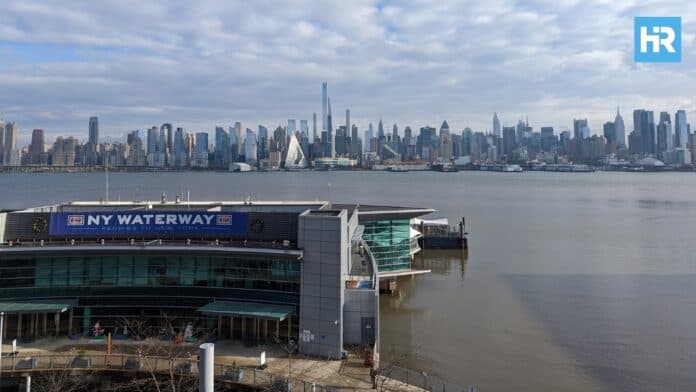
NJ Transit has secured a $6.32 million grant from the U.S. Department of Transportation. With this funding, important upgrades will be made at the Weehawken Ferry Maintenance Facility.

The funds, part of the 2024 Passenger Ferry Grant Program, will be used to install a wave attenuator—a barrier that helps protect ferries from damage caused by waves, high tides, and floods.

Essentially, the goal is to keep the ferry services running smoothly and safely for the thousands of commuters who rely on them daily.

Key Takeaways
  • NJ Transit received a $6.32 million grant to install a wave attenuator at the Weehawken Ferry Facility, protecting the area from floods and high tides.
  • The wave attenuator will help keep ferry services running safely and reliably for thousands of daily commuters.
  • This project is part of a larger $300 million effort to modernize ferry services across the U.S., focusing on resilience and eco-friendly upgrades.

Strengthening the Weehawken Facility Against Extreme Weather

Many New Jersey commuters rely on the Hudson River ferries, and, thankfully, this grant will help keep them safe from harsh weather.

The new wave attenuator at the Weehawken facility will act as a shield, preventing strong waves and high water levels from damaging the boats and interrupting service.

Armand Pohan, CEO of NY Waterway, said, “The funding and construction of the wave attenuation screen is an essential step in ensuring the safety and modernization of our ferry maintenance facility.

He thanked state and federal partners for understanding the importance of this project, especially its potential to protect the ferry system and help safeguard the Weehawken shoreline.

Collaboration for Safer, More Reliable Transit

In a move towards safer, more reliable transit, NJ Transit President Kevin Corbett expressed satisfaction in supporting NY Waterway’s efforts to secure federal funding.

Ferries are an integral part of our state’s transportation network, providing critical connectivity and mobility every day for thousands of New Jerseyans,” he said.

Congressman Rob Menendez, who helped secure the funding, added, “This grant will ensure that our transit system is more resilient, reliable, and fulfilling the needs of New Jerseyans and people throughout the region.

This $6.32 million grant is part of a larger $300 million package from the U.S. Department of Transportation to improve ferry systems nationwide.

Focused on improving transportation, the Federal Transit Administration (FTA) wants to make ferry services more resilient to extreme weather.

At the same time, they aim to modernize the facilities to meet the needs of today’s commuters.

Federal Support for Upgrading Ferry Services Nationwide

Funded through President Biden’s Bipartisan Infrastructure Law, the Weehawken project is one of many that will benefit. Not to mention, this initiative involves $300 million in federal funding.

It’s clear that ferries are vital to many communities, offering critical transport solutions with scarce alternatives.

U.S. Transportation Secretary Pete Buttigieg explained that this funding aims to make ferry services more reliable and eco-friendly. Additionally, it seeks to protect the waterways that many people depend on.

The FTA is spreading this money across 18 projects in 14 states. To support these initiatives, the projects will replace old ferries with new electric ones, expand fleets, and improve docks and terminals.

Plus, eight of these projects will focus on introducing environmentally friendly propulsion technologies, like electric-powered ferries and charging stations.

Moving Toward Greener, Cleaner Ferry Operations

The FTA plans to improve ferry services and make them greener by encouraging the use of electric and low-emission ferries.

With this shift, they aim to reduce air pollution and make ferry travel more environmentally friendly.

For example, San Francisco is getting funding to build new electric ferries, and Alaska will replace aging vessels with eco-friendly models.

Veronica Vanterpool, Acting Administrator of the FTA, praised these projects, saying, “We applaud ferry agencies for taking the big step toward electrification, increasing reliability, and bringing their aging ferry systems into a state of good repair.

A Long-Needed Solution for Weehawken and Beyond

Undoubtedly, installing the wave attenuator in Weehawken is a much-needed step toward protecting the ferry system and the local area.

Weehawken Mayor Richard Turner noted that local efforts have focused on making ferries cleaner and quieter, hoping this project will address concerns about pollution and noise.

While the Weehawken facility is being upgraded, NY Waterway’s ferry maintenance operations are temporarily happening in Hoboken at the former Union Dry Dock site.

So, this site will temporarily be used for ferry repairs and refueling until the new facility in Weehawken is ready.

Future Plans for Hoboken and Maritime Park

As NY Waterway prepares to move back to Weehawken, Hoboken is moving forward with its plan to turn the Union Dry Dock site into a public park called Maritime Park.

Construction will start next summer on the park, including a skatepark and other features.

With the $6.32 million grant secured, the Weehawken ferry facility is getting a much-needed upgrade, ensuring safer, more reliable, and environmentally friendly ferry services for the future.

As these upgrades take place, commuters and the local community can look forward to a stronger ferry system that’s better prepared for whatever comes next.

The Complete History of CrossFit: How It All Began and Grew Worldwide

CrossFit—ever heard of it? Of course, you have. It’s that intense, sweat-dripping, heart-pumping workout everyone’s talking about.

You’ve probably heard about it at your local gym or from that friend who can’t stop saying “WOD” like it’s everyday slang.

But where did it all begin?

Let’s rewind to the 1990s and explore CrossFit’s journey from a small garage in Santa Cruz to a full-on worldwide movement—a community, a lifestyle, and, for many, a passion.

Key Takeaways
  • CrossFit was started in 1996 by Greg Glassman, a former gymnast who created intense, functional workouts that mimic everyday movements.
  • CrossFit thrives on its strong community, with over 13,000 affiliates globally, making it more of a lifestyle than a workout.
  • The CrossFit Games, launched in 2007, helped push CrossFit into the spotlight, showcasing the fittest athletes and growing its influence.

How It All Started: One Man, One Vision, One Garage

In the 1990s, Greg Glassman, a former gymnast, looked at the fitness world and thought, “There’s gotta be a better way.”

Glassman wasn’t interested in traditional fitness programs that focused on one thing at a time, such as weightlifting for strength or cardio for endurance.

He wanted a workout to prepare people for anything life throws at them.

By 1996, Glassman had a game plan: functional, high-intensity movements that mimicked everyday actions.

You know, like squatting to pick something up or jumping up on a curb. It wasn’t about looking good in the mirror (though that could be a bonus) but about building real-world fitness.

The first CrossFit gym—or as insiders call it, a “box”—opened in Santa Cruz in 2000.

And no, it wasn’t some fancy gym with machines everywhere. Instead, it was a bare-bones space where people pushed their limits with a mix of bodyweight exercises and minimal equipment.

However, what made CrossFit stand out was the community. People pushed, supported, and encouraged each other like a family.

CrossFit’s Early Growth: From Law Enforcement to the Global Stage

At first, CrossFit was a hidden gem. But that didn’t last long. It quickly caught on, especially with the military and law enforcement, who loved its focus on functional fitness.

Essentially, CrossFit prepares you for anything. And people in tough, unpredictable jobs needed that.

Then, in 2007, CrossFit had a game-changing idea—literally. They created the CrossFit Games, a competition to determine who was the “Fittest on Earth.”

This wasn’t your typical fitness contest. Athletes had to show they could do it all—run, lift, climb, swim—you name it. It was exciting and unpredictable, and it got a LOT of attention.

In just a few years, CrossFit exploded in popularity. By 2009, there were over 1,000 CrossFit affiliates (gyms) worldwide, and the prize money for the Games went from $500 to $250,000.

Not bad, right?

CrossFit’s Expansion and Cultural Influence

One of the coolest things about CrossFit is that it’s more than a workout. Sure, the workouts are tough, but the community spirit really sets it apart.

You don’t just show up at a CrossFit box, do your thing, and leave. You connect with people, cheer each other on, and build authentic relationships. It’s like joining a fitness family where everyone’s rooting for your success.

The magic lies in the fact these bonds don’t stay at the gym. CrossFitters often hang out outside the box, participating in everything from nutrition challenges to social events.

And because of social media and documentaries like Fittest on Earth, that sense of community went global.

Suddenly, you could see people from all corners of the world sharing their workouts, their progress, and their stories online.

With that surge, CrossFit became a worldwide fitness culture. Words like “WOD” (Workout of the Day) and “AMRAP” (As Many Reps As Possible) became common lingo in gyms everywhere.

Wherever you were in New York or New Zealand, CrossFitters spoke the same language.

The CrossFit Games: From Local Event to Worldwide Phenomenon

Speaking of community and competition, the CrossFit Games quickly became the year’s event for athletes and fans.

These Games were no joke—each year, the workouts got harder, the stakes increased, and the prize money grew.

By 2023, athletes like Jeffrey Adler and Laura Horvath were crowned the “Fittest on Earth.”

What’s amazing is that the Games aren’t only about elite athletes. In fact, they’ve inspired everyday people to push themselves beyond their limits.

It’s not uncommon to walk into a CrossFit box and see people competing against themselves, striving to beat their previous scores or lift just a little heavier than last time.

That’s the magic of CrossFit—you’re always aiming for progress.

CrossFit’s Challenges and Criticism

Of course, no success story is without a few bumps in the road. CrossFit has had its fair share of controversy—and not only because of its tough workouts.

In 2020, Greg Glassman stepped down after making some very controversial comments, which led to a massive shakeup in the company.

It was a tough moment for the community, but Eric Roza took over and brought in fresh ideas.

Under Roza’s leadership, CrossFit has worked to regain trust and keep pushing forward.

And there’s also been safety concerns.

CrossFit’s high-intensity nature means that injuries could happen without proper form or guidance.

In response, CrossFit has prioritized proper coaching and scaling workouts, ensuring that beginners and advanced athletes alike can train safely and effectively.

How CrossFit Changed Fitness Forever

CrossFit didn’t only change the lives of people who stepped into its gyms—it changed the fitness world.

Before CrossFit, functional fitness and high-intensity interval training (HIIT) were relatively unknown.

Now? Those are buzzwords in every gym and fitness app.

CrossFit introduced the idea that working out should make you strong for real life, not just to look good in a mirror.

Where CrossFit Stands Today

Even after all these years, CrossFit is still going strong. There are more than 13,000 affiliates worldwide, and it keeps growing.

CrossFit’s influence is everywhere, from mainstream fitness classes to how people think about overall health.

Sure, there have been controversies and criticisms, but CrossFit has weathered them all, evolving and staying true to its mission—making people fitter, healthier, and more capable.

Join the CrossFit Movement

CrossFit’s journey from a single garage in Santa Cruz to a worldwide phenomenon is nothing short of inspiring.

What started as a different approach to fitness has turned into a global movement that has redefined how we think about strength, endurance, and community.

As we can see, CrossFit is a way of life. It’s about pushing your limits, lifting each other up, and constantly striving to be better, faster, and stronger.

Whether you’re a beginner or an elite athlete, you have a place in the CrossFit community.

So, if you’re ready to take on a new challenge and experience something bigger than just a workout, it’s time to step into a CrossFit box.

You’ll leave stronger, both physically and mentally, and gain a community that’s got your back every step of the way.

Hoboken Council Approves Western Edge Settlement Despite Union City Opposition

The Hoboken City Council has approved a settlement with developers to allow new high-rise buildings and over 1,700 apartments on the Western Edge.

Despite the decision, Union City strongly opposed the plan and vowed to keep fighting it in court.

This controversial project has sparked heated debates between local officials, including Mayor Bhalla and Councilwoman Fisher.

Key Takeaways
  • Hoboken approved a settlement that allowed major construction, including 1,001 new apartments and taller buildings, even though Union City is fighting over concerns about blocked views and building heights.
  • Union City plans to continue fighting the development in court, saying it breaks planning rules and hasn’t been properly reviewed. Local residents are worried about the impact.
  • Strong disagreements between Mayor Bhalla and Councilwoman Fisher escalated, with accusations of political misconduct, bad decision-making, and even claims of racism being exchanged.

Hoboken Council Moves Forward With Western Edge Settlement

The Hoboken City Council recently voted to approve a settlement with Pegasus Partners, allowing them to move forward with the Western Edge development project.

This settlement, approved by the City Council, clears the way for new high-rise buildings and hundreds of apartments, but the decision has not been without controversy.

Union City officials, led by Vincent Ferrera, a lawyer representing the city, are furious about the approval.

They argue that the development will block views of the Palisades and that the plan hasn’t been properly reviewed.

Even though Hoboken has approved the deal, Ferrera clarified that the fight isn’t over.

Union City plans to continue pursuing legal action in Hoboken over the development.

And Union City isn’t alone in its concerns. Arthur Neiss, another lawyer involved in the case, pointed out that parts of the plan, such as the impact on Monroe Street, haven’t been fully explained or shared with the public.

He suggested the deal might even be illegal, saying it feels like the developers are “buying approvals.”

Changes to the Development Plan

Despite the ongoing disagreements, the council approved several changes to the development plan.

Jessica Almeida, a lawyer for Hoboken, explained some of the new details:

  • Two new buildings will build 1,001 apartments, of which 10% will be affordable housing, meaning they’ll be set aside for lower-income residents.
  • The project’s retail space is getting smaller, going from 78,000 square feet to 50,000 square feet. There will also be no commercial office space, which was in the original plan.
  • The project includes a $3 million community benefit payment, which the developers will pay the city for the project’s impact. This amount is less than what was previously proposed.
  • The height of the buildings has gone up. They’ll now be 18 stories tall, much higher than the original plan.

Not to mention, the deal includes a 30-year payment in lieu of taxes (PILOT) agreement, which lets the developers pay a set amount to the city instead of regular property taxes.

Almeida said this could be more beneficial for the city than traditional taxes.

Ongoing Controversy and Heated Exchanges Between Officials

The settlement has heated political tensions between Hoboken’s leaders, especially Mayor Ravi Bhalla and Councilwoman Tiffanie Fisher.

Fisher has been very vocal in opposing the settlement, accusing Bhalla of making decisions to benefit himself and not the city.

She claimed that Bhalla had broken contracts, which worsened the situation for Hoboken taxpayers.

As the debate intensified, tensions hit a boiling point during the council meeting, with Bhalla sending out an email before the meeting accusing Fisher of racism.

Bhalla claimed that Fisher once said he was “unelectable” because of his turban and beard, but Fisher strongly denied this.

She said the mayor was trying to distract from the real issues with the settlement and called his accusations “political grandstanding.”

Fisher argued that the settlement gave too much away to the developers, especially with the increased height and extra apartments.

She pointed out that Hoboken’s schools and infrastructure aren’t prepared for such a big influx of new residents and called for more time to review the deal.

The Settlement’s Controversial Details: More Housing and Fewer Benefits

The final agreement will allow for even more apartments and taller buildings than the original plan, with 300 extra units allowed on both properties. In total, there could be up to 600 extra apartments in the area.

Moreover, the height of the buildings is also being increased from 16 to 18 stories, which many Union City residents are upset about because it could block their views.

In addition, the community benefit payment was slashed from $9 million to $4 million, leaving some feeling that Hoboken got the short end of the stick.

The developers could also turn a proposed hotel into apartments at 1300 Jefferson Street.

Councilwoman Fisher strongly opposed these changes, accusing Mayor Bhalla of putting Hoboken at risk for millions of dollars in damages if the remaining legal issues aren’t resolved.

Settlement Moves Forward, but Legal Battles Remain

After a long debate, the Hoboken City Council passed the settlement with a 5-1-1 vote.

Councilmembers Cohen, Doyle, Jabbour, Presinzano, and Quintero voted in favor, while Councilman Russo voted against it, and Fisher abstained.

Council President Jen Giattino and 4th Ward Councilman Ruben Ramos recused themselves from the vote due to their personal ties to the developers.

Despite the approval, it’s clear the fight isn’t over. Union City’s lawsuit will continue, and Hoboken’s residents will watch closely. As you can imagine, they are keen to see how the development unfolds and how the city manages the influx of residents and changes to the area.

For now, Hoboken’s Western Edge is set for major changes, but whether those changes will be positive remains to be seen.

Knicks Could Find the Ideal Replacement for Isaiah Hartenstein in Deandre Ayton

With Isaiah Hartenstein gone, the New York Knicks urgently need a reliable center to anchor their defense.

Tom Thibodeau’s defense relies heavily on rebounding and protecting the rim, and with Hartenstein gone, the team is exploring options for a replacement.

One of the top names being mentioned is Deandre Ayton from the Portland Trail Blazers, and he could be just what the Knicks need to fill that gap.

Let’s discover why Ayton could be a good fit for New York.

Key Takeaways
  • The Knicks are considering Deandre Ayton as a possible replacement for Isaiah Hartenstein, mainly for his rebounding and rim protection.
  • Tom Thibodeau plans to fill the center position by using multiple players, including Julius Randle, in small-ball lineups.
  • While Ayton is a strong option, the Knicks must carefully consider the cost of acquiring him in a trade.

Deandre Ayton’s Stats Make Him a Strong Candidate

Ayton’s potential lies in his strong rebounding and defensive skills, which align well with the Knicks’ needs.

According to Stefan Bondy of the New York Post, the Knicks might target Ayton, the former No. 1 pick.

While his career hasn’t quite met the expectations of being picked ahead of stars like Luka Doncic and Shai Gilgeous-Alexander, Ayton’s physical skills make him a strong candidate.

Plus, Portland might consider trading him if their season doesn’t go well.

Last season, Ayton averaged 3.2 offensive rebounds per game, close to Hartenstein’s 3.3, and he finished eighth in the league in total rebounding with 10.9 per game.

Impressively, no Knicks center has averaged double-digit rebounds under Thibodeau, making Ayton’s numbers a potential game-changer.

On defense, Ayton’s ability as a rim protector is evident in his 47.0% defensive field goal percentage, almost identical to Hartenstein’s 47.1%.

Looking at the numbers, it’s clear that Ayton could seamlessly fit into the Knicks’ defensive schemes, helping to maintain the team’s identity of dominating the boards and controlling the paint.

One thing to keep in mind, though, is Ayton’s contract. He’s in the second year of a four-year, $133 million deal, so trading for him wouldn’t be cheap.

Thibodeau’s Backup Plan: Use Multiple Players to Fill the Role

If the Knicks don’t land a player like Ayton, Coach Thibodeau has said he’ll rely on a mix of players to handle the center position.

In an interview with NBA.com, he mentioned the possibility of using Julius Randle as a temporary center for short stretches.

We have versatility,” Thibodeau said.

Julius [Randle] could play at the 5 for 10 or 15 minutes. I don’t want him there for long stretches, but he can do it well and create offensive advantages.

Though the team’s defense is centered on solid rim protection, Thibodeau has had to adjust to injuries over the years.

Mitchell Robinson has been the Knicks’ only consistent center, but his injury history makes it difficult to rely on him alone.

In previous seasons, the Knicks have rotated various centers, including Jericho Sims and Precious Achiuwa, with mixed results.

Thibodeau Now More Open to Small-Ball Lineups

Thibodeau hasn’t always been a fan of small-ball lineups, especially when it came to pairing Randle with his former backup, Obi Toppin.

However, things have changed, and because of some new roster additions, he’s now more willing to experiment with smaller lineups.

In a recent interview, Thibodeau pointed to the defensive versatility of players like OG Anunoby and Mikal Bridges as the reason for his new approach.

OG’s ability to guard big is huge for us. Julius and [Josh] Hart can guard big as well,” Thibodeau explained.

Because of that, the Knicks can cope without a traditional center in certain situations, though it’s clear that they would still prefer a strong rebounder like Ayton.

What It Would Take to Get Ayton: The Cost for the Knicks

With a hefty contract and his role as Portland’s starting center, the Knicks must assess whether Ayton’s performance and fit justify the financial and trade assets required to bring him in.

Portland, which has a surplus of centers, including Robert Williams III and Duop Reath, may be willing to part with Ayton if the right offer comes along.

Their early draft pick of center Donovan Clingan adds to the possibility of an “interior fire sale” by the trade deadline.

That move could present an opportunity for the Knicks if they still seek help in the paint later in the season.

Knicks Must Weigh Their Options

As we can see, the Knicks are in a tough spot at center, and Deandre Ayton could be just the player they need to fill that gap.

His rebounding and defense would fit perfectly with Thibodeau’s system, and his presence could help keep the team competitive in a stacked Eastern Conference.

But Ayton doesn’t come cheap, and the Knicks need to weigh whether giving up assets for him makes sense.

If the Knicks decide to pursue Ayton, it could solve one of their biggest issues as they look to make a deep playoff run.

On the other hand, sticking with their current roster and using multiple players at center might be the safer and more affordable route.

Whatever the choice, the Knicks have some important decisions ahead as they gear up for the new season.

Latest News

Hundreds Rally Against ICE in Jersey City After Recent Immigration Arrests

On one of the coldest days of the year, hundreds of people gathered in Jersey City on Friday to oppose recent actions by U.S....

Coast Guard Conducts Daily Icebreaking Mission to Keep Hudson River Ferries...

Prolonged freezing temperatures have turned large portions of the Hudson River into a hazardous mix of drifting ice and hardened formations that threaten commuter...

Davenport Says NJ Will Investigate and Prosecute ICE When Rights Are...

The Senate Judiciary Committee convened in Trenton on Monday for Acting New Jersey Attorney General Jennifer Davenport’s confirmation hearing, a session that quickly centered...

Ali Accuses Menendez of Copying ICE Abolition Stance in NJ-8 Primary

The Democratic primary in New Jersey’s 8th Congressional District has become a direct fight over immigration enforcement and political credibility, with challenger Mussab Ali...

Jersey City Defends Immigrant Rights After ICE Activity at Light Rail

In Jersey City this week, federal immigration enforcement at the 9th Street Light Rail Station has placed Jersey City at the center of a...