Home Blog Page 124

North Bergen zoning change prohibits smoke shops and massage parlors

An example of "electronic nicotine delivery systems" as the township calls them. Image via Shutterstock.

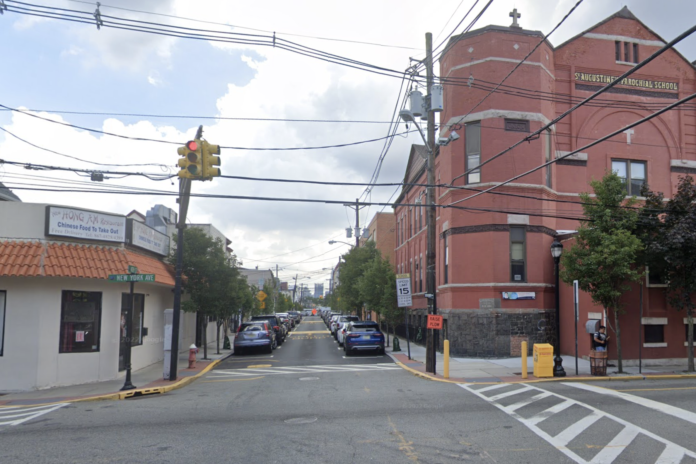
North Bergen has amended the township’s zoning ordinance to prohibit various smoke and vapor substance uses and massage parlors.

Mayor Nicholas Sacco and the Board of Commissioners adopted the ordinance at a Dec. 21 meeting after it was introduced earlier in the month.

Under the adopted ordinance, electronic and/or vapor substance inhalation shops and tobacco or smoke shops and massage parlors are prohibited in all zoning districts in North Bergen.

Residential districts would also be amended by eliminating reference to multi-family mid-rise and high-rise buildings in the R-3 Moderate Density Residential District.

Now, the ordinance refers only to multi-family dwellings, garden apartments and townhomes, with mid-rises allowed to be 3 stories and high rises allowed to be 7 stories.

That also applies to multi-family mid-rises and high-rises in all zoning districts.

Updating definitions in municipal code

The measure also updates certain definitions in the township’s municipal code in accordance with the other changes.

The ordinance defines multi-family housing as a building containing five or more dwelling units that are entirely separated from each other by vertical walls or horizontal floors.

According to the ordinance, an electronic and/or vapor substance inhalation shop is defined as businesses where customers can purchase electronic and/or vapor substance inhalation products commonly known as “e-cigarettes,” “e-pipes,” “e-hookahs,” “electronic nicotine delivery systems” and other similar devices.

A tobacco or smoke shop is similarly defined as any store, stand, booth, concession or other place that either devotes a substantial portion of its display area, 5 percent or more floor or wall space, to tobacco products, hookahs, electronic vapor devises, electronic inhalation substances or drug paraphernalia to purchasers for consumption or use, the proposed ordinance states.

According to the ordinance, a massage parlor is defined as premises that are used, in whole or part, to administer acupressure, massage, bodywork or somatic therapy, or involving the act of holding, touching, positioning, mobilizing, applying friction or pressure manually and/or by mechanical or vibratory apparatus to body tissues, including, but not limited to, employing the procedures of acupressure, reflexology, moving, striking, pounding, rubbing, manipulating, kneading and/or tapping, or the use of oil rubs, heat lamps, salt glow, hot or cold packs, vibration, percussion, medical gymnastics, heliotherapy, external application of topical preparations, or tub, shower or cabinet baths, but excluding the practice of medicine, physical therapy or chiropractic by an osteopath, medical doctor, physical therapist or chiropractor licensed to practice in the State of New Jersey.

All changes take effect 20 days after the adoption of the ordinance.

For updates on this and other stories, check www.hudsonreporter.com and follow us on Twitter @hudson_reporter. Daniel Israel can be reached at [email protected].

North Bergen approves salary range increases for array of township positions

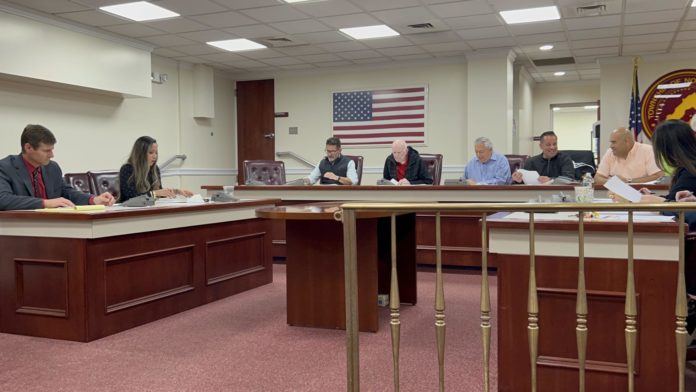
The North Bergen Board of Commissioners meets in-person bi-weekly at Town Hall. Photo from a November meeting by Daniel Israel.

North Bergen has increased the salary ranges for a number of municipal employees.

Mayor Nicholas Sacco and the Board of Commissioners voted to adopt an ordinance doing so at its Dec. 21 meeting after it was introduced earlier in the month. The move follows similar increases for a number of other positions in 2021.

The ordinance amends, mostly raising, salary ranges in each of three schedules. The salary ranges are broken down into schedules, with Schedule A for competitive, Schedule B for non-competitive and Schedule C for unclassified.

In salary Schedule A, the new salary ranges include from $50,000 to $136,000 for Assistant Fiscal Officer; $21,000 to $40,000 for Building Inspector; $90,000 to $161,000 for Director of Community Improvements; $7,000 to $25,000 for part-time Electrical Inspector; $3,000 to $40,000 for Fire Official; $30,000 to $73,000 for Mechanic; $50,000 to $127,000 for Municipal Court Administrator; and $11,000 to $54,000 for Public Safety Telecommunication.

In 2021, salary ranges were previously increased for Assistant Fiscal Officer from $50,000 to $130,000; Director of Community Improvements ranging from $90,000 to $150,000; and Municipal Court Administrator ranging from $50,000 to $122,000.

Under Schedule B, the new salary ranges include $8,000 to $94,000 for Keyboarding Clerk; $8,000 to $75,000 for Laborer; $5,000 to $73,000 for Mechanic’s Helper; and $20,000 to $45,000 for Security Guard.

Lastly, for Schedule C, the new salary ranges include $12 to $20 per hour for Counselors; $15,000 to $58,000 for Fire and Police Surgeons; $90,000 to $250,000 for a Municipal Administrator; $40,000 to $125,000 for Municipal Township Clerk; and $20,000 to $138,000 for Tax Collector and Tax Search Officer.

In 2021, salary ranges for Schedule C were previously increased for Municipal Administrator ranging from $90,000 to $231,000; Municipal Clerk ranging from $40,000 to $116,000; and Tax Collector and Tax Search Officer ranging from $20,000 to $131,000.

Township attorney Tom Kobin explained, in response to Sacco, that the salary ranges are expected to be changed as often as the township needs to. He said the ranges are adjusted to be good for a few years, but can be changed whenever the board desires. 

Sacco recalled a story of a former employee who misinterpreted a similar ordinance in the past. He said they thought it was salary increases, not range increases, and resigned out of misplaced anger. 

“Someone resigned because they saw the salary range and thought everyone was going up,” Sacco said when the ordinance was introduced. “They thought that they were only getting a 3 percent raise and everyone was getting more. So he resigned and left. I said to him, they’re not getting more, they’re getting the same 3 percent you’re getting, it’s just the range.” 

For updates on this and other stories, check www.hudsonreporter.com and follow us on Twitter @hudson_reporter. Daniel Israel can be reached at [email protected].

Councilwoman Amy DeGise hit-and-run case now has a court date

Councilwoman Amy DeGise has faced numerous calls to resign after her hit-and-run but now is faced with a scheduled court date.

After nearly six months since the hit-and-run incident of Jersey City Councilwoman Amy DeGise, a court hearing has been scheduled for Jan. 10 at the Veterans Courthouse at 470 Martin Luther King Jr. Blvd. in Newark, according to the Essex’s County Prosecutor’s Office.

The councilwoman was caught on surveillance hitting bicyclist Andrew Black on Martin Luther King Drive and Forrest Street.

According to reports, the 29-year-old cyclist was making an Uber Eats delivery on the morning of July 19 when he ran a red light and was hit by the councilwoman’s black SUV going east on Forrest, as reported by the Hudson Reporter.

Six hours later, the councilwoman called the Jersey City Police Department to report the incident. She was charged with two summonses, one for failure to report an accident and another for leaving the scene of an accident.

DeGise has also faced open criticism from two grassroots organizations that support protection of bicyclists, and have openly asked for her resignation as the city’s councilwoman.

Since the time of the incident back in July until now, Jersey City councilmembers James Solomon and Frank Gilmore have openly called for the councilwoman to step down. Residents who have also attended open public city council meetings have also requested her removal as councilwoman, but so far, the daughter of the Hudson County Executive has shown no signs of resignation.

The Hudson Reporter attempted to reach out to both the city councilwoman and Andrew Black but none have responded so far.

The court hearing is scheduled for 1 p.m. at the Veterans Courthouse at 470 Martin Luther King Jr. Blvd. in Newark.

For updates on this and other stories, check www.hudsonreporter.com and follow us on Twitter @hudson_reporter. Jordan Coll can be reached at [email protected].


Secaucus cannabis board discusses new retail application

900 Castle Road in Secaucus. Image via Google Maps.

Will Harmony Dispensary have some competition when it comes to adult-use recreational cannabis sales in Secaucus? That’s what officials are discussing.

The town’s Local Cannabis Control Board held a special meeting on Dec. 20 to discuss the application of Floro Secaucus LLC. The applicant is seeking a Class V retail license to sell recreational cannabis at 900 Castle Road, which is a warehouse-type industrial building currently home to NJ Casket Company and Pet Rest in Peace Memorial Center and Crematorium.

That address is adjacent to the location where Harmony Dispensary currently sells medical cannabis out of. After initially banning the establishments ahead of a state deadline to make a decision, Secaucus shifted gears, ironed out the details of the local industry regulations, and lifted the prohibition but limited the operation of cannabis establishments to five lots that make up a light industrial area defined by warehouses, including the one that Harmony is in.

Amid Harmony’s quest to expand from medical sales to recreational, which it succeeded in earlier this month, the town began preparing the license application process for other cannabis entities. Officials said there had been some inquiries about businesses seeking to open in town in one of the permitted warehouse lots on Castle Road, which appears to include Floro.

The board met in person at the chambers on the second floor of the municipal building, with the option to watch via Zoom. After the meeting, Town Administrator Gary Jeffas told the Hudson Reporter that no formal action was taken by the board.

“A meeting was held but no decisions were made,” Jeffas said.

Jeffas said the meeting was informational in nature. The board asked various questions of the applicant, some of which they are circling back on with the town.

“It was a meeting on the one application we had, Floro Secaucus, LLC,” Jeffas said. “The meeting was mainly an informational session. They had their attorney, the managing member of their LLC and somebody from the group that helped put together the application.”

Informational meeting

“We used it as an informational meeting to ask questions and gather more information about the company, their background, what their plan is, what their thought is for the process, and how they would operate back there if they did get a license,” Jeffas said. “But there was no action or decision made.”

According to Jeffas, the board may have another meeting to discuss Floro’s applications. The applicant is gathering more information for the board based on some of the line of questioning at the December meeting of the board, which appears to be its first gathering.

“We just advised them that the board would discuss further and have a potentially another meeting to discuss further,” Jeffas said. “They also need to collect some more information for us on some of the questions just to fill in some of the gaps on some of the questions we had.”

Jeffas said most of the questions were around the business and the level expertise that the principals had in the business. He said that the consulting group working with Floro on the application is helping them through the process.

“The consulting group would help them with their human resources, their regulatory requirements on their day-to-day operations, so just kind of understanding how they would lean on the consulting company to assist in their business,” Jeffas said. “I think the consulting company operates about 20 or so recreational cannabis facilities in the United States and Canada. So they were the ones with a bit more experience on the recreational side of it. It was a decent amount of questioning just to understand the relationship and how they would assist in their functioning and operating at Secaucus and a business plan that would work.”

Applicant returning with more information?

According to Jeffas, there were also questions raised by Police Chief Dennis Miller as to security at the proposed dispensary. He said that is another topic they are working to iron out details on.

“Then the police chief asked some stuff about their security plan that they’re going to circle back. It seems they would have an outside company handle and set up security for it,” Jeffas said. “So we agreed that if there’s more questions on security, they would have a representative from that company who could better explain how they would handle things like security, the cameras, the people they would hire and those things.”

At another potential meeting on the application that could be held in the future, Jeffas said the board can consider furthering the application. That would entail the passage of a resolution of support by the board, as well as by Mayor Michael Gonnelli and the Town Council, before the applicant seeks state approval to proceed further.

“If the board decides to consider their application, we would give them a letter of support saying that the town supports their application so that when they go to the state, the state knows they have the support of the town and probably what we did with Harmony,” Jeffas said. “Then we would have the council pass a resolution saying that the mayor and Town Council are in support of the application moving forward so that the state knows they have the full backing of the town. That’s the decision-making process we’re kind of in right now.”

For updates on this and other stories, check www.hudsonreporter.com and follow us on Twitter @hudson_reporter. Daniel Israel can be reached at [email protected].

Bayonne proposes creating Department of Planning, Zoning and Development

Bayonne City Hall decorated for the holidays as of December 14. Photo by Daniel Israel.

Bayonne is contemplating establishing a new department at City Hall and reorganizing other divisions under that. The City Council introduced an ordinance proposing the creation of the Department of Planning, Zoning and Development at its December meeting.

The ordinance would move the Division of Community Development, the Division of Planning and Zoning and the Municipal Housing Liaison and RCA Administrator from under the Power and Duties of the Mayor to the new department. According to the ordinance, the department would exercise the powers of the city as an authorized local public agency for purposes of any federal urban renewal or redevelopment program with the approval of the City Council.

The Department would be the sixth, next to the following: the Department of Administration, Department of Public Safety, Department of Municipal Services, Department of Public Works and Parks and the Department of Law. Just like those departments, there will be a director known as the Director of Department of Planning, Zoning and Development appointed by Mayor James Davis, and per the ordinance, they must be “qualified by education, training and experience in the process of the development of housing, commercial and industrial improvements within large urban areas.”

According to the ordinance, the Director will direct and supervise the functions necessary to assist and encourage the timely and proper improvement to real property within the city. These functions will include the acquisition of real property; the development of maps and standards governing the development of the city; the management, maintenance and operation of property owned by the city but not needed for public use; the upkeep and improvement of the city’s infrastructure, including the water and sewer systems; and the sale or lease of such property and the operation and administration of such incentive programs that may be established by the city to assist and encourage the development of property.

Division of Planning, Division of Zoning and Municipal Housing Liaison and RCA Administrator

The Division of Planning will be headed by the City Planner, Suzanne Mack, or an Assistant Planner. They have the authority to perform all the planning functions of the Division, and to supervise the administration of the planning and implementation of such community services, housing preservation and conservation and other services. The division will also supervise the administration of planning process, regulations and enforcement.

The Division of Zoning will be headed by Zoning Officer Tracey Tuohy. It has administrative oversight of the personnel employed to perform zoning and land use functions. The division has authority, through the Zoning Officer, to perform all of the functions and duties of the Division.

The Municipal Housing Liaison and RCA Administrator is part of the administrative mechanisms established for the execution of Bayonne’s responsibility to assist in the provision of affordable housing in accordance with the Fair Housing Act of 1985. Duties include handling things like affirmative marketing, household certification, affordability controls, resale and rental, processing requests from unit owners and enforcement.

“This is reallocating the planning and zoning, and it adds development, commercial development and planning, and zoning maintenance,” City Council President Gary La Pelusa told the Bayonne Community News. “What’s happening is, these are currently under the mayor right now. What’s going to happen is, they’re going to be moved to a new Department of Planning Zoning and Development.”

In addition to moving the the Division of Community Development, the Division of Planning and Zoning and the Municipal Housing Liaison and RCA Administrator into the new department, there would be the creation of two new divisions. That would be the Division of Development and Housing and the Division of Real Property and Infrastructure.

“The Department of Planning, Zoning and Development will do five things,” La Pelusa said. “It will cover planning, zoning, development and housing, the Municipal Housing Liaison, and real property infrastructure. Those things are going to be in this new department.”

Division of Development and Housing

The Division of Development and Housing will focus on development, tax abatements and housing stock.

The development functions will include responsibility for the preparation, formulation and implementation of an overall economic development plan for the city; coordinate all program activities concerning the economic development of the city; formulate plans for attracting new business and industry into the city so that jobs are made available to alleviate or prevent conditions of unemployment, underemployment and economic dislocation; and develop and administer all programs established by the city to encourage the utilization, construction, reconstruction or rehabilitation of commercial and industrial property.

Other development functions included in the ordinance will involve public officials and private citizens in analyzing local economics, defining development goals, determining project opportunities and formulating and implementing development programs; provide such other assistance as is proper and necessary to permit and encourage the development of real property for commercial and industrial purposes in a manner that is consistent with general law and local ordinance; administer and direct urban conservation, rehabilitation and renewal activities of the city; exercise the powers of the city as an authorized local public agency for purposes of any federal urban renewal or redevelopment program approved by the City Council.

In addition, the ordinance grants the division to have other development powers to with the approval of the Director and the Business Administrator, appoint or contract with technical and professional advisers and assistance as may be required and approved for any federally or state-aided planning, renewal, development or redevelopment project, provided that they do not authorize the making of any contract in excess of $2,500 without the approval of the City Council; make recommendations, in conjunction with the Law Director and the Business Administrator, to standardize certain redevelopment agreement terminology and provisions and to propose any needed changes in state legislation; and coordinate and liaison, as needed, with the Mayor, the City Council, the Law Director and all city departments, in the redevelopment process.

Tax abatement and housing stock preservation functions

The division will also have tax abatement functions to maintain in one place and ensure the security of all of the records, papers and submissions that pertain to all tax abatement and exemption financial agreements; monitor and ensure compliance with the terms of all tax abatement and exemption financial agreements following approval by the City Council; along with the Finance Department, ensure the timely submission and payment of quarterly service charge bills with applicable arrearages and interest and ensure full compliance with the terms and conditions contained within the city’s tax abatement and exemption financial agreements by conducting periodic audits; and make recommendations, in conjunction with the Law Director and the Business Administrator, to standardize certain financial agreement terminology and provisions and to propose any needed changes in state legislation.

Other tax abatement functions will be to coordinate and liaison, as needed, with the Mayor, the City Council, the Law Director and all City departments, in the tax abatement and exemption process; act as a liaison with the Business Administrator and the City Council to review and analyze the financial ramifications of each tax abatement and exemption financial agreement; and assist in the preparation of the capital budget.

Lastly, the Division will yield housing stock preservation functions to advise the director on policies to ensure the preservation and creation of housing; and maintain in one place and ensure the security of all of the records, papers and submissions that pertain to short-term rental permits.

Division of Real Property and Infrastructure

One of the new Divisions in the Department of Planning, Zoning and Development is the the Division of Real Property and Infrastructure. The Division shall manage and oversee all real property and infrastructure owned, leased and controlled by the city.

According to the ordinance, the Division of Real Property and Infrastructure will focus on the acquisition, maintenance and disposition of all real property and infrastructure. In the division, there will also be a Long Term Control Plan and Resiliency Coordinator, responsible for the creation and implementation of the city’s Long Term Control Plan and the recommendations of the Resilient New Jersey Program.

The position is being created as part of the administrative mechanisms needed for the execution of Bayonne’s responsibility to assist in creation and implementation of the Long Term Control Plan pursuant to the United States Clean Water Act and United States Environmental Protection Agency’s Combined Sewer Overflows Control Policy, issued on April 11, 1994.

The Long Term Control Plan and Resiliency Coordinator’s powers and duties include to be responsible for the development, oversight and administration of the city’s compliance with the federal and state laws concerning the Combined Sewer Overflows Controls. They will also be responsible for addressing flooding prevention and addressing climate change.

“Under the ordinance, there will be a separate Long Term Control Plan and Resiliency Coordinator,” La Pelusa said. “The mayor still would have to choose somebody who’s going to oversee that.”

According to the ordinance, The Long Term Control Plan and Resiliency Coordinator will also work toward accomplishing the goals of the Long Term Control Plan. The goals include characterization, monitoring and modeling activities as the basis for selection and design of effective Combined Sewer Overflow controls; a public participation process that actively involves the affected public in the decision-making to select long-term Combined Sewer Overflow controls; consideration of sensitive areas as the highest priority for controlling overflows; and evaluation of alternatives that will enable the permittee, in consultation with the National Pollution Discharge Elimination System permitting authority, Water Quality Standards authority and the public, to select Combined Sewer Overflow controls that will meet Clean Water Act requirements.

Meeting goals of the Long Term Control Plan

The Long Term Control Plan’s goals also seek cost and performance considerations to demonstrate the relationships among a comprehensive set of reasonable control alternatives; operational plan revisions to include agreed-upon long-term Combined Sewer Overflow controls; maximization of treatment at the existing Publicly Owned Treatment Works treatment plant for wet weather flows; an implementation schedule for Combined Sewer Overflow controls; and post-construction compliance monitoring program adequate to verify compliance with water quality-based Clean Water Act requirements and ascertain the effectiveness of Combined Sewer Overflow controls.

Lastly, the plan’s goals seek to provide clear levels of control that would be presumed to meet appropriate health and environmental objectives; provide sufficient flexibility to municipalities, especially those that are financially disadvantaged, to consider the site-specific nature of Combined Sewer Overflows and to determine the most cost-effective means of reducing pollutants and meeting Clean Water Act objectives and requirements; allow a phased approach for implementation of Combined Sewer Overflow controls considering a community’s financial capability; review and revise, as appropriate, water quality standards, and their implementation procedures when developing long-term Combined Sewer Overflow control plans to reflect the site-specific wet weather impacts of Combined Sewer Overflows.

Similarly, the coordinator will also seek to abide by the goals of Resilient New Jersey. The program administered by the New Jersey Department of Environmental Protection and funded by the U.S. Department of Housing and Urban Development aims to bring together resilience experts, local leaders, community organizations, residents and regional infrastructure entities to develop solutions to reduce flood risk and build resilience.

Preparing for the future, in terms of both resiliency and redevelopment 

The ordinance will create a Long Term Control Plan and Resiliency Coordinator, just 10 years after Hurricane Sandy underscored the need to develop such preventative practices. The Coordinator will play a vital role as the city has already asked for help from the state in financing its estimated over $300 million cost of implementing the plan, as well as the potential implementation of the regional Long Term Control Plan with other Passaic Valley Sewerage Authority municipalities.

“The Long Term Control Plan is something we’re all a little concerned over. It’s something we know is going to cost some money and it’s something that we are mandated to do,” La Pelusa said. “So we need somebody who can pick the right companies and that can help us save money while we still get the job done. You’ve got to capture that storm water and release it over time. There’s issues in the Long Term Control Plan about sterilizing water before you let it out in the waterway. All these things have to be addressed in that plan.”

Additionally, the move to create the Department of Planning, Zoning and Development comes as the city has completed its absorption rate study of recent redevelopment in the city. The study came at the request of Davis with the pause on most residential redevelopment until that study could be completed.

In November, La Pelusa announced the study was completed and that the study showed the newly constructed units were being occupied. While a formal presentation on the data will be brought to the council in the future, the news means that all residential redevelopment will likely move forward full steam ahead as well as the industrial redevelopment of the Constable Hook area of Bayonne that the city has been moving forward with in the meantime.

Residential redevelopment moving full steam ahead again soon?

This seems further backed by the City Council considering the reintroduction of financial agreements for project approved amid the pause, which officials previously defended could not be stopped due to prior planning approvals. This included the project that seemingly prompted the pause and study and was singled out by Davis at the time, amid the campaign for the May municipal election, which was for an 18-story and a 6-story building across the street from each other on Avenue E as part of the next phase of the Silk Lofts redevelopment and the long-term tax abatements that would support it.

The ordinance also follows the City Council contemplating this move back in October. However, La Pelusa told BCN at the time that some details of the ordinance were still being worked out. Those have since been remedied obviously as the ordinance has now been introduced.

The proposed ordinance will be up for a public hearing and vote at the City Council’s next meeting on Jan. 18 at 7 p.m. in the council chambers at City Hall at 630 Avenue C. Read the full ordinance online at bayonnenj.org/_Content/pdf/ordinances/O-14-Chapter-2-Administration-Ordinance-INTRO.pdf or go to bayonnenj.org for more information.

For updates on this and other stories, check www.hudsonreporter.com and follow us on Twitter @hudson_reporter. Daniel Israel can be reached at [email protected].

Prosecutor warns against ‘vigilante justice’ after volunteer fire chief luring arrest

A screenshot of video captured of Henry Meola by OBL Nation on Instagram.

In the wake of the arrest of 33-year-old Nutley Volunteer Fire Chief Henry Meola for luring after he admitted on camera to members of sexual predator watchdog group OBL Nation that he traveled to North Bergen for sex with a 14-year-old boy, the Bergen County Prosecutor’s Office is warning against taking such action. The Prosecutor’s Office did not name OBL Nation, but described a number of occurrences of similar activity to this recent incident in the county, which they took issue with.

“Over the last few months, Bergen County has experienced several instances of a private citizen using the Internet to identify individuals who are attempting to lure minors into sexual activity and arranging for the arrest by law enforcement of these targeted individuals,” the Prosecutor’s Office said in a Dec. 22 statement. “The scenarios and arrests are then publicized on YouTube. The Bergen County Prosecutor’s Office and Bergen County law enforcement do not condone this vigilante activity.”

According to the BCPO, the sting operations by these civilians are dangerous to all involved. Not only that, the Prosecutor’s Office said that they are legally dubious.

“Bergen County law enforcement strongly discourages this activity, which holds the potential for violence and injury to the individuals involved as well as innocent bystanders,” the BCPO said. “It also jeopardizes the due process rights of potential targets, puts private citizens in danger, and risks involving law enforcement in illegal activity. Private citizens are advised not to involve themselves in these activities.”

BCPO said that anyone involved in the “vigilante activity” will likely be a witness in court. Not only that, they may be legally liable depending on their activities during any incidents, the Prosecutor’s Office said, further discouraging the practice.

“Bergen County law enforcement will file appropriate charges against individuals who violate the criminal law when pursuing these activities,” the BCPO said. “Private citizens who lure potential defendants will be called to testify as witnesses throughout court proceedings as this practice ensures they are witnesses to an alleged crime. Also note that individuals who engage in this vigilante activity may also be subject to civil liability.”

For updates on this and other stories, check www.hudsonreporter.com and follow us on Twitter @hudson_reporter. Daniel Israel can be reached at [email protected].
Two teens stabbed in Union City, one fatally

The stabbing took place in the area of 40th Street and New York Avenue. Image via Google Maps.

The Hudson County Prosecutor’s Office Homicide Unit and the Union City Police Department have announced the preliminary findings from an investigation into the stabbing death of a 15-year-old juvenile on Tuesday, Dec. 20, according to Hudson County Prosecutor Esther Suarez.

At about 6:24 p.m., the Union City Police Department was notified of a stabbing in the area of 40th Street and New York Avenue. Responding officers located two juvenile males in the area of 40th Street and Bergenline Avenue with apparent stab wound(s).

Allen Flores, 15, of Union City, was transported to Christ Hospital in Jersey City and was pronounced dead at 7:08 p.m. The cause and manner of death are pending the findings of the Regional Medical Examiner’s Office.

A second juvenile, a 16-year-old Union City male, remains hospitalized at Jersey City Medical Center with serious injuries.

A preliminary investigation by the Hudson County Prosecutor’s Office Homicide Unit determined five juveniles were involved in an altercation prior to two of the juveniles being stabbed. Three juveniles have since been arrested.

A 16-year-old Union City male is charged as a juvenile with fourth-degree Unlawful Possession of a Weapon (knife); third-degree Possession of a Weapon for an Unlawful Purpose (knife); and second-degree Possession of a Weapon (knife) While Committing a CDS Offense.

A 15-year-old Jersey City female and a 15-year-old Jersey City male are charged as juveniles with first-degree Armed Robbery; first-degree Conspiracy to Commit Armed Robbery; fourth-degree Unlawful Possession of a Weapon (bat); and third-degree Possession of a Weapon (bat) for an Unlawful Purpose.

Juvenile matters are confidential and no additional information can be released at this time. Additional arrests and charges may be forthcoming.

The Hudson County Prosecutor’s Office Homicide Unit and the Union City Police Department are actively investigating this case. Anyone with information is asked to contact the Office of the Hudson County Prosecutor at 201-915-1345 or to leave an anonymous tip at hudsoncountyprosecutorsofficenj.org/homicide-tip.

All information will be kept confidential. The above charges are merely accusations and the juvenile is presumed innocent until proven guilty.

For updates on this and other stories, check www.hudsonreporter.com and follow us on Twitter @hudson_reporter. Daniel Israel can be reached at [email protected].

Weehawken bans short-term rentals like Airbnb in the township

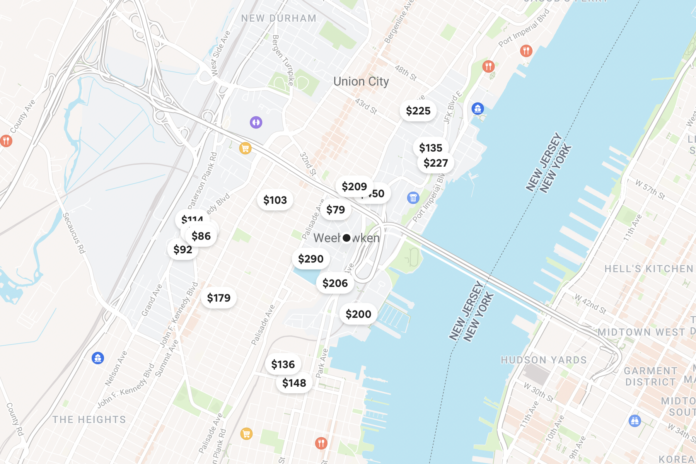
A screenshot of the Airbnb map showing short-term rentals available in Weehawken on December 20.

Weehawken has officially enacted a ban on short-term housing rentals in the township.

The move prohibits rentals of less than 30 consecutive days, targeting short-term rental hosts who use vacation rental companies like Airbnb and Booking.com to rent out units for short periods of time as opposed to renting to a long-term tenant.

Weehawken, a waterfront community right on the Hudson River with eye candy views of New York City, is a hotspot for short-term or vacation rentals. As of December 20, there were plenty of listings for short-term rentals on Airbnb, ranging from anywhere $92 to $375 and beyond.

Banning short-term and vacation rentals

The short-term rentals were previously allowed if the rental hosts maintain a permit. That permit had to be renewed annually for a small fee, and the host was allowed to offer listing on Airbnb and other such services

At its December 21 meeting, Mayor Richard Turner and the Weehawken Township council adopted an ordinance that would effectively ban short-term rentals in the township.

Prior to the meeting, Turner told the Hudson Reporter that the ordinance bans short-term rentals less than 30 consecutive days, but that the township was looking into potentially allowing them again with stringent regulations at a later date.

“We’re going to examine all the ordinances all the other towns have put in, but right now we’re going to ban them because it really is starting to get out of control,” Turner said. 

According to Turner, the township is having issues with the short-term rentals taking away affordable housing from long-term use in rent-controlled buildings.

“The bigger problem we’re having now is some of our affordable housing buildings and the buildings under rent-control are starting to do Airbnb,” Turner said. “What that does is it takes affordable units off the market. We are losing affordable apartments to Airbnb and we decided to take some action because we have several buildings that are getting carried away with it.” 

Turner said that in new buildings, the condominium associations usually ban Airbnbs. Instead, they are prevalent in the affordable housing, with one instance of five Airbnbs in one building as recent as last year, Turner said.

Residents uncomfortable and strangers bringing crime?

In addition to taking affordable units off the market, Turner argued that the short-term rentals are making residents uncomfortable at the apartment buildings where they occur. Although located in densely populated Hudson County, the small township is still mostly suburban in nature prompting complaints from residents about strangers coming and going, he said.

“We get complaints all over town from people that are not comfortable with their neighbors renting on Airbnb if it’s a three-unit rental building and there’s strangers coming and going,” Turner said. “We live in an urban area and it’s a small town and people are just not comfortable.”

Another reason behind the proposed ban on short-term rentals is crime. He said that sometimes, people offer these short-term rentals and realize their property and even furniture has gone missing.

“People rent out their apartments and they complain that something was missing,” Turner said. “That’s prevalent. We’ve had people complain about heirlooms being taken and furniture being taken and pictures being taken and this and that.”

According to Turner, this ban would not be affecting mom-and-pop hosts as much as it would be investors looking to profit off of the short-term rentals.

“The industry says I’m depriving the mom-and-pop owners of the house,” Turner said. “I’m not aware of any mom-and-pop owners, somebody that lives in the house looking forward to renting it out on a regular basis. It’s so rare and it’s just not that type of town.”

Turner said that most short-term rentals in Weehawken are owned by absentee landlords who often don’t live in the township.

“The problem comes from absentee landlords of the multi-families, the affordable ones, or the regular houses,” Turner said. “You can have six houses in a row that are owner occupied and the seventh house is three units of Airbnb. Most people that do it are absentee landlords and they make more money than if they just rent it to regular people.”

Stiff penalties aim to curb short-term rentals

The penalties for each violation of the ordinance began at $1,000 for the first time, $1,500 for the second time, and $2,000 for the third time, with the possibility of 90 days of jail time. Turner said this was to discourage the practice through significant loss of income, with the fine being equivalent to what he said was the income of bookings for two short-term rentals.

“We have to make the fine as hefty as the lawyers think we can get away with so that people don’t say it’s worth it to just pay the fine,” Turner said. “If they start getting hit with some $2,000 dollar fines, I think the significant income loss would discourage it.” 

Turner said the township was comfortable with the ban, doing so now in the Winter to prepare for what is usually a rush in Weehawken in the Spring. However, the township will examine other policies from neighboring municipalities, such as Jersey City which passed strict regulations on short-term rentals in the past, to see if Weehawken would benefit from them.

“We’re doing this now before the Spring comes, that’s when it really starts up again, not too much in the Winter,” Turner said. We’re very comfortable with this. But we’ll take a look at everything just to see if there’s anything else that makes sense.” 

For updates on this and other stories, check www.hudsonreporter.com and follow us on Twitter @hudson_reporter. Daniel Israel can be reached at [email protected].

Jersey City Medical Center and Global Business Corporation donate to toy drive

Just days before Christmas, Jersey City Medical Center and Global Business Corporation donated more than 600 toys to Jersey City’s Julia A. Barnes Elementary School this week.

“We wanted to make a difference and put a smile on children’s faced this holiday season,” said Adrienne Austin, Director of Diversity and Inclusion at Jersey City Medical Center.

The toy drive, which was spearheaded by the Medical Center’s Business Resource Groups (BRGs) began in November and donations were received from employees, physicians, and members of the community with the largest donation of 400 toys donated by the Bank of China and China General Chamber of Commerce, a non profit organization in New York City.

A portion of the toys will be donated to children served by the outpatient programs in areas such as physical and occupational therapy, the Center for Comprehensive Care, and Treatment and Speech-Language Pathology Services, according to the provided press release to the Hudson Reporter.

“Thanks to Jersey City Medical Center for their generosity. They didn’t just deliver toys, they also  delivered joy to our elementary school students today,” said Principal Don Howard, Jr.

For updates on this and other stories, check www.hudsonreporter.com and follow us on Twitter @hudson_reporter. Jordan Coll can be reached at [email protected]


Weehawken approves contracts with township employees and police

The Weehawken Police Department sends off retiring Deputy Chief Jason Czornomor this past October. Photo courtesy of the township.

Weehawken has approved contracts with union and non-union township employees as well as with local police officers. Mayor Richard Turner and the Township Council voted unanimously to adopt an ordinance ratifying the contracts at its December 7 meeting.

According to Turner, the average increase in the contracts is between three and three and a half percent for the four contracts with employees who are members of the American Federation of State, County and Municipal Employees (AFSCME) local.

For non-union employees, Turner said it was a four-year catch up. This was because the township hadn’t given any raises for non-union employees in four years. He said for those employees, the increases would be the same percentages.

The council also adopted an ordinance ratifying the police contracts. Turner said the percentages of the increases for officers from the Police Department were “the same that everybody else received.”

Banning Airbnb in Weehawken?

At the December 7 meeting, the council also introduced an ordinance dealing with short-term rentals in the township. Turner said that it “deals with Airbnb,” a vacation rental company, but did not elaborate on the ordinance further.

Weehawken, a waterfront community right on the Hudson River with eye candy views of New York City, is a hot spot for short-term or vacation rentals. As of December 19, there were plenty of listings for short-term rentals on Airbnb, ranging from $92 to $375 and beyond.

The short-term rentals are currently allowed if the rental hosts maintain a permit. That permit must be renewed annually for a small fee, and the host can then offer listings on services like Airbnb and Booking.com.

After that December 7 meeting, Turner told the Hudson Reporter that the ordinance would ban short-term rentals less than 30 consecutive days, but that the township was looking into potentially allowing them again with stringent regulations at a later date. According to Turner, the township is having issues with the short-term rentals taking away affordable housing from long-term use in rent-controlled buildings.

In addition to taking affordable units off the market, Turner argued that the short-term rentals are making residents uncomfortable at the apartment buildings where they occur. Although located in densely populated Hudson County, the township is still mostly suburban in nature, prompting complaints from residents about strangers coming and going, he said.

Another reason behind the proposed ban on short-term rentals is crime. He said that sometimes, people offer these short-term rentals and realize their property and even furniture has gone missing.

According to Turner, this ban would not be affecting mom-and-pop hosts as much as it would be investors looking to profit off of the short-term rentals. He said that most short-term rentals in Weehawken are owned by absentee landlords who often don’t live in the township.

The penalties for each violation of the ordinance began at $1,000 for the first time, $1,500 for the second time, and $2,000 for the third time, with the possibility of 90 days of jail time. Turner said this was to discourage the practice through significant loss of income, with the fine being equivalent to what he said was the income of bookings for two short-term rentals.

Turner said the township was comfortable with the ban, doing so now in the winter to prepare for what is usually a rush in Weehawken in the spring. However, the township will examine other policies from neighboring municipalities, such as Jersey City which passed strict regulations on short-term rentals in the past, to see if Weehawken would benefit from them.

Turner and the township council will meet next on Dec. 21 at 5 p.m. at Town Hall at 400 Park Avenue. For more information, go to weehawken-nj.us.

For updates on this and other stories, check www.hudsonreporter.com and follow us on Twitter @hudson_reporter. Daniel Israel can be reached at [email protected].
Latest News

NJ Teacher in “Baby Rapist” Chat Pleads Guilty

Former NJ Teacher in ‘Baby Rapist’ Chat Pleads Guilty to Child...

On Wednesday, February 11, 2026, Senior Counsel Philip Lamparello announced that Matthew Ozol, 40, of Jersey City, pleaded guilty before U.S. District Court Judge...
Jersey City Faces $250M Deficit, Mayor Takes $1 Salary

Jersey City Releases Report Showing $250 Million Budget Deficit

On February 4, 2026, Mayor James Solomon released a document titled A Report to the People of Jersey City, outlining what it calls a...

Hundreds Rally Against ICE in Jersey City After Recent Immigration Arrests

On one of the coldest days of the year, hundreds of people gathered in Jersey City on Friday to oppose recent actions by U.S....

Coast Guard Conducts Daily Icebreaking Mission to Keep Hudson River Ferries...

Prolonged freezing temperatures have turned large portions of the Hudson River into a hazardous mix of drifting ice and hardened formations that threaten commuter...

Davenport Says NJ Will Investigate and Prosecute ICE When Rights Are...

The Senate Judiciary Committee convened in Trenton on Monday for Acting New Jersey Attorney General Jennifer Davenport’s confirmation hearing, a session that quickly centered...